Königsberg

Mind the gaps: a far-from comprehensive life of Hannah Arendt

In 1975 – the year of her own death – Hannah Arendt published a heartfelt memorial essay about W.H. Auden in the New Yorker. It ranks, I think, as one of the finest tributes ever paid to the poet, that ‘expert in the infinite varieties of unrequited love’: a moving, tender harvest of 15 years’ warm friendship. The loveless Auden even wanted to marry Arendt after the death of the writer--philosopher’s second husband, Heinrich Blücher. Now turn to Hannah Arendt: A Life of the Mind: a much-acclaimed German ‘biography’ of the Jewish exile from Königsberg who, from her apartment at 370 Riverside Drive in New York, became one of the most influential, and sturdily independent, political and social thinkers of the postwar decades. Auden appears just once, in passing.
Why we must forgive Immanuel Kant his misogyny and racism

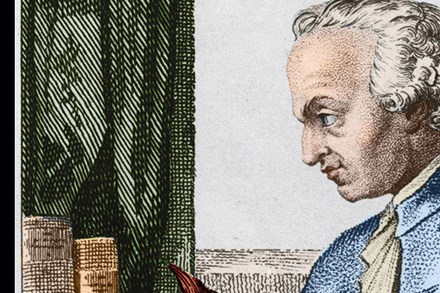
If the only story you’ve heard about Immanuel Kant’s life is that it was so regular that the citizens of Königsberg (now Kaliningrad) would set their watch by his daily walk, then this book has much to teach you. In fact the provenance of this oft repeated anecdote is an essay by the German poet Heinrich Heine, who, far from being an eyewitness, had never even met Kant: ‘Everything had its set time, and the neighbours knew that it was exactly half past three when Immanuel Kant, in his grey frock coat, rattan cane in hand, emerged from his front door.’ The Kant that emerges from these pages is less dull and more recognisably human than his metronomic image. He played billiards, gambled and socialised with the great and good of Königsberg.

Clerical skulduggery on the far borders of 1830s Germany

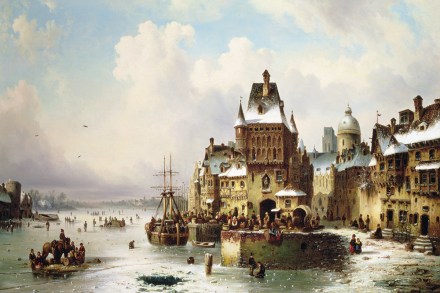
Königsberg is no more. Now known as Kaliningrad, it forms part of a small Russian exclave surrounded by Lithuania and Poland. It is probably here that the third world war will start. Before it was bombed flat and ethnically cleansed, the historic Baltic city formed one of the main centres of the German province of Prussia. Old Königsberg was a port and a -meatballs-and-potatoes kind of place, but also one of the battlefields of the Enlightenment. The philosopher Immanuel Kant was born, lived and died there. One of the questions he struggled with was how to reconcile the claims of human reason with the need for faith in the divine.