Kingsley amis

Why didn’t I listen to the Old Devil?

From our UK edition

When Kingsley Amis won the Booker prize for The Old Devils in 1986, he said that he had previously thought of the Booker as a rather trivial, showbizzy sort of caper, but now considered it a very serious, reliable indication of literary merit. It was a joke, evidently. Indeed, when he said it during his acceptance speech he grinned from ear to ear, just to make it crystal clear that he was being ironic. But it didn’t do any good. In a BBC round-up of the events of the year, the presenter said that Amis had won the distinguished literary prize in spite of having previously disparaged it. This was portrayed as a brilliant bit of sleuthing on the presenter’s part, as if his own dogged research had exposed Amis’s ghastly hypocrisy.

A woman of some importance | 22 September 2016

From our UK edition

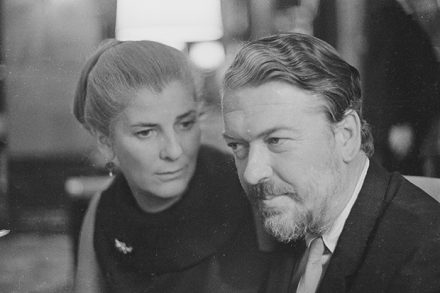
Searching for a 12-month stretch in the life of Elizabeth Jane Howard (1923–2013) that might illuminate the kind of person she was and the circumstances of her fraught and chaotic career, I settled on the year of 1955. Our heroine, then living in a maisonette flat in Little Venice and reading manuscripts for the publishing firm of Chatto & Windus, was hard at work on her well-received second novel, The Long View (1956). She was also having an affair with Arthur Koestler, who, when they entertained, her biographer tells us, expected her to ‘produce a three-course meal, look demurely beautiful and say as little as possible’. And so the year winds on. Koestler dazzles her with his volcanic temperament, gets her pregnant and then fixes an abortion.

Junk Bond

From our UK edition

You now need to be in your mid-sixties or older — a chilling thought — not to have lived your whole life in the shadow of James Bond. In 1953, the year of the Queen’s coronation and the conquest of Everest, Bond announced his arrival with the words, ‘The scent and smoke and sweat of a casino are nauseating at three in the morning’, the opening line of Casino Royale. His creator was Ian Fleming, a cynical, not-very-clean-living newspaperman with a chequered career behind him, who wrote the book to take his mind off ‘the agony’ of getting married for the first time.

… and sense and sensibility

From our UK edition

Book reviews, John Updike once wrote, ‘perform a clear and desired social service: they excuse us from reading the books themselves’. It’s a theory, I’m afraid, that doesn’t apply to this review — but it certainly does to this book: an impeccably wide-ranging collection of Ferdinand Mount’s own non-fiction reviews, including for The Spectator, over three decades. Find yourself unaccountably vague on the premiership of Lord Rosebery? A little rusty on the life of George Gissing? Embarrassingly patchy on the history of Methodism? Thanks to Mount, there’s no need to plough through 500 pages on any of them — nor the more than 50 other subjects he covers.

Scratching a living

From our UK edition

John Gross’s The Rise and Fall of the Man of Letters: English Literary Life since 1800, a standard text for anyone set on a life of writing about books, was intentionally truncated, ending its chronology before Gross’s own time of eminence. Two decades after the book’s publication in 1969, Gross explained in a new afterword that he had not wanted to comment on his peers and colleagues, for fear of misunderstanding or offence. A perfectly justifiable approach, but it made the book uncomfortably tantalising for those who prefer their gossip to be at the expense of the living. The Prose Factory is dedicated to Gross, and partially overlaps with The Rise and Fall, beginning in 1918.

Larkin’s misty parks and moors — in all their lacerating beauty

From our UK edition

When Philip Larkin went up to St John’s College, Oxford, in the early 1940s, he found himself in a world of deprivation and departures. The arrival of war had ruined any hope he might have had of living the sybaritic student life mythologised by Evelyn Waugh; the majority of the younger dons had departed to serve in the forces or the ministries; the few undergraduates at the college who hadn’t already followed suit could expect to be called up soon. And most were. But Larkin was not. Deemed unfit for active service because of his poor eyesight, he remained at Oxford for the full three years of his degree, while friend after friend was carried away to combat. It was in this environment that he began to think seriously about photography.

We had so many books we had to hire a structural engineer to prevent us being buried

From our UK edition

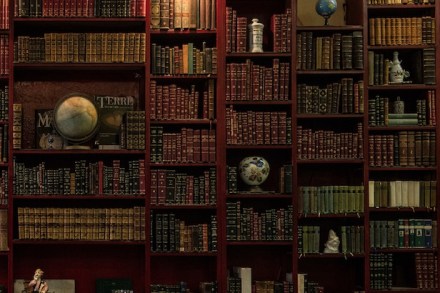
My father Anthony Hobson, whose books are to be sold at Christie’s in two sales next week, claimed that the book collector’s greatest joy was the sight of an empty shelf: a vacuum begging to be filled. Such a thing was a rare occurrence in our home, so freighted with literary matter, mainly upstairs, that the advice of a structural engineer had to be sought: were we all about to be buried beneath an avalanche of bibliographical rarities? On the landing stood the vast tomes on Renaissance book binding, my father’s lifelong study - serried dark objects stamped with words that sounded to my young self like spells: Sigismondo Boldoni, Aldus Manutius.

The fat debate – Julie Burchill vs Katie Hopkins

From our UK edition

In this week's issue, Julie Burchill explains why she is not dieting. Ever. As Kingsley Amis said, no pleasure is worth giving up for the sake of two more years in a geriatric home. And Burchill has seen nothing during her long, wicked, wonderful life to make her change her ways — or her weight. But what will Katie Hopkins, arch-enemy of the obese, make of this? She joins Burchill on this week's View from 22 podcast, to discuss whether someone can ever be overweight and happy. Hopkins has campaigned vigorously against obesity — so does she think Burchill is greedy when she goes off to 'have another cream doughnut', as Hopkins puts it? Burchill doesn't seem too bothered by what Hopkins thinks.

Lolita’s secret revenge mission, and other daft theories of literary spite

From our UK edition

Richard Bradford has written more than 20 books of literary criticism and biography. This latest one is a compendium of writers’ feuds and resentments. Reading Literary Rivals is a curious experience; from the quotations and bare facts you can just about make out a version of reality, but it’s fighting so hard against the author’s interpretations that it’s sometimes obscured altogether. It feels as if Bradford has done his research with a baleful monocle pressed to his eye, giving a ghastly pallor to everything he reads. When Dickens read Thackeray’s review of his work, he wrote to thank him, but when Professor Bradford read the same review, he saw nothing but mockery and malice. Nabokov and his friend Edmund Wilson disagreed about communism.

Mark Amory’s diary: Confessions of a literary editor

From our UK edition

Until recently I used to claim that I had been literary editor of The Spectator for over 25 years; now I say almost 30. The trouble is I am not quite sure and it is curiously difficult to find out. Dot Wordsworth arrived on the same day as me but she cannot remember either. Each of us assumed that the other was an established figure and so our superior. A similar imprecision may undermine other memories. In the early Eighties then, when Alexander Chancellor had reinvented the magazine after a bad patch, and it seemed daring, anarchic and slightly amateurish, I wrote theatre reviews and one late afternoon went round to Doughty Street, where The Spectator then was. I could find no one sober in the building. How did it manage to come out so promptly each week?

The biography that makes Philip Larkin human again

From our UK edition

How does Philip Larkin’s gloom retain such power to disturb? His bleakest verses have the quality of direct address, as if a poetical Eeyore were protesting directly into our ear. ‘Aubade’, his haunting night-time meditation on the terrors of death and dying, focuses on ‘the sure extinction that we travel to/ And shall be lost in always’ and offers no consolation. His ‘Next Please’ makes grim fun out of our habit of hope, pictured as a ship we expect to greet us with its full cargo of rewards. But of course ‘Only one ship is seeking us, a black-/Sailed unfamiliar….’ He saw religious faith as a form of self-deception. Moreover, his ‘The Old Fools’ mercilessly depicts senility.

Mugabe envy in Scotland

From our UK edition

Who owns Scotland? The people who most commonly ask this question believe that the land has been wrested from ordinary Scots by evil lairds and rich foreigners (by which they chiefly mean the English). Now the Scottish government is bringing out a report on how to correct this alleged injustice. It may recommend extending community ‘right to buy’ powers and allowing tenants to buy their holdings even if the owners do not want to sell.  This would have the unintended effect of ending all new tenancies. But the SNP’s misunderstanding of the situation is even more radical than that. It believes that big Scottish landowners are rich because they own the land. For a long time now, it has been the other way round. They own the land because they are rich.

Wine and The Spectator: how little has changed since 1860

From our UK edition

What are the big themes in wine today? High rates of duty loom large, as does their impact on prices. There are some concerns for consumption, but no one seems too keen to keep a lid on it (not least among the Fourth Estate). Discovering the next big thing becomes ever more competitive as the wine world expands too; and we are (rightly) living through a fetish for rare grape varieties. The bravura new Spectator Archive, cataloguing every magazine from 1828 till 2008, tells us little has changed. Wine duty was a hot topic in Victorian times. In March 1860, a correspondent wrote: 'Of all the articles in the long lists of Customs and Excise, there is not one which has so often, and to such a degree, been experimented upon, as the single item of wine.

Flouting all those pieties

From our UK edition

If not equal to his best novels, Kingsley Amis’s short stories are still wonderfully entertaining, says Philip Hensher Some writers of short fiction — there doesn’t seem to be a noun to parallel ‘novelist’ — are dedicated craftsmen, like Chekhov, Kipling, William Trevor, Alice Munro or V.S. Pritchett. Others, like Evelyn Waugh or E.M. Forster, are more haphazard, producing stories to commission, or as a sketch, to try something out in moments when an idea on a small scale seems to be all that inspiration can supply. The result, when the collected edition finally surfaces, is generally more varied in surface than the works of the specialist — just think of Dickens’s stories, written for odd occasions and generally at short order.