Kenya

Portrait of the week | 18 June 2015

Home Talha Asmal, aged 17, from Dewsbury, West Yorkshire, died in a suicide bomb attack on forces near an oil refinery near Baiji in Iraq, having assumed the name Abu Yusuf al-Britani. A man from High Wycombe, Buckinghamshire, Thomas Evans, 25, who had changed his name to Abdul Hakim, was killed in Kenya while fighting for al-Shabab. Three sisters from Bradford were thought to have travelled to Syria with their nine children after going on a pilgrimage to Saudi Arabia. Britain had had to move intelligence agents, the Sunday Times reported, because Russia and China had deciphered documents made public by Edward Snowden, the CIA employee who has taken refuge in Russia. Payments expected by customers of the RBS group of banks failed to enter accounts overnight.

Wild life | 18 June 2015

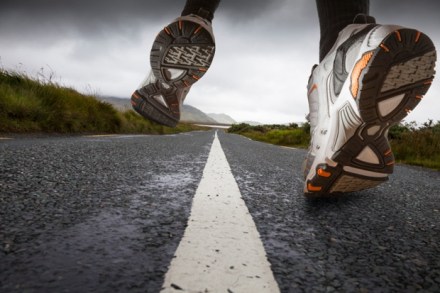
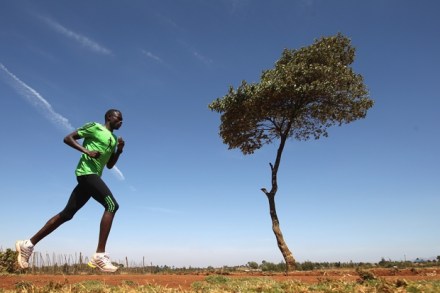
Laikipia, Kenya   Out cross-country running on the farm in Kenya recently, I came face-to-face with a gang of bull elephants. I zigzagged away from them, keeping downwind, jogged on for a bit, then found myself following the tracks and fresh dung of a herd of buffalo. I paused my stopwatch, had a think then continued at a timid pace while looking around fearfully. The night before I had heard lion and hyena, so as I ran I imagined the yellow eyes that might be following the form of a 50-year-old man huffing, puffing and advancing at a stumble — easy prey, but chewy old meat. I studied the ground ahead of me, checking for the camouflaged signature of a puff adder or the coiled spring of a cobra.

Redefining aid

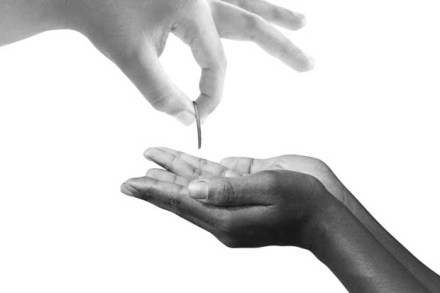
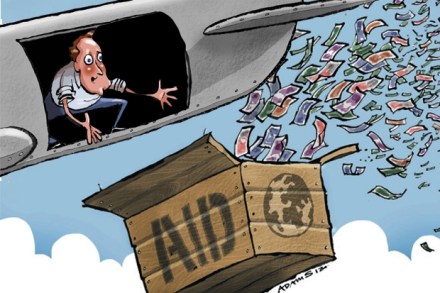
In this week’s Queen’s Speech, the government promised as usual to cut red tape for businesses. But David Cameron is remarkable in his enthusiasm for simultaneously wrapping his own government in red tape. He has proposed a law to prevent the Chancellor raising rates of income tax, and in one of the last acts of the coalition he pushed through a law which commits British governments for ever after to spent at least 0.7 per cent of Gross National Income (GNI) on international aid. There is little chance of the Prime Minister failing to meet his self-imposed spending target. Civil servants at the Department for International Development (DfiD) have proved themselves to be more than equal to the task of shovelling money in the direction of developing nations.

Wild life | 21 May 2015

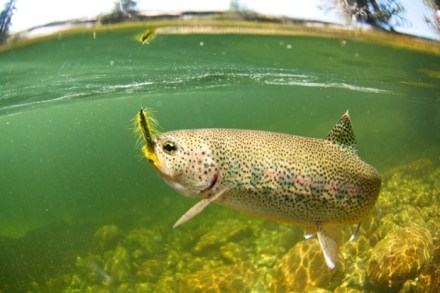
 Nairobi Trout were first introduced into Kenya’s highland streams in 1905. Men like Ewart Grogan, ‘baddest and boldest of a bad bold gang’, shipped Loch Leven fingerlings in ice-packed chests to Mombasa and then up to the Rift Valley on the Lunatic Express. From there, porters carried them up into the misty, forested Aberdare and Mount Kenya slopes. Rivers with now legendary names such as Amboni, Gichugi and the two Mathioyas were stocked — and our fly fishers’ paradise was born. Last week in Nairobi, the Kenya Fly Fishers’ — the oldest club of its kind in all of Africa — held its 95th annual dinner. It was a strictly male affair, more than 100 members and their guests. Visually it was pure H.M. Bateman.

Portrait of the week | 9 April 2015

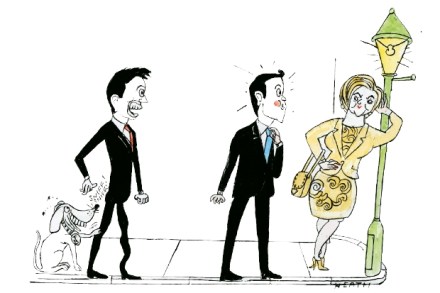
Home Tony Blair, the former prime minister, opposed a referendum on membership of the EU. In a speech at Sedgefield he said that, following the Scottish referendum, David Cameron, the Prime Minister, knew ‘the perilous fragility of public support for the sensible choice’. Opinion polls following a television debate by seven party leaders, which drew an audience of 7.7 million, were inconsistent. Nicola Sturgeon, the leader of the Scottish National Party, was held to have made a mark, while Leanne Wood, the leader of Plaid Cymru, and Natalie Bennett polled at between 2 and 5 per cent. Nigel Farage, the leader of Ukip, was seen to sweat profusely.

The warrior arched his body, readying to sling his spear at my chest

 Laikipia With a shriek, the warrior arched his body, readying to sling his spear at my chest. The tear-dropped javelin point flashed in the sun. In the heat, dust swirled up from the hooves of the young blood’s cattle invading my farm. In his hand, the seven-foot shaft lance quivered, ready, poised for release — and then he yelled again. This is March 2015, I reminded myself, not AD 991 at the onset of the Battle of Maldon. I had asked the man to come with me to the police, where he would be arrested for trespass. The spear flashing was his response. He had pushed his cattle into what was left of my pasture, and many other herds had been there too for weeks — upwards of 7,000 beasts cropping the last of the grass.

If you want a real safari, head to Botswana

As a boy camping with my father on safaris deep in the African bush, there were no tents involved; we just slept by the fire like cowboys in the open under the constellations. Supper was sweet tea and biltong and we used a tin bucket for a shower. When it rained we simply moved underneath our parked Land Rover. One morning we woke to find tracks circling us, where a big lion had come close enough to blow on our toes as we slept. That old Africa rubbed off on me and I still like safaris to be the real thing — under canvas, by the campfire, gin, tall tales, fresh air, and carpet-creeping between tents. Safari is an art and it’s for real people, not celebrities climbing Kilimanjaro.

I cannot imagine living in a world without lions

Laikipia We are privileged to live with lions on the farm. We hear them most nights. We encounter them frequently. Out walking last month, I sensed four lions the instant before I saw them. Adrenaline raised a mane of goose bumps from my skull to my thighs. I should have shouted and advanced on them and certainly not run away. Instead I became rooted to the spot, hypnotised by their great yellow eyes. After seconds they timidly slunk off — in Kenya’s recorded history honey bees have killed more people than lions have — leaving me to feel neither scared, nor relieved, but thrilled. Sixty years ago Elspeth Huxley wrote that all the lions in Laikipia, the ranching plateau I call home north of Mount Kenya, had been shot out.

The myth of the White Widow

Over the past year or so, a determined and fanatical Islamist has been waging a deadly and bloody war against the western world. This enemy is capable of moving unnoticed across continents and inflicting savage violence in each of them; inspires young Muslim men to become suicide bombers and die in their thousands. The enemy is particularly horrifying for being a traitor, born in Britain and a woman to boot. The ‘White Widow’, remember her? Samantha Lewthwaite from Aylesbury, usually described by our tabloid press as one of the most evil and powerful women alive. But is she really evil? Is she really even much of a threat?

Could the Kenyan mall atrocities happen here?

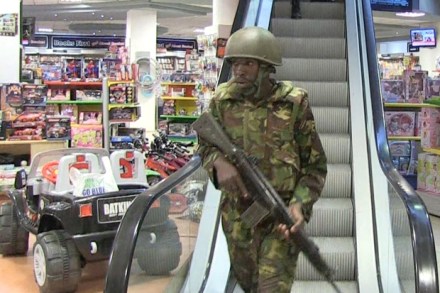
So you’ve just popped down to the supermarket for the weekly shop, toddlers in tow, when the grenades start to fly, the air lights up with tracer bullets and you realise to your horror that unless you find a suitable hiding place in a matter of seconds these are the last moments you’ll spend with your kids on earth. This was the awful crisis that faced Amber Prior and her children, who were among the numerous innocents caught up in the al-Shabaab suicide attack on the Westgate shopping mall in Nairobi, Kenya, last year. Their tale was told in the BBC2 documentary Terror at the Mall, and I make no apologies for reviewing it late because it is surely one of the most gripping and important pieces of television any of us are likely to see this year.

From Burma — or maybe Saigon — to Manchester via Calcutta

England   We dropped off our daughter Eve at her new school in the Midlands and started the long journey home to Africa. On the train we sat down and my wife Claire looked as if she’d seen a ghost when she saw the elderly lady in the opposite seat. After ten minutes Claire said, ‘I’m sorry I keep staring at you, but you look exactly like my grandmother. Where are you from?’ The woman said she was from Trinidad, but her family was originally from Kerala, in India. Claire said her grandmother was from Calcutta. Our son Rider looked puzzled. ‘Where are we from?’ For him the counties whizzing by our train window were foreign lands. After Kenya, Elspeth Huxley said, England was like a ‘castrated leopard’.

Climbing Mount Kenya with my 13-year-old daughter

 Kenya Highlands I’ve just descended Mount Kenya with Eve, my 13-year-old daughter, and her class of school leavers from Pembroke House. Afterwards our guide Steve, an ex-Grenadier guardsman, emailed me to say Pembroke kids were his favourites on these mountain expeditions. ‘How could one not enjoy the company of such a crowd of gregarious misfits,’ he wrote. On the scree in the freezing pre-dawn darkness a few hundred feet from Point Lenana, Eve’s altitude sickness kicked in so severely we had to return to the last camp, at Shipton’s, where she recovered and walked for another two days. But 30 out of 34 kids in her year reached the summit, puking and laughing all the way. It was a great rite of passage for all of them.

The Catholic missionary and the Masai running champion

In 2012, David Rudisha, a Masai warrior from Kenya, ran what many say was the greatest race in the history of the Olympics. He led the 800m final from the front and smashed his own world record, becoming the first man ever to run under 1.41. In the words of Seb Coe, ‘Bolt was good, Rudisha was magnificent.’ In interviews after the race he thanked one man above all others for his success: an Irish Catholic missionary named Brother Colm O’Connell — a man with no official athletics training who had nonetheless been David’s coach since he first began to run. And if David wins another gold at the Commonwealth Games next week, he’ll have Colm to thank again.

Please take your holiday in Kenya this year

 Rift Valley Many of my British tribe fled Kenya around independence in 1963 because they believed there was no future. Gerald Hanley, an Irish novelist who knew the country, forecast ‘a huge slum on the edge of the West, Africans in torn trousers leaning against tin shacks, the whites of their eyes gone yellow, hands miserably in their pockets...’ For sure, poverty here is an awful, destabilising reality. But Kenya’s past 51 years is a story of hard work and enterprise in which there has been real social mobility and countless stories of rags to riches. In everything from finance to farming, Kenyans are Africa’s most successful capitalists.

The books that have kept me alive

In bed Safety measures — I’ve never been good at them, so inevitably I inhaled and got soaked by the toxic agricultural chemical I was out spraying on a windy day in Kenya. At 49, I’m not worried about triggering distant future tumours — or infertility — and I’m still waiting to pay back on the mortgage of my misspent youth. I expected that being poisoned would be rather invigorating — similar to a whiff of tear gas in a riot, which I like as much as bee stings, or dragging my hand through nettles. I spent the next few days wondering if I might drown in my own lungs or that my coughing might turn me inside out, a frothing slug sprinkled with salt. Happily I didn’t die and then I remembered what a joy it is to convalesce.

Spectator letters: Bereaved parents against press regulation, and a defence of Tony Benn

Why we need a free press Sir: As bereaved parents and (to borrow from some signatories of last week’s advertisement) victims of public authority abuse we wholly oppose adoption of the politically endorsed Royal Charter of Press Regulation. The European Court of Human Rights ruled that Christopher, our mentally ill son, had been denied his right to life as a result of failures by the prison service, the police and the NHS. Our experience was that, in the aftermath of our son’s death, the primary objective of the public authorities involved was to protect themselves from criticism because of those failures rather than to achieve justice for our son.

A £50 million search for love

 Laikipia When I first knew Michael Cunningham-Reid he was such a strict teetotaller that he would not eat trifle for pudding in case there was sherry in it. For years, not drinking was his leitmotif, along with big cigars and a thirst for gambling, racehorses and catching marlin with just two lines out on the Indian Ocean. At Michael’s funeral at his Lake Naivasha farm, my wife Claire was the first to reveal she had secretly given him a glass of wine. Julian then confessed he had done the same and said over the microphone, ‘Own up, who else?’ Mourners under the fever trees wriggled on their hay-bale seats and the giggles rose to a roar of laughter.

Aidan Hartley: If Santa Claus tried to make a delivery, he’d be shot before he reached the chimney

Laikipia In the cattle rustlers’ camp, I know as I write this that the warriors are sharpening their blades, staring down the dirty barrels of their rifles, and loading their clips with bullets. Before full moon on the 17th of this month they will set out in their war paint, glistening with rancid butter and ochre. There will be four of them, young men not much more than teenagers. One will carry a bucket of sheep’s fat, and on this disgusting ration they will survive while lurking in the thorn scrub for days, never making a fire, leaving no tracks, sleeping cold on the rocks — and watching us. They will watch us as we go about our daily routines.

How al-Shabaab is keeping the black-market African ivory trade alive

It has taken a while, but finally the world appears to be taking the illegal trade in ivory seriously. Why now? Reports of a ‘terror trail’ that links al-Shabaab and black-market ivory. The Elephant Action League investigated the ivory trail into Somalia, and found that ivory, or ‘white gold’, is ‘one of the lifelines of al-Shabaab’. EAL found that according to sources within the militant group, ‘between one to three tons of ivory, fetching a price of roughly $200 per kilo, pass through the ports in southern Somalia every month’. Al-Shabaab’s monthly income from ivory is - according to EAL - between $200,000 and $600,000.

Aidan Hartley: Kenya is special like no other African nation

As I write this, my hands are seared and bruised from holding a hot iron after branding our cattle. We have castrated our steers and piled up the testicles on fence posts to fry later. We fought the cattle to the ground. We pulled their tails and they bellowed. I feel so happy. The cattle brand sizzles into the flesh with a hiss and a cloud of smoke as it burns in the brand KH9, which has been the Hartley mark here in Kenya since 1936. Finally we might have a stud herd that can make a difference. This has all been going on in my absence, but I have come home to the farm after covering dozens of wars and crises for 25 years and I will do it no more. Cattle rustlers and bandits will still shoot at me but I am going to be a farmer for the rest of my life.