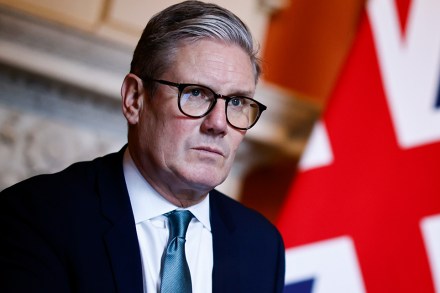
Keir starmer

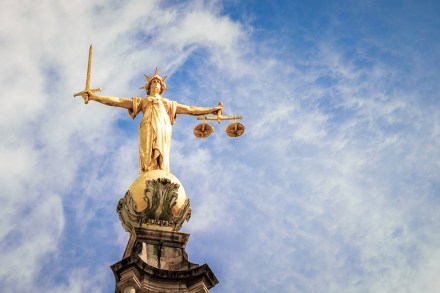
What real justice would look like for grooming gang victims

From our UK edition

It is always interesting to watch a dam burst. In the past week, as Elon Musk and other prominent Americans discovered the British ‘grooming gang’ scandal, British politics has suddenly had to face up to something it has spent a quarter of a century trying to ignore. One would hope that the claim that thousands of underage girls had been gang-raped by thousands of men in cities across the country would be a subject of profound concern for our politicians. Who did this? Why? How can we help the victims and prevent any reoccurrence? But no society asks questions to which it does not want an answer. The language used about this mass crime has been coyly euphemistic. Take ‘grooming’.

Lessons for Keir Starmer from Cicero

From our UK edition

The Prime Minister, Sir Keir Starmer, and his chosen Attorney-General, Baron Hermer, both professional lawyers, seem to take the view that lying is just an aspect of public relations and parliament an irrelevance. As the Roman republic collapsed under the assault led by Julius Caesar and Marc Anthony, Cicero reflected, in those perilous times, on the nature of the relationship between civil law (ius civile, the term given to the bulk of statute law in Rome) and government and how it might be enabled to control the situation. He turned, for example, to the jurists. These freelance experts in law, though they had no professional standing whatsoever, provided opinions on legal matters to anyone who wanted them.

Why 2025 could redefine politics

From our UK edition

22 min listen

Santa will have had a tricky time this year fulfilling all the Christmas wish lists in Westminster. Keir Starmer is desperately hoping for a change in the political weather, and Kemi Badenoch would like an in with Donald Trump. Ed Davey dreams that Labour’s electoral troubles will get so bad that proportional representation starts to look appealing. Nigel Farage, meanwhile, wants to avoid what usually happens with him and keep his party from falling out – or perhaps Elon Musk will give him a Christmas bonus in the form of a generous donation.

Best of 2024 with Dominic Sandbrook, Mary Beard and Harriet Harman

From our UK edition

75 min listen

This week is a special episode of the podcast where we are looking back on some of our favourite pieces from the magazine over the past year and revisiting some of the conversations we had around them. First up: the Starmer supremacyLet’s start with undoubtedly the biggest news of the year: Starmer’s supermajority and the first Labour government in 14 years. In April, we spoke to Katy Balls and Harriet Harman about just what a supermajority could mean for Keir Starmer. Listening back, it’s an incredibly interesting discussion to revisit. The aim of Katy’s piece was to communicate the internal problems that could arise from such a sweeping victory and, crucially, how Starmer might manage a historic cohort of backbenchers.

Year in Review 2024 with Michael Gove, Quentin Letts and Katy Balls

From our UK edition

28 min listen

It’s been a historic year in British politics. At the start of 2024, the UK had a different Prime Minister, the Tories had a different leader, and The Spectator had a different editor! Michael Gove, Katy Balls, and Quentin Letts join Cindy Yu to review the biggest political stories of 2024. On the podcast, the panel discuss the rise of Reform UK and Nigel Farage as a political force, Labour’s adjustment to government, and Michael reveals his reaction to Rishi telling Cabinet that he was going for a summer election. Produced by Oscar Edmondson and Megan McElroy.

Why we must not forget Hong Kong

Forty years ago this Christmas I visited Hong Kong for the first time — a few days after the signing in Beijing of the Sino-British Joint Declaration that sealed the former colony’s transfer to mainland rule in 1997. It was a moment of apprehension, but at least the timetable had been set. And how lucky I was to have experienced that extraordinary outpost as it was then, in such contrast to what China’s masters have made it now. The Christmas Day service in St. John’s Cathedral, overhead fans stirring the turbid air, was a poignant glimpse of Hong Kong’s past. Norman Foster’s Hongkong Bank building, the most expensive in the world at the time, was approaching completion as a symbol of commercial confidence in the future.

Hong Kong

Could the local elections be cancelled?

From our UK edition

14 min listen

Labour will reveal plans today to re-design local government, with district councils set to be abolished, and more elected mayors introduced across England. The plans could be the biggest reforms of their type since the 1970s, but with the May 2025 local elections set to be Labour’s first big electoral test since the general election, how will they be impacted? Local government minister Jim McMahon didn’t deny that the elections could be affected, or some even cancelled. Reform UK have called foul – what’s going on? James Heale speaks to Isabel Hardman and Katy Balls. Also on the podcast: rumours abound that a Chinese spy could be named in Parliament today – what does this story tell us about the UK’s complicated relationship with China?

Why 2025 could redefine politics

From our UK edition

Santa will have a tricky time this year fulfilling all the Christmas wish lists in Westminster. Keir Starmer is desperately hoping for a change in the political weather and Kemi Badenoch would like an in with Donald Trump. Ed Davey dreams that Labour’s electoral troubles will get so bad that proportional representation starts to look appealing. Nigel Farage, meanwhile, wants to avoid what usually happens with him and keep his party from falling out. Come the new year, all four leaders will have their eyes on May’s local elections. The 21 county councils, ten unitary authorities and one metropolitan district are up for grabs for the first time since 2021. Back then Boris Johnson was riding a wave of popularity after the vaccine rollout and the Tories won Hartlepool from Labour.

The joy of our village Christmas play

From our UK edition

We are just recovering from the village play. This annual Christmas event was taken over last year by our son William, who writes it and acts in it, and his wife Hannah, who directs. Last year, it subverted the genre (as critics like to put it) of ghost stories. This year, it did a similar trick with whodunnits. It was entitled Death on the Dudwell, a reference to the trickle of a tributary which runs beside our fields. The play, set in 1935, opens with the idle would-be heir Arthur Prince (William) reading a contemporaneous Spectator on a sofa. It concerns the murder of his father, the unsavoury Lord Haremere (played by William’s former prep-school head, David Chaplin) who, though already dead before the play starts, has a good many lines.

‘I will die protecting this country’: Kemi Badenoch on where she plans to take the Tories

From our UK edition

‘It’s like a start-up,’ Kemi Badenoch explains of her new job, as she plumps down on a sofa in the Spectator offices. A month into her tenure as Conservative party leader and she is discovering the upsides to being out of power. ‘Everyone around me in the leader of the opposition office is there because of me – not because they happened to be there when I got there. That changes the dynamic quite a bit.’ ‘What’s a lunch break? Lunch is for wimps. I don’t think sandwiches are a real food’ She says the ‘biggest difference’ so far between being a secretary of state and leader of the opposition is that the role is ‘actually a lot less lonely’.

Labour’s Nigel Farage nightmare

From our UK edition

Arriving on stage to accept ‘Newcomer of the Year’ at The Spectator’s Parliamentarian of the Year awards, Nigel Farage gave a warning to the Westminster establishment. ‘I’ve got a bit of a shock for you,’ he said. ‘If you think that I and four other people – the newcomers into parliament this year in the general election – were a shock, I’m very sorry but at the next election in 2029 or before, there will be hundreds of newcomers under the Reform UK label.’ He added: ‘We are about to witness a political revolution the likes of which we have not seen since Labour after the first world war. Politics is about to change in the most astonishing way. Newcomers will win the next election. Thank you very much.

Labour’s confidence tricks

From our UK edition

There is nothing new, nor necessarily fatal, about making a poor start in government. Margaret Thatcher had a torrid first couple of years in office, set back by galloping inflation and mass unemployment, before she found her direction. Those who assume that Keir Starmer is doomed to be a one-term prime minister thanks to his plunging popularity are speaking too soon. The resignation of Louise Haigh over a historic fraud conviction will swiftly pass. The mini-scandal of freebies accepted by government ministers, which kept Fleet Street occupied over the summer, has already been largely forgotten.

Is Keir Starmer turning into Rishi Sunak?

From our UK edition

11 min listen

The government is trailing a major policy speech ahead of Thursday, in which the Prime Minister will set out key 'milestones' that he wants to hit, in terms of healthcare, living standards, the climate and so on. It's all sounding a little like a previous prime minister... Cindy Yu talks to Katy Balls and James Heale about the opportunities and perils in setting public targets. Produced by Cindy Yu.

Boris Johnson on Covid failures, the Nanny State & his advice for ‘Snoozefest’ Starmer

From our UK edition

36 min listen

Former prime minister Boris Johnson joins The Spectator’s political editor Katy Balls to divulge the contents of his new book, Unleashed. He reflects on his premiership as PM during the pandemic, describing the time as a ‘nightmare’ for him. He also details how he managed to suppress the force of Nigel Farage, and gives advice to Keir Starmer on how to build a relationship with Donald Trump. Watch the full interview on SpectatorTV: https://youtu.

Portrait of the week: Storm Bert, Israel-Hezbollah ceasefire and Putin gives cockatoos to North Korea

From our UK edition

Home A white paper outlined measures to counter economic inactivity (which had risen by September to 41.2 per cent among those aged 16 to 24): everyone aged 18 to 21 would be offered an apprenticeship, training, education or help to find a job; Jobcentres would be rebranded as the National Jobs and Careers Service. Rachel Reeves, the Chancellor of the Exchequer, said: ‘What I haven’t heard are many alternatives’ to the tax rises imposed by October’s Budget; she was speaking to the Confederation of British Industry. A petition on the parliament website, accusing Labour of breaking promises and calling for a general election, gathered more than 2.

Should Starmer be worried about this petition?

From our UK edition

13 min listen

Today is the Confederation of British Industry (CBI) conference, at which Rachel Reeves has laid out her plan to 'Get Britain Working' and prove Labour as the party of business ... despite what the recent Budget and the employers national insurance increase might suggest. What's the mood of big business today?  Also on the podcast, a petition has gone viral over the weekend calling for a general election. Various people have signed it, from Nigel Farage to Michael Caine. But should Labour actually be worried? Oscar Edmondson speaks to Katy Balls and Isabel Hardman.  Produced by Oscar Edmondson.

Labour’s Chinese takeaway

From our UK edition

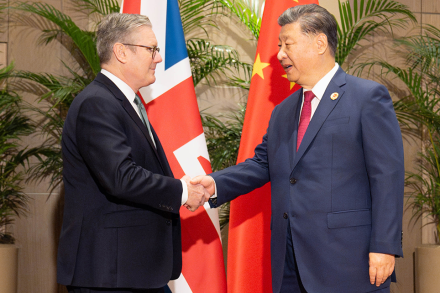
I was thrilled to learn that our government intends to enjoy an ‘open’ relationship with China – one of my favourite countries, as I am sure it is yours. Sir Keir Starmer announced this intention when he bumped into Xi Jinping at the G20 beano in Rio de Janeiro. He also said: ‘We want our relations to be consistent, durable, respectful, as we have agreed, avoid surprises where possible. The UK will be a predictable, consistent, sovereign actor committed to the rule of law.’ Those agreeable adjectives are all Keir’s – I didn’t slip any in, surreptitiously, Not even ‘predictable’, which I assume was there to reinforce the earlier commitment to not surprising the Chinese, perhaps by jumping out from behind a hedge and demanding the return of Hong Kong.

Will the assisted dying bill pass the Commons?

From our UK edition

In the months before the general election, the Labour party had an internal debate about starting a ‘national conversation’ on assisted dying. Keir Starmer had promised Esther Rantzen, the veteran broadcaster with terminal cancer, that if elected he would hold a vote on it. Wes Streeting, in the health brief, argued that it might be the time to start a wider debate with the country on the thorny issue. However, he faced pushback from those in the shadow cabinet mindful of the fact there could be an election within months. Talking about death wasn’t exactly the feel-good change factor they were aiming for. ‘We didn’t want to become the death party,’ recalls a colleague. ‘It could basically blow up the family courts. Is that such a good idea?

Keir Starmer’s choice of Attorney General should concern conservatives

From our UK edition

Of all Keir Starmer’s appointments to government, none have been so personal or politically significant as his choice of Attorney General. The Prime Minister’s politics have been shaped, refined and hardened by his time as a human-rights barrister. The role of Attorney General – the government’s chief legal adviser and the minister responsible for the Crown Prosecution Service, which Starmer ran as director of public prosecutions – is of critical importance to him. While the PM may or may not take a close interest in who is minister for planning, veterans or food security, he will have thought very carefully about who should be his AG. The choice of Richard Hermer is deeply revealing – and should be profoundly worrying.

Will Trump push the UK closer to the EU?

From our UK edition

11 min listen

Keir Starmer is in France today to hold talks with Emmanuel Macron where they will discuss the impact of a Trump second term, and what it will mean for Ukraine. The Prime Minister marked Armistice Day at the Tomb of the Unknown Soldier under the Arc de Triomphe – the first time since 1944 that a British Prime Minister has been in France for the ceremony. What will come from this bilateral meeting? How does a Trump victory bring the UK and the EU closer? Elsewhere, a minor row broke out over the weekend around the UK’s Remembrance Day commemorations, with Reform UK leader Nigel Farage not being allowed to lay a wreath despite his party having five sitting MPs. Does he have a point? Oscar Edmondson speaks to Katy Balls and James Heale. Produced by Oscar Edmondson.