Keir starmer

Starmer facing welfare rebellion

From our UK edition

15 min listen

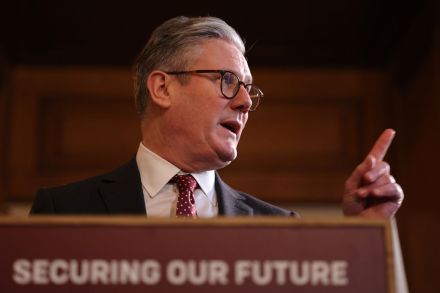
There is a row on the horizon over welfare cuts. Yesterday’s meeting of the Parliamentary Labour Party (PLP) was packed, with many lobby journalists expecting fireworks. The Prime Minister got a positive reaction for his message on Ukraine, with MPs impressed by his strong response since Trump took office, but there was some scepticism in the room about his plan to make £6 billion in welfare cuts. This is a difficult topic that cuts to the heart of the Labour Party and its position as the party of welfare – about 80 Labour MPs are said to oppose the government’s proposals. Can Keir Starmer weather the storm? James Heale speaks to Katy Balls and John McTernan, former political adviser to Tony Blair. Produced by Oscar Edmondson.

How long will Starmer’s ‘war bounce’ last?

From our UK edition

11 min listen

Trump has been stealing the headlines when it comes to Ukraine this week, but Europe – and whether it can stay united in the face of the US pulling its support – remains an important subplot. At a summit yesterday, 27 countries backed the plan to increase spending on defence, but when will the cracks start to show? Thankfully, it seems that the Prime Minister is good in a crisis. Back at home, he has seen a modest bounce in popularity and he is making a good impression in Brussels, coming across as assured without grandstanding. He has also been leading on defence spending – could defence be the way in for Starmer to renegotiate a new position within the EU? Is Starmer having a good crisis?

Freedom of speech in the UK is very, very under threat

With all the transatlantic back-and-forth over Ukraine, and J.D. Vance’s contentious remarks on Fox News about some “random country that hasn’t fought a war in thirty or forty years,” it’s easy to forget that just three weeks ago, the vice president gave a landmark address about free speech in Europe and Britain, in particular. Last week, when Keir Starmer visited Washington, DC, Vance raised his concerns more directly with the prime minister about “infringements on free speech … that affect American technology companies and by extension American citizens.

My faux pas with Washington’s most eligible bachelorette

From our UK edition

To the Queen Anne splendour of the British ambassador’s residence in Washington for Peter Mandelson’s welcome party as our man in D.C. Downing Street did their utmost to stop lobby hacks from attending since they didn’t want us to report anything that might distract from Keir Starmer’s ring-kissing at the White House the next day. The PM’s make-or-break meeting with The Don clearly weighed on his mind. On the plane over, he looked almost ill at the prospect. Yet by the time he landed he was cracking jokes, air-kissing Tina Brown and bantering with FBI director Kash Patel – a Liverpool fan – about football. Oh, and as for Peter’s do, the Lutyens palace sparkled after its £120 million refit, but it was still perhaps a little understated for someone of his stature.

Starmer is the unlikely hero of the hour. Can it last?

From our UK edition

When Donald Trump addressed Congress this week, he declared he was ‘just getting started’. His words will not have soothed politicians in the UK, who are still playing catch-up with the President’s first 43 days. This week, Trump proved yet again that he is the biggest force in British politics. His blow-up with Volodymyr Zelensky at the White House, threats of a trade war and the disparaging comments by his Vice-President, J.D. Vance, about European countries that haven’t ‘fought a war in 30 or 40 years’ dominated Westminster. Amid all the noise, UK party leaders have been drawn into new positions. Despite his close links to Team Trump, Reform’s Nigel Farage has denounced Vance.

Where does Trump’s suspension of Ukraine aid leave Europe?

From our UK edition

13 min listen

Overnight President Trump made another extraordinary move in his ongoing attempt to broker a deal between Ukraine and Russia, suspending all U.S. military aid to Ukraine. Katy Balls talks to James Heale and geopolitical analyst Mark Galeotti about how serious this development is and where it leaves Ukraine's European supporters. Produced by Natasha Feroze and Cindy Yu.

Can Starmer stick to his promises to Ukraine?

From our UK edition

14 min listen

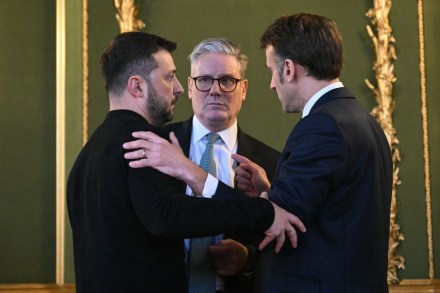
Along with the French President Emmanuel Macron, Keir Starmer seems to be spearheading Europe's diplomatic efforts to secure a lasting peace deal for Ukraine in light of the new American administration's animosity towards Zelensky. Among the proposals being discussed are a peace-keeping force in the country, as a part of efforts to show the Trump administration that Europe is taking responsibility, as it were, for its own security. But will Starmer really get the Americans on board? And if not, does he risk over-promising to Ukraine? James Heale talks to Kate Andrews and Katy Balls. Produced by Cindy Yu.

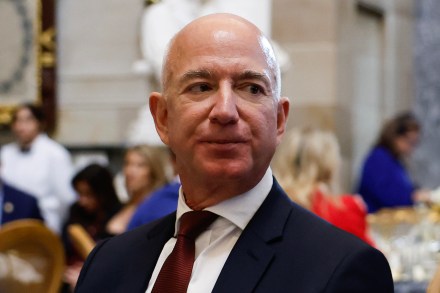
Bezos dines with Trump after dicing up Opinion page

“We are going to be writing every day in support and defense of two pillars: personal liberties and free markets,” wrote billionaire Jeff Bezos in a Wednesday note to the staff of his newspaper, the Washington Post. “We’ll cover other topics too of course, but viewpoints opposing those pillars will be left to be published by others.” The missive from on high sent shockwaves around the capital. David Shipley, the Post’s Opinion editor, stepped away from his role over the new directive. Libertarian magazine Reason had a field day: “If this sounds like something you might want to read, may I suggest @reason where we’ve been doing this since 1968?” wrote editor-in-chief Katherine Mangu-Ward.

jeff bezos

How successful was Keir Starmer’s visit to Washington?

From our UK edition

25 min listen

Freddy is joined by The Spectator World’s deputy US editor, Kate Andrews, and The Telegraph columnist, Tim Stanley, to talk about Keir Starmer’s much-anticipated meeting with Donald Trump in Washington. Across the board, it has been read as a success – at least domestically, that is. The victories include movement on the Ukraine backstop, some positive discussions around the UK avoiding tariffs, and a second state visit is on the horizon as well. The biggest win, though, was the number of compliments that the president gave Starmer, including – puzzlingly – about his accent. The Spectator World’s Ben Domenech secured an interview with Donald Trump after the Starmer meeting, in which he was similarly effusive about the PM: ‘I thought he was very good.

Can Starmer charm Trump?

From our UK edition

12 min listen

Keir Starmer is in D.C. for what will probably be one of the most important bilateral meetings of his premiership. The goal is to charm Trump and secure some guarantees for Ukraine's security after a negotiated peace in the war. Can he succeed? Cindy Yu talks to James Heale and Peter Quentin, Rusi Associate Fellow and former policy adviser to Ben Wallace. Produced by Cindy Yu.

Is Keir Starmer really Morgan McSweeney’s puppet?

From our UK edition

Every government has its éminence grise.  The quiet, ruthless man (or occasional woman) operates in the shadows, only to be eventually outed when the boys and girls in the backroom fall out among themselves or when someone pens a memoir. Think Peter Mandelson, Nick Timothy, Fiona Hill and Dominic Cummings. The authors of Get In, both lobby journalists, have produced a detailed insider account of the rise of Keir Starmer, as seen through the eyes of those inhabitants of the political underworld whose names rarely surface in the public prints. In this case, the focus is on one alleged strategic genius, a man in his late forties with the memorable name of Morgan McSweeney, referred to throughout by the somewhat sinister moniker of ‘the Irishman’.

Keir Starmer’s welcome embrace of realism

From our UK edition

Sixty-five years ago, a British Prime Minister acknowledged that a new world order was coming to pass and that it was time to lay down a burden the country could, and should, no longer shoulder. Harold Macmillan’s ‘wind of change’ speech in Cape Town signalled the eclipse of empire, the retreat of Britain from imperial pretensions and a new age of nationalism in Africa. Today, our own Prime Minister has trimmed his sails to catch a very different wind of change. He is navigating a new path – necessitated by the impact of Storm Donald from across the Atlantic. Sir Keir Starmer has indicated that Britain is willing to bear new burdens, shoulder graver responsibilities and prepare for a new era of realism across the globe.

Why the SNP can’t lose

From our UK edition

What does a party get after nearly two decades in office, collapsing public services, an internal civil war and a £2 million police investigation? Re-election, again – perhaps with an even bigger majority. Last spring, under the hapless Humza Yousaf, the SNP’s grip on power in Scotland finally appeared to be loosening. But eight months on, the nationalists have managed a remarkable turnaround. The party now has a 15-point poll lead and it looks as though John Swinney will remain in Bute House at next year’s Holyrood elections. ‘The caretaker manager has got the job permanently,’ says one rival. The party’s change in fortunes owes less to Swinney’s skill as an operator and more to the spectacular collapse of Scottish Labour.

Portrait of the week: US and Russia talk, Chiltern Firehouse burns and Duchess of Sussex rebrands

From our UK edition

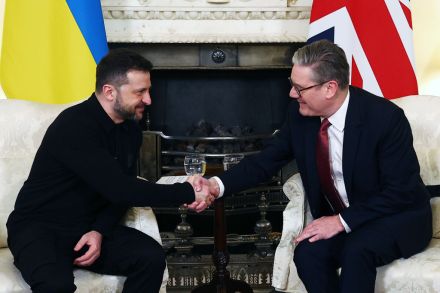
Home Sir Keir Starmer, the Prime Minister, said that, to guarantee the security of Ukraine, he was ‘ready and willing’ to put ‘our own troops on the ground if necessary. I do not say that lightly’. Parliament would be allowed a vote on such a deployment, the government said. Earlier, Sir Keir took an unannounced telephone call from President Donald Trump of America about their forthcoming meeting. Afterwards, Mr Trump said: ‘We have a lot of good things going on. But he asked to come and see me and I just accepted his asking.’ The Chiltern Firehouse hotel in Marylebone burnt down.

How Europe’s consensus on Ukraine broke down

From our UK edition

14 min listen

The future of Ukraine is being decided in a meeting between US and Russian diplomats in Saudi Arabia today. So far, we understand that America will insist that Ukraine is recognised as a sovereign nation, but NATO membership remains off the table. Meanwhile, European leaders have been cut out of the conversations. In response, they held their own summit yesterday, but it didn’t seem like they were all singing from the same hymn sheet. While the UK is pushing for higher defence spending and is willing to commit troops, other European nations seem more dovish, especially Germany and Italy. This is reflected in opinion polls as well. What's going on?  Oscar Edmondson speaks to James Heale and James Johnson, director at JL Partners. Produced by Oscar Edmondson.

Can Starmer be the bridge between Europe and the US?

From our UK edition

14 min listen

There is lots to make sense of today in a huge week for European and world politics, with the fallout of the Munich Conference and today’s emergency summit in Paris. European powers are trying to navigate peace in Ukraine in the face of a belligerently isolationist Trump administration. The UK is caught between preserving its privileged position with the US and the desire for a European reset, as well as the need for an end to the war in Ukraine without giving in to Russia. Can Starmer bridge the transatlantic chasm that has opened up? Do the Europeans want us, and do the Americans need us?  Events in Europe will be incredibly consequential here in the UK.

Europe

The Europe of American imaginations no longer exists

Since the United Kingdom left the European Union five years ago, the pair have been in battle to prove who has performed better. But the real story of the past five years is not a stagnant UK falling behind a buoyant EU, but of Britain and Europe being trapped in the same cycle of relative decline. It’s America that has quietly raced ahead of Europe this century. Following the pandemic it has become impossible to ignore the gulf in economic vitality between the US and Europe, the former growing by 16.3 percent per capita since 2008. There are very good reasons for America’s success, or rather, Europe’s decline. The EU and the UK increasingly treat their industries as pieces of heritage which must be preserved against disruptors and foreign competition.

Reversing our economic decline is not easy, but it is simple

From our UK edition

Our immiseration came swiftly and stealthily. At the start of the 21st century, Britain was a prosperous country. Ambitious people fought to come here. We trusted that, over time, we would become wealthier – an expectation that had been accurate for most of the previous two centuries. Since the millennium, Britain and western Europe have pretty much stopped growing – especially if we ignore the impact of immigration and calculate GDP per head. Reversing this slowdown should be the top issue at every election, but it is surprisingly under-discussed. In theory, almost all our politicians want growth. Keir Starmer and Rachel Reeves keep describing it, nasally and tautologically, as their ‘number one priority’.

Kemi vs. Nigel: who would Thatcher have backed?

From our UK edition

It is 50 years since Margaret Thatcher was elected Tory leader and at this week’s shadow cabinet meeting, Lord Forsyth was invited as guest speaker to mark the occasion. He noted the similarities between 1975 and 2025. Back then the party was broke, reeling from defeat and facing the fallout from a reorganisation of local government. But, despite threadbare resources, Thatcher managed to rebuild to win power four years later. ‘You have the potential to do the same,’ Forsyth told Kemi Badenoch. Yet there is a crucial difference between then and now: a rival on the right. Nigel Farage’s Reform party is vying with Badenoch to inherit Thatcher’s mantle. Each leader is competing for the same voters, members and donors.

Keir Starmer and the lost art of political oratory

From our UK edition

31 min listen

From Churchill to Thatcher to Blair to Farage, Parliament has seen some truly fantastic rhetoricians over the years. But last week came the news that – in a bid to improve his own oratorical skill – Keir Starmer employed a voice coach: former actress Leonie Mellinger. Mellinger has been at the centre of a fresh COVID-19 row, as the Prime Minister considered her to be so important that she qualified as a ‘key worker’ in 2020, visiting Labour headquarters in a mask on Christmas Eve 2020 to advise Starmer. It is not an unusual practice to employ a voice coach to improve a politician’s public speaking, and on the podcast Michael Gove is joined by his own former coach Graham Davies, to recover the lost art of political rhetoric.