Judaism

Brass tacks

From our UK edition

The last time I reviewed a restaurant in Selfridges, a PR man rang up to ask what he could do to change my opinion of Selfridges. Don’t worry, I told him, Spectator readers don’t go to Selfridges to sit in a fake Cornish fishing village, because they are too busy eating the remnants of the Labour party. And they don’t care about shopping. You don’t dress a Spectator reader. You upholster it. I felt guilty about mocking the stupid fake Cornish fishing village so I avoided the next themed restaurant in Selfridges, which was a fake forest on the roof (‘inspired by an autumnal forest’… because who can be bothered to go to a real forest if they even still exist?). But I had to review the revamped salt beef bar in the food hall.

France has become a religious battleground

From our UK edition

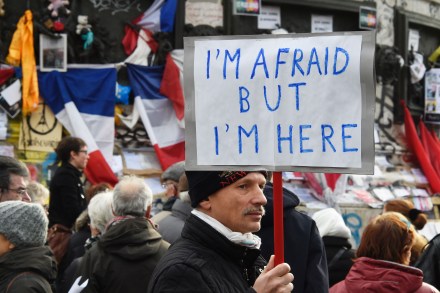
The new year has not started well for France. On the last day of 2015 - the most traumatic year for the French in decades because of the twin attacks in Paris - president Francois Hollande warned the nation in his traditional New Year's Eve address: 'France is not done with terrorism... these tragic events will remain for ever etched in our memories, they shall never disappear. But despite the tragedy, France has not given in. Despite the tears, the country has remained upright.' Hollande's warning was borne out within 24 hours. On the first day of 2016 a lone motorist - inspired by Islamic State - drove at a group of soldiers guarding a Mosque in Valence.

The wandering Jew

From our UK edition

It’s been a long time coming for György Spiró. However much Hungarian writers complain about the isolation forced upon them by their non-Indo-European agglutinative language, the big names have always got through, maybe to a global shrug from the reading public, but they have made it out. And in fact, recently, the Magyar dead have done particularly well: Bánffy, Szabó, Szerb, Márai and Karinthy have found many British fans. Though he’s better known as a dramatist in Hungary, Spiró’s massive novel Captivity was published there in 2005 to great acclaim.

If you believe the internet, I was the Israeli army’s answer to Jason Bourne

From our UK edition

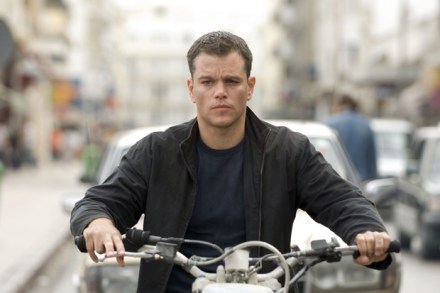
One of the strangest and, in a weird way, best things to have happened to me in the past year was the emergence of a firm conviction among a quite large collection of internet weirdos that I spent my youth fighting for an elite unit of the Israeli army. It started after a boozy pre-Christmas lunch almost exactly a year ago, when a woman tweeted me. I vaguely recalled that she had tweeted me before, probably about Jews or bankers or Palestine or Dolphin Square or Jimmy Savile, all of which I get quite a lot and normally ignore. This time, though, she had a question. She wanted to know about my Twitter profile picture, and whether the olive-green shirt I’m wearing in it was my uniform from my time in the IDF. This amused me.

Of gods and men

From our UK edition

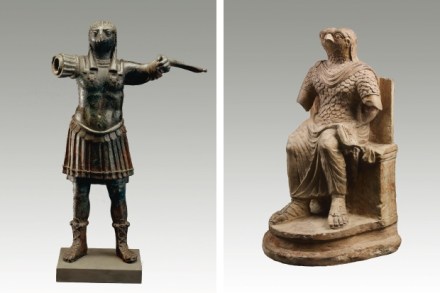
Over the stupefyingly long course of Egyptian history, gods have been born and they have died. Some 4,000 years ago, amid the chaos that marked the fragmentation of the original pharaonic state, an incantation was inscribed on the side of a coffin. It imagined a time when there had been nothing in existence save a single divine Creator. ‘I was alone in the emptiness,’ the god proclaimed, ‘and could find no place to stand.’ Nevertheless, beside him, he could feel the gods that were yet to exist. ‘They were with me, these deities waiting to be born. I came into being and Becoming became.’ The gods emerged, to reign first on earth and then in the heavens, and history began.

Character assassination

From our UK edition

Here are three truths about play-writing. A script without an interval will be structurally flawed. A vague, whimsical title means a vague, whimsical drama. And a play about Alzheimer’s will self-destruct for the obvious reason that drama is an examination of character while Alzheimer’s is an effacement of character, so the paint evaporates before it reaches the canvas. A fourth truth is that subsidised theatres know nothing of the first three. So that explains Plaques and Tangles at the Royal Court, which runs for 110 uninterrupted minutes, without the variations of mood generated by an interval, and which examines a case of early-onset dementia. Megan is a married librarian with two kids.

Barometer | 23 July 2015

From our UK edition

Gesture politics A royal home movie from 1933 apparently showed the future Queen, aged seven, and her mother giving a Nazi salute. Like the Swastika, the stiff-armed salute was not invented by the Nazis. In this case they took it from the Mussolini and his Fascists, who thought it came from ancient Rome. Three Roman soldiers are shown making such a gesture in Jacques-Louis David’s 1784 painting ‘Oath of the Horatii’.But the US beat both Nazi Germany and Fascist Italy by using the gesture to accompany the pledge of allegiance. Hitler himself claimed the salute was one of peace, saying it meant ‘Look! I am holding no weapon.

Vespasian vs Islamic State

From our UK edition

As Ahmed Rashid argued last week, it is hard to see what the West is doing in the Middle East, occasionally dropping bombs on Isis, whose effect may well be to hand Syria over to al-Qaeda. The Roman general Vespasian (ad 9–79) would propose a different strategy. The Romans had never found the Jews easy to get on with — the feeling was mutual — and semi-provincialising Judea in ad 6 had not helped matters. In ad 66 a major revolt broke out there, and the legate in Syria, Cestius Gallus, was ordered to crush it. He was driven off in disorder, and in ad 67 the emperor Nero sent Vespasian with a much larger force to restore Roman control. He attacked rebel towns, dealt out punishments and took Galilee.

Censoring Jews

From our UK edition

You might think that Jews, faced with a relentless campaign to ban their culture, would think once, twice, a hundred times, about instituting bans themselves. After they had thought about it, they would decide that, no, absolutely not, prudence as much as principle directs that they of all people must insist that art should be open to all. A good liberal idea, you might think. So good and so obvious there’s no need to say more. If you still require an explanation, allow me to help. You don’t try to silence others if you believe in artistic and intellectual freedom. You keep your mind open and the conversation going. Every little Hitler and great dictator in history has tried to tell the public what it can and cannot see, and no one should want to join their company.

Nicky Morgan has no right to tell Orthodox Jews how to behave

From our UK edition

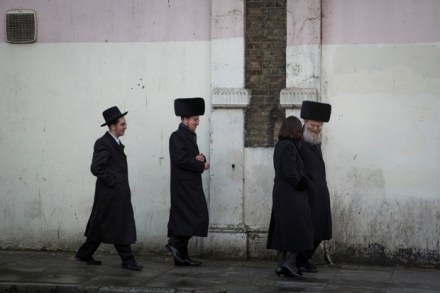
Imagine if Education Secretary Nicky Morgan went into a mosque and told the praying blokes to put their shoes back on. Or if she bowled into a Catholic school and said: ‘The look of anguish on Christ’s face in that crucifix hanging on your wall could upset children. Please take it down.’ We would be outraged (I hope). We’d wonder what business it is of politicians to tell people how they may express their religious convictions. So why isn’t there more discomfort over Morgan’s launch of an investigation into a Jewish sect’s decree that women may not drive children to its schools? The Belz sect, which is ultra-Orthodox, runs two schools in Stamford Hill.

Why wasn’t the head of Hamas properly cross-examined during his BBC interview?

From our UK edition

When journalists have the much sought after opportunity to interview the heads of states and organisations with appalling human rights records the very least we expect is to see such people given a thorough cross-examining. What we don’t expect is for heads of terrorist organisations to be provided with a platform from which to give the equivalent of a party political broadcast and to get away with it virtually unchallenged.  And yet that is precisely what we got when the BBC’s Middle East correspondent Jeremy Bowen recently interviewed Khaled Meshaal, the head of Hamas. Hamas leader Meshaal warns of Israeli 'extremism' after elections, reads the baffling headline that accompanies Bowen’s interview.

Keeping the faith | 9 April 2015

From our UK edition

There was no shortage of Easter music and talks across the BBC networks with a sunrise service on Radio 4 followed by much fuss and fanfare for the ‘live’ relay of Libby Lane’s first Easter sermon as Bishop. A significant milestone for the C of E as women are at last allowed to don mitres and wield a bishop’s crozier. Three, not to be outdone, invited the Revd Lucy Winkett (who had to outride the brouhaha caused by her appointment as the first woman priest at St Paul’s Cathedral) on to Private Passions, where she proved herself an insightful musician and theologian.

Bad Jews at the Arts Theatre reviewed: strange, raw, obsessive and brilliant

From our UK edition

Bad Jews has completed its long trek from a smallish out-of-town venue to a full-scale West End berth. Billed as a ‘hilarious’ family comedy it opens on a low-key note in a New York apartment where three cousins have gathered for grandpa’s funeral. Daphna is a puritanical vegan Jewess, training as a rabbi, who wants to move to Israel, marry a soldier and serve in the IDF. She’s insanely jealous of Jonah and Shlomo, whose parents have bought them a flat before either has found a job. Shlomo (who calls himself Liam) is a ‘bad Jew’ obsessed with Japanese culture who intends to marry out.

Another day, another UKIP dog whistle. Fancy that!

From our UK edition

You will recall that when Talleyrand died, Metternich is supposed to have asked 'What did he mean by that?' Say this for Nigel Farage: he's no Talleyrand. Subtlety is not part of the UKIP genome. Take, for instance, a Kipper press release issued this afternoon. I confess I had not hitherto been aware of UKIP's alliance with the RSPCA and the British Veterinary Association. So it was good to discover that Mr Farage's party is calling for a 'ban on the non-stun slaughter' of animals. I wonder what they mean by that? Oh. You see: "We find the government response to this issue is [sic] weak, lazy and bordering on spineless.

Here’s how politicians can convince British Jews that they have a future in the UK

From our UK edition

A recent study has suggested that over half of Britain’s Jews feel they have no future in the UK. At first glance this might seem outrageous, indeed incredible. Arguably (one might say) we Jews are the most successfully integrated of all the UK’s ethnic minorities.  A miniscule set of communities – comprising in total 0.5 per cent of the UK’s total population -  British Jewry punches well above its weight in all walks of life: the learned professions; the arts; the entertainment industries; academia; big and not so big business; even politics. Of course (you might retort) Jews have a future in the UK! A more pertinent question might be to ask what sort of a future we Jews have. Our places of worship must be guarded night and day.

The right to offend is nowhere near as important as the right to speak the truth

From our UK edition

Last week I lost count of the number of times we've been told, pace the Charlie Hebdo murders, that we have no right not to be offended, that freedom of speech involves the possibility of criticism and ridicule of any religion; indeed, that it’s the flip side of religious liberty. Salman Rushdie, who has more right to make the point than most, said that 'religion deserves our fearless disrespect' and  people like Suzanne Moore in the Guardian seemed to suggest that we have a positive duty to disrespect religion, though I am still waiting for that paper to reproduce some of Charlie Hebdo’s finest on the subject of the prophet of Islam as opposed to its scabrous stuff about gay cardinals.

This ex-priest’s history of the gospels could unsettle the most faithful churchgoer

From our UK edition

When James Carroll was a boy, lying on the floor watching television, he would glance up at his mother and ‘see her lips moving, only to glimpse the beads in her lap. I recall thinking that they slipped through her thumb and forefinger the way cartridges moved into machine guns’. There was nothing unusual about this: in 1970s England, as well as 1950s America, most devout Catholic ladies carried a rosary in their handbag. If you walked into church while the Legion of Mary were at prayer, you’d be deafened by their Hail Marys. It was a competitive sport. Whoever prayed loudest and fastest — usually an Irish biddy with the gleam of the Taleban in her eye — could force the others to keep up with her frantic pace.

What Julie Burchill’s ex-husband thinks of her new memoir

From our UK edition

Unchosen is the journalist Julie Burchill’s account of how she — a bright and bratty working-class girl from Bristol — fell in love with the Jewish race. It’s an exhilarating and exasperating mix of the utterly brilliant and the totally bonkers. Poor Julie — she thought that her teenage dream of marrying a Jewish man had come true when she married me back in the 1980s. Yes, she got her Jew, but the -ish bit was missing. My family and I earn a chapter in her book called ‘Meet the Perverts’ and all I can say is: Oy vey! You think you’re a smart and funny man to be married to — and then you read an ex-wife’s memoir and you wonder: was I that boring?

Muddled souls – Britain is a non-religious, Christian-ish country

From our UK edition

[audioplayer src="http://traffic.libsyn.com/spectator/TheViewFrom22_30_Oct_2014_v4.mp3" title="Ruby Wax and Andy Puddicombe join Mary Wakefield to discuss the quasi-religion of 'mindfulness'."] Listen [/audioplayer] A new survey of British religious attitudes is out. It reveals a surprising degree of hostility to religion, and an unsurprising degree of muddle. David Cameron's claim that Britain is a Christian country looks refuted, for more than 60 per cent of respondents said they are ‘not religious at all’. Presumably this must mean that less than 40 per cent call themselves Christian? Er, no – 56 per cent say they are Christian. It seems that Britain has a strong contingent of nonreligious Christians, like secular Jews.

Pop stars at prayer – from Madonna to the Beatles, and jihadist Cat Stevens

From our UK edition

A spoof in the Israeli Daily recently had Eminem planning to convert to Judaism and move to Tel Aviv. But I don’t think we’ll be seeing that any time soon - he’s not really waiting for the Messiah, he’s just a very naughty boy. Still, stranger things have happened. I was very amused by the Reverend Richard Coles recently; when asked if he is the only vicar who has ever topped the British pop charts, he said 'Yes, but I met the vicar of Hitchen the other day and I said 'We've met, haven't we? Was it through the church?"' Apparently the vicar of Hitchen replied 'No, I was in Pigbag in the 1980s!