Judaism

The Christian view of sex contains multitudes

From our UK edition

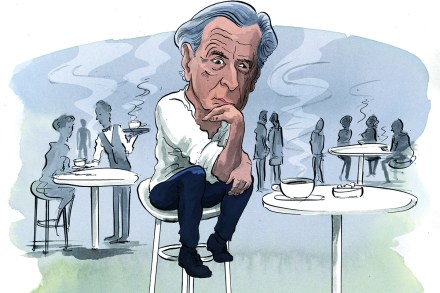
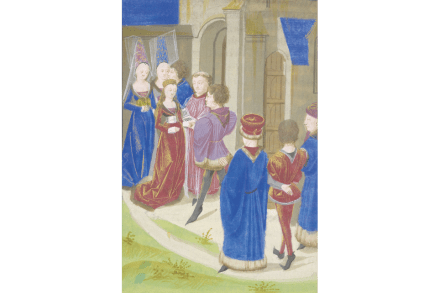
Lower Than the Angels (that is the condition of man, according to the psalmist and St Paul) is a book that combines the two most fascinating subjects, religion and sex – but you do have to take both bits of the agenda. This is Christian history with an eye to marriage, sexual acts, sexuality, celibacy, feminism and gender. Diarmaid MacCulloch is primarily a historian of the Reformation but, as his A History of Christianity (2009) demonstrates, he’s up for the bigger picture. This history takes us from early Jewish concepts of God and sex (I was startled to find the God of Abraham was once assigned a spouse, Asherah) right up to current Anglican rows about homosexuality.
David Baddiel’s father and mother must be the most talked about parents in Britain

From our UK edition

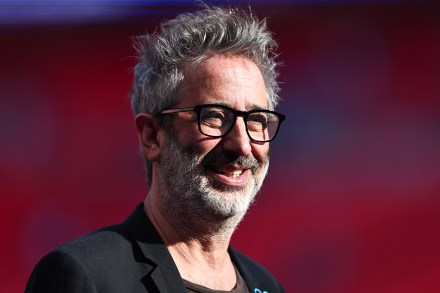
According to Clive James: ‘A life without fame can be a good life, but fame without a life is no life at all.’ In My Family: The Memoir, the famous comedian David Baddiel proves he’s also had a life. Or, at least, a family. For anyone who hasn’t been paying attention – and Baddiel, as he admits, craves attention – or who has never watched television or listened to the radio over the past 30 or 40 years, Baddiel is famous as a stand-up comedian specialising in a ‘sweary and often not-very-nice-Jewish-boy style of comedy’, as a TV chat show host with fellow comedian Frank Skinner, presenting Fantasy Football League and Baddiel and Skinner Unplanned. He also writes films, sitcoms, novels and non-fiction, including the recent Jews Don’t Count.

Does Keir Starmer’s atheism matter?

From our UK edition

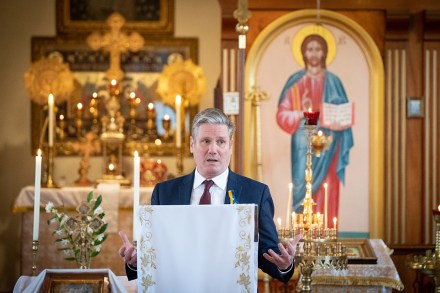
Good Friday, 2021, at Jesus House For All Nations church in Brent, north-west London. Face masked, head bowed, hands clasped, Sir Keir Starmer stands alongside Pastor Agu Irukwu. The pastor opens his arms to invoke Almighty God. We hear Starmer in voiceover: ‘From rolling out the vaccine to running the local food bank, Jesus House, like many other churches across the UK, has played a crucial role in meeting the needs of the community.’ A nice video tribute for Easter, this. Good to see churches getting some recognition. A sign, perhaps, of the inclusive national unity a Labour government would foster.

Even pilgrims are staying away from Jerusalem

From our UK edition

Israel has a new train line: 25 minutes from Ben Gurion airport to Jerusalem. The Christian pilgrims would love it but they’re not here. Instead, there are soldiers and visiting American Jews. My taxi driver says American Jews come with thousands of dollars of cigarettes and drive around looking for soldiers to give them to. He says American Jews love Israel more than Israelis. Then he moves his machine gun – it’s on the front seat – and says: ‘Welcome to Israel.’ The American Jews go south to the massacre sites of 7 October to stare at the bullet holes. I don’t. You can’t forget the war here. At the airport you are greeted by photographs of hostages. They are up in windows and on street corners. Some say, ‘Bring them home NOW’, an anti-Netanyahu message.

One-on-one with Broadway powerhouse Betsy Aidem

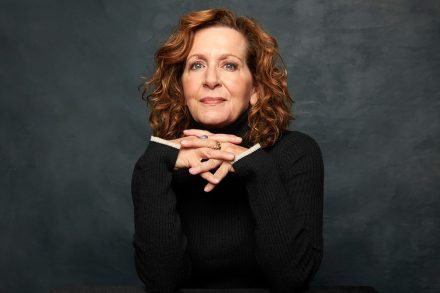
For the last few years, Betsy Aidem has immersed herself in historical trauma. In 2022, the Broadway powerhouse starred in Leopoldstadt, Tom Stoppard’s Tony Award-winning play, which follows the lives of a Jewish family in Vienna in the first half of the twentieth century.  The same year, she took on a part in a similar vein: that of the feisty Marcelle in Joshua Harmon’s Prayer for the French Republic, which ended its Broadway run on March 3. The action flits between 2016 France, when antisemitism is on the rise and the far-right Front National leader Marine Le Pen is gaining traction as a presidential candidate; and the 1940s, when Marcelle’s grandparents hide from the Nazis in their Parisian apartment.

betsy aidem

The invisible boundaries of everyday life

From our UK edition

Norman Shrapnel, the wise and kindly parliamentary correspondent of the Guardian back in the day when it was a readable newspaper, tried never to give a book a bad review. He liked to say that anyone who had taken the time and trouble to write about anything at length deserved to be given the benefit of the doubt, and so he generally dipped his reviewer’s pen in honey rather than vinegar. I must say that on picking up Maxim Samson’s Invisible Lines, I felt quite otherwise. I wanted at first (an important caveat) to paint my laptop’s entire screen with vitriol. Within two pages I’d begun to loathe the author’s use of ‘foreground’ as a verb (technically he is not wholly wrong, just wanting in style).

Will Orthodox Judaism accept female rabbis?

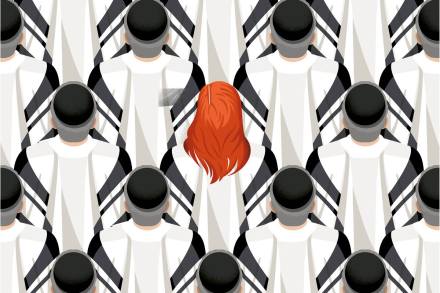
Bracha Jaffe, an American-Israeli, spent decades working in tech, focusing on software development and raising her family in Israel. But following a midlife career shift and a move to New York, she now also works as an assistant rabbi at the Hebrew Institute of Riverdale, a large Orthodox synagogue in the Bronx. Every day, she plays a key role guiding congregants during life cycle events, such as births and deaths. She teaches classes and visits the sick. “I think it’s still true that when someone says ‘Rabbi,’ what comes to mind is an older male, perhaps with a white beard,” she says. With her blonde bob, ever-present smile and warm demeanor, Jaffe is a far cry from this stereotype.

orthodox judaism

The ‘historic’ national dishes which turn out to be artful PR exercises

From our UK edition

In 1889, Raffaele Esposito, the owner of a pizzeria on the edge of Naples’s Spanish Quarter, delivered three pizzas to Queen Margherita, including one of his own invention with tomatoes, mozzarella and basil, their colours taken together resembling the Tricolore. The Italian queen loved the pizza, and Esposito duly named it after her. In that restaurant today hangs a document from the royal household, dated 1889, declaring the pizzas made by Esposito to be found excellent by the queen. And so was born the Pizza Margherita, a dish now synonymous with Naples. The queen’s seal of approval in the wake of Italian unification, which had proved difficult for Naples, came to represent the embracing by the governing royal family of an impoverished city by way of their cheapest street food.

Poland, 1968: the last pogrom

From our UK edition

‘Are you Jewish?’ the officious-looking Dutch diplomat asked my dad. ‘Yes’, he said, realising at that very moment, everything had changed. He was no longer Polish; the culture he had been born in, the citizenship he held, the language he spoke, the country he loved – it all meant nothing. He was just Jewish. He couldn’t be both. The diplomat stamped my father’s papers and he left for a new life in western Europe. Up to 20,000 Jews, including my mother, were hounded from Poland at the end of the 1960s. They were accused of supporting Israel in a virulent anti-Semitic campaign led by the communist government. This anti-Jewish campaign was ostensibly sparked in 1967 by the Six-Day War between Israel and its Arab neighbours, supported by the Soviet bloc.

The legacy of Chaim Topol

From our UK edition

In 1969, for my seventh birthday, I was taken – dragged, probably – ‘up west’ to the theatre to see a musical. As I recall, it didn’t fill me with joy to be going, but it turned out to be fantastic. The songs, the acting, the dancing: it was great fun. Then we went for pasta in Soho, which was also a special event in those days. More importantly, though, I think it was the first time I became truly aware of a vital part of my identity: that I was here because decades earlier my great-grandfather had arrived on these shores, driven out of his native Russia by a pogrom, the ethnic cleansing of Jews across that vast country.

Speaking truth to antisemitism

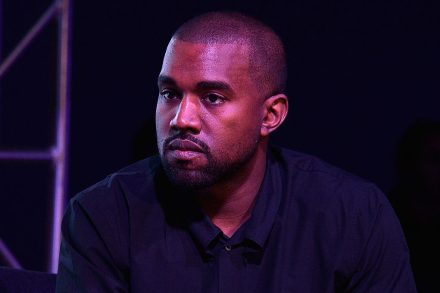
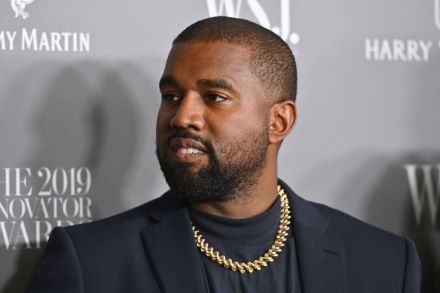
It’s impossible to sugarcoat what Ye, The Artist Formerly Known as Kanye West, said that got him in hot water late in 2022. You can’t announce you are going to “go death con 3 ON JEWISH PEOPLE” and then act surprised when your conduct sparks a firestorm. After getting kicked off Twitter (though Elon Musk would later reinstate him), Ye was subsequently suspended from Instagram for posting an image of a message he sent to Russell Simmons in which he said, “I gotta get the Jewish business people to make the contracts fair.” Given the magnitude of Ye’s superstardom and his history of erratic behavior, this would have been a globe-spanning media event in any case.

Jews

An unapologetically Jewish Fiddler on the Roof returns to New York

Fiddler on the Roof is a study of Eastern European Jewry: it is based on Yiddish writer Sholem Aleichem’s short stories and is set in a Yiddish-speaking village in early twentieth-century Imperial Russia. Yet, in the hit musical, which premiered on Broadway in 1964, Sheldon Harnick’s lyrics only feature a handful of Yiddish words. Harnick later confessed that the creators downplayed the Jewishness of the story — something they thought might be too sticky; too specific — in order not to put off American audiences. As scriptwriter Joseph Stein said: “These were stories about characters who just happened to be Jewish.

The cast of Fiddler on the Roof (New World Stages)

Republicans endorse Kanye as everyone else slowly backs away

If there is one celeb to not rally behind right now, it’s Kanye West. Over the past few years, the rapper's mental health has steadily declined and his outbursts have become more regular. As he becomes more unhinged, friends who used to come to his defense have realized it’s in their best interest to quiet down. Yet in spite of all that, Cockburn can't help but notice that House Republicans have embraced Kanye. A tweet, which somehow has not been deleted, was posted on Thursday by the House Republicans Twitter account. It reads, "Kanye. Elon. Trump." Not only was the tweet ratio'd within minutes — with quote tweets such as "who are three people we really don’t need to hear from ever again?

Asking a rabbi about abortion

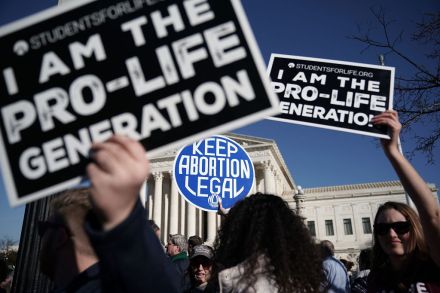
When the Roe news broke, my thoughts — myopically — turned not to the millions of Americans who were rejoicing, or the millions of Americans who were mourning, but to a social engagement I had coming up a few days thereafter. The intimate dinner would be populated by a few friends and family on both sides of the aisle, with very different perspectives on abortion and, obviously, very different reactions to the news. I was dreading it. Imagine my surprise when, over steaks and haricots verts, the conversation was productive, the rhetoric thoughtful, and the passions cool... most of the time.

abortion

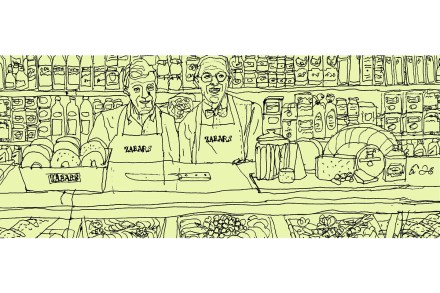
Zabar’s is still thriving

You might expect Zabar’s, the world-famous “appetizing” store on Manhattan’s Upper West Side, to have become a shadow of its former self. This seems to be the case for most of New York’s other independent specialty shops. Fairway, Balducci’s, H&H Bagels, Dean & Deluca: the food purveyors of my youth have gone kaput. They were bought, leveraged, expanded, overextended and oversold. They expired past their sell-by dates. But somehow Zabar’s survived. For the Upper West Sider, Zabar’s is our Yale College and our Harvard. Like many I make my way down to 80th Street and Broadway most weekends for continuing education. I head to the appetizing counter and take a number.

zabar's

I can feel my heart hardening as the war goes on

From our UK edition

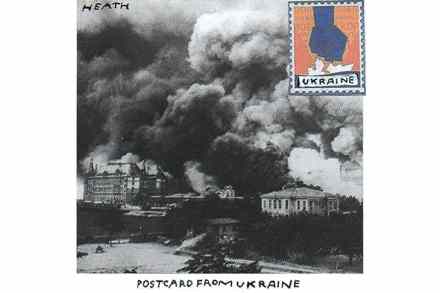
Palm Sunday in Perugia. Umbrians were scuttling around with twigs and leaves, but I was in town to celebrate another faith. It was the annual International Journalism Festival, which hasn’t been ‘annual’ for the past two years due to Covid. Happy reunions were applauded with the sound of countless clinking glasses, but the mood was often mournful. In the first panel I was on, the moderator, Natalia Antelava, asked for a moment of silence for the 18 journalists already killed in Ukraine. Among them was Oksana Baulina, a former colleague of Natalia’s at Coda Story news platform, where I am also a contributing editor. Oksana was Russian.

Howard Jacobson superbly captures the terrible cost of becoming a writer

From our UK edition

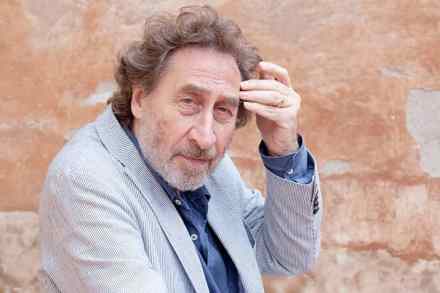
Howard Jacobson, who turns 80 this year, published his first novel aged 40. Since then he has produced roughly a book every two years, including The Finkler Question, which won the Man Booker in 2010. Given that he was put on Earth to write, why the wait? This is the subject of Mother’s Boy, a tale of self-persecution in the form of a monologue which includes interjections from the ghosts of his parents and one chapter, recording a period in his twenties that he drifted through in a dream state, printed in a font resembling handwriting. ‘How’s the novel coming along?’ his father would routinely ask after Jacobson graduated from Cambridge with a ‘poor degree’ in English. He was taught by F.R.

The false mystery of motives

Faced with some high-profile crimes, our law enforcement authorities are finding it hard to say what has prompted “suspects” to pursue deadly violence. Even President Biden found himself baffled by what would lead a known Islamist terrorist to invade a synagogue on Saturday night and hold a rabbi and other members of his congregation hostage. The FBI likewise for a period expressed its bewilderment. The hostage taker had demanded the release of Aafia Siddiqui, a convicted Islamic terrorist held in a Texas prison, but the FBI wasn’t about to draw any inferences from his choice of hostages or his principal demand. The FBI professed to know nothing of his motives — and President Biden nodded in agreement.

motives

Our new era of Jewish-Muslim relations

From our UK edition

Reactions to the recent passing of F.W. de Klerk transported me back to my childhood in South Africa. The horror of apartheid was a frequent topic of conversation in our family. My uncle’s law firm, Witkin, Sidelsky and Eidelman, pioneered the employment of black people and gave Nelson Mandela his first job as a clerk, in defiance of the accepted practice at the time. My mother was the principal of the only training college for black pre-school teachers and my father, a rabbi, made pastoral visits to Robben Island. We were all-too-aware of the urgent need to dismantle the structural racism that plagued the country. When de Klerk and Mandela worked together to do exactly that, the joy was tempered by the knowledge that it had taken far too long.

What Bernard-Henri Lévy sees for the West

I meet Bernard-Henri Lévy at his apartment in central Paris on a chilly autumn afternoon. Considerations of security prohibit me from revealing its location. A French Jew who is a public and vocal enemy of both Islamism and some of the world’s worst regimes, Lévy is both perhaps the most important public intellectual in Europe, and a man with enemies. I have come to ask him about the future of the West — if, that is, he feels there will be one. Lévy, internationally known by his initials BHL, is a philosopher who has been at the heart of French — and international — society for half a century. But he remains an idiosyncratic figure.

lévy