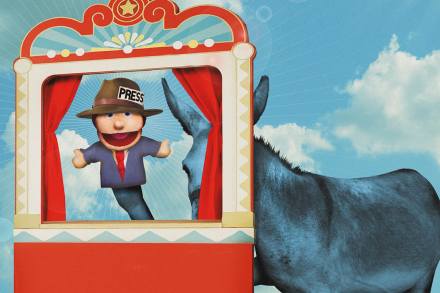
Journalist

Alien fever shows no signs of abating

These two books are about aliens – intelligent beings who may or may not have visited our planet. Jonathan Caplan is a distinguished lawyer and believer; David Lavelle is a journalist and skeptic. Aliens have always been with us. For at least 4,000 years there have been reports of strange visitations assumed to come from heaven, hell or simply the universe. Angels and demons were commonplace, but they were eventually replaced by technology-based visions, most often flying saucers. These could be quietly ignored until 1947, when postwar alien fever was sparked in Roswell, New Mexico. Metal and rubber debris were found which the US Army initially claimed were parts of a “flying disc.


Toby Young: love him or loathe him?

From our US edition

London Everyone has at least one friend that none of their other friends can stand, someone you love but everyone else loathes. Mine is called Toby Young. For around thirty years people have asked me: are you still friends with that awful Toby Young? And with a bit of hesitation I say, well... yes. And they shake their heads or roll their eyes in disbelief and disapproval. They don’t like his politics — he’s a right-wing conservative and founder of the Free Speech Union, which defends victims of woke ideology. And they don’t like Toby the person because of a series of sophomoric and “sexist” tweets that came to public light in 2018. It was national news and it cost Toby his career in public life.

Toby

Bianca Bosker’s snapshot of the art scene

From our US edition

Early on in her entertaining account of five years immersed in the New York art scene, author Bianca Bosker is informed that, as far as the art world is concerned, because she is a journalist, she is the “enemy.” Given that the job of a journalist is to find things out, then explain and communicate those findings, it is unsurprising that a hermetic, deeply self-protective society like the art world would be resistant to journalistic inquiry. In reality it’s not just Bosker’s profession that makes it difficult for her to get past art’s gatekeepers, but a whole litany of personal and social failings that are gleefully enumerated by an art dealer early on.

Bosker

Is Courier Newsroom really fighting fake news?

From our US edition

"We are not the Fox News of the left,” says Tara McGowan. “We are legitimate journalism.” We are sitting in the lobby bar of the Edition Hotel in Manhattan as McGowan tells me about Courier, the network of local-news outlets she founded in 2019 after a successful career in Democratic politics. Courier, in McGowan’s telling, “is a network of pro-democracy newsrooms across the country that reach passive news consumers where they are with good factual local news and reporting.” McGowan rejects allegations that Courier is a partisan political operation masquerading as a news outlet. Courier isn’t pro-Democratic Party, she says. It’s “pro-democracy.

courier

Mehdi Hasan exposed as copycat and hypocrite

From our US edition

Mehdi Hasan of MSNBC has a plagiarism problem. It appears that, as with the cases of John Oliver and James Corden, Britain is not sending its best. The pundit also seems to be as much of a chameleon as Kamala Harris and Kirsten Gillibrand, taking whatever position gets him ahead. Lee Fang, a reporter formerly at the Intercept, published an investigative piece on his Substack looking at Hasan’s journalistic (or, maybe, not-so-journalistic) history. "Writing" an article in 2000 taking up the cause of spanking disobedient kids, he took — almost to the letter — the text from a 1998 article in US News and World Report. A few alterations here and there to account for the difference in date, and voila!

mehdi hasan plagiarism

Why I’m touchy about being asked what I do for a living

In former times I had acquaintances of long standing, or even friends, who never once asked what I did for a job and neither did I ask them. In the new equitable era I seem to be always introduced to people who badly want to know before proceeding. Here’s how it goes. We are introduced. We exchange platitudes. I am difficult to place on the social scale, it’s true. The accent, for one thing. The question is shamelessly put just after the off: ‘So what do you do?’ (I complained about it to my American friend Vernon. That’s nothing, he said. In the United States they ask you how much money you make before they let go of your hand.) I used to tell these social scientists who asked straight away: ‘Fudge packer. And you?