John lennon

The sham shaman: the fantastic lies of Carlos Castaneda

From our UK edition

On a day in the early spring of 1998 I found myself sitting in a hotel room in Hollywood waiting to hear whether or not I would be interviewing Carlos Castaneda. He was the author of The Teachings of Don Juan, published in 1968, a book which recounted his apprenticeship in the deserts of Mexico at the feet of an elderly Indian shaman and his induction through mind-altering substances into ‘the Yaqui way of knowledge’. In revealing the deeper reality behind the illusion of existence, providing a blueprint for the life of ‘a warrior’ free from the fear of death, Don Juan’s teachings were perfectly attuned to the zeitgeist of the age.


The John Lennon visa is now the OnlyFans visa

The US created the O-1B visa system in 1972 after John Lennon was nearly deported, and it became clear that there was no immigration system to attract artists to the country. Lennon couldn’t possibly imagine what the system has become now – nearly half the applicants for the O1-B in the last year are OnlyFans models, according to a report published by the nonprofit Florida Phoenix. This makes sense in the Trump 2.0 era, where the President is a game-show host, the War Secretary is a news anchor, Dr. Oz runs Medicare and the former first lady of World Wrestling Entertainment is in charge of the Department of Education. Our cinemas are empty and the average American reads negative five books a year. Bonnie Blue, there’s a luxury condo in Miami waiting for you.

OnlyFans

Uncovering Brian Wilson’s real genius

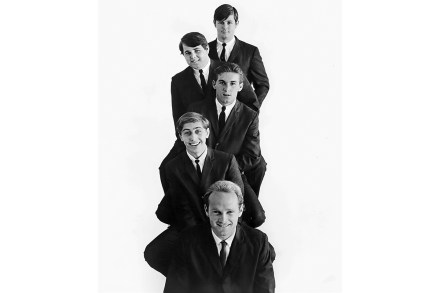
The death earlier this year of Brian Wilson, aged 82, was marked by the usual tributes to a man who was not only a pioneer of popular music, but also a sadly troubled genius whose early years of wild success were quickly overtaken by decades of drug addiction and mental health problems. A recurring theme in the obituaries was what might have happened in the aftermath of the Beach Boys’ masterpiece, 1966’s Pet Sounds, if Wilson, by then the band’s producer and lead songwriter, had not descended almost immediately into narcotic-induced torpor. It has commonly been suggested that Paul McCartney – who revered Wilson – was also jealous of the achievement of Pet Sounds, which arguably overshadowed the Beatles’ Revolver, and that Sgt.

Unpacking John Lennon and Paul McCartney’s complex relationship

Fifty-five years after they broke up, what is there left to say about the Beatles? There have been so many books written about the group and so many obsessively detailed websites devoted to exploring every song, every public utterance, every twist and turn in their history, that the average rational man or woman might think they know all there is to be known about them. Craig Brown’s magisterial 2020 volume 150 Glimpses of the Beatles was a pop-cultural dive into their peerless influence and standing; Ian MacDonald’s still legendary Revolution in the Head dives into the 241 songs that they recorded (although, of course, it should be 242, thanks to the emergence of “Now And Then” in 2023) and does so with grace, intelligence and slightly frightening attention to detail.

John

What did John Lennon, Jacques Cousteau, Simon Wiesenthal and Freddie Mercury have in common?

From our UK edition

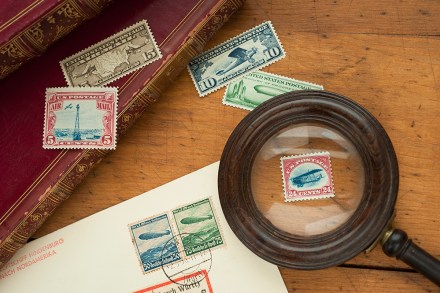
Robert Irwin – novelist, historian, reviewer and general all-round enthusiast and scholar of just about everything – died last year. It might seem odd that a man whose previous works included the definitive one-volume introduction to The Arabian Nights and a controversial critique in 2006 of Edward Said’s Orientalism – not to mention what is one of the great novels about Satanism, Satan Wants Me (1999) – should have spent his final years working on a book about stamp collecting. But fear not. This is not some weird aberration in a career of weird aberrations; it is, in fact, another weird aberration.

Poor little rich girl: the extraordinary life of Yoko Ono

From our UK edition

David Sheff first met Yoko Ono in 1980 when Playboy commissioned him, then aged 24, to interview her and John Lennon. She asked him to send her his astrological and numerological charts before summoning him to the Dakota, where she and John occupied six apartments. (Elton John, a friend of theirs, wrote an excellent spoof: ‘Imagine six apartments/ It isn’t hard to do./ One is full of fur coats/ Another’s full of shoes.’) Yoko told him that his charts were good – ‘these are strong numbers’ – and that he would get on well with John. So they fixed a time to meet the next day. The interview lasted three weeks, during which Sheff went everywhere with the Lennons and got to know them and baby Sean well.

David Bowie’s plastic soul: Young Americans at fifty

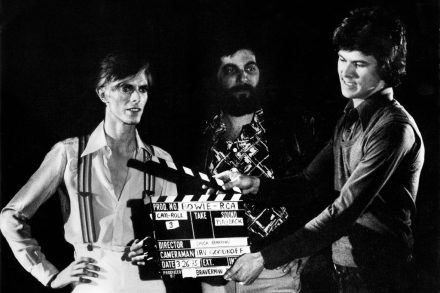
When the Puerto Rican guitarist Carlos Alomar first met David Bowie, he didn’t think a man could turn a whiter shade of pale. The singer looked emaciated; his complexion teetered on translucency, and weighing only 95 pounds, the only signs of life were a pulse and a mop of orange hair. It was the mid-Seventies, and Bowie was touring America deep in the throes of addiction — the “darkest years” of his life — surviving on a paltry diet of red peppers, cigarettes, milk and cocaine. Yet somehow, through the haze of these drug-fueled years, Bowie underwent a chameleonic reinvention of self and sound — and finally broke America. Bowie had cast a sheen of suspicion over America as an aspiring artist, even admitting to hating it initially.

david bowie

The problem with Paul McCartney is he wrote too many good songs

From our UK edition

Don Bradman, the greatest cricketer of all time, was once asked if he reckoned he could have maintained his batting average of 99.94 against the fearsome West Indian bowling attack of the time. Oh no, he said. Not a chance. He’d probably be hitting in the 50s, like the very best batsmen of the time. But then again, he added, he was in his late 60s so it was unrealistic to expect better. Seeing the Stones is the only thing that compares to the human-jukebox effect of McCartney live That’s the position Paul McCartney occupies in the world of pop. No, at 82 years old he is not going to make a new Revolver or Abbey Road. And no, he can’t do the Little Richard scream like he used to 60 years ago. But he is still, as they say in sport, the Goat. The undisputed champion of the world.

The show belongs to Jonathan Slinger and Ben Whishaw: Waiting for Godot reviewed

From our UK edition

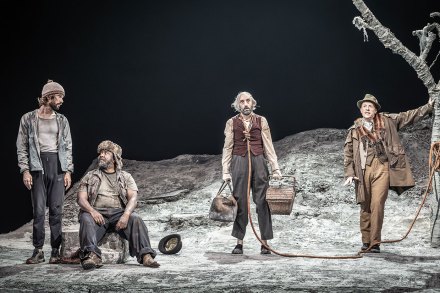
Waiting for Godot is a church service for suicidal unbelievers. Those who attend the rite on a regular basis find themselves wondering how boring it will be this time. A bit boring, of course, but there are laughs to be had in James Macdonald’s production. The set resembles a Gazan bombsite with a tree-stump stranded in a pit of ashen rubble. Didi is played as a goofy English toff by Ben Whishaw who supplied the voice of Paddington in the movies. The bear is back.

On the road with Danny Lyon

From our UK edition

A Google search for ‘Danny Lyon’ produces more than eight million results in 0.30 seconds, yet the celebrated American photojournalist and filmmaker is little known in the UK. This superb, quixotic, bare-all memoir ought to change that. Starting in 1962, Lyon not only photographed the heroes of the US civil rights movement as staff photographer for the Student Non-Violent Coordinating Committee (SNCC, pronounced ‘snick’), but in a way was one of the heroes himself, risking jail, beatings and abuse. He’s had prizes galore and two solo shows at the Art Institute of Chicago.

‘Now and Then’: the Beatles are back

In the Sixties, the rivalry between the Beatles and the Rolling Stones  — even if it was more of a hype battle dreamt up by their respective publicity departments — meant that whenever one band released an album or single, the other was never too far behind. Sometimes, they even explicitly referenced their competitor’s work; the Stones’s 1967 album Their Satanic Majesties Request was “inspired” by the Beatles’s LP Sgt. Pepper’s Lonely Hearts Club Band, released earlier that year. Yet after the Beatles split up in 1970, the rivalry seemed to be at an end, and the deaths of John Lennon in 1980 and George Harrison in 2001 apparently put paid to any possibility of the Liverpudlian band continuing in any form. Oh, how wrong we were.

beatles

James Bond and the Beatles at war for Britain’s soul

From our UK edition

‘Better use your sense,’ advised Bob Dylan: ‘take what you have gathered from coincidence.’ John Higgs is a master of taking what he can gather from coincidence – or, as he would insist, synchronicity. From the filigree of connections and echoes in the KLF (Discordianism through the lens of 1990s pop provocateurs) to the psychogeography of Watling Street to more recent deep dives into William Blake, he confronts the modern Matter of Britain: who wields power, and who resists it? Love and Let Die starts with another perfect coincidence, namely that it was 60 years ago – to be precise, 5 October 1962 – that saw the first Beatles single appear in shops and the first James Bond film appear in cinemas.

What if the Beatles never broke up?

There's a new film out about the Beatles. It's about them being in the studio doing stuff that you do in studios. It's really good. Have you heard about it? Of course you have. I am referring to the omnipotent, omniscient and omnipresent Get Back, Peter Jackson's reanimation of the Beatle Band’s last days in the bunker. It's a bit like Downfall, but without Hitler. As a middle-aged doctor of rock 'n' roll, I am required to take the cultural temperature of what we now call Heritage Rock. This is the music that middle-aged (and rising) men like when they can't keep up with young people’s music anymore. Think Neil Young, and that pretty much covers it. And when Neil Young is not re-releasing live albums from his pomp, then think the Beatles.

white album

Why the mid-1960s was the golden age of pop music

From our UK edition

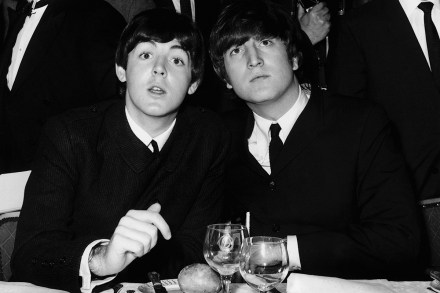
On a Monday evening in May 1966, Paul McCartney and John Lennon visited a nightclub called Dolly’s in Jermyn Street. The two Beatles were accompanied by two Rolling Stones, Brian Jones and Keith Richards. Already at the club was Bob Dylan, stopping off in London on his European tour. Dylan had first met Lennon and McCartney nearly two years earlier at the Delmonico Hotel in New York. All four Beatles, then in the first flush of American success, had gone to meet him after playing to thousands of screaming teenagers at a tennis stadium in Queen’s. Their fascination with his lyrical and emotional maturity was already showing in their songs. Although Dylan was less likely to admit it, the influence went both ways.

More mesmerising than it should be – Disney+’s The Beatles: Get Back reviewed

From our UK edition

My late friend Alexander Nekrassov loathed the Beatles, which I used to think was a wantonly contrary position akin to hating kittens or blue skies or Christmas carols. What could there possibly be not to like, love and admire about the band that gave us ‘Eleanor Rigby’, ‘A Day In the Life’ and ‘Strawberry Fields Forever’? Since then I’ve encountered so many Beatles sceptics that it has given me pause for thought.

It’s amazing how little insight Paul McCartney has into the Beatles’ genius

From our UK edition

The Paul people are out in force these days. A New Yorker profile, a book and a new documentary have put the Beatles, and particularly Paul, back in the papers. Not that they, or he, ever left. I should admit a bias. I have the same first name as John, and being a man of straightforward loyalties I took him as my favourite early on. Even now I find him the most interesting of the four: vain, sardonic, nasty, boyish, thoughtful, wounded; bright-eyed and pugilistic and blessed with an undermining cleverness that left him bored by whatever he came across. The even-tempered Paul just doesn’t entrance me in quite the same way.

The nearest thing to Paul McCartney’s autobiography: his guide to the Beatles’ songbook

From our UK edition

Whatever your favourite theory of creativity, Paul McCartney has a cheery thumbs-up to offer. You think the secret is putting in the hours? ‘We played nearly 300 times in Hamburg between 1960 and 1962.’ Or could it be a wide range of cultural inputs to assimilate and remix? The Arty Beatle hoovered up Shakespeare, Dryden, not just Desmond but Thomas Dekker, Berio and Cage and rock’n’roll and light jazz, and sublimated them all. In one of the great missed opportunities, when it came to arranging ‘Yesterday’, his first thought was Delia Derbyshire. Some people credit childhood trauma: McCartney recalls how his father Jim would weep alone in a neighbouring room after Paul’s mother died. The sexual drive?

‘You should see some of the other scripts that come through’: Robert Carlyle interviewed

From our UK edition

‘I always feel slightly sick when I hear actors talking politics,’ says Robert Carlyle — that polished Glaswegian burr sounding no less arresting over a slightly patchy Zoom connection. ‘I mean we’re all entitled to an opinion,’ he continues, sounding for a second as though he might be about to opt for a more diplomatic track. ‘I just find that too many actors find it difficult to get theirs across without sounding like a twat.’ It’s a fair point, you might think. But for Carlyle, it’s also been a good professional move. Reflecting on his career, he credits this aversion to mouthing off with inspiring his long-term commitment to keeping his head down.

The rising cost of remembering the Fab Four

If you’re a diehard Beatles fan, it’s been a pricy year. And it’s going to get much worse. Within the last 12 months, those of us unable to resist new or repackaged product from John, Paul, George and Ringo have wrestled with sense and reason over whether to splash out on one of the numerous limited-edition, pre-release colored vinyl copies of McCartney III, the mega-box set reissue of Lennon’s Plastic Ono Band from 1970 or even, dear old Ringo’s recent EP, ‘Zoom In’. And there’s more to come; expect a cascade of marketing hoopla around August’s Get Back, the Lord Of The Rings director Peter Jackson’s reworking of the band’s 1969 misery-memoir movie Let It Be, as well as a lavish tome of McCartney lyrics and memoirs in November.

beatles george harrison

Fifty years of ‘Imagine’

How should we measure the value of a work of art or, failing that, a pop song? Take for example John Lennon’s ‘Imagine’, which was recorded exactly 50 years ago. It certainly scores on the sales front, having shifted about 21 million copies worldwide according to the Chartmasters service. That’s a healthy revenue stream in anyone’s book, particularly for a tune whose lyric urges us to envision a world without possessions. The ‘ubiquitous’ box gets ticked, too, because ‘Imagine’ has been covered by more than 200 other artists. It’s the unifying song we all seem to turn to at moments of crisis, as when the pianist David Martello performed it in front of the Paris Bataclan the morning after the November 2015 terrorist attacks there.

imagine