John lennon

The joy of ironing

From our UK edition

On the Saturday morning of the Ascension Day bank holiday, I swung down the stairs and ladder to the little bedroom-cum-book room and did the ironing. For me ironing is therapy. If the internal critic becomes too negative or noisy, I stick a playlist on and steam flatten the commentary line by line. On Saturday morning the internal critic was going full blast. ‘That’s it, mate. You’ll be brown bread by Michaelmas and forgotten by Christmas. What a shame you fizzled out like that. Lazy and unfocused right to the end. All those bright hopes you entertained to change for the better, to make some money to pass on, to open an honest dialogue with God. You’re all mouth and trousers. Always have been.
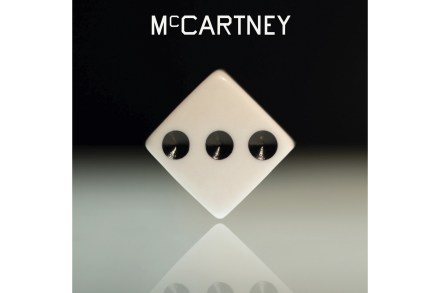
As pretty as anything he’s written in four decades: McCartney III reviewed

From our UK edition

Grade: A- The greatest songwriter of the 20th century, or just one of the top two or three? Who else would you have up there? Kern, Gershwin, Ray Charles, maybe. Dylan for the words along with the music. But not, I think, John Lennon. It’s McCartney’s melodic imagination that captivates and sometimes staggers — ‘Here, There and Everywhere’, ‘Maybe I’m Amazed’. The Beatle it was not OK to like, and yet who, today, would prefer to hear the overwrought ‘Strawberry Fields’ to the easy, loping chime of ‘Penny Lane’? Yes, Wings were the naffest band imaginable. But even then I would take their worst album (Red Rose Speedway) over Lennon’s solo best (Some Time in New York City).

The great lost Beatles album

The Beatles never had a proper Christmas number one, only seasonal number ones with unseasonal bangers: ‘I Want To Hold Your Hand’, ‘I Feel Fine’, ‘We Can Work It Out’/‘Day Tripper’ (1963-65) and ‘Hello Goodbye’ (1967). Though they never made a traditional Christmas record, the Fabs loved Yule — and you know you should be glad. Between 1963 and 1969, they recorded an album-worth of charming Christmas nonsense. Welcome to the semi-secret hinterland between the legal and bootleg worlds: the Beatles’ Fan Club Christmas flexi discs. The flexis have only had one official release since their private circulation to the ravenous Brit-Beatle fan club.

beatles

We loved them, yeah, yeah, yeah

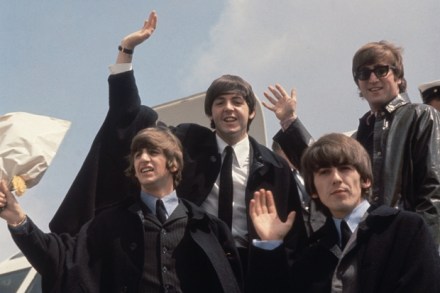
When the Beatles’ first authorized biographer, Hunter Davies, clinched the deal in 1967, his publisher remarked that ‘we know everything we could possibly know about the Beatles and they’ll disappear soon’. In that same year, the philosopher Bryan Magee adopted an incredulous tone in the Listener: ‘Does anyone seriously believe that Beatles music will be...part of daily life all over the world in the 2000s?’But here in the recently released statistics for the Top 10 global recording artists of 2019, among the Taylor Swifts and the Ed Sheerans, 50 years after they broke up — let me introduce you to the band you’ve known for all these years.

beatles glimpses

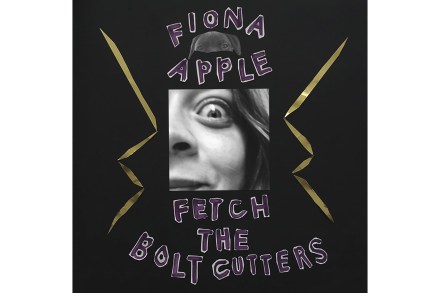
Beautiful voice, pretentious album: Fiona Apple’s Fetch the Bolt Cutters reviewed

From our UK edition

Grade: C+ Where did they all come from, the quirky yet meaningful rock chicks who don’t have a decent song between them yet put out albums by the bucketload? Back in the day it was just Joni Mitchell, who had four good songs, Laura Nyro who had two and Dory Previn who had one. Now there are thousands of these creatures, flaunting their intemperance without showing much brilliance. And all slavered over by the (still male) music press. Years of oppression, of being disregarded, they would argue. But disregarded for very good reasons, in almost all cases. Yeah, Carole King is ten times the songwriter James Taylor ever was. I will give you that. We got that wrong. But that doesn’t mean we have to be tormented for eternity by the likes of Laura flipping Marling, does it?

They say it’s your birthday? It’s my birthday too, yeah!

The White Album is one the greatest works of 20th century art, executed by the greatest exponents of the 20th century’s greatest popular and unpopular art: pop music. Which is why connoisseurs of this work of high magik know that there is nothing new to say about The Beatles, which, as everyone also knows, was The White Album’s official title. The minutiae of The Fabs’ mind-boggling State Of The Universe address from 1968 have been dissected and analyzed so completely that armies of middle-aged divorced male White Album necrophiliacs now roam the pub and bars of the West, clashing over the rallying cry, ‘But should it have been a single album?

white album

Gathering moss

From our UK edition

Many moons ago, I worked at the New Musical Express magazine, which transformed me from virgin schoolgirl to the fabulous creature I’ve been for the past four decades. It’s hard to describe how influential the NME was at its 1970s peak. I’ve met people who waited in exquisite teenage agonies for two-week-old copies to arrive in the Antipodes, while my colleagues were regularly flown to the USA and supplied with groupies and cocaine as if they themselves were rock stars. And then punk came along and rocked the gravy boat — and the internet finished the job. Last time I saw a copy, it was lying wanly in a bin marked FREE — PLEASE TAKE ONE.

The great rock’n’roll swindles

From our UK edition

Birds have been giving me a lot of grief of late. There’s Tappy — the blue tit who has built his nest just underneath my bedroom window and makes rat-like scuffling noises that bother me at night and wake me early in the morning. And Hoppy, a mistle thrush fledgling who can’t quite fly yet, which means we have to keep the cat indoors, which means I have to deal with its horrible shit in the litter tray every day before breakfast. And the rookery in the big ash, whose inhabitants are very vocal, especially when one of their babies falls out of the nest and gets devoured by the dog. I may be only a couple of dawn choruses away from losing it altogether, as my fellow Brummie Ozzy Osbourne once famously did with a pair of white doves.

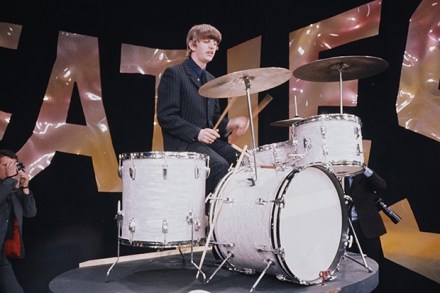
Ringo’s no joke. He was a genius and the Beatles were lucky to have him

From our UK edition

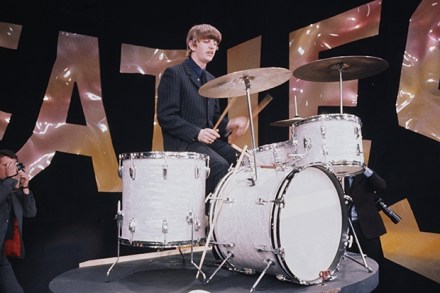
We’re closing 2016 by republishing our ten most-read articles of the year. Here’s No. 9: James Woodall on celebrating the musical contribution made by the forgotten Beatle: Ringo Starr ‘He was the most influential Beatle,’ Yoko Ono recently claimed. When Paul and John first spotted him out in Hamburg, in his suit and beard, sitting ‘drinking bourbon and seven’, they were amazed. ‘This was, like, a grown-up musician,’ thought Paul. One night Ringo sat in for their drummer Pete Best. ‘I remember the moment,’ said Paul, ‘standing there and looking at John and then looking at George, and the look on our faces was like ...what is this? And that was the moment, that was the beginning, really, of the Beatles.

Paul McCartney

From our UK edition

It’s slightly galling, after years of sticking up for Paul McCartney, to read a new biography of the bloke and realise that you don’t, in the end, really like him that much. But that’s how good Philip Norman’s book is — Macca has no agenda, it simply lets you make up your mind. And for me, it was the leg-combing wot won it. You can’t argue with McCartney’s work. In fact, what you have to argue against is the ridiculous notion that he was the poppy, pappy one while John Lennon was the radical. It was Macca who funded the underground newspaper International Times; who was into Stockhausen, Cage and Berio while Lennon was (to quote McCartney himself) ‘living on a golf course in bloody Weybridge’.

Bowie once praised Adolf Hitler… but he was always changing his tune

From our UK edition

[audioplayer src="http://rss.acast.com/viewfrom22/projectfear/media.mp3" title="Rod Liddle and Kaite Welsh discuss David Bowie's legacy" startat=678] Listen [/audioplayer]I was desperately worried that you hadn’t read or heard enough platitudinous drivel about David Bowie — and therefore felt compelled to weigh in with my own observations. In all honesty I haven’t heard so much repetitive, imbecilic guff since Mandela shuffled off this mortal coil. It was even worse than the confected sobfest that greeted the passing of the charming and likeable Lou Reed.

John Lennon’s desert island luxury

From our UK edition

Beatlebone is an account of a journey, a psychedelic odyssey, its protagonist — at times its narrator — John Lennon, seen through the prism of Kevin Barry’s imagining. Barry’s first novel, The City of Bohane, was a dystopian nightmare of comic vernacular and violence, showered with praise and prizes. Think James Joyce and Flann O’Brien collaborating on a script for Tarantino. Beatlebone, his second novel (on the shortlist for the Goldsmiths prize for fiction) has Lennon fleeing New York in 1978 for a secret visit to Dorinish, the uninhabited island he bought 11 years earlier. Burned-out, creatively blocked, he craves a few days of solitude, to sit and stare at the surf. And scream. (In 1970 Lennon and Yoko took a course of Californian Primal Scream therapy.

So what if Lou Reed was a monster?

From our UK edition

Another week, another famous dead person having his grave danced on with gay abandon. This time it’s the late, great Lou Reed’s turn to have his reputation trashed by scandal-sniffing vultures. Less than two years after he died — at least they waited for him to rot, which is something I guess — a new book has been published claiming he was a ‘monster’. It is testament to the 21st century’s feverish obsession with hounding dead heroes and exposing their wicked streak that my first response upon hearing this was: ‘Of course he was a monster. Everyone is, right?’ According to the book — Notes from the Velvet Undergound, by Howard Sounes — Reed was ‘a very unpleasant man’.

I’ve never thought much of John Lennon’s music – until now

From our UK edition

It’s probably blasphemous to admit that I’ve never thought very much of John Lennon’s music. Common sense tells me it must be good but it’s never made much of an impact on me no matter how hard I’ve tried to appreciate it. If I like a Beatles song, I usually discover it’s by George. But the discovery from a radio trailer (reluctantly, I’ll have to admit they do sometimes work) that Lennon would have been 75 this week was shocking enough (how could he ever be that old?) to make me tune in on Thursday night to John Lennon’s Last Day.

Starr quality

From our UK edition

‘He was the most influential Beatle,’ Yoko Ono recently claimed. When Paul and John first spotted him out in Hamburg, in his suit and beard, sitting ‘drinking bourbon and seven’, they were amazed. ‘This was, like, a grown-up musician,’ thought Paul. One night Ringo sat in for their drummer Pete Best. ‘I remember the moment,’ said Paul, ‘standing there and looking at John and then looking at George, and the look on our faces was like ...what is this? And that was the moment, that was the beginning, really, of the Beatles.’ I think Ringo Starr was a genius. The world seems to be coming around to the idea. Two months ago, he was finally accepted into the Rock and Roll Hall of Fame — the last Beatle to be inducted.

Life is full of little endings. We should pay them more attention

From our UK edition

The end of the year seems a good time to think about lasts. Not many of us ever do. Firsts are always landmarks: the first time you taste alcohol, drive a car, have sex. Then the first time your child talks, walks, goes to school. All are noted at the time, stored away in the mental file marked ‘life events’. But when do we ever notice, much less remember, a last? We’re doing them a disservice — in many cases they’re even more poignant than the firsts. One problem, of course, is that we often don’t know it’s a last at the time. You’ll register your last day in a job, or your last exit from a house you’ve owned. Recovering alcoholics note (though only in retrospect) the occasion of their last drink. But the last time you go to London?