John keats

The chameleonic life of Claire Clairmont

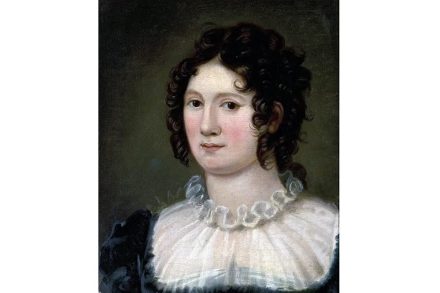
Commentary on the young Romantics can be curiously puritanical. Not on saintly John Keats, who died too young to cause any trouble. But Byron and Shelley? Beastly to women, negligent as parents, destructive as friends, oblivious to their own privilege. Feminist observers tend to resemble the English visitors to Geneva in 1816 who borrowed telescopes to spy on the renegade inhabitants of the Villa Diodati across the lake, hoping to be scandalized. A central character in the summer that saw the birth of Frankenstein was the only non-writer of the villa’s gathering, Byron’s young lover and Mary Shelley’s stepsister, Claire Clairmont.

Clairmont

How Wilfred Owen became a poet

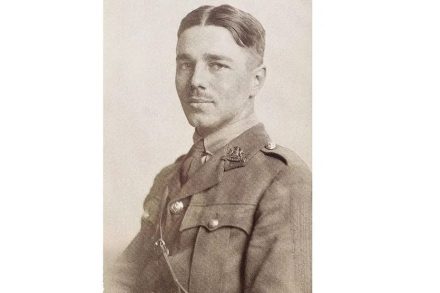
Here is the opening of a sonnet written by Wilfred Owen in the spring of 1911: “Three colors have I known the Deep to wear;/ ’Tis well today that Purple grandeurs gloom.” Owen was eighteen and had just been on a pilgrimage to Teignmouth in England, where his hero John Keats had once stayed. The kindest thing to say about this poem is that it is heavy with the influence of Keats. Six years later, in a seaside hotel requisitioned by the army and waiting to be sent back to the Western Front, he begins a poem like this: “Sit on the bed. I’m blind, and three parts shell.” This looks so simple. The monosyllables carry the meter without fuss; “shell” here means both munitions and protection.

Owen

The energetic and tragic Keats

When John Keats wrote “On First Looking into Chapman’s Homer,” he had just returned from a long evening at the home of a childhood friend, Charles Cowden Clarke. Charles Clarke was the son of the headmaster of Clarke’s Academy, where Keats had gone to school. A week earlier, Clarke had introduced Keats to one of his heroes, Leigh Hunt, editor of the independent Examiner (Hunt was imprisoned for two years for printing that the Prince Regent was “a fat Adonis at forty”), friend of William Hazlitt and Charles Lamb, and literary kingmaker. Hunt despised what he viewed as the overly ornate poetry of Alexander Pope, preferring instead Chaucer’s earthy Old English and the directness of Shakespeare and Milton.

The odd couple: John Keats and F. Scott Fitzgerald

On a shard of paper, some time in the bleak 1930s, F. Scott Fitzgerald incorporated a favorite line from one of his favorite poets, John Keats, in a short verse of his own: 'Don’t you worry I surrender Days are long and life’s a bender Still I know that Tender is the Night.' Keats was a Romantic, perhaps the Romantic, with his lyric gift and tragically brief life. Fitzgerald loved the Romantic poets, and romance in the lower case, but was at the heart’s core a modernist, far more egoist than romantic, and quite hardboiled. The little quatrain above is rather like T.S. Eliot’s ‘jug jug’ in The Waste Land — homage of a sort, but also showing ironic distance, and no intention of writing like Keats.

Fitzgerald