Jesus

Why Gen Z is troubled by Jesus

Many teenagers today find Christianity off-putting because Jesus seems too fond of "mansplaining." He appears to have a "God complex," while the Almighty is alienating on account of being "really violent and aggressive." These are the findings in the report Troubling Jesus, the third part of Youthscape’s "Translating God" project, based on a recent survey of British 14- to 17-year-olds. Drawing on five reading groups, in which teenagers reacted to passages of scripture traditionally understood as conveying "good news," Youthscape faced reactions "radically different" from what it says might have been expected. While Jesus was not only seen as a condescending male chauvinist and God the Father as a bully, many youths discerned other issues in the readings.
christianity gen z jesus

I met Jesus – and he’s an old Spanish gardener

As the old Jewish proverb goes, “Man plans and God laughs.” But nothing, in my experience, makes Him clutch His sides quite like hearing about my Mediterranean gardening ambitions. Every winter, my horticultural memory performs a factory reset. I somehow forget the summer mornings when the thermometer climbs past 90°F by 8 a.m. and the plants wilt by noon. The brutal, arid wind that strips moisture from the leaves faster than I can water? Erased from my mind. What blight? And the way perfect fruit splits overnight after a thunderstorm? Never happened. Come spring, I’m suddenly possessed, clicking “add to cart” on tomato varieties with names like 1980s cocktail bars: Pink Jazz, Green Zebra, Cosmic Eclipse.

jesus garden

Why do so many Americans believe in the Devil?

Early in our marriage, my wife vetoed the idea of celebrating Christmas in the Alpine tradition: by having Santa Claus accompanied by Krampus, your friendly neighborhood ice-demon. Of course, Mrs. Davis was amenable to the idea of a horned monster beating our children with birch rods. At least when they’re naughty. Then she realized that, since neither of us are Swiss, it would technically be cultural appropriation. That was the end of that. Speaking of demons, here’s a little Christmas meditation for you: more Americans believe in the Devil than in God. According to a recent survey, 56 percent of us believe that “Satan is not merely a symbol of evil but is a real spiritual being and influences human lives.” That’s compared to 51 percent who believe in an all-powerful Creator.

Film and TV are run by satanists

From our UK edition

I once came up with a brilliant idea for a children’s Sunday-evening TV series. It would follow the adventures of young Jesus in Britain, circa AD 16, and his rich, tin-trading great uncle Joseph of Arimathea. There’d be dragons and giants and lots demonic figures, all trying to kill the boy Messiah before He achieved his true purpose. And young Jesus would continually be constrained from using any of His real powers because it was all a secret and His time had not yet come. If you’re clever, you can probably guess the title. But it’s never going to get made because a) I haven’t written it and b) the film and TV worlds are run by satanists. Not literal satanists, perhaps. Well, not all of them.

What does Christian atheism mean?

From our UK edition

Two opposed camps can only have a fruitful debate if they agree on what it is they disagree about. A militant atheist such as Richard Dawkins is right to call out scientific ignorance in some religious settings. But at a deeper level his argument fails, because the deity he rejects is a blown-up thing, not the Creator conceived in classical tradition. Similar considerations apply to Slavoj Žižek’s Christian Atheism. When the claim that religion is no more than pious fantasy forms your starting point as well as your conclusion, then reason becomes the first casualty. This approach is as circular as beginning a book on socialism by asserting that all left-wing thought and endeavour are flawed by definition.

The three most radical words Jesus said

From our UK edition

Some Jewish friends recently asked me: ‘What is Good Friday?’ At first, they said, they had thought it was so called because of the peace agreement signed in Northern Ireland in 1998. Then they had learnt that it was a Christian thing, but they weren’t sure what. They wanted to know why it was ‘Good’. This put me to the test. You cannot explain anything about Christianity without paradox. It was Good, I hazarded, because it was bad: Jesus had to die to rise. My friends were scrupulously polite, but I thought I detected increasing perplexity. Many films of Christ’s Passion have been made, but all from a more or less Christian point of view. The film I should love to see would be one made through the eyes of a practising Jew.

The many Jesus-like figures of the ancient world

From our UK edition

What people tend to forget about Jesus Christ is that he killed children. As a five-year-old, Jesus was toddling through a village when a small boy ran past, knocking his shoulder. Taking it like any five-year-old would, Jesus shouted after him ‘you shall not go further on your way’, at which point the boy fell down dead. Later, when the boy’s parents admonished Joseph and Mary for failing to raise their son properly, Jesus blinded them. Something to bear in mind next time you ask yourself: ‘What would Jesus do?’ Jesus smites teachers, sells a ‘twin’ into slavery, and has someone crucified in his stead If this story is unfamiliar, that is because it doesn’t appear in any of the Bible’s traditional Gospels.

Is the Virgin Mary being sidelined by Rome?

From our UK edition

The Catholic church has always venerated Mary (‘Mother of God’) above other saints. But in recent years there has been a slight (a very slight) cooling in the church with regard to the inclusion of Mary in the liturgy of the mass. It’s been an English custom since medieval times to recite a Hail Mary (a verse of the rosary – the traditional Marian prayer) at the end of the ‘Prayers of the Faithful’ – the sequence of introductory prayers in the main body of the service. But just over a decade ago Rome decided to gently discourage this practice. It still continues in many churches (old habits die hard) and in some senses represents a small disjunction in the English church’s relationship with Rome. Okay, not small – tiny. Infinitesimal.

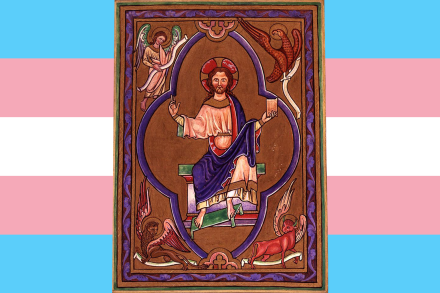
Say hello to Trans Jesus

It’s been said that the Christian right is more “right” than Christian. And there’s probably some truth to that. But, seriously, have you seen the Christian left? Back in 2020, we had the saga of White Jesus. An ex-pastor named Shaun King urged Black Lives Matter activists to destroy images that made Jesus look European rather than Palestinian. The trouble is that ancient Jews actually did look Mediterranean, because…well, they were. The big blue thing to the west of Palestine? That’s the Med. Mr. King was probably thinking of the Arab Muslims who now live in Palestine. But they only showed up around the year 640, when the Rashidun Caliphate invaded the Levant and killed most of the Jews and Christians around Jerusalem. Awkward. Anyway, White Jesus is out.

trans jesus

Live like it’s Christmas every day

Every December 24 — while dad builds the fire, mom preps the salmon loaf, wifey makes the eggnog, and I “test” the brandy — a wail goes up from the Davis house. It’s Elvis Presley, crying: “O why can’t every day be like Christmas? Why can’t that feeling go on endlessly?” And we answer him, no less soulfully: “For if every day could be just like Christmas, what a wonderful world this would be!” It’s a great song. But, hey, doesn’t the man deserve an answer? Why can’t every day be like Christmas? Granted, we can’t all spend our days opening presents and eating sugar cookies. It might work for Tom Hanks, but some of us have work to do. And yet, whatever the cynics might say, I don’t think Christmas cheer has that much to do with presents.

This comedy duo should be on Netflix: General Secretary reviewed

From our UK edition

General Secretary is a new drama with a dull title and an off-putting poster. A pair of angry women in sombre clothing glare into the middle distance. But the satirical premise is intriguing. What if two young females with no experience took over the world? Georgie and Cassie are working from home when they receive a mysterious message from the United Nations. A pushy German blonde appears on their screens and makes an announcement: ‘You vill now be presiding over ze vorld.’ That’s it. And so they take control from their kitchen. The first surprise is that the newly empowered sisters don’t set about exposing the faults of male-dominated governments. Instead they panic and fret like a couple of giddy airheads.

Why Christmas sends a shiver down my spine

From our UK edition

Does Christmas send a shiver down your spine? It should. We seek at this time of year to reclaim the magic of Christmases past. We think of snow thick on the ground. Rosy-cheeked children skating on frozen ponds. Carol services by candlelight in draughty churches. In 2020, there has been very little magic and wonder. Instead there has been sickness, death and a ban on seeing our loved ones; lost jobs and lost hope. To compensate, we feel more urgency this Christmas to seek out the magic, to find those spine-tingling moments, to reach beyond the humdrum and the daily grind. But, lovely though the fairy lights and colourful baubles might be, we need look no further than the nativity itself to discover the real magic of Christmas.

White Jesus

It’s not the best of times to be a statue — or even an icon. Last week Shaun King, a well-known campaigner on racial issues, wrote that icons and statues which depict Jesus as white should be removed. 'They should all come down,' King said. These icons are 'tools of oppression and racist propaganda...all murals and stained glass windows of white Jesus, and his European mother, and their white friends should also come down’. King received an enormous amount of abuse and even death threats — including from a group of retired police officers in Long Beach, California. Shaun King is an influential figure.

jesus

Away from the manger: the holy relics of Bethlehem

From our UK edition

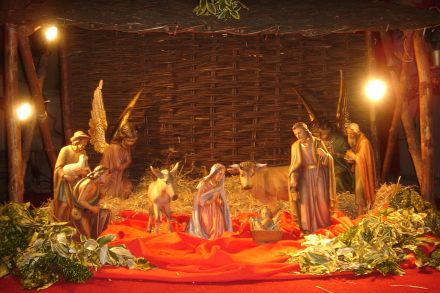
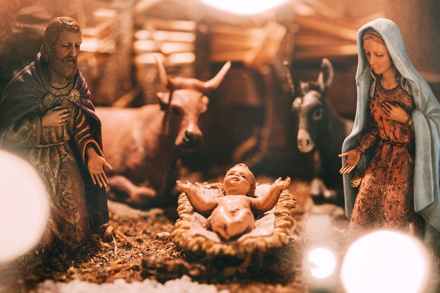
‘No crib for a bed,’ says ‘Away in a Manger’ rather puzzlingly, since a crib is a manger. ‘No one paid me much attention, lying on the hard stones, a young child in a crib,’ says God made Man in the Old English poem ‘Christ’. At the beginning of his prophecy, Isaiah declares: ‘The ox knoweth his owner, and the ass his master’s crib.’ The crib as a manger lent its name to the whole Christmas caboodle of stable, ox, ass, Mary, Joseph and all the trimmings of magi and shepherds. Francis of Assisi was keen on building cribs that put the Christ Child in his surroundings, and the idea caught on.

The way of the cross

From our UK edition

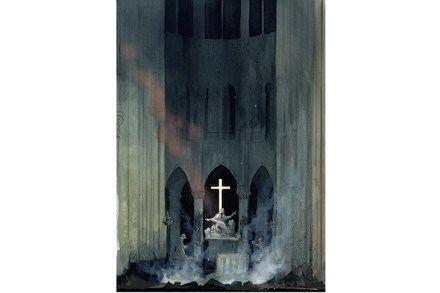
Declarations of hope that Notre Dame can be resurrected have been much in evidence this Holy Week. Such is the lesson of Easter: that life can come from death. Unlike the Eiffel Tower, that other great emblem of Paris, Notre Dame provides the French with evidence that their modern and secular republic has its foundations deeply rooted in the Middle Ages. Notre Dame has always been more than just an assemblage of stone and stained glass. It is a monument as well to a specifically Christian past. Last summer, one of the world’s best-known scientists, a man as celebrated for his polemics against religion as for his writings on evolutionary biology, sat in another cathedral, Winchester, listening to the bells peal.

Why Peter Sellars’s staging of the St John Passion – which I sang in – was deeply flawed

From our UK edition

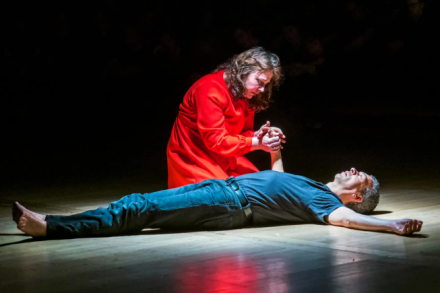
It has been my privilege over the past two weeks to sing in the chorus of the Orchestra of the Age of Enlightenment under conductor Simon Rattle and director Peter Sellars in a staged production of J.S. Bach’s St John Passion. The experience has been life changing for some of my colleagues; it has certainly been unique. Dressed in black casual clothing, we spend much of the performance sauntering around the stage making abstract gestures intended to highlight certain words and distill the myriad emotions found in the music. Some find this effective; others find it silly.

The star dreamer

From our UK edition

‘Wake up, boy! Wake up...’ My father was shaking me and I was confused because it seemed that I had only just gone to sleep. ‘Get dressed. Hurry.’ The lamps were not lit and the house was silent. Outside, the night sky glittered with stars and silken moonlight shone across the sand. My father was the baker in our village not far from the city, and we could see the lights of braziers and torches and the oil lamplight, that seemed to run up and down inside itself, like water. We heard the bells and the blowing of the ram’s horn, the shouts of men as they shooed their animals through the narrow streets and called their wares in the market place.

The stirrer and the monk

From our UK edition

Sometimes Andrea Mantegna was just showing off. For the Palazzo Ducale in Mantua, he painted a false ceiling above the Camera degli Sposi. Around a great trompe l’oeil oculus, apparently open to the sky, assorted gawpers and cherubs lean nosily over the parapet: ‘What’s going on down there, then?’ Only the Duke and Duchess of Gonzaga entertaining their friends from Ferrara. A terracotta pot is half off the edge, supported only by a thin rod. One nudge from a misbehaving putto and — whoops! — just missed the Duchess. Some of the putti stick their heads through the trellis. Another stands on a ledge, flashing us his bare, plump, crinkly bottom, brilliantly foreshortened by Mantegna. Giovanni Bellini’s figures tend not to show us their bums.

Original sin | 15 March 2018

From our UK edition

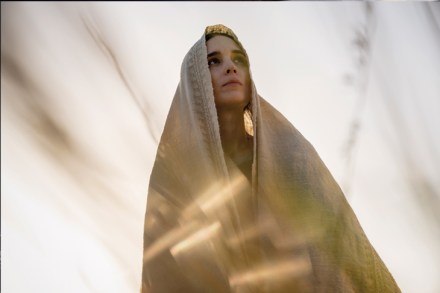
This biopic of Mary Magdalene is a feminist retelling that may well be deserved but it’s so dreary and unremarkable that the fact it is well intentioned and even, perhaps, necessary can’t come through and win the day. Or even part of the day. Just the morning, say. Directed by Garth Davis (Lion), and written by Helen Edmundson and Philippa Goslett, this is, according to the bumf, the Mary of the original gospels rather than the repentant sinner and ‘prostitute’, which is what, in truth, I always had her down as, but then I did get most of my learning from Jesus Christ Superstar.

Vice and virtue

From our UK edition

‘Can the ultimate betrayal ever be forgiven?’ screams the publicity for The Judas Passion, transforming a Biblical drama into a spears-and-sandals soap opera in a sentence. Thankfully, this really isn’t the premise of composer Sally Beamish and poet David Harsent’s new oratorio. Instead, the two authors pose a more interesting problem: is betrayal still betrayal when it’s divinely ordained, the price of salvation? A performance of Mahler’s Fourth Symphony this week celebrated the innocent joys of heaven; The Judas Passion invited us to count their sinful cost. You see them before you hear them. The 30 pieces of silver catch the light as they hang suspended as part of the ‘Judas chime’, an instrument created especially for The Judas Passion.