Jeremy corbyn

Expect the unexpected in Theresa May’s pointless poll

From our UK edition

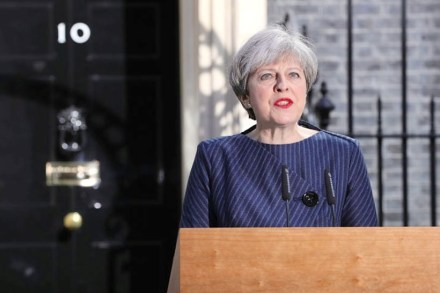
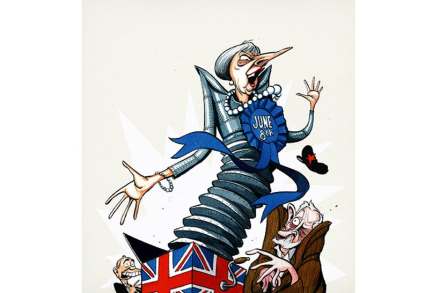
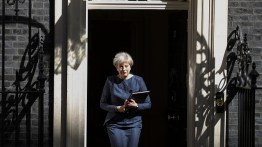
A general election is called and in a matter of hours a neutral and unbiased BBC presenter has likened our Prime Minister to Recep Tayyip Erdogan. Governments rise and governments fall, but some things stay just as they always were. It was Eddie Mair on Radio 4’s PM programme who made the comparison, while interviewing the Home Secretary, Amber Rudd. In fairness to Mair, he had been alluding to Theresa May’s apparent wish to create ‘unity’ within Westminster, a truly stupid statement within an address which sometimes made no semantic sense and sounded, to my ears, petulant and arrogant. Then along came the opinion pollsters to tell us exactly what will happen on 8 June — except they declined to be too explicit.

Caption contest: Corbyn appeals to the youth

From our UK edition

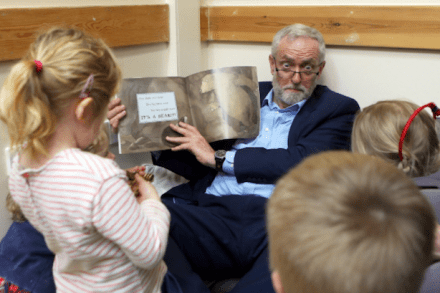
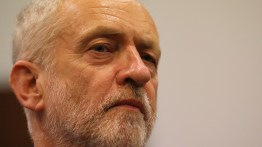
Although children can't vote, Jeremy Corbyn today found time to visit Brentry and Henbury Children's Centre -- as he promised that a Labour government would put a stop to 'super-sized' school classes. Alas, this message was distracted from slightly thanks to the faces Corbyn pulled as he read Michael Rosen's We're Going on a Bear Hunt to the children. Captions in the comments.

The Tories don’t need silly pledges to scare off Labour in this election

From our UK edition

We are coming to the end of the first week of an election campaign that few were expecting when this week began. The parties are drawing their battle lines: the Tories are warning of a happy Vladimir Putin and a 'coalition of chaos' involving the SNP, Labour and the Lib Dems, while Labour is making this an anti-establishment election (though what precisely the Establishment is up to and which naughty coffee chains it involves remains vague, even for the party's MPs promoting that message on the airwaves). The Lib Dems, meanwhile, had long worked out their pitch as the anti-Brexit party. Of course, not all Labour MPs are talking about the way the Tories are 'rigging' the system or how Jeremy Corbyn proposes to solve that.

Len McCluskey’s victory finally gives Corbyn something to smile about

From our UK edition

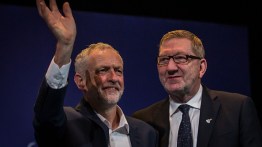
Len McCluskey has been re-elected as General Secretary of Unite. It was something of a messy fight: his rival Gerard Coyne was suspended yesterday - we still don’t know why - and the contest was much narrower than had been expected, with McCluskey winning by just 5,000 votes. The dismal turnout of 12 per cent also suggests that many of those eligible to vote were put off by the parochial rows at the heart of this contest. McCluskey accused a ‘cabal’ of Labour figures, who he described as ‘skilled masters of the darks arts’ of trying to use the election to oust Corbyn. While Coyne suggested that the general secretary of Unite shouldn’t be ‘the puppet master of the leader of the Labour party’, in a thinly-disguised dig at his rival.

What the papers say: Jeremy Corbyn does pose a threat to the Tories

From our UK edition

Theresa May is riding high in the polls and there’s much talk of a Tory landslide - but that doesn’t mean the Government should rest on its laurels, says the Daily Telegraph. It’s vital, the paper says, that the PM does her best to ‘create a sense of urgency among the voters’; ‘They have to understand the dangers of not coming out to support her,’ the paper adds. Of course, some might laugh at the prospect of Corbyn making it to Number 10 - yet it’s just that sense of ‘impossibility’ that the Labour leader ‘hopes to exploit’.

The Spectator Podcast: Election special

From our UK edition

On this week's episode, we discuss the two European nations that are are heading for the polls in the next couple of months. First, we look at Theresa May's shock decision to hold a snap election, and then we cross the channel to consider the French election as they get set to whittle the field down to just two. With British news set to be dominated until June 8th by election fever (yet again), there was no place to start this week but with the fallout from the Prime Minister's stunning U-turn on an early election. It's a gamble, James Forsyth says in his cover piece this week, but with a portentially enormous pay off. James joins the podcast along with Bobby Duffy from Ipsos MORI and Richard Angell director of Progress.

Momentum plot to boost Corbyn’s electoral appeal proves costly

From our UK edition

Oh dear. The first rule of political plotting: tell no-one, or at least tell very few. So it was a curious move of the Hackney branch of Momentum to write-up and publish online everything they discussed at Wednesday night's meeting about the upcoming election. Activists for Momentum -- the pro-Corbyn grassroots campaign group -- have come up with an interesting plan to boost Corbyn's polling. They suggest Corbynistas to 'bet a tenner' on 'Labour to get the most seats or Corbyn to be the next PM' as this will mean the 'odds will shorten and the narrative will begin to change'. Just don't expect to get your money back...

Watch: Labour supporters boo journalist at Corbyn speech

From our UK edition

Some Labour supporters, it's fair to say, do not like hearing hard truths. So when a journalist at Jeremy Corbyn's first speech of the general election campaign asked about the party's dismal support in the polls - and whether Corbyn merely spoke for an 'Islington elite' - there was only going to be one outcome. ITV journalist Libby Weiner's question was met with a round of boos after she said to Corbyn: 'Mr Corbyn, you say that you want to speak for the many not the few, but your poll ratings of something like 14 or 15 per cent suggest that very few people believe you. And you've attacked the elite, aren't you effectively just part of an Islington elite that doesn't reflect the views of people around the country?

Corbyn makes his pitch to be Prime Minister – it’s Us vs Them

From our UK edition

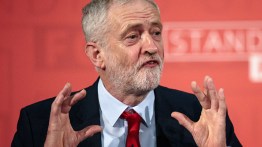
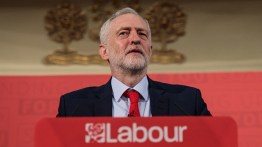
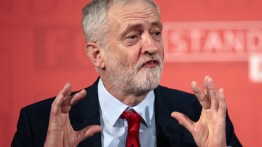
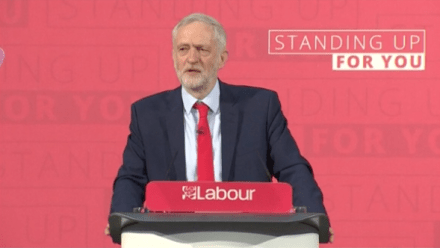
With a new poll out today giving the Conservatives a 24 point lead over Labour, the June election already looks like a done deal to many. But today Jeremy Corbyn tried to put his party's woes to one side as he launched Labour's campaign with his first speech of the election. As hacks were heckled for asking about those pesky polls, Corbyn used the main thrust of his speech to set himself out as the anti-establishment leader. He said that while the Tories want to make the election about Brexit, Labour will focus on domestic issues that effect voters on a daily basis -- 'it is only Labour that will focus on what kind of country we want to have after Brexit'. What was most striking about the speech was Corbyn's full-on populism.

How this election could change British politics for a generation

From our UK edition

Two days into the election campaign, and the polls are already jaw-dropping. The latest You Gov has the Tories on 48 percent, 24 points ahead of Labour—and that’s before the Tory attack machine has gone to work on Jeremy Corbyn. Now, there is a chance that the Tory lead is being exaggerated by the methodological changes that the pollsters made after underestimating the Tories in 2015. But talk to pretty much any MP on either side and they’ll say that Theresa May is remarkably popular and Jeremy Corbyn the opposite. There are, as I say in the cover this week, risks to this early election for Theresa May. But two great prizes are within her—and the Tories’—grasp. First, they have a chance to reunite the right.

What the papers say: The manifesto pledges Theresa May must make

From our UK edition

The General Election campaign is officially underway - and the newspapers have wasted no time in compiling their wish lists. Here are the policies the papers want to see put into practise: Theresa May’s plan for Brexit - leaving the single market and being ‘free from EU courts’ - gets the wholehearted backing from the Sun. But this election is not only about Brexit, argues the paper. For one, the PM must give ‘proper help — not just lip service — for the 'just about managings'’. Tax cuts would be a big boost, suggests the paper, which says these could be paid for by taking away ‘state-funded perks for richer OAPs’.

The exodus of Labour MPs is underway

From our UK edition

Who'd be a Labour MP? Despite the best efforts of the Parliamentary Labour Party, Corbyn is going nowhere and, if the polls are to be believed, he's leading Labour to electoral oblivion. A general election landslide is on the cards for the Tories, with some estimates suggesting the Government could boost its majority by more than 100 seats come June 8th. Much of this surge will it seems, inevitably, come at the expense of Labour MPs. And for some, the prospect of a snap election has led to them calling time on their Parliamentary careers. Here is the full list of the Labour MPs doing just that: Gisela Stuart, who represents Labour in Birmingham Edgbaston, said she was ending her 20 year spell in the Commons ahead of the snap election.

What can May say to the Tory Remainers?

From our UK edition

I don’t see it. I do not see the anatomy of how it all pans out. Theresa May will be the next Prime Minister because, jeez, who else is going to be? What I cannot see, though, is what she says, and to whom, along the way. Most of all, I cannot see what she says to Remainers. ‘Who cares?’ you may be thinking, and ‘get over it’ and ‘you lost’ and so on. Yet these arguments, while powerful, only get us so far. The fact is, quite a lot of people who formerly voted Conservative also voted Remain. In Mrs May’s own constituency, indeed, she may have a majority of a smidge over 29,000, but she also faces an electorate who, by a margin of almost 8 per cent, voted against leaving the European Union.

What I expect from this pointless election

From our UK edition

A general election is called and in a matter of hours a neutral and unbiased BBC presenter has likened our Prime Minister to Recep Tayyip Erdogan. Governments rise and governments fall, but some things stay just as they always were. It was Eddie Mair on Radio 4’s PM programme who made the comparison, while interviewing the Home Secretary, Amber Rudd. In fairness to Mair, he had been alluding to Theresa May’s apparent wish to create ‘unity’ within Westminster, a truly stupid statement within an address which sometimes made no semantic sense and sounded, to my ears, petulant and arrogant. Then along came the opinion pollsters to tell us exactly what will happen on 8 June — except they declined to be too explicit.

Labour is starting its hardest election campaign woefully unprepared

From our UK edition

The opposition parties about whom Theresa May complained in her speech launching the snap election are grinding into action. Their size and resources seem to be inversely proportionate to how prepared they are: the Lib Dems say they have already selected around 400 candidates to contest seats, while Labour hasn't selected any candidates in seats it doesn't hold. The party is contacting its 2015 candidates to see if they might stand again so it might mount reasonably well-informed campaigns in key seats (or formerly key seats: a campaign with an ounce of wisdom would have to name seats it already holds as 'key seats' while accepting that many of its sitting MPs will just be washed away).

Theresa May is right to say no to a TV debate

From our UK edition

I worked on the first TV debate of the Scottish referendum. I was involved in countless more. I was to be found on the production team for televised clashes during the 2015 general election and the 2016 vote for Holyrood. So I speak with some experience when I say TV debates are a terrible idea. Theresa May's refusal to participate in any is the first good news to come out of the general election. When the format debuted in 2010, I was optimistic. Here was an opportunity to extract a good deal more honesty and accountability from the overspun and media-managed Gordon Brown and David Cameron. Cleggmania (remember that? Come to think of it, remember him?

MPs should practice what they preach – and have a shorter summer holiday

From our UK edition

One of the consequences of the early election is that Britain will find itself without a functioning parliament for six weeks at a time when arguably it has never needed one more. I am sure that many MPs will feel entitled to a holiday after yet another election campaign – or at least those who are not sent into premature retirement. But what about Parliamentary business? The Great Repeal Bill requires debate and scrutiny – and in Parliament, not the TV studio. As thing stand, Parliament will rise in the first week of May.   It will then reconvene in the middle of June only to break up for the summer recess little over a month later. It will not return until October, after the party conference season.

If Labour is decimated, Corbyn and his comrades will be delighted

From our UK edition

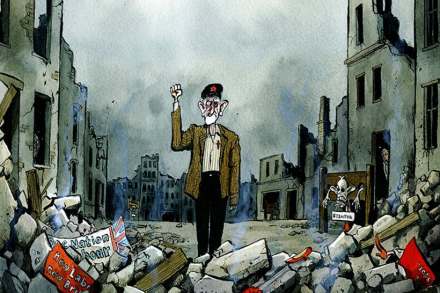
In the early hours of 9 June 2017, Jeremy Corbyn conceded defeat. For the luckless political journalists forced to cover the Labour campaign this was a rare moment. The leader of the opposition had avoided the press and public. Now, as Labour was going down to its worst defeat since 1935, Corbyn was at last prepared to take questions. But not before he had made one of the most graceless concession speeches in British political history. He offered no apologies to the scores of Labour MPs who had lost their seats or the millions of voters who needed an alternative to conservatism. He accepted no responsibility. On the contrary, the passive-aggressive Labour leader was as close to jubilation as anyone had seen him. His eyes shone. His voice rang with an unearned self-confidence.