Jazz

Cyrus the Great

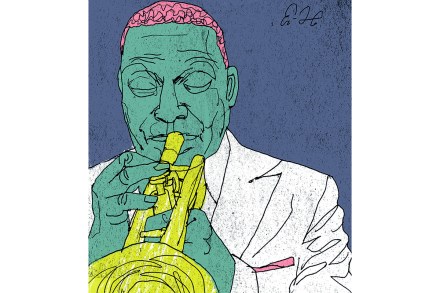
This article is in The Spectator’s February 2020 US edition. Subscribe here. Washington, DC has a proud jazz history: the birthplace of Duke Ellington where he made his first arrangements as a highs-chooler; the home of U Street, where joints like the Crystal Caverns and the Howard Theatre hosted Louis Armstrong, Billie Holiday and Count Basie. Today, jazz holds out in a few spots on U Street and in select clubs such as Blues Alley. A relative latecomer, founded in 1965 near M Street in the heart of hoity-toity Georgetown, Blues Alley touts itself as ‘the nation’s premier jazz and supper club’. Despite a menu featuring such delicacies as ‘McCoy Tyner’s Blackened Catfish’, the supper part can safely be labeled as hearty, but no more.

cyrus chestnut

The soft power of Italian jazz

This article is in The Spectator’s January 2020 US edition. Subscribe here.New York City The singer and saxophonist Ray Gelato opens his set at Birdland with a cover of ‘That’s Amore’. But this isn’t the sleepy send-up of Neapolitan street waltzes that Dean Martin recorded in 1953. Gelato raises the tempo and swings it four to the bar. As he sprints his way through the verses, Philadelphia’s City Rhythm Orchestra drives the pace, piano, bass and drums holding down the shuffle while the four-piece horn section plays call-and-response to each other and his vocals. It’s the start of a fun, high- energy set, the two hours of which feel as if they pass in half the time. You don’t tap your feet to this music: you stomp.

italian jazz

Brazilian wax

This article is in The Spectator’s November 2019 US edition. Subscribe here. When Brazilian president Jair Bolsonaro spoke at the United Nations General Assembly in late September, he depicted Brazil as a victim of colonialism. ‘The United Nations has played a fundamental role in the suppression of colonialism,’ he said, ‘and we cannot allow this mentality to return to these rooms and corridors at any pretext. We cannot forget that the world needs to be fed.’ Foreign countries, Bolsonaro alleged, have ‘an interest in keeping indigenous people living like cave men’.

brazilian

A great time in the Faddisphere

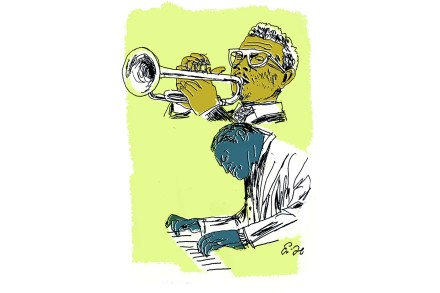
This article is in The Spectator’s inaugural US edition. Subscribe here to get yours. It’s easy enough to write an elegy for the jazz world, a tale of decline and fall, from towering heights to epigones plying their trade in the shadows of the giants. But like most such stories, lachrymose in spirit if not intent, it obscures as much as it reveals. No doubt many of the great clubs that existed in the Fifties and Sixties have faded away, but since the Eighties there has been a distinct revival of more traditional forms of jazz.

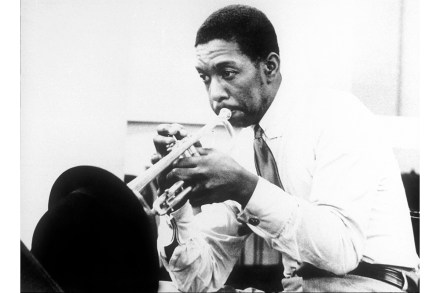
faddisphere jon faddis

Vive la Left Bank libération!

We all have our favourite period of Parisian history, be it the Revolution, the Belle Époque or the swinging 1960s (the cool French version, with Jean-Paul Belmondo and Françoise Hardy). Agnès Poirier, the author of this kaleidoscopic cultural history, certainly has hers: the turbulent 1940s, which saw the French capital endure the hardships of Nazi occupation before throwing off this yoke and embracing freedom in every aspect — sexual, political and intellectual.Leading the way was that maligned couple, Jean-Paul Sartre, the philosopher, political activist and father of existentialism, and Simone de Beauvoir, the brilliant pioneer feminist, who was his life partner, if often errant lover.