Jazz

The late Quincy Jones, a man of many talents

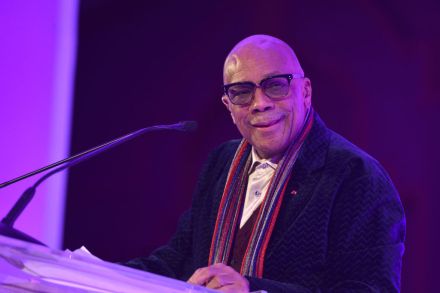
The death of Quincy Jones, at the considerable age of ninety-one, represents not just the passing of a great American musical icon, but the departure of a truly remarkable man from the stage. The winner of an astounding twenty-eight Grammy awards, he excelled in so many different areas of music — from record production and film soundtrack composition to big band jazz and multi-instrumental playing — that it would not have been particularly surprising to discover that he had written operas or symphonies on his days off.

quincy jones

Bud Powell should be a household name

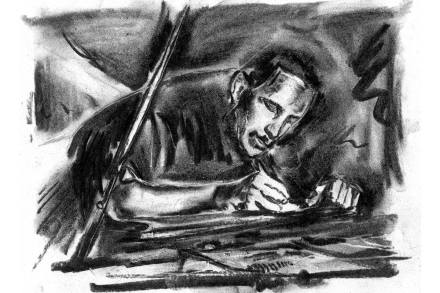
Late one January night in 1945, a young black man stumbled drunkenly toward Broad Street Station in Philadelphia. He was exhausted after playing a long set in a grotty club half a mile away. The naturally nervous musician often used alcohol to settle his unbearable over-excitements and debilitating despairs. On this occasion he had one too many. His awkward gait caught the attention of two policemen. They went to shoo him away, but instead of escorting him peacefully along, something about the twenty-year-old vexed the pair and they began to bash him about the head repeatedly with their truncheons. When the seriousness of his injuries became apparent, after he’d been slung into a frozen cell, he was taken to a hospital to recuperate.

Powell

An unvarnished insight into the mind of Sonny Rollins

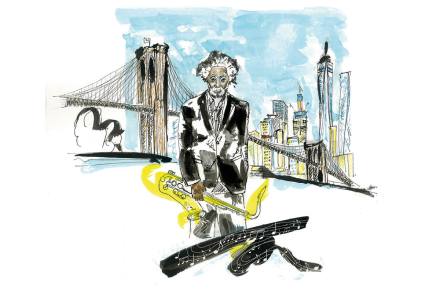
In the mid-1950s, alongside his close friend and intimate confidant John Coltrane, the revered saxophonist Sonny Rollins completely revolutionized notions about how the tenor saxophone could function within modern jazz. In landmark albums like Freedom Suite, Way Out West and Tenor Madness, Rollins pushed the art of melodic improvisation to transcendent new heights, his charismatic sound, his snaking melodies and his rhythmic liquidity ringing the changes as surely as Louis Armstrong had done thirty years earlier. And like Louis, and later Miles Davis, there came a point where Rollins wrestled free of the jazz aficionado’s gaze to become admired by a more general audience.

rollins
Holiday

A look into Billie Holiday’s final year

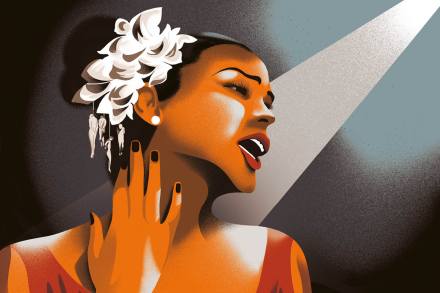
If ever a singer were difficult to pin down, it was Billie Holiday (1915-59), whose harrowing life story was first told in an unreliable memoir published just three years before her death. With Lady Sings the Blues, the jazz legend known for her emotional honesty not only allowed herself to be misrepresented (after all, she wasn’t even a blues singer), but actively participated in fabricating the fake stories which proliferated through the book. Some of these — such as a misstatement of her place of birth — are still repeated to this day. Two decades after the publication of Lady Sings the Blues a steady stream of more accurate biographies began to appear.

The Spectator’s Music of the Year 2023

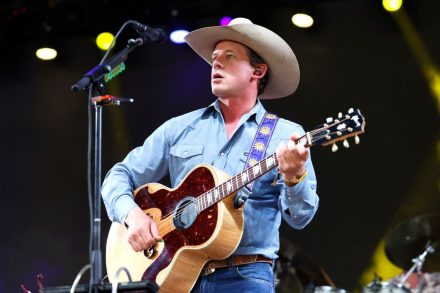
Teresa Mull, assistant editor A Cat in the Rain by the Turnpike Troubadours The Turnpike Troubadours are back with a new album that sounds a lot like their old ones, which is why I like it so much. A Cat in the Rain has been heralded as “a triumphant comeback,” and indeed, as a fan who’s followed (or tried to, anyway) the Red Dirt band’s ongoing drama, I was surprised and delighted to welcome the return of Evan Felker’s rustic voice singing some fresh, but still familiar-feeling, songs. The lyrics have a gentler, humbler feel to them — overcoming alcoholism by laboring on a cattle ranch and rekindling with the wife you divorced to produce two kids will do that to a man, apparently.

turnpike troubadours music

A visit to Louis Armstrong’s old home

The New York Times recently started a new series about introducing a friend to jazz in five minutes with a tribute to Duke Ellington. In many ways, Ellington is a sound choice. He was the bandleader par excellence, a brilliantly inventive composer who formed much of the modern jazz vocabulary. But matters can’t rest there. In any assessment of jazz’s founding fathers, Louis Armstrong has to stand as the most influential figure. Both his trumpet and voice are simply inimitable. A recent visit to his modest home, which is now a museum, during a trip to New York with my family offered a reminder of the magnetic attraction Armstrong continues to exert.

armstrong

The underrated Kenny Dorham

Kenny Dorham was one of the jazz greats. The closest player in modern times to his intimate sound is probably Roy Hargrove, who, like Dorham, hailed from the Lone Star State. But despite all the accolades from the jazz cognoscenti, there is something plaintive about his career, down to the liner notes for his own albums. Indeed, right from the first sentence. Take the 1956 album Kenny Dorham and the Jazz Prophets on the ABC-Paramount label: “Kenny Dorham is one of those artists who have not as yet been accorded their deserved share of recognition.

Durham

A concert begun in darkness

It was all glitter at Blues Alley in Washington, DC when the trumpeter Terence Blanchard, who is the composer of a widely hailed opera called Fire Shut Up in My Bones that was recently performed at the Met, appeared in March with his E-Collective band as well as the Turtle Island Quartet to play several sets. Blanchard wore iridescent tennis shoes and played a miked trumpet with extra reverb that almost looked as though it was glowing in the dark. Periodically, he would tap his right foot onto an electronic device on the floor that manipulated his tones to extend them into the ether. Indeed, his audacious high notes lingered on long after he had stopped blowing. The collective is Blanchard’s foray into the world of deep funk. It definitely makes an impact.

Schächter

Charles Mingus at 100

"All the Things You Are” is an essential jazz standard, but in 1960 the bassist Charles Mingus gave it an update: “All the Things You Could Be by Now If Sigmund Freud’s Wife Was Your Mother.” It doesn’t take a psychoanalyst to peek under the hood of this composition. Like many Mingus tunes, the loose adaptation is fairly bipolar, picking up and dropping off in fits and starts, alternating between vacuum-tight swinging sections and meandering, tempo-less squabbles between members of the four-piece band. Mingus isn’t for the faint of heart, but on the centenary of his birth it’s worth confronting his life’s work, which surely places him among America’s most important composers.

Mingus

Messenger service

When Art Blakey’s Jazz Messengers visited Japan for a two-week tour in 1961, they were among the first Western groups to tour the country. It didn’t take much for the locals to get the message. The legendary drummer’s band contained what might be his strongest lineup ever — Lee Morgan on trumpet, Wayne Shorter on tenor saxophone, Bobby Timmons on piano and Jymie Merritt on bass — and they were greeted by elated fans upon landing at Haneda Airport on New Year’s Day. “It was like a florist’s shop,” Blakey recalled. “They wanted me to make a speech but I couldn’t. I just cried.” For the band members, this maiden voyage was a deeply moving experience. Back home, they had been relegated to playing, more often than not, in smoky jazz clubs.

messengers

Wynton’s works

Jazz has periodically seen the rise of so-called “young lions.” The phrase was first used in 1961 as the title of a Lee Morgan LP put out by Vee-Jay Records, a black-owned company, with cover art that sports a photo of four lions lounging on a stone ledge. Then, in 1983, Elektra Records released an LP that was also titled The Young Lions, featuring Wynton Marsalis, Bobby McFerrin and a number of other young musicians who were focused on reclaiming the bebop tradition. Now, in late November, as Marsalis celebrated his sixtieth birthday with the Jazz at Lincoln Center Orchestra at the Rose Theater, his baritone saxophone player Paul Nedzela (as the New York Times reported) called out during a rehearsal, “It’s the Young Lions!

Marsalis

Roy Hargrove doubles up

There is a long tradition in jazz of duets between trumpeters and pianists. It’s a mercilessly revealing format, one that allows for no hiding on the part of either performer. But the payoff can be big. Consider the recording of the song “Weather Bird” by Louis Armstrong and Earl Hines in December 1928. Part of the epochal Hot Five and Hot Seven sessions that announced a new era in jazz, it featured Armstrong ripping up the old New Orleans playbook. Armstrong’s remarkable rhythmic innovations sometimes seem like the musical equivalent of a running back stutter-stepping to fake out his opponent before exploding downfield. He helped ensure that the Roaring Twenties really roared.

hargrove

Vital Morgan

The jazz world has seen more than its share of tragic deaths, whether it was the trumpeter Clifford Brown perishing in a car crash at night on the Pennsylvania Turnpike at the age of 25 or saxophonist John Coltrane succumbing to liver cancer at 40. But perhaps there is no more confounding early demise than that of the bravura trumpeter Lee Morgan. Morgan, who played with the likes of Miles Davis, Dizzy Gillespie and Art Blakey as a teenager, was known for his swagger, which he liked to call ‘expoobidence’, (which he deployed as the title for an album for Vee-Jay records in 1960 called Expoobident). It all came to a swift terminus in February 1972 after his common-law wife Helen, a tough cookie if there ever was one, pulled out a .

morgan

Along came Bill Evans

Everybody Digs Bill Evans was the title of one of the great jazz pianist’s early albums, but it wasn’t always clear that he dug himself, at least if you consider his turbulent personal life. There was, first and foremost, the lifelong drug habit, culminating in his death in 1980, which one friend deemed the ‘longest suicide note in history’. There was also the introspective streak that prompted Evans to doubt his own prowess even after he had become famous. But there is also the spellbinding music that casts as powerful a spell as ever. Small wonder that a cluster of purveyors of fine music, including Craft Records, Electric Recording Company and Acoustic Sounds, have rushed to reissue his works on CD and LP.

bill evans

Dark knight of cool

‘When the legend becomes fact, print the legend,’ Maxwell Scott announces in The Man Who Shot Liberty Valance. Something like this seems to have occurred with the jazz trumpeter Chet Baker. Other members of the West Coast jazz scene such as the great saxophonist Art Pepper were often in dire straits, but Baker has come to personify the romantic figure of the tragically doomed jazz artist. Once heralded as the ‘prince of cool’, Baker’s self-destruction was lucidly chronicled by Bruce Weber in the 1988 documentary Let’s Get Lost. Even his album covers, where he gazes broodingly at the viewer, underscore his vulnerability. His meditative, halting solos formed the antithesis of the frenetic bebop movement emanating from jazz haunts on the East Coast.

chet baker

Booker prized

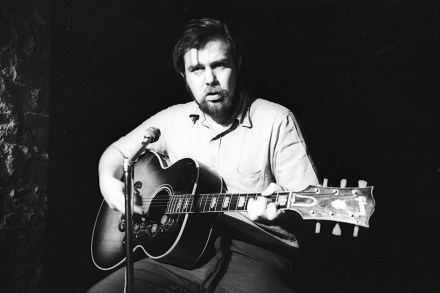
Dr John called James Booker ‘the best black, gay, one-eyed pianist New Orleans has ever produced’. Booker died in 1983, aged 43, ruined by drugs, drink and madness, and attended by legends of delinquency lurid even for a New Orleans piano ‘professor’. Though he had appeared on plenty of other people’s records and stages, Booker had recorded only three studio albums in his lifetime. Classified, recorded in October 1982 and now re-released on vinyl, was the last of them. It might not be the best of them, but it shows why Booker was one of the greats. The studio was booked for three days, but Booker had a breakdown the week before and couldn’t get a good take down in the first two days.

booker

Count my blessings

I have to laugh when I read about my Baby Boom cohort’s memories of savoring rock ’n’ roll behind the backs of disapproving elders. I had no such problem. I wasn’t especially taken with the new sounds of the Fifties: I was six years old when Elvis Presley debuted on the Ed Sullivan Show. I thought he was vaguely comical. In any case, my parents had resolutely high-minded middlebrow taste in such things, wavering somewhere between Dvorak, Lawrence Welk and Mozart. Rock ’n’ roll was simply out of the question. Everything else heard in the household — country and folk music, in particular, which my elder siblings’ favored — was tolerated to some degree, but my own secret musical vice was not.

count basie

Salvant grace

Jazz has traditionally been a male preserve — all 15 of the Jazz at Lincoln Center Orchestra are men — but jazz singing is the exception. Later this year, Netflix will release Ma Rainey’s Black Bottom, based on the superb play by August Wilson and starring Chadwick Boseman and Viola Davis. If the movie adheres to the spirit of the play and its subject (Rainey, the ‘Mother of the Blues’, sang frankly sexual songs in a moaning style), it is sure to ignite a fresh interest in her tempestuous life and career. The imperious Rainey wasn’t simply a gifted singer, but also an astute talent-spotter.

salvant

Tenor badness

In Stephen Spielberg’s 2004 comedy The Terminal, Viktor Navorski (Tom Hanks) is a native of Krakozhia, a small eastern European country engulfed in civil war. When Navorski lands at JFK, he discovers that his passport is invalid as America does not recognize Krakozhia’s new regime. He’s stuck in the airport for months and unable to accomplish his mission: completing his father’s quest to obtain the autographs of all 57 musicians in Art Kane’s 1958 photograph ‘A Great Day in Harlem’, a who’s who of jazz greats (including Count Basie, Coleman Hawkins, Dizzy Gillespie and Thelonious Monk), captured on East 126th Street in daylight without their instruments.

benny golson

The real McCoy

‘My current pianist, McCoy Tyner, holds down the harmonies, and that allows me to forget them,’ John Coltrane said in an interview in 1961. ‘He’s sort of the one who gives me wings and lets me take off from the ground from time to time.’ Tyner, who died on Friday at the age of 82, will be remembered for his crucial role supporting John Coltrane during some of the legendary saxophonist’s most creative years. But on the occasion of Tyner’s death it’s also worth recognizing that ‘the Real McCoy’ had a penetrating voice and lasting influence all his own.A son of west Philadelphia born in 1938, Tyner was encouraged by supportive parents and was playing piano by 13.

mccoy tyner