Jaws

Why a frothy Jane Austen adaptation is always imminent

There has never been a good screen adaptation of a Jane Austen novel. There have been plenty of films with plots and characters vaguely based on her work, many of them excellent. Who could forget Matthew Macfadyen’s trembling Mr Darcy confessing his passion to Elizabeth Bennet in the lashing rain, or Colin Firth’s entry to the Mr Wet Shirt contest 1813? Yet people who have only seen the screen adaptations think of Austen as the writer of dull, silly stories where nothing much happens. Now imagine that you had to watch, with no context, someone slowly, patiently defusing a bomb. You would have no idea how much every tiny movement mattered; how high the stakes were for the smallest slip. Hollywood keeps mistaking Austen for a writer of Regency romances. She is not.
The movie brats who changed popular cinema

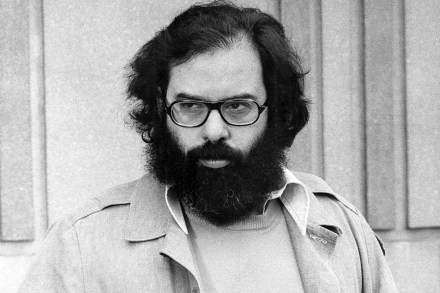
For some people it’s Star Wars; for others it’s Jaws or Close Encounters of the Third Kind. For me not a year goes by without watching Chinatown and the first two parts of The Godfather. This urge to repeatedly live through familiar narratives surely starts with bedtime stories; and though it diminishes in early adulthood as we push ourselves out into the world, the habit returns before long. So, although The Last Kings of Hollywood, Paul Fischer’s partial history of American movie-making focusing on Francis Ford Coppola, Steven Spielberg and George Lucas, tells a familiar story, it will be read by the same people who have already worked their way through the holy scriptures on the period.

A compelling account of actor Robert Shaw’s life

From our US edition

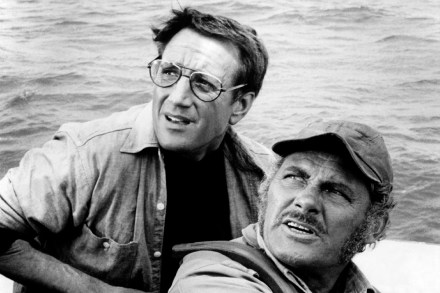
A narrative biography by a member of its subject’s family is, if not unique, something of a novelty. Here, Christopher Shaw Myers writes the story, while his uncle Robert Shaw’s life (1927-78) provides the book’s framework. Shaw Myers has previously written the as-yet-unfilmed screenplay Jaws & Mrs. Shaw and revisits some of the same material here. In both cases, a pivotal moment comes when Robert Shaw’s mother visits the set where Jaws is being shot in 1974 off the coast of Martha’s Vineyard, and thus happens to be present when her son polishes off the monologue about the shark attack on survivors of the USS Indianapolis that anticipates the gory finale of the film.

Shaw

The enduring appeal of Jaws, 50 years on

From our US edition

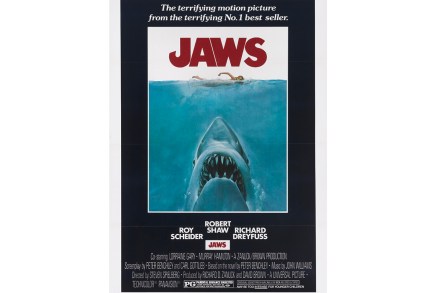
It’s been 50 years since audiences first thrilled to the thudding theme music and bared teeth of the original Jaws. The movie, released on June 20, 1975, immediately had customers lining up around the block, recouping its then-astronomic $20 million production cost within a week. It still stands alongside Rocky and Star Wars as one of a trio of enduring “high-concept” mid-70s blockbusters. In keeping with Sylvester Stallone’s boxing picture and George Lucas’s space opera – and most other Hollywood money-spinners – it’s easy to forget that there was nothing inevitable about the film’s long-lasting success.

Jaws

Swimming with sharks is nothing to be scared of

From our US edition

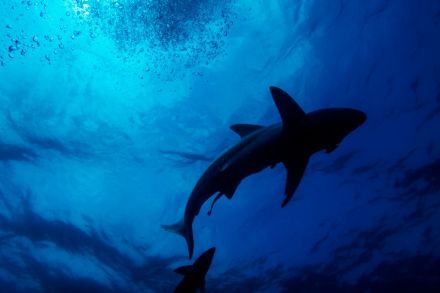
The small South African coastal town of Umkomaas hosts many scuba diving operations and resorts; its local reef system, the Aliwal Shoal, is one of the top fifty dive sites in the world. It contains the usual attractions like schools of tropical fish, turtles, rays and a few shipwrecks. The real attraction though — the reason people come from all over the world to this sleepy town — is to dive with sharks. Without a cage. For up to sixty minutes at a time. The Blue Ocean Dive Resort, where I stayed for a week, specializes in these dives, employing several experts to maximize the shark sightings. During my time there, I must have seen over fifty different sharks, including oceanic blacktips, bull sharks and tiger sharks.

sharks