Jane austen

Everyone involved should be in prison: Netflix’s Persuasion reviewed

From our UK edition

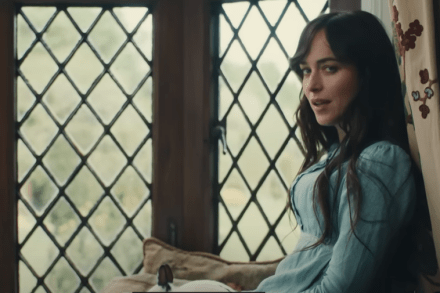
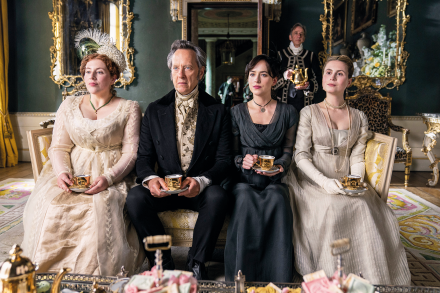
You may already have read early reviews of Netflix’s adaptation of Jane Austen’s Persuasion saying it’s ‘the worst adaptation ever’ as well as ‘mortifying’ and ‘a travesty’, but I know you won’t believe it unless you hear it from me, so here you are: it is truly horrible. I would also add that everyone involved should probably be sent to prison. Not for life, but until we could be confident they’d learned the error of their ways and there was minimal risk of reoffending. A probation officer would possibly be required to keep a close eye, just to make sure. Better safe than sorry. There are ways to adapt Austen for a contemporary audience, but those ways are not this way, and I say this not as a purist.

The not-so-sweet roots of ‘nice’

From our UK edition

‘That’s nice,’ said my husband, taking a Nice biscuit with his coffee. It was his little joke. The biscuit is named after the French city, though no one knows why. Like the trainers, the city was named after the goddess Nike when it was founded by Greeks in the 4th century bc. Nice, as in ‘a nice cup of tea’, was a word loathed by my schoolmistresses, like got. Their cue may have been Jane Austen. ‘This is a very nice day,’ remarked Henry Tilney in Northanger Abbey, ‘and we are taking a very nice walk, and you are two very nice young ladies. Oh! It is a very nice word indeed! – it does for every thing.

Howard Jacobson superbly captures the terrible cost of becoming a writer

From our UK edition

Howard Jacobson, who turns 80 this year, published his first novel aged 40. Since then he has produced roughly a book every two years, including The Finkler Question, which won the Man Booker in 2010. Given that he was put on Earth to write, why the wait? This is the subject of Mother’s Boy, a tale of self-persecution in the form of a monologue which includes interjections from the ghosts of his parents and one chapter, recording a period in his twenties that he drifted through in a dream state, printed in a font resembling handwriting. ‘How’s the novel coming along?’ his father would routinely ask after Jacobson graduated from Cambridge with a ‘poor degree’ in English. He was taught by F.R.

An affectionate exercise in comic sabotage: Pride & Prejudice* (*sort of) reviewed

From our UK edition

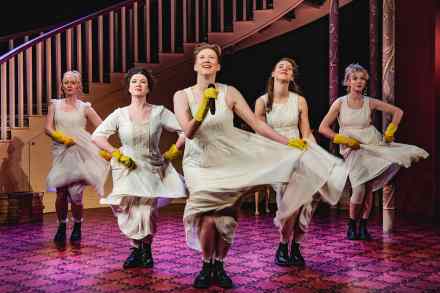
Let’s be honest. Jane Austen is popular because War and Peace doesn’t fit inside a handbag. Austen’s best-loved novel, Pride and Prejudice, has been updated in a fetching new production that treats the sacred text as a screwball comedy. The fun starts before curtain-up with the cast of five girls messing about on stage and struggling with a chandelier that almost shatters but doesn’t. This improv bit is irritatingly predictable. Then the show begins and the girls start to curse, laugh and pontificate their way through the tale. We get a feminist lecture explaining that Mrs Bennet’s predicament owes itself to the laws of bequest that prevented women from inheriting property. So if Mr Bennet dies, his wife and five daughters will be destitute.

Superb but depraved: BBC1’s The Serpent reviewed

From our UK edition

The Serpent is the best BBC drama series in ages — god knows how it slipped through the net — but I still think it most unlikely that I shall stick it through to the final episode. It’s not the style that’s wrong but the subject matter: do we really want to spend eight hours of life in the company of a smug, ruthless serial killer who murders at least 12 people — and more or less gets away with it? Up to a point The Serpent has addressed this problem by trying to make the central figure not the killer, Charles Sobhraj, but the persistent Dutch junior diplomat, Herman Knippenberg, who eventually nabs him.

It’s all in a name: the stories behind book dedications

Don’t skip over the dedications in books. They can be as illuminating as the stories they precede and shine an intriguing light on the author’s private life and loves: Jane Austen and Edmund Spenser [caption id="attachment_9876775" align="alignnone" width="739"] Family portrait of Jane Austen[/caption] The dedication to Jane Austen’s Emma reads: ‘To His Royal Highness The Prince Regent, This Work Is By His Royal Highness’s Permission, Most Respectfully Dedicated, By His Royal Highness’s Dutiful And Obedient Humble Servant, The Author.’ The Prince Regent was George Augustus Frederick, uncle of Queen Victoria and the eldest of George III’s children. He was self-indulgent and excessive.

book dedications

Sumptuous and very promising: A Suitable Boy reviewed

From our UK edition

Nobody could argue that Andrew Davies isn’t up for a challenge. He’d also surely be a shoo-in for Monty Python’s Summarise Proust competition. After turning both War and Peace and Les Misérables into satisfying, unhurried six-part drama series, he’s now taken on Vikram Seth’s 1,300-page novel A Suitable Boy. The first episode started with a wedding that immediately established the programme’s visual sumptuousness, while also serving as a handy introduction to the main characters. The groom’s rebellious brother Maan, for example, chafed at the idea that he was supposed to be next.

Jane Austen finds a surprising fan in the Bank of England’s Mark Carney

From our UK edition

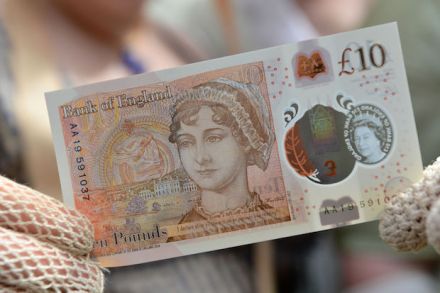
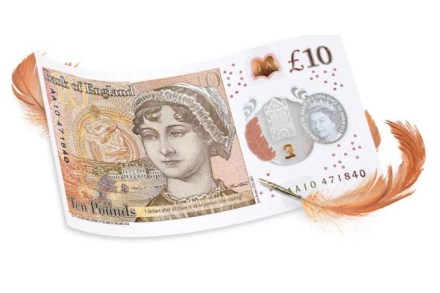
Winchester Cathedral, where Jane Austen was laid to rest 200 years ago this week, was the venue chosen for the unveiling of the new £10 bank note, which will feature a portrait of the English novelist. On a humid July day, tourists, pensioners, banknote geeks and a few noisy children packed the aisles. The atmosphere was expectant, as worshippers gathered to get a glimpse of 'Reverend' Carney at the pulpit. Smartphones were whipped out as soon as he started speaking. I travelled with my family as an off-duty journalist and was expecting the rather dry and technical explanations favoured by the Bank of England governor in the inflation report.

Watch: Andrea Leadsom hails Jane Austen as one of our ‘greatest living authors’

From our UK edition

Oh dear. Although there has been much excitement this week at the news that Jane Austen will feature on the new ten pound note, some appear to have got a bit carried away in their celebrations. Speaking in the Chamber this morning, Andrea Leadsom shared her personal joy at the news: 'I'm delighted to join in celebrating Jane Austen, who will feature on the new ten pound note – one of our greatest living authors.' However, given that Jane Austen sadly passed away in 1817 it appeared that Leadsom had got her dates mixed up. Happily, she was quick to realise her error – rephrasing to say that Austen was one of the greatest authors of all time.

Would Jane Austen be amused or bemused by her £10 note quotation?

From our UK edition

So, the new tenner has been unveiled today. Two centuries after her death, Jane Austen replaces Charles Darwin, who has enjoyed a 25-year sojourn with his hummingbirds. And yet it feels like this new note has been in the air for a while, though obscured by the hazy fug of controversy. First there was the (largely vegan) stew about animal tallow remaining part of the production process. All protests about what we’re doing with the natural world are worth hearing, so long as they are proportional. Quite what percentage of society occupies the intersection of the Venn diagram where strict boycotters of plastic bags, soap and cosmetics overlap with those who shun vehicular transport (tyres), candles and latex, I’m not sure.

More sinned against than sinning

From our UK edition

The 55-year-old ’flu-ridden John Charles Wallop, 3rd Earl of Portsmouth, his feet in a basin of warm water, shivered in the dock with fever but also with fear. Would the jury, assembled in 1823 in London’s jam-packed Freemason’s Hall at the end of an unpredecentally sensational two-week trial, find him eccentric, delusional, simple-minded or, instead, stark raving mad? Elizabeth Foyster, a historian and senior lecturer at Clare College, Cambridge, was alerted to this enthralling, almost unbelievable true story with the caveat that the vastness of the material in Lambeth Palace archives concerning a scarcely remembered trial of a hugely wealthy, relatively obscure aristocrat had deterred anyone else from attempting to make sense of it.

Playing at shepherdesses

From our UK edition

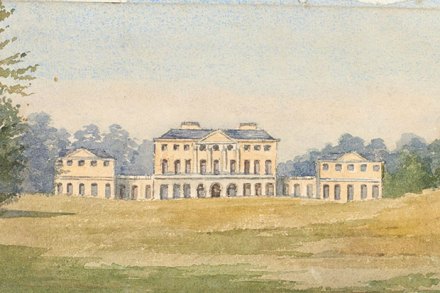
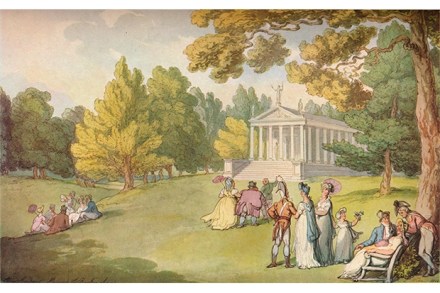
Oh, the longueurs of aristocratic Georgian leisure. What on earth did they do all day, with no domestic chores, no Wi-Fi, no television, no telephones for chatting and the slowest of transports to move their lives from the sticks to the bright lights of London or Bath? Kate Felus has written a fascinating book which tells us how the 18th-century landed gentry whiled away their summers out of doors. On winter she does not dwell, because, as she says, summer was the time when all the great landowners were likely to be at their country estates. Apart from Margaret Willes’s excellent Gardens of the British Working Class, the documented social history of gardens tends to concentrate on grand, rather than humble, establishments.

A few good books

From our UK edition

It is a truth universally acknowledged that whenever ITV or the BBC decides — the latter usually with charter renewal in the near or middle distance — that it needs to make some of that World-Class Drama it’s so proud of, its thoughts turn to regency frocks, scruffy urchins, pea-soupy London, agreeable country houses and the incessant clip-clop of hoof on cobble. Classy costume drama — invariably based, for extra classiness, on classy fiction of the sort you might find in Penguin Classics — is one of our major exports. But in the range of its source material they consider, its makers are as blinkered as the inevitable horse that draws Mr Darcy’s inevitable carriage in the inevitable tracking shot round Pemberley.

The eyes have it | 23 June 2016

From our UK edition

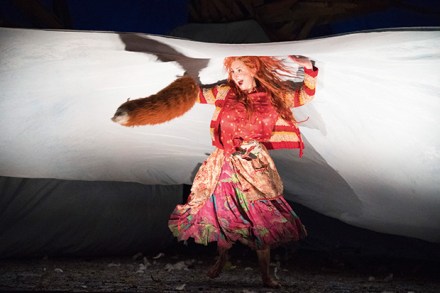
Tchaikovsky knew what he thought of the title character of his Eugene Onegin. ‘I loved Tatyana, and was furiously indignant with Onegin who seemed to me a cold, heartless fop,’ he wrote to a friend; and directors, by and large, have been happy to leave it at that. And why not? Dishy but emotionally unavailable Regency dandies have been a growth area in recent years — blame it on Colin Firth, if you like — and Eugene Onegin is probably the standard repertoire opera you’re least likely to see subjected to a directorial updating, in the UK at any rate. Michael Boyd’s new production at Garsington certainly doesn’t update anything.

Jane Austen on speed

From our UK edition

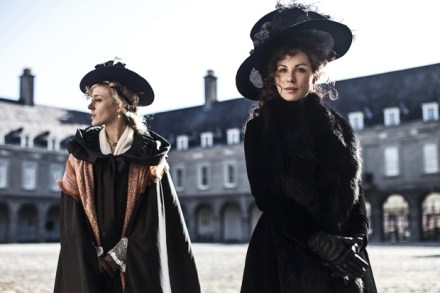
Love & Friendship is based on the little-known Jane Austen epistolary novella, Lady Susan, which was not published until after Austen’s death, and was then ill received. As G.K. Chesterton declared: ‘I, for one, would have willingly left Lady Susan in the wastepaper basket.’ Knowing what I know now and having, in fact, read Lady Susan, I, for one, would have willingly punched G.K. Chesterton in the head, had I been around at that time. And, had I wished to torment him further, which is highly likely, I might have then told him that it would one day be turned into the most delicious hoot of a film, so put that in your pipe and smoke it. I think he’d know he’d met his match.

Pride, prejudice, celebrity…

From our UK edition

Curtis Sittenfeld’s novel Eligible is a page-turning romantic comedy which is very funny and entirely ridiculous: each of the short chapters is as unwholesomely addictive as a Pringle coated in crack cocaine. It’s clearly influenced by writers like Tina Fey, Nora Ephron and Nancy Meyers. But that isn’t the point. Because with a certain punky insouciance, Sittenfeld has closely modelled her entertainment on Jane Austen’s Pride and Prejudice.

Come rain or shine

From our UK edition

‘Pray don’t talk to me about the weather, Mr Worthing,’ pleads Gwendolen in The Importance of Being Earnest. ‘Whenever people talk to me about the weather, I always feel quite certain that they mean something else. And that makes me quite nervous.’ Weatherland would make Gwendolen very nervous indeed. Our observations of the sky, Alexandra Harris reveals in this extended outlook, have always meant something else. Weatherland is a literary biography of the climate. Beginning with the Fall (in the Biblical rather than the autumnal sense) and ending with Alice Oswald, Harris condenses 2,000 years of weather ‘as it is recreated in the human imagination’.

High life | 28 May 2015

From our UK edition

An operation on my hand after a karate injury has had me reading more than usual. I even attempted Don DeLillo’s Underworld, but soon gave up. Truman Capote famously said that On the Road was typing, not writing, but old Jack Kerouac was Jane Austen compared with some contemporary novelists. Making it sound easy is the hardest thing in writing, and today’s modernists sure make it look easier than easy. But they’re also sloppy, self-indulgent and at times incomprehensible. What I don’t get is how one can enjoy a novel when the plot is not clear. When the reader doesn’t know what’s real and what’s imagined, it’s time to regress and look up Papa and Scott and Graham and Jane.

Forget genre: P.D. James wrote novels that are worth reading and re-reading

From our UK edition

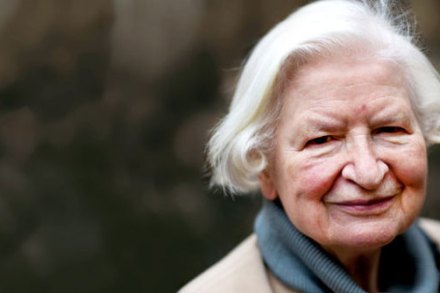
P.D. James was the Queen Mother of crime fiction. Her career as a writer stretched over half a century, and her death at the age of 94 deprives the country of an author who was cherished in person as well as for her books. She was probably best known for her crisply-written and elegantly plotted series about the poet-policeman Adam Dalgliesh. Among other things, however, she was also an occasional contributor to the Spectator, which sometimes showed an unexpected side to her. An early diary piece recalls her attempt to learn to drive in Dublin in the 1980s. The caretaker at her block of flats took one look at her Ford Fiesta and asked if she would like some holy water to sprinkle over it.

P.D. James (1920 – 2014) on Jane Austen and the joys of great-grandparenting

From our UK edition

P.D. James died today at the age of 94. She was a great friend of The Spectator. Here is her diary from 27 January 2010: Our protracted family Christmas with my elder daughter, Clare, came to an end when her son, with his Australian wife and two children, returned to Melbourne. The visit has been a great success, particularly so for Clare, whose idea of a perfect Christmas is to have four generations round the table. The snow was a bonus since neither great-grandchild had ever before seen snow. The first glimpse of a totally white England spread out beneath them as the plane descended to Heathrow was a wonder, and getting close to this marvellous glittering stuff and actually playing with it never palled.