James bond

How to holiday like James Bond in Sardinia

From our UK edition

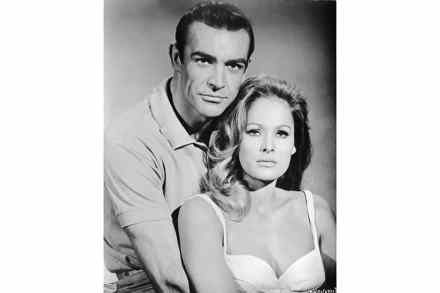
Posing as a marine biologist and with Soviet agent Anya Amasova posing as his wife, James Bond checked into Hotel Cala di Volpe in the The Spy Who Loved Me (1977). Their mission: to gather intelligence aboard super-villain Karl Stromberg’s secret underwater lair, somewhere in the Tyrrhenian Sea between Sardinia and the Italian mainland. In the meantime, they stay in a spacious suite with exposed wooden beams and open ocean views (where Amasova also vows to kill Bond when the mission is over). When I stayed at Cala di Volpe this year, I saw no villainous marine lair, just Tommy Hilfiger’s super yacht. The hotel has retained its Bond glamour through the years and offers the super-rich (and some super-famous) a more private experience than St Tropez or Monaco.

James Bond and the Beatles at war for Britain’s soul

From our UK edition

‘Better use your sense,’ advised Bob Dylan: ‘take what you have gathered from coincidence.’ John Higgs is a master of taking what he can gather from coincidence – or, as he would insist, synchronicity. From the filigree of connections and echoes in the KLF (Discordianism through the lens of 1990s pop provocateurs) to the psychogeography of Watling Street to more recent deep dives into William Blake, he confronts the modern Matter of Britain: who wields power, and who resists it? Love and Let Die starts with another perfect coincidence, namely that it was 60 years ago – to be precise, 5 October 1962 – that saw the first Beatles single appear in shops and the first James Bond film appear in cinemas.

The secret to exploring Istanbul

Two weeks before Covid began to hit Europe, I stood in the Basilica Cistern beneath Istanbul, steadily getting dripped on. Built during the reign of the Emperor Justinian I in 532, just before another deadly pandemic — the plague of Justinian — the cistern lies beneath Istanbul’s tourist hotspot, and despite it being damp, dark and having stands of 007 merchandise at its entrance and exit, it is one of the most enchanting places in a city that has captivated its visitors for over a thousand years. "If the Earth were a single state," Napoleon once pronounced, "Istanbul would be its capital," and upon visiting you begin to understand why.

istanbul

Hollywood, fist-fights and getting canceled

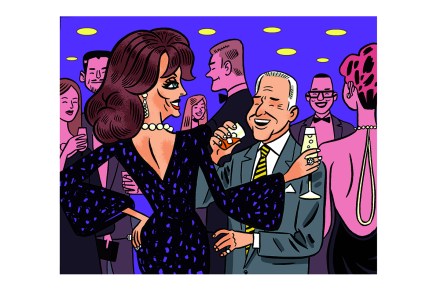
Introductions Scene: a drawing room in London. When the recording starts, Taki is already mid-anecdote... Taki: I was sent out to Monte Carlo to speak to Roger Moore. The Spectator offered to pay all my expenses. I said thank you, I’ll pay my own. I went and had a terrific drunken dinner with Roger who really spilled the beans, cos we were buddies. I came back. The tape was empty because I’d never turned the recorder on. Joan: I’d known Roger since I was fifteen, because my father was a big agent in London and I came back from school — oh, fourteen actually, because I left school at fifteen — and there’s the most gorgeous man I’ve ever seen standing there. He came over and said, “How do you do? You must be Joan, my name is Roger Moore.

Joan Collins

What does ice cream have to do with ‘late capitalism’?

From our UK edition

‘More to my taste is Trockenbeerenkapitalismus,’ said my husband with an intonation that indicated a joke. The joke was a play on the German Spätkapitalismus, ‘late capitalism’. There is also a German wine category called Spätlese, ‘late harvest’, and another, when the grapes are exposed to noble rot and allowed to wither on the vine, called Trockenbeerenauslese. Hence the joke. I do not encourage this sort of thing. But late capitalism deserves no encouragement either. It is generally used to mean anything thought unpleasant about life in western society.

What the Russians thought of James Bond in the 1960s

From our UK edition

Last year I wrote a piece about James Bond for the ‘Freelance’ column of the Times Literary Supplement. All true Bond lovers — of the novels, I mean — know that he lived in a ‘comfortable flat in a plane-tree’d square off the King’s Road’, as Ian Fleming described it in Moonraker. Further internal evidence in Thunderball indubitably established that it was Wellington Square — but there was considerable mystery and doubt about exactly which house contained the Bond apartment. In my article I claimed to have identified it as No. 25, based on a certain amount of sleuthing and, I thought, convincing circumstantial evidence. No.

Fit for 007: the filmic destinations that feature in Bond

From our UK edition

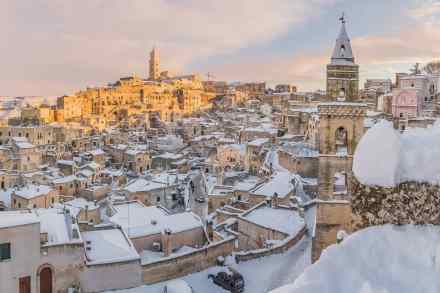
Birds eye shots of Aston Martins cruising along hairpin roads, steamy scenes on chalk-white beaches: the choice of James Bond filming locations has the power to put new holiday destinations on the map. Here we round up the best places to visit from No Time To Die - and rediscover old favourites from the archive. Puglia, Italy Some of the most nail biting scenes in the latest film involve Bond jumping from an aqueduct into a ravine to escape his pursuers then hurtling round the sidestreets of an ancient Italian town on a motorbike. Most of the scenes are shot around the UNESCO World Heritage Site of Matera in southern Italy. Known as The City of Caves, it sits on a rocky outcrop with troglodyte settlements carved into its base.

Drinking with James Bond

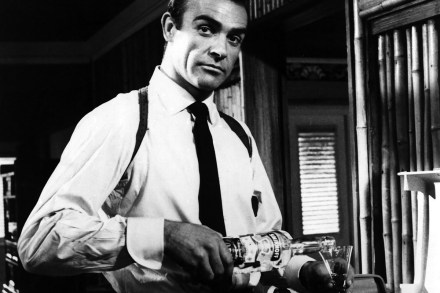
James Bond’s most impressive talent is not his prowess as a spy or his skills of seduction. It’s his ability to always get exactly what he wants at the bar. In the 1954 novel Live and Let Die he orders a round of Old Fashioneds while on a train to meet Felix Leiter, his CIA opposite number. Not only does the buffet car make them for Bond, they even have his preferred brand of bourbon, Old Grand-Dad. You try pulling that sort of thing on the Acela from Penn Station to DC. ‘Sorry Solitaire, they wouldn’t do us a cocktail, but I’ve got a cup of Lipton’s and a bag of pretzels.’ We’d all like to drink like Bond but, lacking his miraculous powers, we need to be in the right sort of bar to do it.

bond
bond

Turning the page on James Bond

The much-delayed 25th James Bond film, No Time To Die, is finally limping onto the big screen. There are gadget-packed car chases, scarred supervillains and revelations as to the loyalties of supposedly sympathetic characters, but there are also new, socially-conscious elements. Lashana Lynch plays a PoC 00-agent who is very much Bond’s equal at spycraft. Fleabag’s Phoebe Waller-Bridge has been parachuted in as a script doctor, to notify us that this is a post-#MeToo Bond. Without a simultaneous release on a streaming service, Daniel Craig’s swan song as Bond will stand or fall on its theatrical performance.

no time to die bond

The spy’s the limit

No Time to Die is Daniel Craig’s last mission as James Bond. Clocking in at well over 180 minutes, it might more accurately be called No Time to Pee. The epic length and general air of slothful despair derive from the picture’s tortured development. Mess and confusion are the inevitable product of two directors, platoons of writers, a tangled residue of multiple plotlines and the star’s blatant misery at being once again vacuum-packed into a tuxedo one size too small. ‘We did our best,’ Daniel Craig has said repeatedly in promotional interviews. M wouldn’t accept that, so why should we? Bond begins No Time to Die with plenty of time to die. He has retired with his heart broken and the rest of him in little better shape.

The spy movies that rival 007

From our UK edition

If No Time to Die and the inevitable 007 re-runs on ITV haven’t already sated your appetite for Bond-style espionage thrills, there’s a veritable smorgasbord of spy movies available to assuage your hunger. Some of the actors who portrayed Bond also essayed secret agents of a different stripe, with Sean Connery (The Russia House), Pierce Brosnan (The Tailor of Panama), Daniel Craig (Munich, Archangel) and Timothy Dalton (Permission to Kill, The Rocketeer) all dabbling in non-007 cloak and dagger roles. For such a long-lasting and successful franchise, it’s perhaps odd that the producers (Eon) haven’t yet contrived to release any 007 film spin-offs.

What James Bond and Aristophanes have in common

From our UK edition

So James Bond is back, doing exactly what he always does, inviting the audience into a fantasy world for the pleasure of wondering ‘What if?’ In this respect, Bond films resemble the work of the world’s first recorded comic poet, the Athenian Aristophanes (c. 440-380 bc). His premise was that Athens’s problems could be solved only by little people of no importance, not the greedy, vain and incompetent leaders in the public eye. So the scene was set for the hero(ine) to put them firmly in their place. One favourite subject for his comic fantasies was the long war between Athens and Sparta (431-404 bc). Take three examples. In 421 bc Aristophanes sent a farmer Trygaeus up to heaven on a dung-beetle to find Peace and restore her to earth.

The secret to wearing pink

From our UK edition

It would be interesting to see what people would have turned up in had the Bond premiere not been of the Royal variety with a black-tie dress code. Perhaps Daniel Craig in Yeezys or Lea Seydoux all Parisian chic in a pair of jeans and sweatshirt, we can but wonder. It is a relief that people didn’t treat it like the Met Gala and turn up in anything but the dress code. The turnout was extremely good for the sartorially minded, including from the guests. Jason Momoa showing up in a Henry Poole tuxedo juxtaposed his hobo-rambler-surfer vibe. This came as less of a surprise to me as he is often posting about deliveries of rings and accessories from artisans and I know he has a few bespoke shoes from Gaziano & Girling.

Which James Bond film made the most money?

From our UK edition

Scummy idea Labour deputy leader Angela Rayner called Tories ‘scum’ in a speech to activists at her party’s conference. The word, derived from a 14th-century Dutch word for foam, was first recorded in the sense of an insult in Christopher Marlowe’s play Tamburlaine, written in the late 1580s. Referring to Christian slaves kept by the Turks, Tamburlain says: ‘These are the cruel pirates of Argier, that damned train, the scum of Africa.’ Thereafter, the term tended to be applied to people of low birth rather than people who are of evil or ill intent — which is presumably what Rayner meant. Who’s had jabs? Are western countries hoarding vaccines and depriving developing countries?

In defence of Marvel

From our UK edition

The teaser for Spider-Man: No Way Home, out this Christmas, which had a record number of 355 million views in the first 24 hours of online availability, delivers three minutes of thrills. Tom Holland is back, in the titular role, with his girlfriend from the previous Spidey movie, his best friend Ned, references to Mysterion, jokes from Benedict Cumberbatch as master wizard Dr Strange, plus engagement with that most playful of Marvel concepts, the multiverse. Bring in the multiverse, and anything, everything, is possible. Are you old enough to recall that moment in Dallas when the shooting of JR was revealed to be a dream? Well, the multiverse does all that, and some. Time is not a constant.

The time is up for long films

From our UK edition

‘Programme starts at 3.45, so the film will start at 4.15, and it’s two hours and 43 minutes long, so we’d be out just before 7 p.m.’ This is the No Time to Die calculation, and I think many of us are doing it and wondering: ‘Can I face it?’ A dark afternoon spent in a state of total surrender to the longueurs imposed on us by a self-indulgent director? Thirsty from too much popcorn, leg muscles seizing up, not allowed to look at your phone, pressure on the bladder, Daniel Craig never smiling and the end nowhere near in sight?

It’s time for James Bond to die

From our UK edition

I saw the new James Bond last night, but after reading today’s reviews I’m not sure I watched the same film as the critics. Perhaps the glitz of the Royal Albert Hall and proximity to the stars make reviewers better disposed towards a film. Those of us watching in the Odeon, Leicester Square, eating Joe and Seph’s 007 Dry Martini popcorn (transmuted into caramel coating with five per cent vodka) were perhaps less carried away. The Bond of No Time to Die is, you’ll have gathered, terrifically in touch with his emotions.

No Time to Die is a compelling mess

From our UK edition

Times being what they are, James Bond can no longer just be the main character in the Bond films. He’s also had to become a defiant metaphor for them. Since Daniel Craig took over the role, Bond has regularly been told that he’s badly outdated. Yet, by the closing credits, he’s once again proved how much the world still needs him. That this has been reflected at the box office is, I’d suggest, largely down to one neat trick: Craig’s Bond films have thrown in just enough gruff emoting to get people to go along with the pretence that his Bond is a radical reinterpretation, while still essentially sticking to their trusty old-school methods.

The secret spy films made by MI6

From our UK edition

Those attending the premiere of No Time to Die this week would perhaps be surprised to learn that the Bond films were once considered to be a national security threat. In the 1960s, with the image of Cold War espionage increasingly becoming shaped by films like Dr No, and TV series like Danger Man and The Avengers, MI6 feared that campy pulp fiction would drown out the real threat of Communist subversion. ‘The biggest single risk to security at the present time,’ one Whitehall report argued, ‘is probably a general lack of conviction that any substantial threat exists.’ ‘The master spy’, the intelligence services complained, ‘seems as much a part of bad fiction as the master criminal.

James Bond and the Beatles herald a new Britain

From our UK edition

The word ‘magisterial’ consistently attaches itself to the work of David Kynaston. His eye-wateringly exhaustive four-volume history of the Old Lady of Threadneedle Street established him as a historian with a confident command of a huge body of information, as bloodless and dry as the subject was. Embarking on Tales of a New Jerusalem, a history of Britain from 1945 to 1979, he has undertaken another marathon and earned magisterial rank. Yet, from the first, Kynaston has shown that he is prepared to leave the bench to sweep the Ealing and Islington Local History Centres, Wandsworth Library, the East Riding Archives and especially that extraordinary resource, the Mass Observation Archive, kept in The Keep at the University of Sussex.