Italy

Low life | 11 July 2019

From our UK edition

The hotel manager had arranged for me to borrow an Alfa Romeo Spider Duetto two-seater convertible (1982) for the afternoon. And now, after lunch, here it was, as promised, parked on the forecourt. ‘You’re familiar with left-hand drive cars I take it, Mr Clarke?’ she said, a touch apprehensively I thought. ‘I’ve had a Spider,’ I said. ‘Similar to this, but a later, fuel-injected model.’ A true statement — although I was as confounded by it as she was. She handed me the key and a map with a suggested scenic route marked in Biro. I climbed in, fired the thing up, and with a cheery wave, 10,000 exploratory revs and a pip on the horn I set off through the village.
A chance encounter with a butterfly-catching Nazi

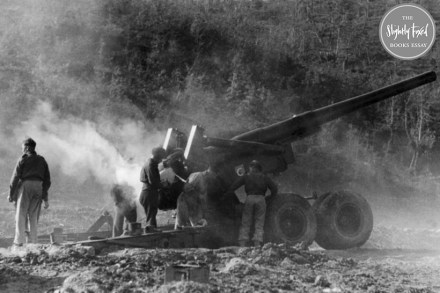
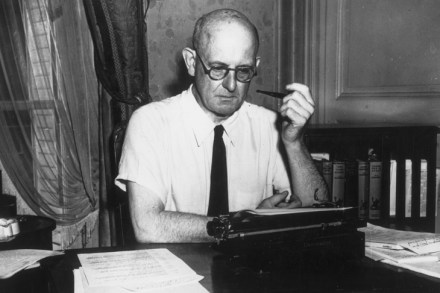
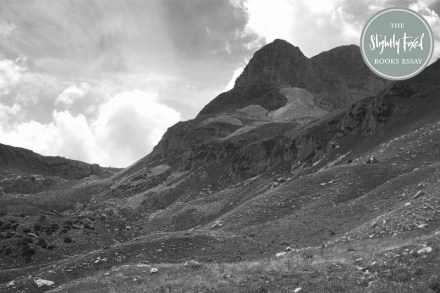
In the winter of 1943, Eric Newby, captured in 1942 on a commando raid on Sicily, escaped from an Italian prisoner of war camp. Love and War in the Apennines, his memoir of life on the run among the peasant farmers of the Apennine Mountains, is that rarest of combinations, a military classic and a love story. Patrick French’s tribute to Newby’s memoir can be read here. In this excerpt, Newby describes an unlikely encounter in a mountain pasture. As I climbed, the trees began to thin out and at last I came to a place where there was nothing but juniper growing.

butterfly naxi apennines

Love and War in the Apennines

An escaped British prisoner-of-war is sleeping in a grassy hollow by the edge of a cliff. He wakes to find a German soldier standing over him, wearing summer battledress, a pistol at his hip. Realizing he has been caught, he says his name and adds, ‘I’m a lieutenant in the infantry, or rather I was until I was put in the bag.’In the bag – captured. It is one of the many phrases of the time that add to the resonance of Love and War in the Apennines (1971), a vivid memoir of Eric Newby’s capture, escape and recapture in Italy’s mountainous terrain during the later years of World War Two. The man standing over him will not, though, take him away.

apennines

The triumph of Matteo Salvini

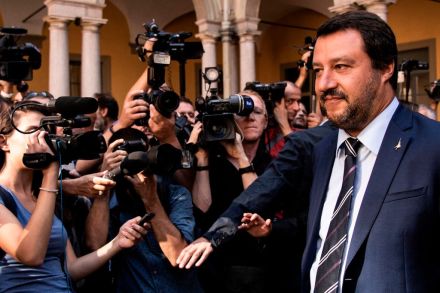
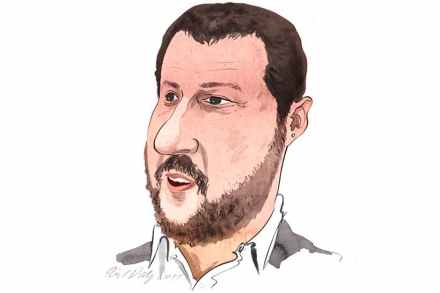
Since becoming leader six years ago Matteo Salvini — Il Capitano as they call him — has transformed the radical-right Lega from small regional separatist party into the largest party in Italy. After last week’s European elections, the Lega is now also the second largest national party in the European Parliament. Its 28 seats place it level with Angela Merkel’s CDU, and just behind the 29 seats of Nigel Farage’s Brexit party. The European Parliament election results confirm Salvini as the undisputed leader of Europe’s populists. Their insurrection is determined to unseat the EU ancien régime. Its latest champion, French president Emmanuel Macron, is ever less convincing and popular in France and elsewhere in Europe.

matteo salvini

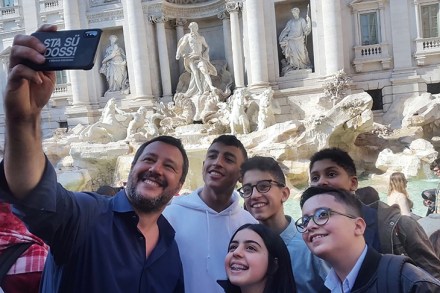
Salvini’s common touch

From our UK edition

While Britain continues to try to struggle its way out of the EU, perhaps it is wise to consider what is happening inside the bloc itself, not just in Paris where the fumes from burning cars fill the apartments and approval ratings for Emmanuel Macron continue to slide as he engages in a national listening exercise (which actually consists of him delivering Chávez-length lectures to the French public). But over the border in Italy, where the tone of the era is being set. Being both interior minister and deputy prime minister is a tremendous position for Matteo Salvini to be in.

Italians

From our UK edition

For a few years before coming to Italy, I lived in Paris and I cannot tell you the life-enhancing difference I felt as I crossed the frontier from France into Italy in my metallic burgundy Honda Prelude. On arrival at the Italian motorway toll that stifling summer of 1998, I discovered I had no money and that the sun had melted my bank card which I had left on the dashboard. The charming young woman on the toll-gate simply gave me a form to fill in and waved me through with a smile. Isn’t this how we should run the world? I remember once being stopped by two Italian police patrol cars in the dead of night when well over the limit. Instead of them breathalysing me, we started to have a discussion about the Mussolini biography I had written.

Italy shows that left-wing populism doesn’t work

From our UK edition

To judge from what is going on in Italy, the only major European country where populists are in power, right-wing populism works but left-wing populism does not. The senior partner in Italy's populist coalition government – the alt-left Five Star Movement – is haemorrhaging support, while the popularity of the junior partner – the radical-right League – soars ever higher. In regional elections in Sardinia last Sunday, Five Star got just 11 per cent of the vote compared to the 42 per cent it got on the island at Italy's general election in March 2018. The League's candidate, by contrast, at the head of a right-wing coalition, won with 47 per cent. This catastrophic result for Five Star comes two weeks after a similar rout in regional elections in Abruzzo.

Europe’s culture clash

From our UK edition

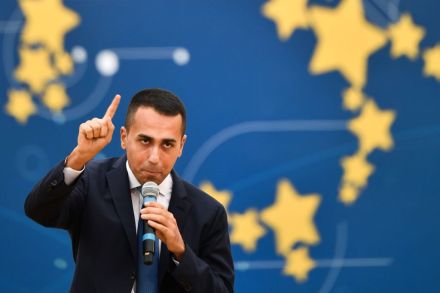
Two weeks ago Luigi Di Maio, Italy’s vice-premier and Labour Minister and the top politician of the Five Star Movement (M5S), appointed a new commissioner for the UN cultural organisation Unesco. He chose the dog--whistling, bum-slapping sex--comedy actor Lino Banfi, star of How to Seduce Your Teacher, Policewoman on the Porno Squad and other films. The M5S was launched online by the 1980s comedian Beppe Grillo. It is run on the basis of a private computer operating system called Rousseau. Most Italians look at the M5S as either a breath of fresh air, a necessary gesture of defiance, or a ridiculous episode that will pass. But you need a sense of humour for that. French President Emmanuel Macron has lately shown himself unable to take the Italian government in his stride.

What Macron’s spat with Italy is really about

From our UK edition

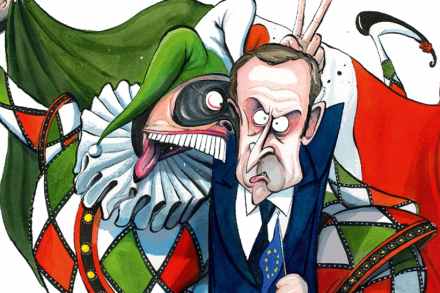
Who needs the Comédie-Française when there is Emmanuel Macron in the Élysée? France's recall last week of its ambassador from Italy for consultation was pure theatre on the part of the president. And it was a decision more for the benefit of his domestic audience than for the coalition government in Rome. In a statement explaining why Christian Masset had been ordered home, the foreign office said that for several months France has been subjected to outrageous statements that have created a 'serious situation which is raising questions about the Italian government’s intentions towards France.' France blamed the recall on Luigi Di Maio, the Italian deputy prime minster, who flew to Paris last week to meet members of the Yellow Vest protest movement.

How Italy’s populists stepped up their war with Macron

From our UK edition

The war of words between the governments of Italy and France escalated last week, after Italy’s deputy Prime Ministers, Luigi Di Maio and Matteo Salvini, gave their support for the gilets jaunes movement against French President Emmanuel Macron. The two sides have repeatedly come to blows over all manner of issues, from immigration to economics, via a whirlwind of thinly veiled insults. But the latest move marks a changing dynamic between the two sides; a once confident and resplendent President Macron now finds himself on the back foot, whilst the Italian leadership, emboldened, have begun to assert themselves across Europe, even to the point of inserting themselves into the affairs of other countries.

Matteo Salvini is doing Brussels a favour with his harsh migration policy

From our UK edition

Matteo Salvini, Italy’s deputy prime minister and interior minister, is one of the most controversial politicians in Europe. The 45-year old chief of the League party exudes a down-to-earth demeanour with his common-man social media posts, in which he shares pictures of himself eating Barilla pasta and Nutella. To his many opponents, Salvini is a thick-headed, semi-fascist ideologue who wants to turn back the clock and return Europe to a dangerous form of nationalism. But to his supporters, in and out of Italy, he is a straight-talking, no-nonsense defender of his country's sovereignty against the northern elites in Berlin and Brussels.

Diary – 3 January 2019

From our UK edition

You’ll be relieved to learn my penguin is back. ‘How long was it gone?’ you ask. About six months. ‘And sorry, it’s a real penguin?’ Actually, no. Here’s the story: back in 2005, I was staying at the 60 Thompson Street Hotel in Manhattan. On my first afternoon in town I went for a stroll along Bleecker Street and popped into a shop called Leo Design where I spotted and purchased a charming bronze penguin — three inches high, and ounces heavy. Back in my room I placed Mr Penguin among my coins and keys, and thought little of him. The next afternoon, after housekeeping had visited, I spotted Mr Penguin on top of the television. Odd, I thought, moving him to the window-sill.

The next Italian crisis

From our UK edition

For those who believe in the European project, Brexit is a headache. Italy, on the other hand, is a bloody nightmare. Its new anti-elite populist coalition government of the alt-left Five Star Movement and the radical-right League is currently set on a collision course with the EU. This could easily start a chain reaction that destroys the single currency. The British media hardly mentioned it but on Saturday, once Jean-Claude Juncker, EU Commission president, had sent Theresa May on her way with a pat on the back, he sat down to ‘a working dinner’ with Giuseppe Conte, the Italian Prime Minister, to discuss Italy’s ‘unprecedented’ breach of EU rules on its budget.

The real Elena Ferrante is a male-female collaboration, but HBO’s My Brilliant Friend is a man’s world

On the one occasion when I visited Naples, the plane from Barcelona was packed with shouting Italians. They broke into exuberant cheers when we completed a routine landing, and clambered over the seats to pinch my cheek. My taxi driver got lost and it took hours to find my Airbnb, in an outlying block of flats with great chunks loose and crumbling from its garish orange façade. The airline, it goes without saying, had lost my bag, and the husband and wife who rented out the room wasted no time in selling me a toothbrush. I spoke no Italian save a few words of Dante, and they no English, but when my Italian-speaking friend arrived the next day he found he could understand them no better than I could. To blame, the notorious Neapolitan dialect.

my brilliant friend elena ferrante

The UN’s politically motivated search for human rights abuses in Italy

From our UK edition

When politicians in Europe listen to the people and actually do something to stop uncontrolled immigration, the Holy See of the Global Crusade to Abolish Countries and the White Working Class – a.k.a the United Nations - sends in the thought police. This spring it happened in Britain when Tendayi Achiume, UN 'Special Rapporteur on Contemporary Forms of Racism, Racial Discrimination, Xenophobia and Related Intolerance', turned up to do a fortnight's fieldwork in order to demonstrate what she had already decided: Britain, thanks to Brexit, is a human-rights emergency in the grip of surging racism.

Matteo Salvini is lucky to be the enemy of the Italian justice system

From our UK edition

As Machiavelli noted: in order to prevail, a successful prince needs Fortuna as well as Virtù. Matteo Salvini, who has replaced Silvio Berlusconi as Italy’s dominant politician, has got them both. In any normal country, it would surely be unthinkable that the deputy leader of a new government elected specifically to stop refugees being ferried across the Mediterranean from North Africa to his country should face trial for actually doing so. But as the Italians themselves are the first to admit: ‘Italy is not un Paese normale (a normal country)’. Its judicial system, for example – they know from bitter experience – is incompetent, arbitrary and politicised, and widely regarded not just as the enemy of the people but of justice itself.

Italy’s anti-immigration rhetoric is paying off for the populists

From our UK edition

It wasn’t long ago when Italy used to be referred to colloquially as “the sick man of Europe,” a country whose economic situation was stuck in the doldrums, whose political system was always a crisis away from collapse, and whose political class was divided into those who were ineffectual and those who were corrupt. The Italians still have their systemic problems, no doubt. Italy has accumulated a pile of national debt (£2bn) that is larger than its GDP (£1.48 trillion). Its unemployment rate is over 10 per cent, higher than the EU’s collective average, and about three in ten young Italians can’t find work.

Diary – 23 August 2018

From our UK edition

Down here near Nice, you find most locals unsurprised by the catastrophic Genoa bridge collapse. The Italian border is only a few miles away but most people will find any excuse not to cross it — including my wife and me. In fact, these days we don’t go there at all. We haven’t done for years. Friends find this strange. After all, Italy’s closeness is one of the reasons we bought the place. So why do I fight shy of motoring through the long autostrada tunnel that runs under the pre-Alps, linking Menton to Ventimiglia? Because it’s bloody dangerous. Not on the scrupulously maintained French side, brightly lit with clearly marked carriageways. But the moment you flash over the border into subterranean Italy, everything goes pear-shaped.

Has Donald Trump finally met a European leader he can work with?

From our UK edition

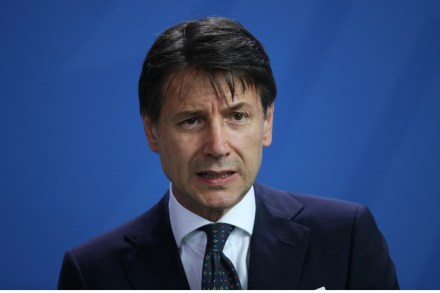
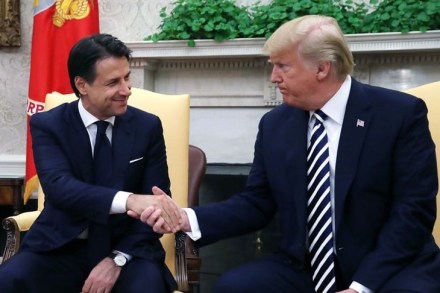
Donald Trump has finally met a European leader he can stand for more than a moment: Italy’s bookish new premier, Giuseppe Conte. The former law professor, who was plucked out of obscurity by 5Star’s Luigi Di Maio and the League's Matteo Salvini to be the nominal consensus pick of Rome’s anti-establishment government, is the kind of European Trump can do business with. Or at least that is Trump’s hope. For the brash billionaire, Europe has been nothing but a nuisance. Despite his proclamations of having a terrific relationship with Germany’s Angela Merkel and a kinship with France’s Emmanuel Macron, it is not difficult to see through the facade.

Refugee lives matter

From our UK edition

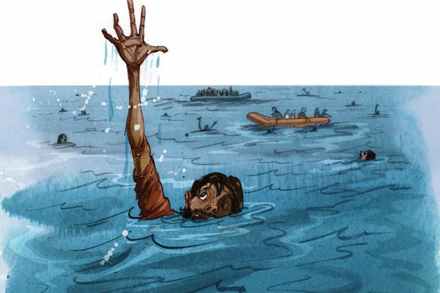
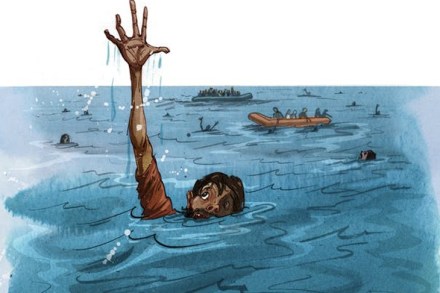
The photographs of children in cages at US migration centres, apparently separated from the parents with whom they illegally entered the country, do not reflect well on the Trump administration. Talking tough on migration helped the President to win the election but there is a difference between building a wall and carrying out a policy which appears to use cruelty as a shock tactic. Yet there is a policy towards migrants that is ultimately far crueller, and which is being pursued beneath our noses in Europe. That is to tempt migrants into unseaworthy boats to cross the Mediterranean. Last year, according to the International Organisation for Migration, 3,116 people died attempting to reach European countries from North Africa by sea, in addition to 5,143 deaths in 2016.