Israel

An arms race in the Middle East is a real possibility

From our UK edition

The war with Iran has already been raging for many months. So far, Western powers have largely confined themselves to covert operations designed to thwart Tehran’s nuclear aspirations. However, the bombing of a bus carrying Israeli tourists in Bulgaria on Wednesday marks a dramatic escalation in hostilities. In the past, western intelligence agencies have assassinated and kidnapped Iranian nuclear scientists, at one stage picking off a different target every few months. Not only did this hinder Iran’s quest for nuclear weapons, but it was also deeply embarrassing to the regime because of the sophistication with which attacks were being conducted right under its nose.

The Gazan double standard

From our UK edition

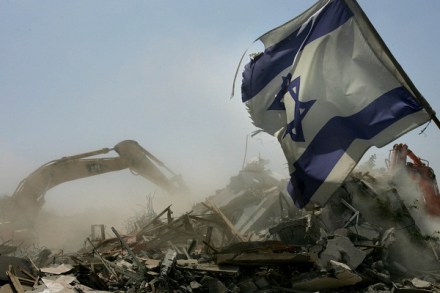
The journalist Tom Gross notes a story that you may have missed.  One hundred and twenty families in Gaza have lost their homes. 'Ma’an and other Palestinian news agencies report that the Hamas government in Gaza has renewed its policy of demolishing the homes of Palestinian families in order to seize land for government use. 120 families are to lose their homes in the latest round of demolitions – a far greater number than the number of illegally built Palestinian homes Israel has demolished in recent years – and unlike Israeli authorities, Hamas doesn’t even claim these homes were built illegally or with dangerous structures. Yet western media and human rights groups have been virtually silent about these destructions of Palestinian homes by Hamas.

First, call the lawyers

From our UK edition

I have just started a new column, Bright on Politics, for the Jewish Chronicle. My first piece last week discussed Ed Balls and Israel. And this week I discussed why politicians turn to judges when they have lost their moral compass. Here's the piece. I'm sure you'll let me know what you think. Blind faith of Brothers and others in law When the political class loses faith in its ability to make moral judgments, what does it do? It calls in the lawyers. The present fashion for judge-led inquiries in the UK has given us the Leveson inquiry into the ethics of the press, and may yet lead to a similar examination of the ethics of banking. On the moral issue of settlements in the Occupied Territories, Israel and the Trades Union Congress could not be further apart.

Plus ça change in Cairo

From our UK edition

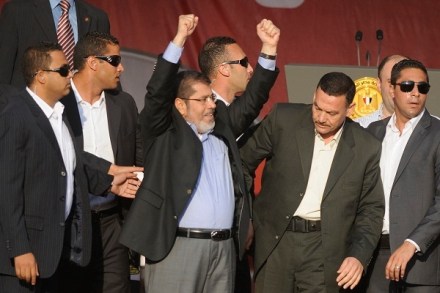
Don’t expect Cairo to become Kabul now that the Muslim Brotherhood’s presidential candidate, Mohammed Mursi, has been sworn into power earlier today. There are real fears, of course, about the future of Egypt under an Islamist president and it’s foolish to whitewash Mursi as either moderate or benign. The Muslim Brotherhood is a deeply reactionary and dangerous group, but Mursi will find it extremely difficult to implement the more radical aspects of his agenda.   Officially, the Brotherhood has said it will respect all existing treaties – a subtle attempt to placate fears about Egypt’s future relations with Israel.

Have Israel and Britain given up on each other?

From our UK edition

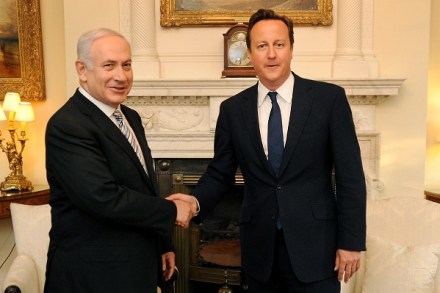
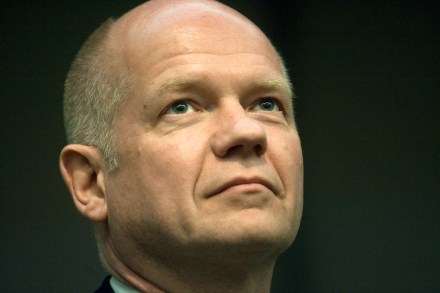
Benjamin Netanyahu’s announcement to authorise more than 800 new housing units in West Bank settlements, and the condemnation which followed from British Foreign Secretary William Hague, has marked a new high-water mark in the mutual frustration felt by the two governments.

Gunter Grass: the tin drum and the tin ear

From our UK edition

This morning's editorial in Israel’s left-wing Haaretz newspaper noted a double standard that was also a bad joke. Israel’s Interior Minister’s had declared, 'If Gunter Grass wants to continue to distribute his false and distorted works, I suggest he do so from Iran, where he'll find an appreciative audience.' The minister could not detect the irony in his words, the paper said. It is precisely his decision not to let Grass enter Israel because of a poem he wrote that 'is characteristic of dark regimes like those in Iran or North Korea'. You can read Grass’s poem here. I find it a false and vainglorious work because of its strong element of self-pity. Grass calls it 'What Must Be Said,' as if he is making a courageous stand.

How do you solve a problem like Baroness Ashton?

From our UK edition

Baroness Ashton has managed a return to diplomatic form by comparing the murder yesterday of three children and a Rabbi at a Jewish school in Toulouse with ‘what is happening in Gaza.’ Plenty of people have already deplored her comments. But they present an opportunity to address one of the underlying and too infrequently asked questions of our time: if you do not think Ashton is a very good politician, what can you do about it? Ordinarily if a politician says or does something you do not like we, the electorate, are at some point given the opportunity to vote them out. There used to be considerable pride in this arrangement.

Will Israel strike?

From our UK edition

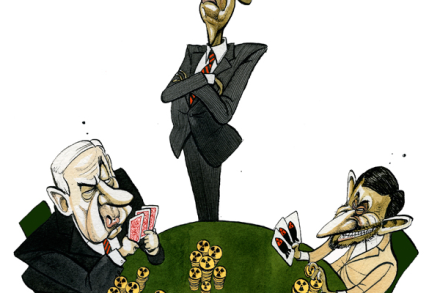
While we're on the subject of conflict in the Middle East, it's worth pointing out the cover story to this week's edition of the magazine. It's by the Atlantic's Jeffrey Goldberg, and it deals with the dangerous war of words currently being waged over Iran. Will it tip over into real war? In the eye-catching conclusion to his article, Goldberg suggests so: ‘I thought, before the Netanyahu-Obama summit, that the meeting would delay premature action by Israel against Iran. I believe now that I was mistaken. My sense is that Netanyahu feels the press of history and may well strike at Iran in the coming months. The clues are increasingly obvious. The most obvious, to my mind: the gift Netanyahu brought to Obama at the outset of their meeting.

Iran Hawks Circling

From our UK edition

At National Review, Mario Loyola offers a pretty succinct summary of the conservative (that is, American conservative) case for attacking Iran: [I]n an editorial, the Wall Street Journal makes the same points that I made on the Corner over the weekend, here and here. The only way to convince Iran to abandon its pursuit of nuclear weapons is to convince it that the risks of pressing on are prohibitive. Almost certainly the only way to do that is to convince them that military strikes are coming if they don’t pull back. If the goal is to deter from getting the bomb in the first place, then we should be giving Iran the impression that we’re prepared for a showdown, with or without Israel.  But we’re very clearly doing the opposite.

10% of Voters Will Agree With Anything (Except for the Canadian Question)

From our UK edition

Almost no belief is so barmy it can't win the approval of at least one in ten voters. The problem for politicians is that the nutty tenth is not fixed. Indeed, perhaps a majority of the population is, on occasion, likely to be a member of the loopy group. The latest evidence that a tenth of the population is utterly unsound on even the simplest questions comes from a Gallup survey of American attitudes to other countries: Perhaps some of those pleased with North Korea thought they were being asked their views on South Korea. Whatever. That one in ten Americans professes to have a positive view of Iran is, all things considered, quite remarkable. To put it another way: for every American who hates Canada there are three who like Iran and four who like North Korea.

Hague’s ‘Cold War’ warning

From our UK edition

William Hague has gazed into his Middle Eastern crystal ball and doesn't like what he sees. In an interview in today's Telegraph, he says of Iran: ‘It is a crisis coming down the tracks, because they are clearly continuing their nuclear weapons programme… If they obtain nuclear weapons capability, then I think other nations across the Middle East will want to develop nuclear weapons. And so, the most serious round of nuclear proliferation since nuclear weapons were invented would have begun with all the destabilising effects in the Middle East. And the threat of a new cold war in the Middle East without necessarily all the safety mechanisms… That would be a disaster in world affairs.

Our enemy’s enemy

From our UK edition

It’s unusual for The Guardian and The Spectator to agree on anything, but Seamus Milne and our own John R Bradley are sceptical about these Syrian rebels whom we’re being invited to support. Bradley was alone in predicting the Egyptian revolution, and argues in today’s magazine that the conventional wisdom is once again wrong. Who’s backing the rebels? The Qataris, keen to depose the last secular regime in the Arab world. And the Saudis and Israelis, whose hatred of Iran eclipses all other considerations: this isn’t about the Syrian people, but about depriving the ayatollahs of an ally. Some in the West also take the view that the enemy’s enemy is my friend — so the rebels must be good eggs.

Does Iran Actually Want the Bomb?

From our UK edition

The obvious answer to this is, Yes of course it does. Were I advising the Iranian regime I'd probably be pretty keen on developing a nuclear capability too. At the very least I should certainly want Iran's opponents to think Iran has serious nuclear ambitions. And yet, I'd also appreciate that if Iran's opponents really believe Iran is close to acquiring a nuclear weapon then the game enters a new and complicated phase that is dangerous for Iran too. So I might actually want Iran's opponents to be unsure or confused and prefer it if the question of Iran's nuclear desires remained ambiguous. That way, I might argue, Iran could enjoy some of the benefits of being a would-be nuclear power without taking on the risks of being so. All this, of course, is entirely speculative.

An Israeli strike on Iran?

From our UK edition

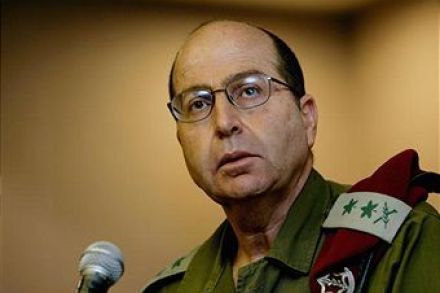
Will they or won’t they? Most political parlour games involve a question of this kind and the one about whether Israel will strike Iran – played out regularly in Washington, London and Paris – is no exception. The last couple of days have seen more sabre-rattling than before. Israeli Vice Premier Moshe Yaalon, who heads the Strategic Affairs Ministry, and is a former commander of the Israeli military, said all of Iran’s nuclear installations are vulnerable to military strikes while the US defence secretary was quoted as saying he thought Israel was likely to bomb Iran within months. They may or may not, but it is unlikely they will communicate through the voice of Leon Panetta or even in the pages of US newspapers.

Will Israel bomb a near-nuclear Iran in 2012?

From our UK edition

An Israeli strike on Iran has to be the most over-predicted event of recent years. It was meant to happen last year. And the year before that. But now there are reasons why 2012 could, indeed, be the year when Israel will find it propitious to take overt military action against Iran's nuclear programme. (Everyone assumes that a range of covert activities, from assassinations to cyber attacks, are already ongoing). The Iranian government is moving closer to having the requisite capabilities, and can reasonably be expected to take the final steps towards nuclearisation.

Palestine presses on in the UN

From our UK edition

While the Palestinian bid for membership at the United Nations moved closer to rejection, it turned out that Palestine has a veto over which UN agencies the United States funds. For after Palestine gained admission to UNESCO, the US administration followed through on its threats and cut the organisation's funding. As UNESCO is based on assessed contributions from member-states, others cannot make up the short-fall. The Palestinian Authority is now considering making applications to the WHO, WIPO and the International Telecommunications Union – technocratic bodies that actually play a large in role. For example, the WHO is crucial for dealing with global pandemics like SARS and Swine Flue.

Hamas splashes out

From our UK edition

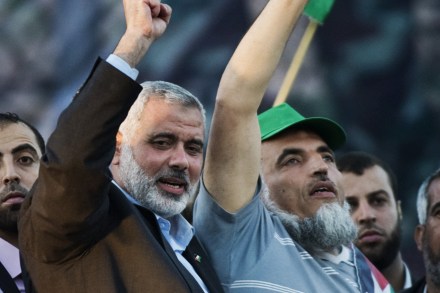
There are many questions arising from the prisoner swap between Israel and Hamas, not least whether it opens the door to a more lasting deal in future. But one question that deserves more attention than it will get, and ought to concern European policymakers, is where international aid is going. Take this little snippet from Reuters: "Palestinians freed by Israel in a trade for soldier Gilad Shalit took their morning exercise on Wednesday around a luxury swimming pool overlooking the Mediterranean, instead of circling the prison yard as they have done for long years inside. There was none of the usual breakfast-room free-for-all at Gaza's 4-star Al-Mashtal beach front hotel.

Saving Private Shalit

From our UK edition

It's difficult for the outside world to understand the huge significance that Gilad Shalit's release, this morning, has for Israel. A soldier captured by Hamas five years ago, he has become a huge cause célèbre — to the extent that black cabs in London were even commissioned with his picture on it. Books that he wrote aged 11 were printed and bought in their thousands by Israelis. He was wanted back so badly that Israel has agreed to release 1,027 Palestinian prisoners, among them hardcore terrorists. Events stemming from the Arab Spring have made both sides eager to do a deal, which experts say might contribute — even if in a tiny way — towards that ever-elusive peace settlement.

An Execution in Tehran

From our UK edition

Cranmer is right about this: It really is quite incredible. Last week, a convicted murderer, Troy Davis, was finally executed in the United States, and it seemed as though the entire British (and EU) Establishment arose to denounce the barbarism. Even Pope Benedict XVI appealed for clemency. Yet today, Iran is scheduled to hang a Christian pastor for 'apostasy', and the collective silence from our scurvy politicians, trappist churchmen and hypocritical media is positively deafening. Pastor Yousef Nadarkhani was found guilty two years ago of 'apostasy', even though he was never a practising Muslim. His guilt was determined because he 'has Muslim ancestry' (which is a kind of convenient catch-all in a place like Iran), and he was sentenced to death.

The new Israel and Palestine question

From our UK edition

The halls of the UN are packed with presidents and foreign ministers. But for all the thousands of subjects under discussion, this year's General Assembly will be remembered for one issue only: the Palestinian statehood application. Mahmoud Abbas has made clear he wants to proceed, despite the reality of a US veto. In the end, it may not come down a showdown. If an application is made to the UN Security Council, the issue will likely go to a sub-committee of the full UNSC and take quite some time before it comes to a vote, whatever the Palestinians may want. That is why the US prefers the option to a vote in the General Assembly, which would probably take place and pass immediately.