Israel

The government should acknowledge Israeli restraint

From our UK edition

With NATO planes circling above Libya, Saudi troops quashing protests in Bahrain, and troops killing civilians in Syria and Yemen, there has been little attention paid to Israel. But Israel has recently been the victim of a series of violent attacks. More than 30 people were injured in a bombing in Jerusalem, and Islamic Jihad's military wing, the Al-Quds Brigade, has fired mortars and rockets into Israel for days on end. The attacks suggest that Hamas is, once again, struggling to rein in other terrorist groups like Islamic Jihad. Some IDF commanders fear a descent into chaos in Gaza. In the face of the onslaught, however, the Israeli government has shown amazing restraint.
Tehran’s latest provocation

From our UK edition

The people of Egypt and Libya may have swung the spotlight onto their respective countries – but it is a spotlight that Iran is keen to exploit. Two of their warships have just passed through the Suez canal en route to Syria, the first to do so since 1979. They were given clearance by Egypt's new military stewards a few days ago. On one level, Tehran's actions are unimpeachable: Egypt cannot forbid access to Suez unless it is at war with the country at sail. But they are also, of course, designed to provoke. Why choose to do this now, other than to suggest something about the new latticework of power, and of power relationships, in a turbulent Middle East? Israel, for its part, is less than impressed.

Eastern promises | 18 February 2011

From our UK edition

Events in Bahrain are yet another reminder of why the supposed choice between stability and democracy is a false one. The idea that in the medium to long term backing a Sunni monarchy in a Shiite majority country is a recipe for stability is absurd. If this was not enough, by backing the minority monarchy the West is ensuring that, for obvious reasons, the opposition to it will become radicalised and anti-Western. The West is where it is. It, sadly, cannot start again from scratch in the Middle East. But it cannot allow itself to continue being the allies of those who brutally repress the aspirations of their own peoples - a policy that would ensure this troubled part of the world grows even more hostile to Western interests.

Reasons for optimism in the Middle East

From our UK edition

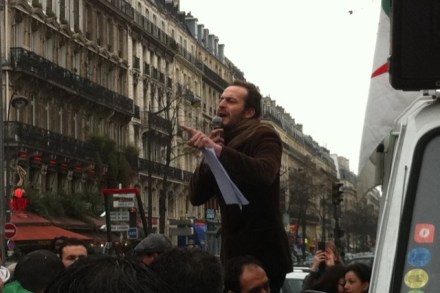
I began the week in Israel, where I watched Tzipi Livni make an extraordinary pitch for the premiership by representing herself as the candidate of moderation and peace. I ended it in Place de la Republique in Paris where secular Algerians had gathered to show solidarity with their countrymen demonstrating against "le pouvoir" in Algiers. Their slogan, "Laicité, Egalité, Liberté", is refreshing. Am I wrong to feel quietly optimistic on both fronts? As we reported in the Jewish Chronicle this week, Tzipi Livni also made a significant overture to the diaspora Jewish community by saying she welcomed a wider discussion about the future direction of Israel from outside the country itself.

And more from the world’s press on Egypt

From our UK edition

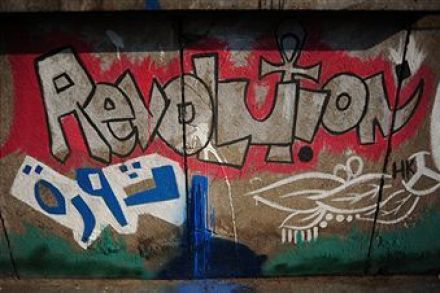
Here are a few more pieces from around the world on the Egyptian revolution and its aftermath. Andrew Neil: More about the Muslim Brotherhood. Charles Krauthammer says a freedom plan is not enough, America needs a freedom doctrine. Foreign Affairs: Who are rest of the Egyptian opposition? Bikyamasr: Israel’s take on Egypt’s new army government. The Middle Eastern Media Research Unit reacts critically to Obama’s intervention. Washington Post: A power vacuum in the Middle East. The Diplomat: Echoes of Cairo In Tehran. Silk Road Economy: What drought in China means for politics in Egypt. PS: If any CoffeeHousers see other pieces worth noting, do please link to them.

The world reacts to the Egyptian Revolution

From our UK edition

https://www.youtube.com/watch?v=cqGLgjTc8UQ Mubarak's exit has had a predictably seismic effect on Arab Street. Protests are spreading in Algeria; Syria, Jordan and Saudi Arabia are braced for dissent. Follow it all on al-Jazeera. In the meantime, here's what the world's papers make of it. The New York Times' Anthony Shadid considers the way ahead. Haaretz's Benny Neuberger considers the balance between democracy and peace and rejects the idea that Arab democracies would be any less hostile to Israel. The Jerusalem Post's David Horowitz reports that Natan Sharansky, the hero of Soviet Jewry, believes the Middle East protest movement is a purer form of democratic change than that which emerged from the Soviet Union.

From the archives: the fall of President Sadat

From our UK edition

With protesters in Egypt trying to force President Mubarak to resign, here is the piece that Roger Cooper wrote for The Spectator on the event that propelled him to power: the assassination of Anwar Sadat in 1981: The legacy of Sadat, Roger Cooper, The Spectator, 10 Oct 1981   Rarely has a political assassination set off such divergent reactions as that of Egyptian President Anwar Sadat on Tuesday.  President Reagan called it ‘outrageous and tragic’, the Pope praised him for ‘his noble vision of reconciliation’, and the Israeli prime minister, Menachem Begin, expressed deep regret at the death of ‘a great leader’.

Where does it leave Israel?

From our UK edition

Israel is in a right state over Egypt's incipient revolution. Israeli politicians talk openly about the threat from an Islamist takeover, the greatness of Hosni Mubarak, and have even taken to sneer at the West's hopefulness. Now that President Mubarak has announced he will leave, the Israeli leadership will be looking on in horror. They are right to be concerned. The beleaguered Jewish state has already lost one regional ally in Turkey and does not relish the prospect of losing Egypt too. That would leave only Jordan, a country whose monarchy may be the next casualty of the pro-democracy movement sweeping the region. But it is not just a matter of numbers. The "cold peace" with Egypt was the most important strategic alliance Israel had in the Middle East.

Fox: Iran could have a nuclear weapon by 2012

From our UK edition

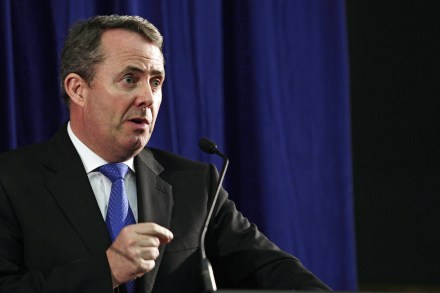
As Cairo smoulders, it's easy to forget about one of the most combustible ingredients in the Middle Eastern cocktail – Iran. Yet the threat still exists, as Tony Blair and Liam Fox have been keen to remind us. James Kirkup reports that the Defence Secretary has warned a Commons committee that Iran could have a nuclear device as soon as next year. Fox isn't the first to make the 2012 claim. The director of the CIA did so last year. And a recent article by the former UN weapons inspector David Albright and Andrea Stricker – which I arrived at via Jeffrey Goldberg – explains just how Iran might pull it off, in spite of recent setbacks: "Technically, Iran could decide to build a nuclear weapon now using the Natanz enrichment plant.

Will Mubarak Fall?

From our UK edition

A week ago, that would have seemed a foolish question. But after thousands of Egyptians have taken to the streets for two consecutive days of protest, even Hosni Mubarak is beginning to look vulnerable. It has placed the West in a dilemma, in a way that Ben Ali's fall did not. For years, the fear has been that President Mubarak is the lesser of two evils. Though authoritarian, Mubarak's Egypt is a pro-Western state willing to live with Israel and combat Islamist terrorism. On the hand, the Muslim Brotherhood opposition, which shares an ideological wellspring with Al Qaeda, is a grave threat to Western security.

The Gaza flotilla raid was legal – but stupid

From our UK edition

Yesterday saw the publication of a report into Israel's naval blockade of Gaza, the Hamas-run part of the Palestinian crypto-state, and the Israeli military's raid on a flotilla of aid ships bound for the coastal enclave last year. The inquiry, headed by former judge Yaakov Turkel, argued that: "The naval blockade imposed on the Gaza Strip... was legal pursuant to the rules of international law" The inquiry defined the fight between Israeli forces and Hamas and other Gaza-based militant groups as "an international armed conflict".

How Iran’s nuclear programme was delayed

From our UK edition

Iran’s nuclear programme is the most likely source of a major global conflict. So it is highly significant that the outgoing head of Mossad recently told the Israeli parliament that technical problems meant that Iran might not be able to make a bomb until 2015. These technical problems have, as a riveting piece in the New York Times explains, being caused by a computer virus. The stuxnet (correction) virus is in wide global circulation but it only kicks in when it spots the pattern that is used for centrifuges making highly-enriched uranium. When it does, it makes the centrifuges spin so fast that they destroy themselves. This virus appears to be a joint production of the Israeli, American and British secret services.

US Middle East initiative takes early holiday

From our UK edition

When the Obama administration started its latest Middle East initiative, it was amid great fanfare. I blogged – sceptically -- about the optimism exuding from the State Department at the time. Now, however, the US government has given up its push for a freeze in Jewish settlement construction as quietly as possible. As Martin Indyk of the Brookings Institution puts it: “The Middle East peace process just died, but nobody seems to be in mourning. Twenty months of U.S. efforts to freeze Israeli settlement activity to create a conducive environment for negotiations have produced only deadlock.

The ultimate Jewish conspiracy theory

From our UK edition

This has to be the ultimate Jewish conspiracy theory story. Why have the Wikileaks disclosures been so soft on Israel? Here is Tariq Shahid from the Palestine Think Tank. I’m hoping it’s a spoof but here’s my favourite section: “Browse through all the news sources available on the latest Wikileaks revelation, and try to find even only one revelation that actually damages Israel, even though so many of the revealed documents are directly or indirectly connected to Middle East politics, and to a large extent to Israeli affairs. Did you find any document among them that either creates difficulties for the government of the Zionist entity, or even slightly embarrasses it?

Chinese burns

From our UK edition

The latest cache of Wikileaks has done America no end of good. The Saudis urged the US to bomb Iran – a sign that the Arab world can make common cause with the States and Israel. It has also emerged that North Korea has sold the Iranians long range rockets – Moscow, Berlin and Istanbul are all within the Ayatollah’s range. But the most important revelation is that China has tired of North Korea’s lunatic machinations, recognising that the rogue state is an impediment to global and regional security. China is also convinced that the country will not survive Kim Jung-il’s death and favours a union of the two Koreas, provided the new state is pro-Chinese (could it be anything but?).

Stop blaming Israel alone

From our UK edition

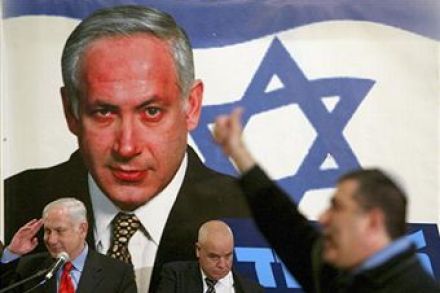
Reading the British press - or even listening to some ministers - you would be forgiven for thinking that the only obstacle preventing Middle East peace is Israeli obstinacy and Benjamin Netanyahu's unwillingness to force his political allies - like Shas - to the negotiating table. But, as always, things are a bit more complicated than the newspaper headlines would suggest. From Israel's position, the region is looking increasingly hostile. Talk of a war in Lebanon with Hezbollah persists. In Syria, President Assad looks less interested in a rapprochement than he has done for years.

Israel, radical Islam and the EDL

From our UK edition

I realise the title of this post looks like an open invitation to every lunatic conspiracy theorist on the web. But I'm afraid there's no avoiding this. Israel and the radical right (be that of the Islamic variety or the most traditional sort) are taking up a lot of my thinking time at the moment. Anyone who cares about these issues should look up two stories in this week's Jewish Chronicle. The first contains the news that one of the most senior figures in the British Jewish community has said that diaspora Jews should be free to criticise Israel.

Will there be peace in the Middle East in time for X-mas?

From our UK edition

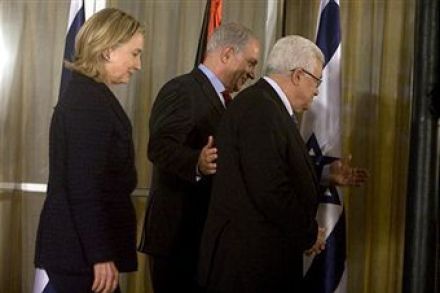
Two years into her term, and after carefully avoiding any success-free issues, Hillary Clinton has finally launched herself into the Middle East peace process. According to Roger Cohen in the New York Times, "The heavy lifting is now in Clinton’s hands". As evidence of Clinton's new role, Cohen lists a video conference with the Palestinian prime minister, where the US secretary of state announced $150 million in US aid to the Palestinian Authority and said the Obama administration was “deeply disappointed” by recent Israeli behaviour. Mrs Clinton's foray into the Middle Eastern quagmire  is interesting.

The winning entry

From our UK edition

So just how good is it? Because of course those splendid people, the Man Booker judges, have rather prejudiced this review by going and giving their prize to Jacobson’s latest. If only they’d had the patience to wait for the launch of this blog. Because although not on the panel this year (September is such a busy time), I am always more than happy to drop the odd word of wisdom, share my insights, and generally do my bit to see that contemporary novelists are held to account for their various crimes against culture. And all in all, perhaps this year’s prize hasn’t been too badly awarded, because Jacobson has less to answer for than most. That is praise, by the way.

In international politics, the pursuit of stability is not enough

From our UK edition

One of the biggest challenges facing the post-Iraq generation of foreign policy decision-makers, like William Hague and Hillary Clinton, is to balance the pursuit of overseas stability with promotion of the dynamic and sometimes de-stabilising forces that build countries' long-term stability and make economic and political progress possible. This may sound like an academic question but it is a very real change- and not just because the SDSR has made the task of building overseas stability a key government objective.   Take Iraq. After having lost an admirably violence-free and largely fair election, it looks likely that Iraqi Prime Minister Nouri al-Maliki will cling to power and the voter-winner, Ayad Allawi, will be denied a role in government.