Israel

Is that a ‘no’ then, Owen?

From our UK edition

To my simple suggestion that Owen Jones apologise for claiming that an 11-month old child killed by a Hamas rocket was in fact killed by an Israeli ‘so-called targeted strike’, Owen appears to have answered ‘no’. He starts his reply: ‘In the last couple of years I've learned one thing: the right don't like me very much, and expend a sizeable amount of energy attacking me personally rather than my writing.’ In saying that he has learned even ‘one thing’ I fear Owen exaggerates. He begins his next paragraph: ‘Hard right pseudo-intellectual [Douglas] Murray…’ Nothing worse than attacking a person rather than their writing is there?
Death of the Two-State Solution

From our UK edition

At the (rejuvenated) New Republic, Ben Birnbaum has a comprehensive and comprehensively-depressing survey of the last-gasp prospects for a two-state solution to the Middle East 'peace process'. If the two-state solution (TSS) is not yet on life-support it is hardly a picture of health. The prognosis is not good and time is running out. According to Birnbaum, Mahmoud Abbas and Bibi Netanyahu are, in their different ways, the last remaining men who could make it work. Yet neither man, as he also demonstrates, has much room for manoeuver.

Will Owen Jones apologise?

From our UK edition

Last November, during another exchange between Israel and Hamas in the Gaza, the left-wing columnist Owen Jones appeared on BBC Question Time. Invited to comment on recent events, what he read out (or so it appears from the tape) was a catalogue of errors about Israel. Among them were big, sweeping incorrect allegations – such as the claim that Israel is enforcing ‘a siege which stops basic supplies’ getting into Gaza. But there were also some new and more specific errors. Take his striking and emotive claim that Israel’s ‘onslaught’ included ‘targeted strikes’ which killed children. Here is one of the things he said: ‘I don’t want to just throw statistics around – I’ll give you one example of one of those children.

A lesson in solidarity, from the Jewish community in Britain

From our UK edition

This week I wrote my last Bright on Politics column for the Jewish Chronicle. Here it is in full: This is my last Bright on Politics column. After three-and-a-half years at the JC, I will leave with a lump in my throat, so please forgive me if this piece is a little sentimental or, dare I say it, schmaltzy. When I started work at the paper, some of my former colleagues warned me I was consigning myself to a backwater. Nothing could be further from the truth. Even before I joined the paper I had always felt it to be a unique publication: an ultra-local community newspaper with global ambitions. From my very first days in the job, I found myself slammed into the middle of an international news story with serious implications for UK politics.

Ed Miliband’s Convenient, Part-Time, Cowardly, Zionism

From our UK edition

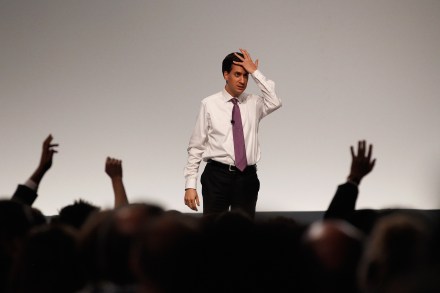
For a few hours this morning it looked as though Ed Miliband might do something uncharacteristically courageous. The Jewish Chronicle reported that the Labour leader had described himself as a Zionist at a meeting organised by the Board of Deputies. It may be sad that this would need to be considered, as Dan Hodges put it, 'a brave and welcome statement' but that's the modern British left for you. Mr Hodges wondered if Miliband would 'stand by' this statement. His scepticism was sensible. And sure enough, word comes that Miliband's views have been 'misinterpreted' by the Jewish Chronicle. As Hodges relates the story: 'Asked at the event whether he was a Zionist Miliband reportedly responded, “Yes, I am a supporter of Israel”.

David Ward and the Ruthless Suppression of Anti-Israel Criticism – Spectator Blogs

From our UK edition

David Ward, Liberal Democrat MP for Bradford East, is unhappy that his recent comments about The Jews attracted such widespread criticism. You see: "There is a huge operation out there, a machine almost, which is designed to protect the state of Israel from criticism. And that comes into play very, very quickly and focuses intensely on anyone who's seen to criticise the state of Israel. And so I end up looking at what happened to me, whether I should use this word, whether I should use that word – and that is winning, for them. Because what I want to talk about is the fundamental question of how can they do this, and how can they be allowed to do this." As machines go, this one seems a pretty Heath Robinson contraption, idiosyncratically constructed and wildly inefficient.

Argentina’s Foreign Minister compares the Falklanders to Israeli settlers

From our UK edition

Argentina’s foreign minister, Hector Timerman, is in town. He spoke to all the All Party Parliamentary Group on Argentina earlier this afternoon. There are close economic and social links between Britain and Argentina, extending far back into the nineteenth century; but the meeting was dominated by what was euphemistically termed ‘the islands’. Timerman began diplomatically. ‘You can speak to this Argentina,’ he assured the assembled honourable members and lords. ‘This Argentina is ready to talk.’ This sounded encouraging, a welcome contrast to President Kirchner’s bellicosity. Timerman spoke about the need for ‘frank and open’ discussions that did not obsess about ‘the past’. The future is what counts.

Breakfast with the Supreme Leader

From our UK edition

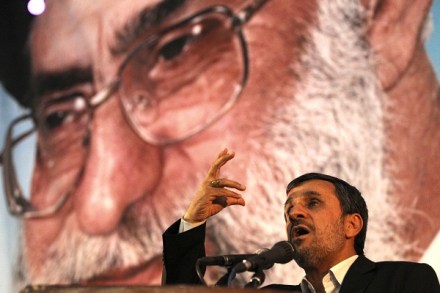
I have a piece in the Wall Street Journal (Europe) this morning: 'Take Iran At Its Word' can be found online here. The piece asks what is required to stop the Mullahs getting nuclear weaponry. And it relates a strange breakfast experience with the Supreme Leader, Ayatollah Khameini.

Should Jews leave Britain?

From our UK edition

Should Jews leave Britain? The question is prompted by this piece written by the Israeli journalist Caroline Glick. Glick recently came to London to take part in an Intelligence Squared debate. The debate was about Israeli settlements. Glick and Danny Dayan attempted to explain to the London audience that Palestinian rejection rather than Jewish settlement in the West Bank is the primary reason there is still no solution to the Israeli-Palestinian dispute. The debate is now available on Youtube and there you can see the deeply rancorous tone of the discussion. At one point Lord Levy’s son, Daniel Levy, (arguing against Glick and Dayan) has to be almost physically restrained by his own co-debater (William Sieghart).

Gerald Scarfe, anti-Semitic? No.

From our UK edition

So, that Gerald Scarfe cartoon, then. I don’t like it much, but then I like cartoons which make me laugh, (and especially so if they have animals in them). McLachlan, Honeysett, Rowson et al – and on a daily basis of course, Matt. I’m always at a bit of a loss with those big cartoons in the broadsheets which are attempting to tell me something very meaningful and make me stroke my chin. This one made me averse because it seemed to encapsulate the shrieking hysteria of the metro-left; translated into words, it says: ‘Netanyahu is building walls out of the blood of murdered Palestinian innocents!

David Ward, Israel and the Holocaust

From our UK edition

David Ward, a Liberal Democrat MP, is in trouble with his party bosses. He chose Holocaust Remembrance Day to indulge in a bit of anti-semitism, suggesting that the very Jews who suffered under the Nazis in death camps were now meting out the same treatment to the poor old Palestinians. I am not sure why he is in the doghouse: this sort of reflexive Jew-baiting lies just below the surface of most of the supposedly principled anti-Israeli posturing among his party colleagues. Not least those who feel the need to appease vast swathes of Muslim voters – Ward’s constituency is Bradford East. It’s good to get it out in the open now and again, so the rest of us can be sure we’ll never vote for them, had we ever been in any doubt.

Israeli elections: first exit polls

From our UK edition

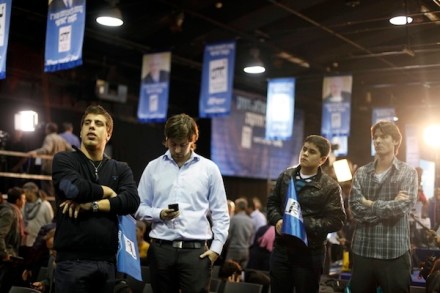
The first story of the exit polls here in Israel seems to be the success of Yair Lapid, the charismatic and populist TV man, who looks set to win 19 seats. Lapid has appealed to a large swathe of the disgruntled secular middle classes, talking a lot about social issues, but not a lot about the peace process. It looks like it still could be good news for Bibi Netanyahu, the Prime Minister. He polled at 31, which is weaker than last week's polls suggested. But I'm told it should be quite easy - though of course this all early speculation - for him to bring Lapid into a broad coalition. And it might be bad for the ultra-orthodox bloc.

Israel Votes and Hope Loses – Spectator Blogs

From our UK edition

Today's Israeli election does not, it is fair to say, take place in at a moment of supreme hope in the Middle East. Quite the contrary. This is an election whose result seems liable to depress most foreign observers. Bibi Netanyahu is no-one's idea of a moderate but the fact remains that, presuming he is returned for a third term as Prime Minister, he may be one of the more left-wing members of the new Israeli government. Indeed, Netanyahu is liable to be one of the more liberal members returned on the Likud list. Daniel Levy has a very useful primer on the dispiriting 'facts on the ground'. As Levy says: The next coalition will likely find it even harder to pretend to the world that a 2009 Netanyahu speech in which the phrase "two states" was uttered is a genuine policy commitment.

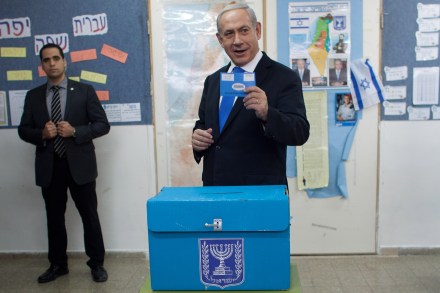
Israeli elections: the IDF goes to the polls

From our UK edition

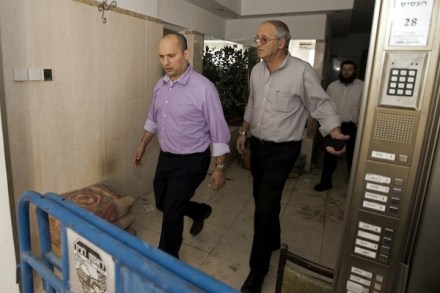
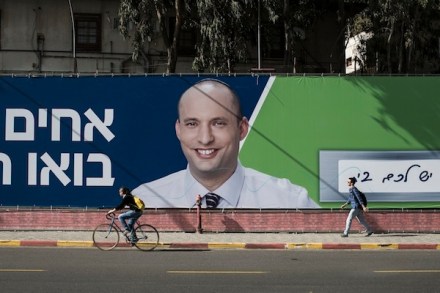
Israel's election is tomorrow, yet voting started here yesterday. At Kirya Defense Headquarters in Tel Aviv, serving Israel Defence Force troops have cast their ballots, and today more polling stations will open for soldiers. There is not much solid information as to suggest how the troops will vote. In recent elections, however, they appear to have backed the parties of the Right. So it is a fairly sure bet that a large number - especially among the rising proportion of Zionist-religious young men in the Force (NOT ultra-orthodox) - will be drawn to Naftali Bennett and his very right-wing Jewish Home party. Bennett seems to be the liveliest story of the election, both abroad and here.

Is Israel going green?

From our UK edition

Israel’s PR electoral system annoys mainstream politicians because it encourages a plethora of fringe parties, who waste their time and prevent them from doing what they want. The governing Likud-Beiteinu came together on a promise to overhaul the system. The proposals include raising the threshold for entering the Knesset from 2 to 6 per cent, thus removing some the smaller parties from the picture. Diversity is often numbing. But the prospect of Israel’s leaders revising the rules for their benefit invites suspicion, especially now that Avigdor Liberman, who led the push for reform, has had to stand down following charges of corruption. Moreover, reform would make things less funny.

Israel is sleepwalking to election day

From our UK edition

Maybe it's the unconscious effect of the Sabbath, but here in Tel Aviv a soporific atmosphere hangs over next week's Israeli elections. Among the Israelis I have spoken to (mostly secular Tel Avivians), apathy prevails. Prime Minister Benjamin Netanyahu is going to win whatever happens, it seems, and he is going to have to come to some agreement with the hard right-winger Naftali Bennett. 'The television wants to make it exciting,' an old Labor voter told me earlier today. 'But it is not. Everybody knows.' His wife nodded from behind her sunglasses, and smiled. Another elderly fellow told me that he would only vote for the 'least bad one - it's always that way.' The political story of this election is of a hardening Right and a paralysed Left.

Yoram Kaniuk, reluctant soldier in 1948

From our UK edition

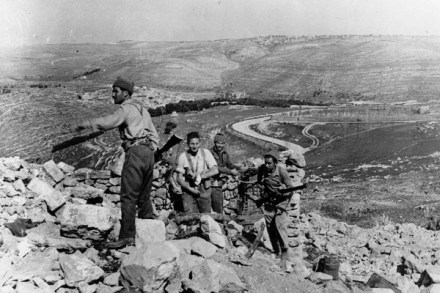
Yoram Kaniuk was born in Tel Aviv in 1930. After his experience in Israel’s 1948 War of Independence, Kaniuk moved to New York where he became a painter in Greenwich Village. Ten years later he returned to Tel Aviv, where he has lived ever since, working as a novelist, painter, and journalist. He has published various fiction, non-fiction, and children’s books over the course of his distinguished career. In 1948 — for which he was awarded the The Sapir Prize in 2010 — Kaniuk recalls fighting as a teenage soldier in Israel’s War of Independence. Told in the first person the book looks at how memory is a selective process; one that favours myth making and narrative, rather than recalling actual events.

When will the government confront the EU?

From our UK edition

Here is a story that should have got far more attention. A story that perfectly epitomises the corruption and anti-democratic activity of the EU. In 2010 the group NGO Monitor – which seeks to hold NGOs to account – petitioned the European Commission to reveal details of the NGOs it has funded in recent years.  As readers will know, much of the government-funded NGO business is a racket, and one which pushes highly specific political agendas. And so it has been in recent years with funding from the EU. In particular, as NGO Monitor has previously shown, there is the little matter of the European Commission funding rabidly anti-Israel groups in Europe and the Middle East.

Arab Winter update

From our UK edition

Rachid al-Ghannouchi is a great British success story. This Muslim Brotherhood leader sought asylum in Britain in 1989 and stayed here throughout the reign of Tunisian dictator President Ben Ali. After the recent Tunisian revolution Ghannouchi returned to his native land, bringing with him the values of tolerance and democracy he learned in the UK. Whoops – that last part is wrong. Since returning to Tunisia this Brotherhood leader and leading Hamas fan, has – through his leadership of the major Brotherhood party in the coalition – helped to lead Tunisia down the road of Islamic fascism.

Did Israeli settlements in the West Bank kill the two-state solution?

From our UK edition

When did the dream of a two-state solution die? When it became clear that there are already two Palestinian states – the Hamas-run Gaza and the Palestinian Authority-governed West Bank? Or when the extremists of Hamas fired thousands of missiles into Israeli cities? Or last week when the ‘moderates’ of Fatah once again refused Israeli offers to go to the negotiating table and instead moved to circumvent their only negotiating partner via a diplomatic coup at the UN? No, in the eyes of portions of the UK government as well as the international community, the two-state solution is threatened not by these consistent, physically and diplomatically violent moves; but by everybody’s favourite subject: Israeli settlement building.