Israel

The Lebanese always return home

From our UK edition

Beirut You might have thought that the threat of the Gaza war spiralling into an all-out regional conflagration, along with breathless travel advice from western governments urging their nationals to leave the country, would have deterred Lebanon’s expats from flying home to celebrate Eid al-Fitr this year. Not one bit. Flights, hotels and restaurants were fully booked despite Iran’s drone strike. The Lebanese know that even if there is fighting (and in South Lebanon, there is on an almost daily basis), if it isn’t on your doorstep, there’s no reason to stop the party. The Lebanese know that even if there is fighting, if it isn’t on your doorstep, there’s no reason to stop the party In any case, the Lebanese always think they have the inside track.

Curb your lefty law professors

“I am enormously sad that we have students who are so rude as to come into my home, in my backyard, and use this social occasion for their political agenda,” said hapless University of California Berkeley Law dean Erwin Chemerinsky. Last week, Chemerinsky and his wife, Berkeley law professor Catherine Fisk, were humiliated at a home dinner they hosted for third-year law students when Malak Afaneh, a Palestinian-American student who is co-president of the Berkeley chapter of Law Students for Justice in Palestine, produced a microphone she had brought with her and launched into a speech protesting the dinner and, apparently, her host.

erwin chemerinsky curb
Israel

Israel and the making of nations

A little more than five years ago the Israeli intellectual Yoram Hazony published The Virtue of Nationalism. Its final chapter was particularly poignant. After World War Two and the Holocaust, Hazony explained, two opposing views arose as to how such evils could be prevented from happening again. One side pointed toward the creation of the European Union and held that nationalism must be repudiated and condemned. The other endorsed the creation of Israel as a nation-state for the Jewish people, with a nationalism of its own. Israel is a test case for the survival of nationalism everywhere. That may sound like an exaggeration — surely nationalism has demonstrated ample staying power.

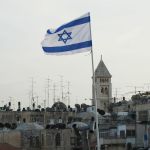
Jerusalem israel

Inside the real Israel

Tel Aviv Like most people, and most Jews, I’ve been experiencing the war in Israel and Gaza from thousands of miles away. I spent the weeks after October 7 with my face glued to my phone, rather than hiding in a shelter as rockets flew above. I experienced every wave of despair, every GoPro atrocity, every moment, hours away in another world; one that wasn’t directly affected by the chaos but was still consumed by it anyway. When the kibbutzim were being destroyed by gleeful Hamas militants, I was at a wedding in Barcelona. When Israel started to fight back, I was safely at my desk doing my work emails, ensconced in the security of distance.

Liz Truss returns – again

From our UK edition

14 min listen

It's 18 months since Liz Truss left Downing Street and her new memoir, Ten Years to Save the West, is out. She gave her first interview to Fraser Nelson on Spectator TV, covering why she wants to abolish the Supreme Court, Donald Trump, her husband's warning that her leadership bid would end in tears, and so much more.   We also cover Iran's missile attack on Israel, and what might come next.  James Heale speaks to Katy Balls and Fraser Nelson.  Produced by Megan McElroy.

What Iran’s attack on Israel means for the Jewish state, America and the region 

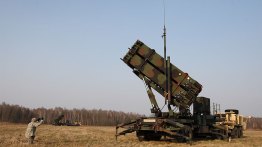
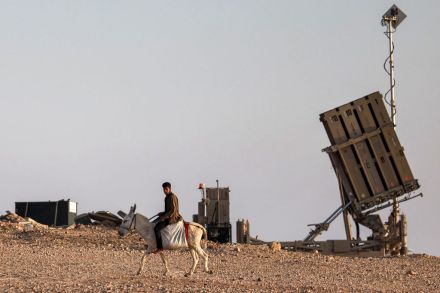
Iran’s unprecedented attack on Israel Saturday night represents a dangerous escalation for three reasons. The first is its scale, some 300 drones and missiles. Second, it marks the first time the Islamic Regime has launched a lethal attack on Israeli territory from Iran itself, rather than through proxies. Most important of all is the combination of the first two: a major attack launched against Israel from Iranian territory. Although Israel, the US, the UK and, surprisingly, Jordan managed to shoot down nearly all the incoming drones and missiles, it was the thought that counts. And it was a very dangerous thought. Within hours, the Iranian attack changed the region’s strategic landscape.

israel iran

Why do MPs send nude pictures of themselves?

From our UK edition

Adam Dyster has gone to work for the shadow Defra secretary Steve Reed. I admit this is not an appointment which would normally trouble the political scorers, but it is a straw in the wind. Mr Dyster was, until recently, the adviser to both the chairman and the director-general of the National Trust. As Zewditu Gebreyohanes points out in her new pamphlet, ‘National Distrust: the end of democracy in the National Trust’, it was against the interest of the Trust that Mr Dyster advised both, since it blurred the necessary governance difference between the trustees and the management. Mr Dyster was previously, in the Jeremy Corbyn era, the national organiser of Labour’s environment campaign, influencing, he says, the party’s general 2017 election manifesto.

Portrait of the Week: Tory phishing, tension over Rafah and Cameron in America

From our UK edition

Home The review by Dr Hilary Cass of gender-identity services for people under 18 called for an end to prescribing powerful hormone drugs; warned that children who change gender may regret it; and found that many had experienced trauma, neglect and abuse. More than 150,000 patients had to wait more than 24 hours in A&E before getting a hospital bed last year, a tenfold increase on 2019. Rachel Reeves, the shadow chancellor, suggested that Labour could plug the gap in its spending commitments by getting more taxes sooner from non-doms. Five Bulgarians admitted in court to stealing more than £50 million in fraudulent claims for Universal Credit. Britain held talks with the European Commission on making Gibraltar part of the Schengen area.

A new survey that may be of interest

From our UK edition

My favourite opinion polls are those which elicit enormous shock in the population for stating something everybody knew for ages, or could have guessed. Such as those headlined ‘People in Torquay are happier than people in Rotherham’ – goodness me, etc. Surely we are reaching the time when bland, deceitful shibboleths should be replaced by reality The polls that always occasion the gravest shock, however – despite the fact they come out every year or so – are those dealing with the views of the British Muslim community. In the lacunae between these reports their findings are completely ignored in favour of the approved set of lies with which the rest of the British population is fed to keep it amenable.

Will Israel still attack Rafah?

The decision by Israel to withdraw its forces from the devastated city of Khan Younis could portend a battle for the control of Gaza. For Prime Minister Benjamin Netanyahu and the Israeli Defense Forces, the prize in the war against Hamas is the capture of the southern city of Rafah, a sprawling, tented enclave bulging with up to 1.4 million displaced and desperate Palestinians. Given that much of Gaza is now in ruins, there is almost nowhere left for the Palestinians trapped inside the city to flee. It is almost universally accepted that any assault would end in a bloodbath.

benjamin netanyahu rafah

Why Blue Line peace is proving elusive

Naquora, Lebanon Tensions along the forty-nine-mile Blue Line that partitions Israel from Lebanon are as high as they’ve been in recent history. Given the stated objectives of Hezbollah, the powerful Shiite militia that controls Lebanon’s South and the IDF, which seeks to repel them beyond striking distance, that's saying a lot. Ten thousand sky-blue helmets stand between the warring sides, protecting a division of international troops from the raining debris of intercepted rockets. Nobody is targeting them, but collateral damage is inevitable in a region that sees fatal exchanges on a daily basis. The United Nations Interim Force in Lebanon was established in 1978 following the Israeli invasion of Lebanon.

unifil un blue line lebanon

Is Biden’s patience with Israel running out?

Back in 2016, Donald Trump had a memorable quote that pretty much encapsulated his old over the Republican Party: "I could stand in the middle of Fifth Avenue and shoot somebody, and I wouldn't lose any voters, OK.” At this point, you might be able say the same thing about Israeli prime minister Benjamin Netanyahu. The premier could stroll up Fifth Avenue, shoot somebody on the street and still receive US-supplied joint direct attack munitions, 2,000-pound bombs, fighter aircraft and no-strings-attached diplomatic support. The man can apparently do no wrong in the eyes of the Biden administration — or more accurately, he couldn’t do anything that would warrant even a minor, let alone substantive, adjustment in US policy.  But is that changing?

joe biden israel idf jose andres

Even pilgrims are staying away from Jerusalem

From our UK edition

Israel has a new train line: 25 minutes from Ben Gurion airport to Jerusalem. The Christian pilgrims would love it but they’re not here. Instead, there are soldiers and visiting American Jews. My taxi driver says American Jews come with thousands of dollars of cigarettes and drive around looking for soldiers to give them to. He says American Jews love Israel more than Israelis. Then he moves his machine gun – it’s on the front seat – and says: ‘Welcome to Israel.’ The American Jews go south to the massacre sites of 7 October to stare at the bullet holes. I don’t. You can’t forget the war here. At the airport you are greeted by photographs of hostages. They are up in windows and on street corners. Some say, ‘Bring them home NOW’, an anti-Netanyahu message.

The London Library should leave us in peace

From our UK edition

Reading only slightly between the lines of US foreign policy on Israel/Gaza, I detect that its most urgent aim is to get rid of Benjamin Netanyahu. The same goes for the Foreign Office and Lord Cameron. The shocking killing of the World Central Kitchen workers is being pressed into the service of this cause by London and Washington. Obviously there are lots of reasons – corruption accusations, alleged divisiveness, Anno Domini – why it might soon be time for the Israeli Prime Minister to depart, but why is that a decision for Israel’s western allies? Don’t we normally allow fellow democracies to make up their own minds who leads them, especially in a war? Undermining Netanyahu is a displacement activity, damaging our aim of upholding Israel’s right to defend itself.

Who put the toddlers in charge?

From our UK edition

Regrettably, we must conclude that our culture is being dictated by two-year-olds. I do not literally mean children of two years of age, some of whom are among my favourite conversationalists. I mean people with the mental age of a two-year-old. That is, people who have never been told ‘no’ and have gone through their adult lives behaving as such. These are people who have never been told ‘no’ and have gone through their adult lives behaving as such The rot began with the green lunatics. I’m all for saving the environment. Most people are. But the moment vandalism became an acceptable way to persuade people of your cause was where things went wrong.

Putin may seem confident – but Russia’s future is bleak

From our UK edition

How old will you be when Vladimir Putin’s next presidential term ends in 2030? Which of today’s world leaders will still be in office? By that time Putin will have been in power for 29 years, and just under half the population of the Earth at that time will have been born during his reign. On current form, Putin is set to see in at least two more US presidents – or more, if he chooses to stay in power until 2036. Putin has made a fetish of defending a Russian national sovereignty that no one had attempted to destroy When Putin launched his invasion of Ukraine in 2022 many dared to hope that defeat on the battlefield would force Russians to finally accept that they are no longer a great global superpower and confront their imperialist assumptions.

Plan Bibi: stalemate suits Netanyahu

From our UK edition

48 min listen

Welcome to a slightly new format for the Edition podcast! Each week we will be talking about the magazine – as per usual – but trying to give a little more insight into the process behind putting The Spectator to bed each week. On the podcast this week: plan Bibi In the early hours of Friday morning, Benjamin Netanyahu leaked his ‘Day after Hamas’ plan for post-war Gaza. But the plan is not a plan, writes Anshel Pfeffer – it is just a set of vague principles that do not stand up to the slightest scrutiny. Its sole purpose is rather to keep the ministers of Netanyahu’s fragile cabinet together to ensure his political survival.

Idris Elba’s champagne makes the world seem less troubled

From our UK edition

Gloom. Relentless rain out of a sullen sky enhanced an already pessimistic mood. We were talking geopolitics and agreeing that the West ought to brace itself for a hard landing. Try as we might, we could find no good news, anywhere. Where is the self-belief of the Reagan/Thatcher years? Instead, a culture war is taking place Some of us were veterans, one or two of whom had spent time in Washington in 1980, the build-up to the Reagan era and the prelude to the most successful decade in modern peacetime history, in which Margaret Thatcher played a crucial role.

Permanent stalemate in Gaza suits Netanyahu

From our UK edition

Jerusalem After midnight on Thursday is dead-time for the Israeli media. The weekend editions have gone to print (newspapers don’t come out on Shabbat) and the Friday night TV news shows have been pre-recorded. The country’s journalists are yearning for respite from a long week covering the war. Benjamin Netanyahu chose that black hole of news, 2 a.m. last Friday, to leak his ‘Day after Hamas’ plan for post-war Gaza. There was no speech. No briefings. Just a page and a bit, double-spaced, presented to his cabinet for discussion. The plan has not been designed to end the war in Gaza. It is about Netanyahu’s own political survival But the plan is not a plan.

The message from Michigan

Both Joe Biden and Donald Trump won overwhelming victories in Tuesday’s Michigan primary, but their undeniable success doesn’t answer the hard questions facing each candidate in the general election. They won’t get the answers next week on Super Tuesday, either, even though both candidates are expected to win easily. What are those questions, on which victory in November depends? Oddly, some are the same for Biden and Trump. Can they recapture the reluctant wings of their party, the factions that have refused to vote for them so far? Can they move beyond consolidating support within their parties to win over independent voters, who outnumber both Republicans and Democrats? Despite that similarity, there is a fundamental difference between the refusenik wings of each party.

michigan