Israel

Why Biden’s Gaza ceasefire proposal failed

From our UK edition

Ceasefire deals to end the war in Gaza have come and gone. President Biden’s unexpected announcement of the latest formula for a settlement, supposedly proposed by Israel, has already fallen by the wayside. In fact, Biden’s three-stage ceasefire deal looked remarkably like the previous ones: a six-week halt to fighting and withdrawal of Israeli troops from populated areas, with a release of some hostages in return for hundreds of Palestinian prisoners; a negotiated Israel/Hamas settlement for a permanent end to the war; and finally, comprehensive reconstruction of Gaza.

Netanyahu thinks he’s Churchill, Israelis see Chamberlain

From our UK edition

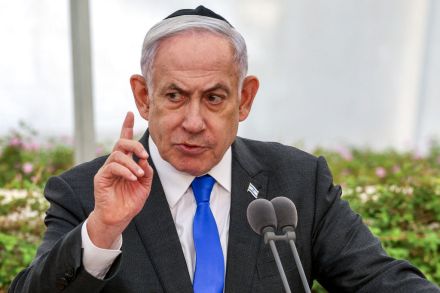
Aleading member of Israel’s wartime cabinet has threatened to resign should Benjamin Netanyahu fail to present a strategy for ending the war in Gaza. The liberal politician Benny Gantz, who would win an election were one held now, has given a public ultimatum. He will collapse Netanyahu’s fragile coalition if no peace plan is delivered by Saturday. Netanyahu might believe he’s a Churchill; most Israelis consider him a Chamberlain Meanwhile, the largest protest since 7 October took place last weekend when 120,000 Israelis marched in Tel Aviv. Families of the 120 hostages held in Gaza (at least a third of whom are presumed dead) have joined the growing demonstrations against the government.

Who is allowed to play Richard III?

From our UK edition

On Tuesday night I was body double/understudy for the brave, brainy, beautiful Rachel Riley, at a packed ‘support Israel’ evening. The keynote speaker was the brave, brainy, beautiful lawyer Natasha Hausdorff. I was slightly out of my depth but I hope I provided some light relief. Natasha was dazzling in defence of beleaguered democracy, but the facts are sombre and the audience went home a little more concerned about our future in the diaspora. Anti-Semitism is known to be a light sleeper. I fear it may become insomniac. I’ve been arguing vehemently with my brother Geoff about everything and nothing for 75 years. Inevitably, these days, our arguments are about Israel.

Portrait of the Week: Farage returns, Abbott reselected and Trump guilty 

From our UK edition

Home Nigel Farage took over leadership of the Reform party from Richard Tice and is standing for parliament in Clacton. This came as news on Monday to Tice, and to Reform’s candidate for Clacton, Tony Mack. Outside the Wetherspoons pub where he launched his campaign, Farage had a McDonald’s banana milkshake thrown over him. Farage proposed net-zero immigration. The Conservatives then said they would ask the independent Migration Advisory Committee for a recommended level for an annual cap on visas, and put that to a parliamentary vote. Invasive Asian hornets, which can eat 50 bees a day, were found to have survived a British winter and might stay permanently.

Will Netanyahu declare war on Hezbollah?

From our UK edition

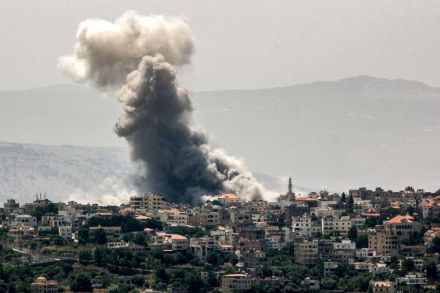
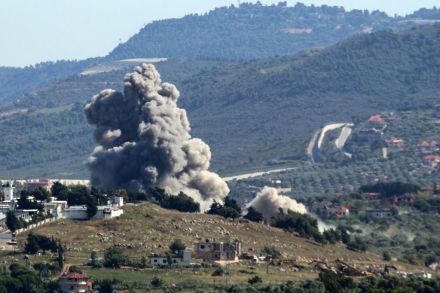
The war in Gaza is perceived internationally as a limited affair, pitting Israel against the Islamist Hamas organisation within the confines of a narrow strip of territory on the Mediterranean coast. This view has long been reductive. A number of other fronts are active as a result of the outbreak of war in Gaza. And one of them – Lebanon – is currently showing signs of erupting into full conflict. In November, the Yemeni Ansar Allah (Houthis) movement commenced their targeting of shipping in the Gulf of Aden and the Red Sea. In the same month, the Iran-allied Shia militias in Iraq began attacks on Israel, and on US and allied forces in Iraq and Syria.

joe biden time magazine

Joe Biden’s TIME interview: the good the bad and the ugly

President Joe Biden sat down for an interview with TIME magazine in the White House last week. The questions centered around foreign affairs, with interviewers Massimo Calabresi and Sam Jacobs asking about D-Day, Ukraine, Israel and Hamas, nuclear power, China, inflation, tariffs and immigration. Back in March Americans generally agreed that the economy and foreign affairs were weak points in Biden’s administration. The TIME interview is unlikely to change anyone’s mind. Cockburn identified a few overarching themes: Biden accused TIME of misreporting and leaving his accomplishments unreported. The first accusation: “The Russian military has been decimated. You don’t write about that. It’s been freaking decimated.” Another theme: senility.

Joe Biden’s ceasefire proposal could sink Benjamin Netanyahu

From our UK edition

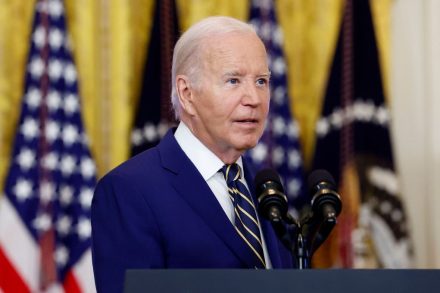
Joe Biden’s introduction of the three-stage deal to end the war in Gaza was a clever rout to bypass Benjamin Netanyahu. Biden has lost confidence in Netanyahu’s readiness to present things to the Israeli public, and to his own cabinet, in an honest and truthful way. By presenting the terms of the deal clearly and independently from Netanyahu’s spins, Biden was in full control of the message, in the hope that the Israeli public will back the deal and make it impossible for Netanyahu to back out of it.

Joe Biden’s non-defense policy

No one can say the Iraq War was under-discussed. On the eve of the 2003 invasion, President George W. Bush and his advisors explained and defended Operation Iraqi Freedom to, among others, British prime minister Tony Blair, Saudi ambassador prince Bandar bin Sultan, the United Nations Security Council and skeptical members of Congress, the media and the American public. Bush even faced opposition from his own secretary of state, Colin Powell, who cautioned the president against invading Iraq with what would come to be known as the “Pottery Barn Rule”: if you break it, you own it. An experienced military leader, General Powell understood the complexities of war and the importance of having an exit strategy.

ukraine war biden defense

I’m setting up a ‘climate crisis hub’

From our UK edition

‘We thought the house would make the most fantastic centre for climate action,’ I heard myself telling the cat rescue lady as she let the two moggies out of their carriers into the living room. I was trying to reassure the socially conscious liberal who had brought the two cats we were adopting that she was leaving them in what she would consider a good place. I said: ‘We want it to be somewhere schoolchildren can come to learn about biodiversity…’ What was I on about? Still, pretending I was turning my house into a climate crisis hub was a bit much.

Portrait of the Week: Sunak’s downpour, national service and the ‘triple lock plus’

From our UK edition

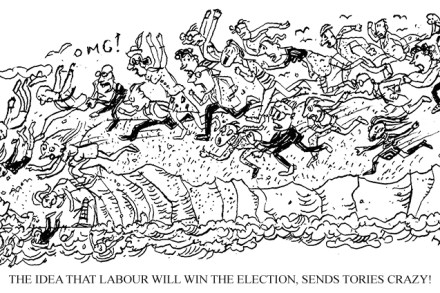
Home Parliament was dissolved, leaving no MPs until the general election on 4 July. With hours to go, Diane Abbott had the Labour whip restored to her, and Lucy Allan MP was suspended from the Conservative party for endorsing the Reform UK candidate for Telford. Among bills that were lost was one prohibiting the sale of cigarettes to anyone born after 31 December 2008. Rishi Sunak, the Prime Minister, had provided an abiding memory by announcing the election standing in heavy rain in Downing Street and making a speech as though it weren’t raining. The Conservatives suddenly said that everyone should do a form of national service at the age of 18. The Tories proposed adding to the triple lock for state pensions a promise that they would never incur income tax.

Netanyahu’s strategy in Rafah isn’t working

From our UK edition

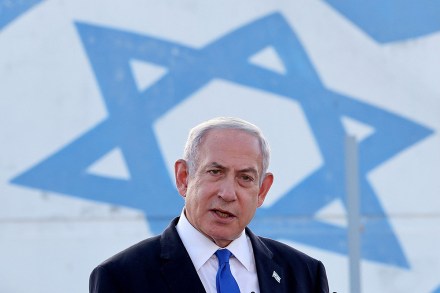
On 7 April, six months after the October massacres in southern Israel, Prime Minister Benjamin Netanyahu told the public that the country was just ‘one step away from victory’ in its war against Hamas in Gaza. Nearly two months later, Israel hasn’t taken that step yet. The war continues. No more hostages have been released alive. Hamas rockets still fall inside Israel, including a barrage earlier this week that rained down on the suburbs of Tel Aviv. The two leaders of Israel’s war effort haven’t spoken to each other for a fortnight In the meantime, international public opinion has hardened against Israel. Some countries, like Colombia, have broken diplomatic relations. Turkey has announced a trade embargo.

Israel may have to stop its offensive in Rafah

From our UK edition

The devastating fire that, according to Hamas, killed dozens of displaced civilians in Rafah and that reportedly started because of an Israeli attack on Hamas terrorists, has come at the worse possible time for Israeli PM Benjamin Netanyahu.  Four days ago, the International Court of Justice (ICJ) ruled that Israel must immediately halt activities in Rafah. Although the language used by the court could imply that Israel may carry out some activities in the city as long as it conforms to its obligations under the Genocide Convention, there were international calls on Israel to cease all activities, and warnings of a disaster have sadly come true. Israel’s ability to carry on in Rafah may now be in doubt. Rafah is the last Hamas stronghold in Gaza.

The grandstanding against the Hay Festival is short-sighted 

From our UK edition

When the country’s largest literary festival parts ways with its main sponsor, it is not usually a cause for rejoicing among writers, performers, and the sorts of people who like to go to literary festivals. It is usually a disaster for the festival. Yet when on Friday the Hay Festival sacked (yes, it was that way round) the investment fund Baillie Gifford as its main sponsor, it was felt that a mighty blow had been struck against injustice.

What is Trump’s new foreign policy?

From our UK edition

26 min listen

Freddy Gray speaks to author Jacob Heilbrunn about what another term in office for Donald Trump might mean for America's foreign policy, its relationship with Israel, and the war in Ukraine. How have his views changed since last time? And what will his relationship with Putin be like?

How Benjamin Netanyahu and Joe Biden fell out

From our UK edition

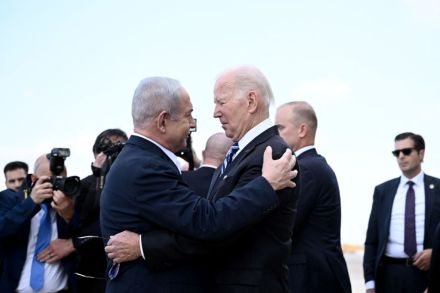
After the atrocities committed by Hamas in southern Israel on 7 October, President Biden offered his total and unflinching support for retribution against the terrorist-designated rulers of the Gaza Strip. Benjamin ‘Bibi’ Netanyahu vowed to annihilate every member of Hamas and to gain the release of the 252 Israeli and foreign hostages abducted and taken into Gaza. Biden agreed that these objectives were right and proper. So, too, did the UK government and other like-minded nations, appalled by the images and reports of slaughter, rape and brutality by Hamas. Relations between Washington and Tel Aviv are not beyond repair Nearly eight months later, that policy of unflinching support for Israel has gone through several stages of doubt, alarm, dismay and anger.

Anti-Semitism has returned to French politics

From our UK edition

New Caledonia is an archipelago in the South Pacific not far from Australia. James Cook discovered it in 1774, but, after concluding that too many languages were spoken there, he declined to annex it to the British Empire. France, not as cautious, made it a distant colony under Napoleon III. Today, riots are convulsing the territory. Supposedly ‘decolonial’ in aim, they are most certainly violent and fuelled by the anti-white racism that, from London to Brussels and Paris, has become the trademark of the new radical left. The strangest thing is that among the flags of the Kanak independence movement, one also sees Azeri flags. Why Azeri?

Portrait of the Week: Infected blood apologies, falling inflation and XL bully attacks 

From our UK edition

Home Rishi Sunak, the Prime Minister, said: ‘I want to make a wholehearted and unequivocal apology’ for a ‘decades-long moral failure at the heart of our national life’, as described in the report by Sir Brian Langstaff from the Infected Blood Inquiry, which found that successive governments and the NHS had let patients catch HIV and hepatitis. Sir Keir Starmer, the Labour leader, apologised too. So far more than 3,000 have died, of the 30,000 infected with HIV or hepatitis C from blood products or transfusions between 1970 and the early 1990s. Interim compensation of £210,000 will be paid to some within 90 days. BT postponed until January 2027 a deadline for forcing customers to switch from copper-based landlines to internet-based services.

Why the Gaza protests are worrying

As the weather has warmed, it’s time for that time-honored tradition — protest season. Because everyone knows the plight of the disenfranchised is best solved at 70°F. Setting up winter camp in a college quad seems unpleasant — the revolution will take place at a time, place and temperature that’s convenient for America’s poetry graduate assistants. Campus protests are nothing new in America. They’ve been a feature of university life since at least the Vietnam War and beyond. And sure, it’s fun to get wrapped up in a romantic cause you only just learned about and of which you have only a surface-level knowledge. It might give your life meaning at a time when you’re trying to figure out what the point of all of this is.

protests
protesters

Campus unrest is coming to a city near you

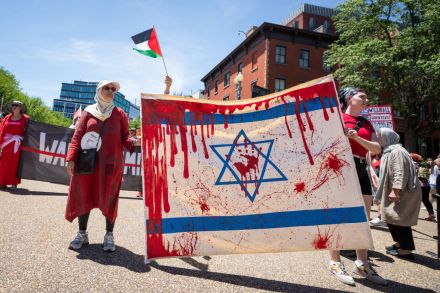
It is 10 p.m. at the University of Texas at Austin’s South Mall. The night is quiet, a stark contrast to just the day before when UT Austin became the latest battleground of the culture war on American college campuses. All over the country this spring, anti-Israel, pro-Hamas protesters set up squalid camps on well-manicured quads, blocking and storming buildings. Revolutionaries clad in Covid masks and the keffiyeh favored by terrorists the world over spent the semester hounding Jewish students in libraries, dorms and whatever other structures they could seize. They demanded that institutions cut ties with Israel, topped off with requiring criminal pardons and straight “A”s for themselves, lest their noble impulses hinder their career prospects.

letters

Letters from Spectator readers, June 2024

The rise of reverse gaslighting Sir — To an otherwise excellent article, I have a small correction. In 1860, the Southern states did not keep Lincoln off the ballot. Unlike today, where voting ballots are printed by the states, in 1860, voters were not presented with official ballots at polling stations that allowed them to check off which candidate they were voting for. Instead, a nineteenth-century ballot or “political ticket” was a slip of paper, provided by each party, listing their candidates for whatever offices were up for election. This allowed voters to easily “vote the ticket” for their party without having to know the names of every candidate and office.