Israel

Why the age-old ‘Jews are white’ trope is back on center stage

During Rosh Hashanah dinner this past week, my mother — an occasional yet focused steamer — recommended I check out the Israeli show A Body That Works on Netflix. And so I did. The series focuses on the marital joy and strife that emerges during a surrogate pregnancy situation between an affluent Tel Aviv couple and a single mother from far more modest circumstances.  Clearly shot before last October 7, I couldn’t help thinking that A Body That Works reflects all that is great about Israel — a place I’ve visited and lived in for decades. There’s Tel Aviv’s balmy seafront location. The series’ hip and hunky cast.
Where conflict in the Middle East goes from here

Anything written on the Middle East at this moment in history is almost instantly out of date. As Lenin said: “There are decades where nothing happens; and there are weeks where decades happen.” The Arab-Israeli war in 1967, the Iranian revolution in 1979, the invasion of Iraq in 2003...the region may once again be at one of those forks in the road that dictate the fate of nations for years to come. Journalists’ predictions age like milk out of the fridge. Nevertheless, here are some: Israel attacks Iran. This isn’t a hard one. The question is what form that attack will take. The prime minister, Benjamin Netanyahu, has wanted to bomb Iran’s nuclear facilities before, only to be stopped by the US.

Israel’s Iron Prime Minister

From our UK edition

At home, the left sees him as cynical, conniving and corrupt; while the right sees him as tired, weak and unambitious. Abroad, he is almost universally loathed and distrusted. And yet no one can deny his Machiavellian mastery of the dirty game of politics, domestic and international. Modern history has produced only two figures who fit this description. The first is Germany’s Iron Chancellor, Otto von Bismarck. The second is Israel’s Prime Minister, Benjamin Netanyahu. For Bibi – his nickname and the title of his recent autobiography – read Bibismarck. Netanyahu has been Prime Minister for almost 14 of the past 15 years, not quite the 19 years Bismarck served as German chancellor.

Portrait of the week: Iran fires missiles into Israel, Rosie Duffield resigns and Mount Everest gets taller

From our UK edition

Home The Conservatives at their party conference examined the four surviving candidates for leader – Robert Jenrick, Kemi Badenoch, James Cleverly and Tom Tugendhat – with the prospect of two being thrown out of the ballot by MPs next week and the other two being put to the party membership on 2 November. Rishi Sunak, the last Conservative prime minister, urged the conference optimistically: ‘We must end the division, the backbiting, the squabbling.’ Jeremy Hunt, the former chancellor, said: ‘One of the biggest lies we’ve had since Labour came to office is this nonsense about having the worst economic inheritance since the second world war.

Biden-Harris should help destroy Iran’s nuclear and missile infrastructure

Iran on Tuesday launched 180 ballistic missiles against Israel, a democracy the size of New Jersey. It was the largest escalation to date in a year-long, seven-front war waged by the world’s leading state sponsor of terrorism against Israel, the United States, and global maritime shipping. President Joe Biden and Vice President Kamala Harris must come to terms with the fact that this attack resulted from their own foreign policy — subsidized by billions of dollars in US sanctions relief, legitimized by strategic accommodations to Tehran, encouraged by pressure on Israel and invited by the non-stop signaling of American fear of escalation.

Israel was right to ignore the West

From our UK edition

There are sources in the Jewish tradition that warn against exultation at the downfall of one’s enemies. But I am not Jewish, and so I have exulted greatly these past two weeks. If you follow most of the British media, you may well think that the past year involves the following events: Israel attacked Hamas, Israel invaded Lebanon, Israel bombed Yemen. Oh and someone left a bomb in a room in Tehran that killed the peaceful Palestinian leader Ismail Haniyeh. Kamala Harris warned that the IDF shouldn’t go into Rafah. As she wisely said: ‘I’ve studied the maps’ Of course all this is an absolute inversion of the truth. Hamas invaded Israel, so Israel attacked Hamas.

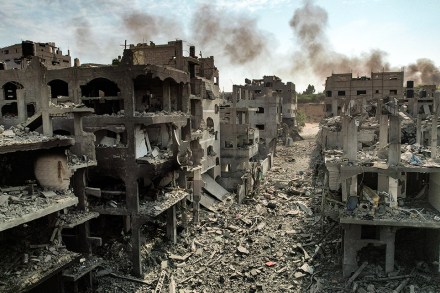
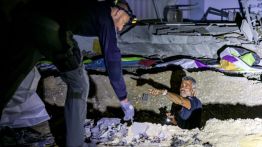
Voices from Gaza, historic city in ruins

From our UK edition

I have been reviewing for decades and this is by far the most difficult book I have taken on: difficult to read because it relates to what Israel has done in Gaza over the last year, and difficult to write about because the subject is so divisive. But whether you think Palestinians deserve what is happening to them or that Israel is a rogue state, please read to the end. First there is the title. Not Catastrophe, or Genocide, or Reckoning in Gaza, but Daybreak. This is a book that carries the promise of a new day, or a dawning – a book that looks forward, but does so also by looking back over 4,000 years of history.

Iran attacks Israel: what does it mean and what happens next?

A few hours before Iran launched missiles at Israel, America’s spy satellite saw Iran moving the weapons onto their launching pads. They told Israel (and leaked to the media) that an attack was “imminent.” They were right. Within hours, several hundred Iranian missiles were flying toward the Jewish State, just as they had in April. The earlier attack caused little damage — most of the missiles were intercepted — and early reports are that the recent attack met the same fate. Israel’s success shooting down the missiles is crucial, not only because it saved lives but because it does not require Israel to launch a full-scale counter-attack. Safety from the missiles did not protect all Israelis, though.

With Israel, the US is caught in a world of contradictions

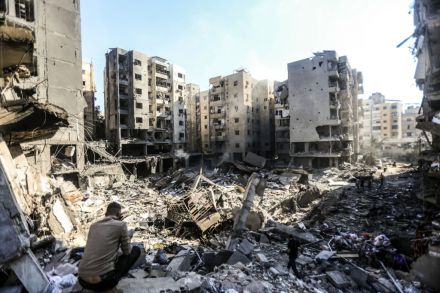
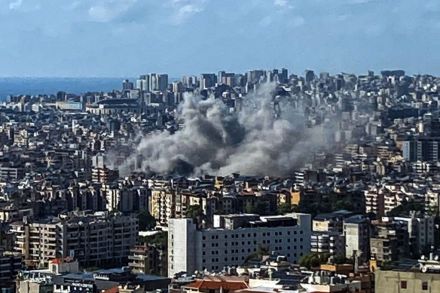
Ever since a 2,000-pound bomb demolished Hezbollah’s headquarters in Southern Beirut last Friday and killed Hassan Nasrallah, the leader of the organization since 1992, there was an expectation among the commentariat that Iran would retaliate. The scope of that response, however, was very much in dispute. The Iranian government was reportedly divided about whether to respond at all, with the newly-elected president, Masoud Pezeshkian, taking the position that an attack against Israel would likely ruin his foreign policy agenda — he offered the West the thinnest of olive branches during his time in New York for the UN General Assembly meetings — and give the Israeli government an excuse to strike inside Iranian borders.

Will America go to war with Iran?

From our UK edition

42 min listen

Israel has launched what it has described as "limited, localised and targeted ground raids" in southern Lebanon. Hezbollah’s deputy leader says they’re ready for a ground offensive. It comes as more than 1000 people have been killed in the past two weeks in Lebanon. Could they be heading for all-out war? Is it possible that Iran and the US will be sucked into the conflict too? With tensions between Israel and the US on the rise, what will the next few weeks look like – and is there a chance Israel’s attacks on Hezbollah open the way to strikes on Iran’s nuclear facilities? Professor John Mearsheimer joins The Spectator’s deputy editor and Americano host Freddy Gray to discuss what’s next for Israel, and the geopolitical implications.

Israel’s campaign to kill Nasrallah, Hezbollah and Hamas 

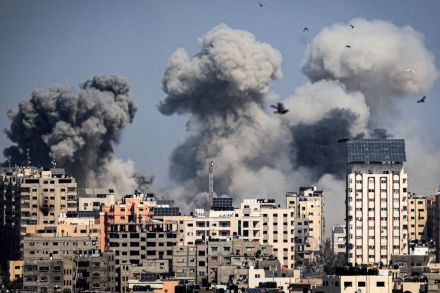
The killing of Hassan Nazrallah is the latest — and most impressive — stage in Israel’s campaign to wipe out Iran’s terrorist proxies on its doorstep. From the Egyptian border to Beirut, the campaign is the most dazzling demonstration of real-time intelligence, high technology and precise military action in the modern era. It will be recounted on screen and studied by military experts for decades to come. James Bond’s gadgets had nothing on the booby-trapped pagers. As the meme put it, “From the liver to the knee.”  The battle started a year ago, when Hamas terrorists in Gaza broke the ceasefire, raped and killed innocent Israelis and took hundreds of hostages for negotiating leverage. It was obvious from the outset that Israel would respond with full force.

israel gaza nasrallah

How to evacuate a country

From our UK edition

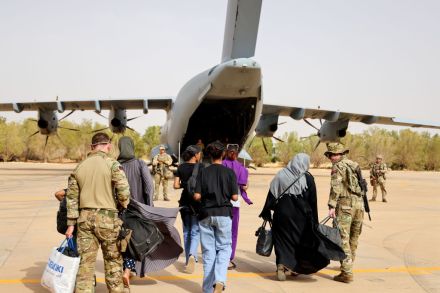
As fighting continues between Israel and Hezbollah, planning for a potential evacuation of British nationals from Lebanon has seen troops, ships and aircraft preparing in Cyprus and the wider region. Defence Secretary John Healey has chaired meetings in London to avoid the government being caught on the hop as happened before the evacuation from Kabul in 2021, following the unexpected collapse of the Afghan National Army. UK tabloids are already screaming about a ‘Dunkirk-style’ amphibious evacuation should an air extraction route become unavailable. This comparison is misleading. Naval planners had only seven days before launching the miraculous evacuation of 330,000 members of the British Expeditionary Force in 1940 under ferocious German attack.

Sky News has lost its way

From our UK edition

Occasionally I am told that I go too hard on the BBC. It is an understandable gripe which I sometimes hear from disgruntled journos from Broadcasting House. So let me start by saying that, as an equal-opportunities insulter, I would like to put on the record how completely rancid Sky News in the UK has become. To give an idea of where Sky UK has gone wrong since being sold, allow me to highlight one story as the channel reported it this week. After the targeted strikes on Hezbollah operatives via their pagers and walkie-talkies, Sky ran a story headlined: ‘Hezbollah has been provoked like never before by Israel and may be tempted to unleash its firepower.’ That is truly fascinating framing.

Is Israel trying to drag America into a war with Iran?

From our UK edition

The American general David Petraeus famously asked of the invasion of Iraq: ‘Tell me how this ends.’ That’s the question as Israeli bombs and missiles fall on Lebanon and the few missiles Hezbollah has sent in response are intercepted. Iran’s ‘axis of resistance’ seems paralysed with indecision. Does Benjamin Netanyahu take this as a win, the vindication of the enormous chance he took by opening a new northern front? Or, like a gambler intoxicated by success at the tables, does he press on? More airstrikes, followed by an invasion of Lebanon… and then the bombers fly on to Iran?  Some Israelis commentators are already calling this the Third Lebanon War (after the wars of 1982-2000 and 2006).

Gretchen Whitmer’s struggle shows Democrats’ Israel problem isn’t going away

Democrats have an Israel problem that isn’t going away any time soon. Michigan governor Gretchen Whitmer illustrated why this weekend in a CNN appearance that had her dodging the actions of her fellow partisans. At issue is the actions of Michigan’s attorney general, Dana Nessel, who is Jewish — and who has targeted eleven campus protesters from the University of Michigan, several of whom allegedly engaged in acts of violent obstruction against police officers charged with clearing their illegal encampment. The blowback against Nessel’s decision to charge the protesters, seven of them with felonies, led to Representative Rashida Tlaib of Michigan to accuse her and her office of anti-Palestine bias: We’ve had the right to dissent, the right to protest.

Is Israel ready for a ‘new phase’ of war?

From our UK edition

The toll wreaked from the events of 17 and 18 September has been extensive. According to the best estimates, more than 3,500 people were injured and 37 were killed. The events I’m referring to, of course, were the sudden and surprise explosions of thousands of electronic devices, carried (in the majority) by members of Hezbollah in Lebanon. Among the injured were the Iranian ambassador to Lebanon, who reportedly lost an eye, and allegedly several personnel from the Iranian Revolutionary Guard Corp who sponsor and assist terrorist organisations across the world.

How Hezbollah was humiliated

Explosions ripped across Lebanon Tuesday afternoon as hundreds of old-fashioned pagers stuffed with an ounce or two of explosives blew up, killing twelve and injuring approximately 3,000 more. On Wednesday, the low-tech carnage resumed, with exploding walkie-talkies killing at least another twenty people and wounding an additional 450.  The targets were militants and allies of Hezbollah, Lebanon’s Shiite Muslim political and military organization which, together with a coalition of political allies, holds a majority in the country’s parliament. Hezbollah and the allied Iranian government, which heavily supports its activities, have blamed Israel, which has been in localized near-daily hostilities with Hezbollah since Hamas’s October 7 attack.

hezbollah

Black Sunday: reckoning with October 7 a year later

October 7 was the bloodiest day in Jewish history since the Holocaust. Some refer to it as Israel’s 9/11, though proportionally it was like fifteen 9/11s. However, numbers rarely tell the full story and here they fall devastatingly short. I was awake when it started. I’ve always been a night owl but staying up until six in the morning is unusual for me. On that bright fall morning I heard sounds like a thunderstorm and went outside to see what was going on. I live on a hill overlooking Gush Dan, the informal megalopolis that’s home for almost half the population of this stamp-sized country. When something big happens I can often see it.

October 7

The BBC’s strange silence

From our UK edition

In the long and illustrious history of race chancing, there must have been many more egregious examples than that of Noel Deans’s recourse to court because a colleague ‘fist-bumped’ him rather than shaking his hand, but I can’t think of any right now. Certainly not over here in the UK, where we still lag a little behind the inventiveness of the top American chancers. It is quite possible that, through the best of intentions, I will appear before a tribunal one of these days The case brought by Mr Deans against RBG Holdings was one of racial discrimination. He alleged that on one occasion the firm’s senior partner, Ian Rosenblatt, greeted him with a fist-bump, which is apparently a common form of greeting among the African-Caribbean community from which Mr Deans hails.

An outcast among outcasts: Katerina, by Aharon Appelfeld, reviewed

From our UK edition

‘Nothing escape’s the wolf’s fangs,’ thinks the narrator of Katerina. Through an outlandish sequence of chances and choices, somehow its author did just that. Aharon Appelfeld, a child of assimilated parents, lived in the old Jewish heartland of Bukovina. In 1940, short-lived Soviet occupation gave way to Nazi control. His mother was murdered and his father disappeared. Young Aharon escaped the Czernowitz ghetto and survived as a wild child in the forests, sheltered by a village prostitute, then as the ‘slave’ of a Ukrainian bandit gang. When the Red Army arrived he cooked for them before, via a peril-strewn route through Italy, he migrated to Mandate Palestine.