Israel

Iran’s axis is dying

From our UK edition

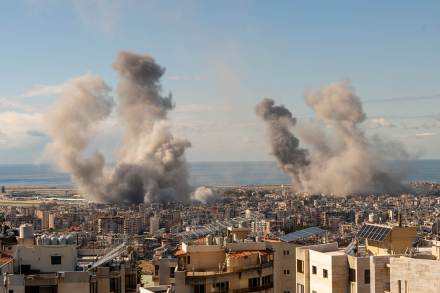
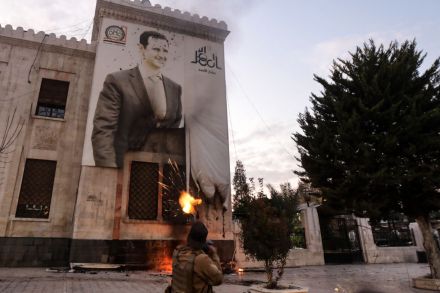
From the hilltop viewpoint at Misgav Am, Israel’s northernmost kibbutz in the Upper Galilee, the view into southern Lebanon is a panorama of uncertainty. Less than a full day after Assad was finally defeated in Syria, I stand at and look down at the rubble of the Lebanese buildings destroyed in the recent fighting, as close to the Syrian border as the IDF will allow. Beside my feet, spent bullet casings remind me that less than two weeks ago this peaceful spot was a frontline position. The shell of a bombed-out nearby community viewpoint serves as a silent witness to the RPG attacks Hezbollah regularly launched on civilian homes and buildings since it started its war on Israel in October 2023.

Will the Syrian Civil War create another ISIS?

From our UK edition

There are unintended consequences, and then there are unintended consequences. What we are seeing in Syria, as Aleppo and Hama fall (and Homs braces itself) to a coalition of anti-regime forces whose DNA is to be found in al-Qaeda et al, is an unintended consequence of Israel’s bombardment in Syria of Iran-funded pro-Assad groups, and the pulverising of Hezbollah in Lebanon. An unintended consequence of the weakening of Iran and its Axis of Resistance. For the three pillars on which Bashar al-Assad props up (for the time being) his murderous kleptocratic narco-state – Iran, Hezbollah and Russia – are, respectively, on their ‘best’ behaviour in the hope of talks with the US, broken, or extremely distracted.

Trump is already the diplomat-in-chief

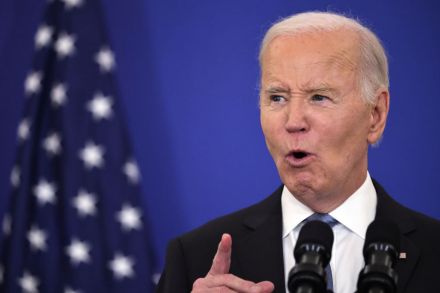
The United States only has one president at a time. Until January 20, that’s Joe Biden. But President-elect Donald Trump and his skeleton foreign policy team are waiting in the wings, plotting policy behind the scenes on issues — Ukraine, Gaza, Iran, Middle East peace — that have stymied the Biden administration for the last year. In fact, Trump is already influencing the respective calculations of allies, partners and adversaries before he even steps foot in the Oval Office. And Biden’s advisors seem perfectly fine with it. Trump fancies himself as a master negotiator, somebody who’s inherently skilled at poking, pressuring and sweet-talking the opposite side of the table until he gets what he wants.

diplomat

Beware the Qataris

From our UK edition

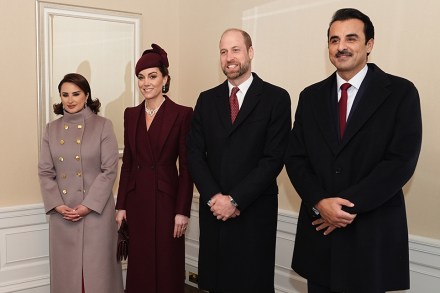
I feel some sympathy for the British royal family because of the ghastly people they are forced to meet. The late Queen had to greet Nicolae and Elena Ceausescu, Idi Amin and Robert Mugabe. This week the King and Prince and Princess of Wales had to meet the Emir of Qatar and his wife. True to form, the state media in Britain managed to miss every major problem with this. The BBC did say that there might be protests around the visit because of Qatar’s record on ‘LGBT rights’. But more troubling is that Britain should ever have welcomed the leadership of such a sordid, terrorist-supporting statelet.

The leak that’s haunting Netanyahu’s government

From our UK edition

Early September, days after the gruesome discovery of six murdered Israeli hostages in a tunnel in Gaza, a dramatic scoop appeared in Bild. The German newspaper had obtained a secret internal Hamas document, supposedly obtained from Hamas leader Yahya Sinwar’s personal computer, that revealed Hamas’s hostage negotiation strategy. The document claimed that Hamas was deliberately exploiting the divisions in Israeli society, manipulating the families of the hostages to help blame Benjamin Netanyahu’s government for not making a deal.

Portrait of the week: Storm Bert, Israel-Hezbollah ceasefire and Putin gives cockatoos to North Korea

From our UK edition

Home A white paper outlined measures to counter economic inactivity (which had risen by September to 41.2 per cent among those aged 16 to 24): everyone aged 18 to 21 would be offered an apprenticeship, training, education or help to find a job; Jobcentres would be rebranded as the National Jobs and Careers Service. Rachel Reeves, the Chancellor of the Exchequer, said: ‘What I haven’t heard are many alternatives’ to the tax rises imposed by October’s Budget; she was speaking to the Confederation of British Industry. A petition on the parliament website, accusing Labour of breaking promises and calling for a general election, gathered more than 2.

What the ICC gets wrong about Israel

From our UK edition

Legal reasoning is only as good as the ethical concepts it uses. That’s why the International Criminal Court’s decision to issue arrest warrants for Israel’s Prime Minister and former defence minister is basically flawed. The ICC claims reasonable grounds for believing Benjamin Netanyahu and Yoav Gallant guilty of the war crimes of ‘intentionally and knowingly depriv[ing] the civilian population in Gaza of objects indispensable to their survival’, creating ‘conditions of life calculated to bring about [their] destruction’. The grounds are these: Israel’s failure to facilitate relief ‘by all means at its disposal’ and to ‘ensure that the civilian population... would be adequately supplied with goods in need’ amounts to a violation of the ‘fundamental rights...

Ta-Nehisi Coates, the DEIty

A decade ago, in June 2014, the Atlantic published a cover story with a simple declarative title: “The Case for Reparations,” by Ta-Nehisi Coates. The piece had taken him two years to write, and the work paid off — with praise sweeping through the ranks of media, prizes from the most prominent elite institutions. The piece was named the “Top Work of Journalism of the Decade” by New York University’s journalism institute. It was hailed as a rare piece of writing which pushed open a cultural dialogue about a controversial subject.

Coates

There may soon be peace in Lebanon

From our UK edition

If the leaks and briefings are to be believed, Israel is getting ready to end its war in Lebanon. With the US pushing hard, and after a successful military campaign, reports say that Israeli leaders are looking to make a deal. Lebanese Hezbollah joined Hama’s war against Israel on 8 October, 2023; around 100,000 Israeli civilians have evacuated the border area. Almost immediately after Israeli troops moved into the Gaza Strip, determined to oust Hamas and release the hostages captured on 7 October, there were negotiations, brokered by Qatar, Egypt and the USA, to try and reach some kind of deal that would free the hostages and end the war. Apart from a brief ceasefire in December, that deal is still being unsuccessfully negotiated today.

Portrait of the week: Tax rises, a cheddar heist and snail delivery man gets slapped

From our UK edition

Home Rachel Reeves, the Chancellor of the Exchequer, repeatedly mentioning an inherited ‘£22 billion black hole’, raised taxes by £40 billion in the Budget, while saying she was abiding by Labour’s manifesto promise not to increase taxes on ‘working people’. A big hit came from increasing employers’ contributions to national insurance; the threshold at which it begins to be paid was reduced from £9,100 to £5,000. But income tax and NI thresholds for employees would be unfrozen from 2028. Capital gains tax went up; stamp duty for second homes rose. Fuel duty would again be frozen. The non-dom regime was abolished. Tobacco went up; a pint of draught went down a penny. The minimum wage would rise. Defence spending would rise by £2.9 billion.

CNN boots commentator Ryan Girdusky for Hezbollah pager joke

Conservative commentator and 1776 Project PAC founder Ryan Girdusky found his punditry gig at CNN to be short-lived after the network kicked him off air Monday for making a joke about Hezbollah’s exploding pagers. Girdusky was sparring with two progressive co-panelists, Ashley Allison and Mehdi Hasan, on CNN Newsnight over whether Trump’s rally at Madison Square Garden could be reasonably equated to the 1939 Nazi rally at the same venue. Girdusky asserted that Democrats were smearing Trump’s supporters by accusing them of attending a Nazi rally, to which Hasan replied, “If you don’t want to be called Nazis, stop doing — stop saying,” presumably meaning to end that sentence with “Nazi things.

girdusky

The two Dearborns that could decide the election

Dearborn, Michigan Leave Detroit and drive down Michigan Avenue, past the liquor stores, abandoned houses and weed-strewn fields; eventually you’ll hit Dearborn. You’ve undoubtedly read a lot about Dearborn these past few months, the Michigan city whose voters could sink Harris’s chances at the White House.   As you’ve been told, around 60 percent of Dearborn’s citizens are of Arab descent — it’s home to the largest mosque in the country and has the largest population of Muslims per capita in the United States. Overall, in Dearborn and in surrounding cities in Metro Detroit, the Arab-American community numbers over 200,000 people.

dearborn

When will Sally Rooney boycott Britain?

From our UK edition

I have a question for Sally Rooney. Why are you perfectly happy to engage with cultural institutions in the UK, despite the various mad wars us Brits have waged in recent years, but you dodge like the plague cultural institutions in Israel because Israel is fighting a war in Gaza? Rooney, the celebrated Irish author of chick lit for people with PhDs, has reportedly put her name to a letter calling for a boycott of Israeli cultural institutions that are ‘complicit in genocide’. Hundreds of other writers with virtue to advertise have apparently signed too. Arundhati Roy, Percival Everett, Rachel Kushner and others all say they will forswear Israeli ‘publishers, festivals, literary agents and publications’ that are ‘complicit in violating Palestinian rights’.

Can Kamala Harris answer a single question?

It’s official. Donald Trump is “like Hitler” and Kamala Harris — even though she does “pray everyday, sometimes twice a day,” can’t seem to answer questions. Her "joyful" campaign took a confusing turn in her CNN town hall in Pennsylvania Wednesday night. She opened with an attack on Donald Trump, in answer to Anderson Cooper’s question about John Kelly’s claims. Kamala says Donald Trump is “increasingly unstable,” “unfit,” “fascist to the core” and that “he himself has said he would terminate the constitution of the United States.” It wasn’t until much later that “joy” and “optimism” were mentioned. The audience at the Delaware County town hall consisted of undecided voters.

kamala

The ICC’s rogue prosecutor

From our UK edition

Yahya Sinwar, the mastermind of 7 October, went to meet his maker last week. Having spent a year being pursued through the underground tunnels of Gaza that he had built, he finally put his head up above the surface in the Tal al-Sultan area of Rafah. The world that had told the IDF not to go into Rafah was once again proved wrong. Sinwar was killed in an exchange of fire by a 19-year-old Israeli soldier who was not even in uniform on 7 October. People inside the ICC were annoyed by the way Khan made himself a sort of ‘world policeman’ A couple of days after Sinwar’s demise, I went into Rafah to see the house where he spent his final minutes.

Letters: Why does the Navy have more admirals than ships?

From our UK edition

Pointless laws Sir: The leading article ‘Wrong problem, wrong law’ (19 October) makes cogent points about the Terrorism (Protection of Premises) Bill, in particular pointing out that it would probably not have made any difference had it been in force at the time of the Manchester Arena bombing, and that if passed it will impose disproportionate and often unmanageable burdens on venues such as churches and village halls. There is, in truth, a wider point here: most legislation is either counterproductive, useless or both. All legislation has five aspects: (1) A real purpose. This may be to achieve the ostensible purpose of the legislation, but is often really to make it look as if the government is ‘doing something’. (2) An ostensible purpose.

The 2024 Hobson’s choice

After what seems like four straight years of a presidential campaign, we’re finally here. When we say “here,” we are talking of course of the last stage of grief, exhausted acceptance. One half of the population accepted that their nominee could be replaced without a single primary vote. The other half accepted that their 2020 nominee couldn’t be replaced at any cost. Many this year are casting votes with considerable pain as they select from two less than ideal options. Andrew Sullivan details his grudging support for Kamala Harris; while Bridget Phetasy describes the reluctant undecided voters pulling the lever for Trump. We’re sure they’re not the only ones holding their noses. The lesser-of-two-evils election is nothing new.

2024
Gaza

Inside the ‘next Gaza’

West Bank It’s hard to take someone seriously when they tell you: be extremely careful, that part of the West Bank is just like Gaza now. Hyperbole, surely, but duly noted. It was late August and I was heading to the Tulkarem and Nur Shams refugee camps, two adjacent Palestinian communities in the northern occupied West Bank which are now the site of almost daily fighting between the Israeli military and Palestinian armed groups. The nearby city of Jenin has seen even worse violence. On the approach to Nur Shams, the landscape suddenly turned from an impoverished yet benign Arab countryside into a full-blown urban war zone. Dust filled the air, Hamas propaganda was plastered all around, an Israeli drone circled above us.

Biden

The endgame: Biden’s quest for a foreign policy legacy

President Joe Biden only has a few more months before he steps out of the White House, hands over the keys to his successor and spends his remaining days soaking in the Delaware sun. But before he enjoys retirement, the lifelong public servant has a big piece of unfinished business: scoring a major foreign policy win that will secure his place in the history books. Unfortunately, dreaming about being a statesman is one thing; being one is quite another. The two conflicts that would give the president that coveted status — the wars in Gaza and Ukraine — aren’t presently amenable to diplomatic resolution. And while Biden and his advisors may be committed to doing the impossible, all the commitment in the world won’t do much if the combatants are intent on slugging it out.

Iran is playing a dangerous game

From our UK edition

A drone exploded in a sleepy Israeli seaside town yesterday. The target of the attack was Benjamin Netanyahu. By luck, the drone missed its target – Netanyahu’s home – and no one was hurt in the explosion. Hezbollah launched three drones from Lebanon toward Caesarea. Two were shot down by the Israel Defense Forces but, worryingly, the third arrived undetected. Sirens, which are supposed to warn civilians of an impending attack, did not sound, meaning no one knew they should seek refuge in a bomb shelter. The Israeli Prime Minister claimed he was not at home when the drone hit. An Iranian – or Iranian-backed – assassination of the Israeli Prime Minister (or other senior figure) would change the game completely.