Islamism

France is throwing a tantrum at Trump

France is intensifying its counter-offensive against what it calls misinformation. Earlier this month, Paris prosecutors confirmed they have opened a criminal investigation into Elon Musk and X. Musk had ignored a summons to appear for a voluntary interview on April 20. The French state requested Musk assist in an investigation into algorithmic manipulation and the spread of AI deepfakes on X. Musk responded to the criminal investigation by labeling the prosecutors “faker than a chocolate euro and queerer than a pink flamingo in a neon tutu!” On the same day, Paris unveiled its “French Response” strategy. The head of the Ministry of Foreign Affairs, Jean-Noël Barrot, posted a video on X (where else?

France misinformation

Britain is facing an Islamist insurgency

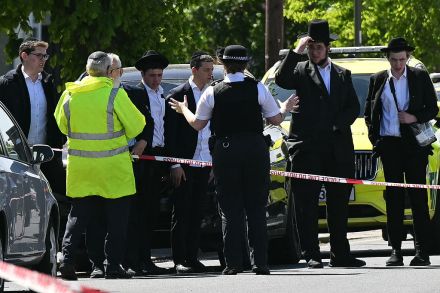
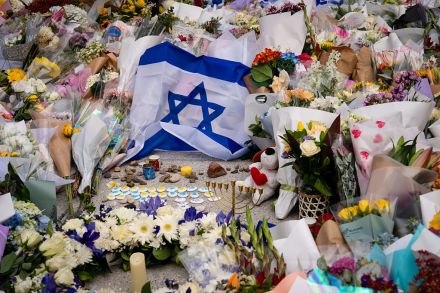
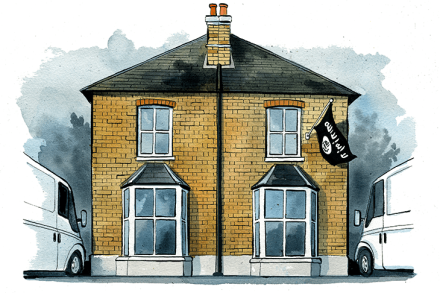
The recent horrific attack in Golders Green has generated much anger and despair at this latest in a series of concerted, violent assaults currently aimed primarily at the Jewish community, but with a clear lineage to earlier Islamist outrages such as the murder of Fusilier Lee Rigby and the London Bridge attacks of 2017 and 2019. The UK terrorism threat level was raised to "severe" following the attack on Thursday. But terrorism, "an action or threat designed to influence the government or intimidate the public," is an inadequate descriptor of what we face in Britain. Instead, I believe we face a different problem: a full-blown insurgency.

islamist

British politics is turning French

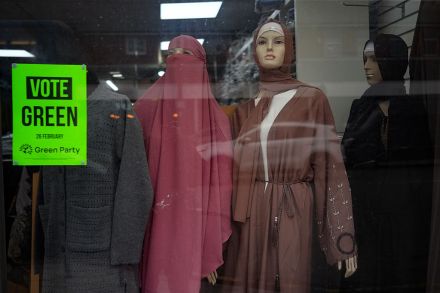
An editorial in Friday’s Le Figaro (France’s equivalent to the New York Times) is headlined "Mélenchon or the moral suicide of the left." The same statement could be applied to Britain’s Green party. Their open pandering to the Muslim vote in Thursday’s Gorton & Denton by-election was arguably a new low in British politics. It wasn’t just Israel and so-called Islamophobes who were targeted (in Urdu) in their campaign leaflets and videos, so was India. Le Figaro’s scathing critique of the left-wing populist leader Jean-Luc Melenchon was written as a reaction to his visit to Lyon on Thursday evening. A fortnight earlier 23-year-old Quentin Deranque had been kicked to death in Lyon, allegedly by a far-left mob.

I burnt a Quran. Now I may have to flee Britain

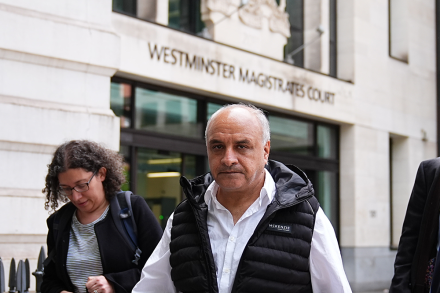
My name is Hamit Coskun and last year I was convicted in a British court of religiously aggravated public order offense. My “crime”? Burning a copy of the Quran outside the Turkish consulate in London. Moments later, I was attacked in full view of the street by a man. I was hospitalized. Then I was arrested and convicted in Westminster Magistrates Court. I managed to get that conviction overturned, with the help of the Free Speech Union and the National Secular Society, but now the Crown Prosecution Service is appealing my acquittal, with the case being heard tomorrow in the High Court. Now I am in discussions with the White House about claiming asylum in America in case the decision goes against me.

‘Islamist’ is a dishonest confection

From our UK edition

Convicted last month of plotting what could have proved the worst terrorist attack in British history, Walid Saadaoui had hoped to murder at least 50 people in Prestwich, because ‘Prestwich is full of Jews’. He was caught purchasing four AK-47s, two handguns and 1,200 rounds of ammunition. For Saadaoui’s fires of righteousness on social media had earlier drawn the eye of British law enforcement. ‘Avenge your religion Oh Muslims in Europe,’ he posted. ‘I pray to you not to catch me until I break my thirst with Jews, Christians and their proxies’ blood.’ Thus Saadaoui instructed an undercover officer: ‘Grab a Jewish person and slaughter him and remove his head, rub blood on my body, throw it away. That is the least we can do.

Bondi attack: understanding Islamism & the causes of anti-Semitism

From our UK edition

50 min listen

Michael Gove and Madeline Grant confront the horror of the Bondi Beach massacre and ask why anti-Semitic violence now provokes despair rather than shock. As Jewish communities are once again targeted on holy days, they examine the roots of Islamist ideology and the failure of political leaders to name it. Why has anti-Semitism metastasised across the radical left, the Islamist world, and the far right – and why does the West seem so reluctant to grapple with its causes? Then, on the 250th anniversary of Jane Austen’s birth, Michael and Maddie ask why Austen is endlessly repurposed, politicised and rewritten by modern adaptors? Was she an abolitionist, a moralist, or something far subtler – and why do her novels continue to resist ideological shoehorning two centuries on?

Bondi Beach and the heroism of Ahmed al-Ahmed

As the appalling story of Sunday’s anti-Jewish mass shooting at Sydney’s Bondi Beach continue to unfold, and 16 people are now dead, there have been few glimmers of light in the darkness. The men identified as the shooters are a father and son, Sajid Akram, 50, and Naveed Akram, 24. The father was shot and killed by police last night, and the son was overpowered and taken into custody. The New South Wales police commissioner says little is yet known about the pair, but Sajid Akram was a licensed gun owner, with six guns in his possession. Old social media posts have also emerged of Naveed Akram being praised for his Islamic studies in 2022.

ahmed

Meet the e-girls selling European decline to America

Earlier this year, a striking 28-year-old woman, dressed head to toe in a vivid shade of crimson, stepped up to the podium at a conference in Hungary. “Ladies and gentlemen: hello Budapest. I’m so thrilled to be here again,” she began, adjusting the twin microphones and gently swiping a strand of long blonde hair from her forehead. “As some of you might remember, last year I gave here a speech as well, about the ‘great replacement,’” she continued, confidently glancing around the assembled audience. “I wanted the whole world to know that the ‘great replacement theory’ was, in fact, not a theory, but reality. White people are becoming a minority in their own homelands at an exceptionally fast rate.

e-

A decade after Bataclan, France is more divided than ever

Ten years ago on Thursday, Islamist terrorists massacred 130 people in a coordinated attack across Paris. It was the heaviest loss of life on French soil since World War Two, and those who perished – as well as the 350 who were wounded – were remembered yesterday in a series of commemorations. Emmanuel Macron visited the six sites where the terrorists struck, among them the Stade de France and the Bataclan concert hall, and the President inaugurated a memorial garden at Place Saint-Gervais, opposite Paris City Hall. According to the Élysée Palace ahead of proceedings, the day would be an opportunity for the nation "to honor the memory of those who lost their lives... and reaffirm its ongoing commitment to the fight against terrorism.

bataclan

Do Jews have a future in Britain? 

I was on my way to synagogue yesterday when I got news that was surprising and unsurprising at the same time. That there had been an attack at a Manchester synagogue on Yom Kippur was a shock, but only the location and the timing. The fact that terror had struck our community felt like the confirmation of our worst fears – and something that was grimly predictable.  For as long as I can remember, Jewish life in the UK has been closely guarded and protected. My childhood synagogue in the leafy London suburb of Surbiton was behind locked gates with security guards posted outside when anyone was in the building. My Jewish newspaper office today has similar protections and an address we’re told must never be made public.

There’s something about Marianne – but can French identity be defined?

From our UK edition

In October 2018, Andrew Hussey, the convivial and courageous observer and analyst of the political and social travails of modern France, was cycling back to his office after lunch through the rather staid and un-bohemian environs of the Boulevard Raspail on the Left Bank in Paris. To the ‘middle-aged man who already has a heart condition’, the scene into which he pedalled near the Montparnasse cemetery was terrifying, but to the veteran historian of the fractious Fifth Republic not particularly unusual. Parisians were sitting on café terraces and queuing for ice cream while just around the corner ‘a mini-civil war’ was taking place.

The Alawite women taken as sex slaves in Syria

From our UK edition

Syria’s Alawite communities are in the grip of a fear that their women and girls could be kidnapped and held as sabaya, or sex slaves. After the Assad dictatorship fell, amid revenge attacks by militias loyal to the country’s new rulers, there were reports of abductions for rape and even of forced marriage. Alawite human rights activists say that some women are still being held prisoner and that kidnappings are still happening. They accuse the Syrian authorities of being unwilling or unable to stop it. The activists say that between 50 and 60 women and girls have been taken. These numbers are small compared with the 1,600 or more civilians killed in a spasm of sectarian violence in March.

The Easter story reminds us of the importance of truth

From our UK edition

Live not by lies, Aleksandr Solzhenitsyn warned the West half a century ago, but we have hardly heeded him since. Fictions have bewitched our minds and captured our culture. Hard truths struggle to be heard. Last week BBC presenters took the leader of the opposition to task for her failure to watch a Netflix drama, Adolescence, which purported to explore the risks to young women from misogyny. At the same time they ignored Kemi Badenoch’s questions about real male violence – the abuse of thousands of girls by rape gangs in 50 British towns and cities.

The futility of Martyn’s Law

From our UK edition

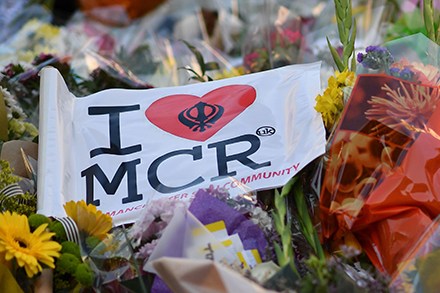
There have been few acts of terrorist violence on British soil as grotesque as the Manchester Arena bombing in May 2017. An Islamist extremist, Salman Abedi, detonated a bomb at an Ariana Grande concert killing 22 and injuring 1,017. An evening of enjoyment for hundreds of young people turned into a spectacle of wanton cruelty. The law does nothing to address the real state failures that have allowed extremism to flourish One of those who died was 29-year-old Martyn Hett. His mother, Figen Murray, has campaigned ever since for legislation to better protect potential victims of terrorism. This week the Commons debated the measure she has fought for – the Terrorism (Protection of Premises) Bill – to be known as Martyn’s Law.

Why French students want English uniforms

From our UK edition

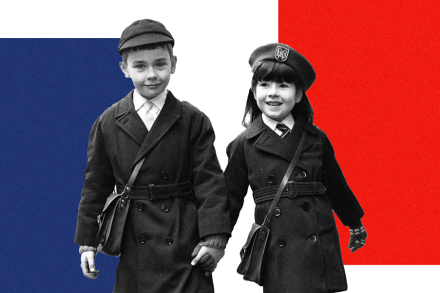
Béziers, France The École Mairan in Béziers in southern France is a happy neighbourhood elementary school housed in a superb renovated 19th-century hôtel particulier. In the middle of the medieval city, surrounded by both great houses and humbler tenements, it is attended by 120 pupils aged six to 11. There are the children of Algerian and Moroccan immigrants and the children of distinguished Biterrois families, with a sprinkling of Spaniards, Italians, Ukrainians and one American. Mairan is one of four schools in Béziers, and 100 in France, where this autumn children have started wearing school uniforms. So I went to Béziers to have a look. ‘The children love their uniforms.

Samuel Paty’s murder has still not been reckoned with

From our UK edition

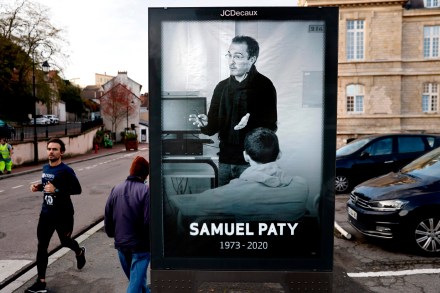
Two years ago on Sunday Samuel Paty was brutally murdered by an 18-year-old outside his school in a Parisian suburb. The teacher’s crime was to have shown an image of the prophet Mohammed during a class discussion on the freedom of expression.   Paty’s killer was a Chechen, and it’s noteworthy that the two other major Islamist terror attacks in France in recent years – the murder of three worshippers in a Nice church and the killing of a policewoman in Rambouillet – were also the work of foreign-born terrorists.   Homegrown Islamic terrorists are now a rarity in France.

Salman Rushdie was never safe

From our UK edition

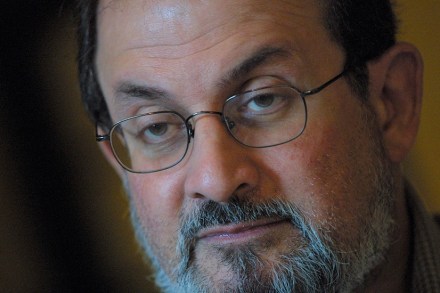
The stabbing of Salman Rushdie sends a renewed message to the world: take Islamism – the transformation of the Islamic faith into a radical utopian ideology inspired by medieval goals – seriously. Ayatollah Ruhollah Khomeini, the most consequential Islamist of the past century, personally issued the edict (often called a fatwa) condemning Rushdie to death in 1989. Khomeini, responding to the title of Rushdie’s magical-realist novel The Satanic Verses, decided it blasphemed Islam and he deserved death. Initially alarmed by this edict, Rushdie spent over 11 years in hiding protected by the British police, furtively moving from one safe house to another under a pseudonym, his life totally disrupted.

Prevent and the problem of ‘political correctness’

From our UK edition

Britain is reviewing its cornerstone anti-terror programme. As the name implies, Prevent is a strategy designed to stop radicalisation before it metastasises into killer intent. But how well is it working? There have been accusations that Prevent is discriminatory. Groups such as Liberty and the Muslim Council of Britain have criticised the anti-terror strategy for targetting Muslims, arguing that it has caused hurt to Britain’s Islamic communities. But there are also criticisms that, even on its own terms, the Home Office programme isn’t working as well as it should. Dame Sara Khan, the social cohesion tsar, last week warned that efforts to tackle Islamist extremism are being hampered by ‘political correctness’.

Is Israel facing a new Intifada?

From our UK edition

Dizengoff Street is one of the busiest thoroughfares in Tel Aviv, a strip of bars, restaurants and Bauhaus architecture that is typically bustling with young people on a Thursday evening. Last night, it was the scene of the latest Palestinian terror attack when a gunman opened fire outside the Ilka bar, killing three and wounding nine. One of those killed was Olympic kayaker Barak Lopen, who represented Israel at Beijing 2008 and London 2012. In the past two weeks, 14 Israelis have been killed by a mixture of Palestinian and Israeli-Arab terrorists. For comparison, there were 17 terrorism-related fatalities in the entirety of last year. I asked on Coffee House last week if Israel was in the midst of another wave of terrorist violence. Dizengoff Street answers that question.

Will Macron surrender to the mob?

From our UK edition

It has been a torrid few days in France. In the early hours of Saturday morning, a former Argentine rugby international, Federico Aramburú, was shot dead on a chic Paris street after an altercation in a bar. The suspect is a notorious far-right activist who allegedly told Aramburú that he didn’t belong in France. On Monday Corsican nationalist Yvan Colonna died, three weeks after he was beaten into a coma by fellow prisoner and infamous extremist, Franck Elong Abé, an Islamist who was captured fighting for the Taliban a decade ago. It is alleged that Abé justified his attack on the grounds that Colonna ‘had bad-mouthed the Prophet’.