Isis

Dual control | 19 January 2017

From our UK edition

Revolting (Tuesdays) is the BBC2 comedy series that spawned the now-infamous sketch ‘Real Housewives of Isis’. It has been watched on the BBC’s Facebook page nearly 30 million times and rightly so because it is fearless, funny and near the knuckle. A pastiche of reality TV shows set in places like Beverly Hills, the sketch depicts three young British jihadi brides brightly discussing their domestic lives in some Raqqa-like hellhole. ‘Ali bought me a new chain,’ boasts one, ‘which is eight feet long. So I can almost get outside, which is great.’ Cue shot of black-hijabed housewife lurching towards the doorway of her bombed-out home, dragging the cooker to which she has been leashed.
Europe is still struggling to face up to the terror threat

From our UK edition

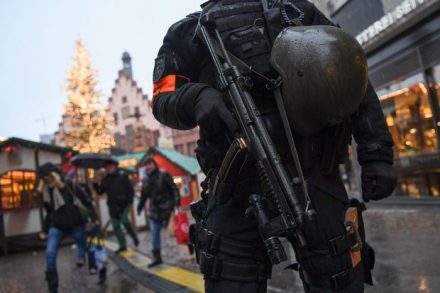
Europe’s unpreparedness to deal with the terrorist threat it is now facing is highlighted in two reports today. The Wall Street Journal has obtained a copy of the report prepared for the Belgium parliament on the failure of the Belgium authorities to stop the Islamic State terror cell who travelled from Belgium to carry out the 2015 Paris attacks. The report details a quite remarkable litany of incompetence, including the failure of the Belgium police to act on a warning that Salah Abdeslam had changed his social media profile picture to a picture of the Islamic State flag. The failure of Belgium’s various police and intelligence agencies to cooperate with each other is well known. But it is not just Belgium that is struggling to deal with the terrorist threat facing it.

Real life | 29 December 2016

From our UK edition

What a fraught, divisive, infuriating sort of year it’s been. It started with me attempting to go on a blind date and being clocked by a speed camera doing 35 in a 30 in the dark on the way home. And on the way to the speed course, obviously, I pranged my car trying to park. I took this to be an omen. The ex-builder boyfriend was duly dusted off and put back into active service. In February, while having two new tyres fitted at a tyre shop in Wandsworth, I found myself being hit on by a jihadist tyre-fitter. We got chatting as I sat in his waiting room. He sat at his desk, beneath a golden passage from the Koran, and I somehow ended up telling him I had been to Iraq. The next thing I knew he was confessing to the fact that he was just back from there, for top secret reasons.

Put out more flags

From our UK edition

Did you know that 190 out of 200 nations in the world have either red or blue on their flags? (The wheel in the middle of India’s flag is blue, for example, and the Vatican flag has a red cord hanging from the keys.) Did you know that four of those 190 — Andorra, Chad, Moldova and Romania — have pretty much the same blue-yellow-red tricolour? Or that the stripes of the French flag are not of even width, but are proportioned 30-34-37? It’s an optical illusion: if the red, white and blue are of equal breadth, the flag looks curiously unbalanced. These are among the facts that you won’t find in Tim Marshall’s Worth Dying For, a vexillological miscellany. I bring them up in no carping spirit.

Islamic State will want a landslide victory for Marine Le Pen

From our UK edition

Yassine was one of the most popular teaching assistants at his primary school in Strasbourg. What is known in the French school system as an 'animateur', Yassine supervised the kids during their lunchbreak and in after-school activities. 'Nice,' 'sociable' and 'attentive' have been some of the words used by parents this week to describe the 37-year-old. Yassine had worked part-time at the school for a decade before he was taken on permanently in 2014 because of his popularity with the kids. Last weekend Yassine B [his surname hasn't been disclosed] was arrested by the French security services after an eight-month surveillance operation. When police raided his flat they allegedly discovered a letter of allegiance to Islamic State and two handguns.

Death by television

From our UK edition

Forty years ago this month a film appeared, so prescient I wonder if its author, Paddy Chayefsky, saw the 2016 American presidential election campaign in a crystal ball. It was called Network and it foretold the rise of Donald Trump. The plot is King Lear appears on Newsnight: a newsman run mad. The protagonist is Howard Beale (Peter Finch), an anchorman at a failing network. The year is 1976, and America is embattled with inflation, depression and the end of the Vietnam war. It is not a time for American heroes, to paraphrase Chayefsky’s acolyte Aaron Sorkin writing in The West Wing. Beale’s ratings are low. He is fired. He announces that he will kill himself, live on air. ‘I just run out of bullshit,’ he says.

A tale of two battles

From our UK edition

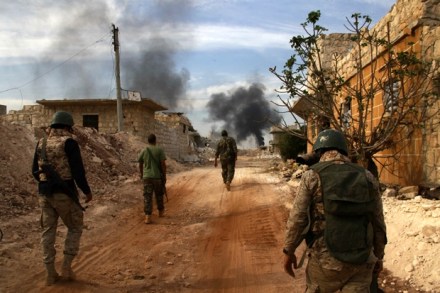
For the past few weeks, British news-papers have been informing their readers about two contrasting battles in the killing grounds of the Middle East. One is Mosul, in northern Iraq, where western reporters are accompanying an army of liberation as it frees a joyful population from terrorist control. The other concerns Aleppo, just a few hundred miles to the west. This, apparently, is the exact opposite. Here, a murderous dictator, hellbent on destruction, is waging war on his own people. Both these narratives contain strong elements of truth. There is no question that President Assad and his Russian allies have committed war crimes, and we can all agree that Mosul will be far better off without Isis. Nevertheless, the situations in Mosul and Aleppo are fundamentally identical.

When Isis comes home

From our UK edition

The Islamic State’s pretence to nationhood was based on the holding of territory. With the battle for Mosul this week, together with the loss of the land that it controlled in Syria, that pretence is becoming harder to maintain. The area involved is now limited to a few shattered cities, and corridors between them. The decline of this terror organisation is to be welcomed. But this is a war which can have no neat ending. If Isis were a genuine state, it would by now be forced to consider unconditional surrender. That is not going to happen. More probably it will dissolve, its leaders and lesser agents making an escape or going into hiding. There is a danger that many Isis fighters will attempt to return to the European cities from which they came and continue an underground jihad.

The battle for Mosul could create another refugee exodus

From our UK edition

As the sun set over the frontline in northern Iraq on the first day of the long anticipated Mosul offensive, Kurdish peshmerga and Iraqi army soldiers began to celebrate the first victories over Islamic State. Almost a dozen villages had been taken yesterday, and more than 77 square miles liberated southeast of the Isis stronghold. The offensive to re-take Mosul, the last major city held by Isis in Iraq, has been more than a year in planning. It was long anticipated all along the hundreds of miles of frontline where the peshmerga and the Iraqi army have been fighting Isis. When I was in Tel Skuf in June last year, men would peer through their binoculars across the miles of flat, grassy, desiccated landscape and say 'we’ll go when the orders come'. Mosul was only 18 miles away.

Iraq’s endgame: The battle for Mosul

From our UK edition

At night, the temperature around the Islamic State-held city of Mosul drops to around 80°F. At the Bashiqa front line, 15 miles northeast of the city, it would feel pleasant and almost calm, were it not for the steady sound of exploding shells. Most of life is tea and cigarettes. It’s like a quiet day on the Western Front, minus the mud. ‘It’s so peaceful you can’t imagine what’s happening — it’s surreal,’ says Allan Duncan, a former soldier with the Royal Irish Regiment who volunteered to join the Kurdish peshmerga here two years ago in order to fight Isis. ‘You almost forget that things are so close to the end.

Vanity bombing

From our UK edition

‘When you’ve shouted Rule Britannia, when you’ve sung God Save the Queen, when you’ve finished killing Kruger with your mouth…’ So wrote Kipling derisively of the domestic cheerleaders of the Boer War. The lines came to mind this week as the Commons again strained at the leash of war. Horrified by the Aleppo atrocities, MPs dug deep into the jaded rhetoric of a superannuated great power. They vied for abuse to hurl at the Syrian and Russian forces laying siege to the wretched city. There were the obligatory parallels with Hitler. The Tory MP Andrew Mitchell, spoke of ‘events that match the behaviour of the Nazi regime in Guernica’. He wanted a no fly zone and a safe haven. Others wanted ‘action not words’.

This Labour leadership contest has represented an intellectual surrender to Corbynism

From our UK edition

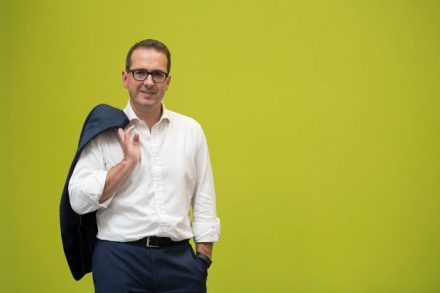
The Labour leadership result isn’t announced until 11.45am today. But whatever the result—and no one seems in much doubt what it will be, this contest has represented an intellectual surrender to Jeremy Corbyn and the ideology he represents. Isabel Hardman and Marcus Roberts discuss Corbyn's victory on Coffee House shots I argue in The Sun this morning, that his opponents surrendered right at the start of the contest. Owen Smith was offered up as a more competent and media savvy leader rather than as the antidote to Corbynism. Smith himself emphasised that the party owed Corbyn ‘a debt of gratitude for helping Labour rediscover its radical roots’. He stressed, ‘I am just as radical as Jeremy Corbyn’.

Bombs astray

From our UK edition

Soon, soon, you will see a wondrous sight,’ says the Isis anthem, ‘for your destruction, my sword has been sharpened. We march by night, to cut and behead… We make the streets run red with blood, from the stabbing of the bayonets, from the striking of the necks, on the assembly of the dogs.’ The people of the Syrian town of Deir Ezzor were left in no doubt that they were the dogs in question. This nasheed — or chant — was posted on the internet, played over video from Syrian state TV of Deir Ezzor residents criticising the Isis siege. The message was clear. That was at the beginning of this year, when fighters from Islamic State were closing on the city and seemed about to storm it.

The Crusades live

From our UK edition

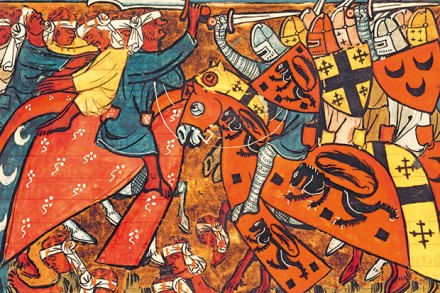
The 12th-century crusader Reynald de Chatillon was one of the most controversial men of his time, and his new biographer Jeffrey Lee believes he has returned to disturbing relevance in ours. Over a relatively long life with a dramatically violent end, Reynald became Prince of Antioch by marriage, endured 16 years in a dungeon below Aleppo, attempted (uniquely in Islamic history) to raid Mecca and Medina, overturned the politics of the Crusader states, and became the bitterest enemy of Saladin. Reynald probably could not read or write, but had he tried his bloodstained hand at Blairesque apologetic memoir, the result might well have resembled Lee’s book. Like Reynald, Lee possesses a memorable style, flashy and crass by turns.

Portrait of the week | 15 September 2016

From our UK edition

Home Schools in England would have the right to select pupils by ability, under plans outlined by Theresa May, the Prime Minister. New grammar schools would take quotas of poor pupils or help run other schools, a Green Paper proposed. ‘We already have selection in our school system — and it’s selection by house price, selection by wealth. That is simply unfair,’ Mrs May said in a speech. Sir Michael Wilshaw, the chief inspector of schools, said the idea that poor children would benefit from a return of grammar schools was ‘tosh’. Oversubscribed Catholic schools which wished to expand would be able to choose all their additional pupils on grounds of faith.

Are Isis Islamic? Hillary Clinton seems to think so

From our UK edition

Here's a strange thing. In a TV interview on Thursday morning, Hillary Clinton said that Isis want Donald Trump to become President of the United States. In her words, Isis are currently saying, 'Please, Allah, make Trump president of America'. Personally I have no idea which ticket Isis will be campaigning for, come November. But I do find this all very confusing. We all learnt from President Obama that Isis have absolutely nothing to do with Islam. Indeed, when the group decapitated the American hostage Peter Kassig a couple of years ago, the Commander in Chief insisted that ‘Isil’s actions represent no faith, least of all the Muslim faith’. But if Isis are not Islamic, why would they be praying to Allah? Has Hillary 'mis-spoken'?

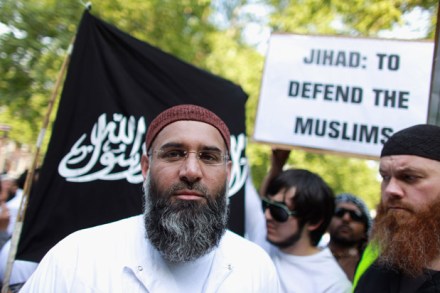
Why Anjem Choudary should not be in prison

From our UK edition

It was impossible not to feel rather sorry for the radical Muslim ‘cleric’ Anjem Choudary and his imbecilic henchman Mohammed Rahman as they were each sentenced to five and a half years in prison by a British court. ‘Allahu Akbar!’ his supporters chanted as the sentence was delivered, an invigorating, all-purpose phrase used during decapitations, bombings or just as one is walking down the street. I have taken to using it as well recently, most especially at a critical juncture when I am pleasuring my wife. I think she appreciates it, although I would not be so ungentlemanly as to wake her up and ascertain for sure. Mr Choudary and his pet halfwit have received their sentences largely, I think, for wishing the complete destruction of western civilisation.

Islamic State’s ‘Jizya tax’ for Christians is pure propaganda

From our UK edition

Christians continue to be slaughtered in the Middle East. But as reports of genocidal atrocities mount up, our governments have found a new reason to sit on their hands. Christians, the theory goes, don't have it as bad as the Yazidis. As 'people of the book’, Christians enjoy privileged status. Rather than suffering the full extent of Islamic State's depravities, they can pay a tax (Jizya) in return for protection. It sounds credible and contains just enough theology to bamboozle the secular population of the international community. Here's the Office of the UN's High Commissioner for Human Rights: 'While Christian communities still living in Daesh controlled territories live difficult and often precarious existences...

France began breeding jihadis in 1989

From our UK edition

E .D. Hirsch Jr., the American educationalist and author of Cultural Literacy, has a new book out that may throw some light on why France has such a problem integrating its Muslim population. Called Why Knowledge Matters: Rescuing Our Children From Failed Educational Theories, it’s a comprehensive attack on the progressive approach that has done so much harm to schools in the West. Hirsch identifies three ideas in particular: that education should be ‘developmentally appropriate’, with the emphasis on learning through discovery; that it should be ‘child-centred’, taking account of different ‘learning styles’; and that the overarching aim of education should be the cultivation of ‘critical thinking’ skills.

The Spectator Podcast: Marriage for one | 27 August 2016

From our UK edition

An increasing number of women are entering into the institution of marriage with their dream partner: themselves. In her cover piece this week, Ariane Sherine investigates the women who have brought a new literalism to saying, 'I do'. But is this just a quirky fad? Or are we witnessing a profound social change? Lara Prendergast speaks to Ariane and Spectator editor Fraser Nelson on this week's Spectator podcast. Ariane tells Lara: 'There are an increasing number of women who have decided, because they don't have a man - or maybe some of them don't want a man - that if they can't find Mr Right, well, I'm going to embrace myself and marry myself and it's going to be a really positive and self-affirming ritual. I'm going to invite all my family and friends and have my big day, man or no man'.