Isis

Portrait of the week | 21 May 2015

From our UK edition

Home The annual rate of inflation turned negative in April, for the first time since 1960, with deflation of 0.1 per cent as measured by the Consumer Prices Index, so that a basket of goods and services that cost £100 in April 2014 would have cost £99.90 in April 2015. But, measured by the Retail Prices Index, inflation continued at a rate of 0.9 per cent. Marks & Spencer reported its first rise in annual profits for four years. Police trying to find the gang that broke into safe-deposit boxes in Hatton Garden last month arrested nine men. A botanist claimed unconvincingly that Shakespeare was depicted in the frontispiece of Gerard’s Herball dated 1597. Greggs, the baker’s, stopped selling loaves in many of its shops.
Isis rising

From our UK edition

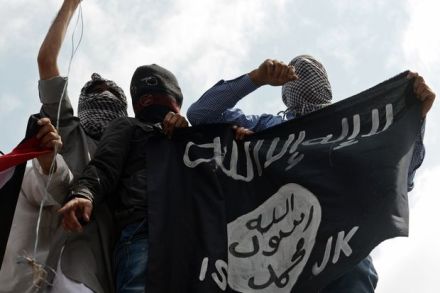
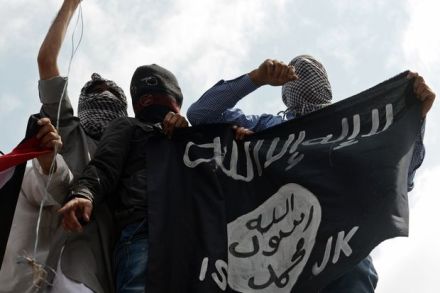
[audioplayer src="http://rss.acast.com/viewfrom22/michaelgovesfightforjustice/media.mp3" title="Fraser Nelson and Freddy Gray discuss the march of the Islamic State" startat=1785] Listen [/audioplayer]In recent months, as the country went through a general election, our focus has been on our own domestic debates. Meanwhile, the situation in Iraq has deteriorated significantly. After intense fighting, the jihadist group Isis has now taken the city of Ramadi. They already control Fallujah and Mosul. A growing body of opinion says that something must be done, before the group moves on Baghdad or organises a major terror strike over here. But what? There are plenty of reasons not to take action. Our interventions in Iraq have not been successful, to put it mildly.

Away from the herd

From our UK edition

 Erbil, Iraq The Kurds here are fighting Isis — everyone knows that. Most of us are at least peripherally aware that the brave Peshmerga (Kurdish militia) have proved an effective force against the Islamists, and we cheer them on. What we don’t realise is that as they battle the world’s latest bogeyman, the Kurds are also simultaneously suffering from another sort of crisis. Traditionally the Iraqi Kurds are nomadic pastoralists. They’ve herded sheep since biblical times, leading their flocks from the mountains to the lowlands and back. The passion they feel for their land is rooted in this pastoral tradition. It’s a weird irony, then, that as their dream of a separate state grows close to being realised, their way of life is dying.

Losing the plot | 30 April 2015

From our UK edition

Enter Rufus Norris. The new National Theatre boss is perfectly on-message with this debut effort by Caryl Churchill. Her 1976 play about inequality screams, ‘Vote Ed’ at triple-klaxon volume. Not that anyone in the audience was won over. They’d made up their minds long ago. Which is just as well because the play is hopelessly ineffective on every level. Churchill must be the most over-rated writer the English theatre has produced. She has virtually no dramatic skills. She can knock out humourless preachy rhetoric by the yard but as for the rest of it she hasn’t a clue. She can’t write a plot. She can’t create a human individual or differentiate one character from another with quirks of thought, word or deed.

Diary – 23 April 2015

From our UK edition

Lunch with the man who hanged Saddam. My irrepressible old Baghdad friend Mowaffak al-Rubaie, Ealing neurologist turned Iraqi national security adviser, is on top form. This may not be unrelated to the news that the noose with which he hanged Saddam is up for auction. Interested buyers are said to include Kuwaiti businessmen, an Israeli family, a bank and an Iranian religious organisation. Mischievous tales are circulating about an offer of $7 million being rejected. Hearing Rubaie relive Saddam’s execution reminded me of the late Sir Wilfred Thesiger recalling how he shot up a tent full of sleeping Germans during the Allied campaigns in North Africa. ‘It felt like murder,’ he said, and you knew he rather liked it. Never mind the general election.

Portrait of the week | 23 April 2015

From our UK edition

Home The prospect of a parliamentary alliance between Labour and the Scottish National Party injected an element of fear into the election campaign. The SNP manifesto promised to increase spending and to find a way to stop the renewal of the Trident nuclear deterrent. Nicola Sturgeon, the SNP leader, said she wanted to make Labour in government ‘bolder and better’. Lord Forsyth, a former Conservative Scottish secretary, said that the building up of the SNP, to take seats in Scotland, was a ‘dangerous view which threatens the integrity of our country’. Ed Miliband, the Labour leader, said the Tories should not be ‘talking up’ the SNP. Even the Democratic Unionists began to eye prospects for advantage in a hung parliament.

A deadly silence

From our UK edition

One Friday, 28 people were rescued by the Italian coastguard when the boat on which they were fleeing Libya capsized in the Mediterranean. Arriving homeless and without prospects in a strange land, these were — relatively speaking — the lucky ones. As many as 700 are thought to have drowned. Add them to the tally. On Monday, another boat capsized with 400 souls feared lost. Last year more than 3,000 died in the Mediterranean trying to get to the West. It has become a phenomenon of our times. We do not hear much about life in the supposedly liberated Libya, but the fact that even immigrants into Libya would rather risk death than stay there gives a fair idea.

The moral arguments for confronting Islamic State are increasing by the day

From our UK edition

It’s not perhaps the first thing you notice in the Labour manifesto, but one interesting commitment by the party is to establish a Global Envoy for Religious Freedom. It may or may not be an indication that Douglas Alexander reads The Spectator – which suggested some time ago that Britain should, like Canada, have a roving envoy to support specifically freedom of religion – but it’s a good move.

Why wasn’t the head of Hamas properly cross-examined during his BBC interview?

From our UK edition

When journalists have the much sought after opportunity to interview the heads of states and organisations with appalling human rights records the very least we expect is to see such people given a thorough cross-examining. What we don’t expect is for heads of terrorist organisations to be provided with a platform from which to give the equivalent of a party political broadcast and to get away with it virtually unchallenged.  And yet that is precisely what we got when the BBC’s Middle East correspondent Jeremy Bowen recently interviewed Khaled Meshaal, the head of Hamas. Hamas leader Meshaal warns of Israeli 'extremism' after elections, reads the baffling headline that accompanies Bowen’s interview.

The jihadi bride and her astonishing dad

From our UK edition

Like you, I suspect, I have been terribly worried these last few weeks over the plight of 15-year-old Amira Abase. Amira fled the country on 17 February in order to take up an exciting and challenging position as an in-house whore for the vibrant and decapitating warriors of the Islamic State somewhere in Syria, probably Raqqa. She travelled with two like-minded school friends from the local caliphate of Bethnal Green and not much has been heard of her since. We wring our hands in anguish at the fate which might have befallen this girl. It is of course commendable that she, along with so many other fervent young British Muslim women, should wish to become a jihadi bride. What kind of life would she be forced to endure in the Islamophobic hell of the United Kingdom?

Don’t expect to hear anything about Islamic State during the election campaign

From our UK edition

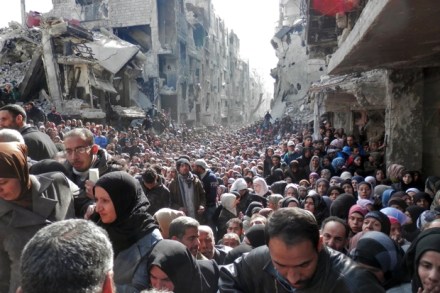
Granted, you don’t really expect foreign policy to feature much in an election campaign – we’re not saints - but it’s still shaming the way that the biggest foreign policy issue simply doesn’t register on the radar right now. I refer obviously to Islamic State, the group that just keeps on giving when it comes to reasons to want them wiped out. It’s a toss up really whether you go for the recently exhumed mass graves of the soldiers they massacred in Tikrit, the Yarmouk Palestinian refugee camp they seized control of, the images they obligingly posted of themselves smashing artefacts at Hatra or the blowing up an Assyrian church over Easter. Take your pick. And the response from the British Government?

The fox that killed my chickens depressed me more than 250,000 tsunami deaths

From our UK edition

It is hard to know how a tragedy is going to move a person who is not directly affected by it. Over a death or misfortune in the family, or among one’s friends, one is sure to feel pain and grief. But what of those other ghastly events involving people, maybe hundreds or thousands of them, with whom one has no connection? They provoke shock, disgust and horror, but not necessarily great personal sadness. Could it be true that I was more depressed when a fox killed all my chickens than I was when the Indian Ocean tsunami of 2004 swept over a quarter of a million people to their deaths? I have an ugly, shameful feeling that I might have been. Perhaps I am uniquely unimaginative and lacking in empathy, but I fear not.

Make no mistake: the Top Gear brouhaha is cultural warfare

From our UK edition

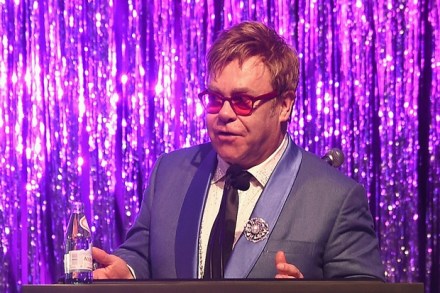
It’s a famous quote by F. Scott Fitzgerald, one that Elton John should ponder (when he’s not out shopping, that is): ‘The test of a first-rate intelligence is the ability to hold two opposed ideas in the mind at the same time, and still retain the ability to function.’ Mind you, Elton John is a hysterical, spoilt, ugly fat man who thinks his opinions count. (Perhaps they do with non-talents such as Liz Hurley and Victoria Beckham.) I now know who Dolce & Gabbana are because of the row over children conceived by IVF and surrogacy, and they seem like nice billionaires, except they threw in the towel right away and apologised.

Isis-gate: Why dogs are out at Downton

From our UK edition

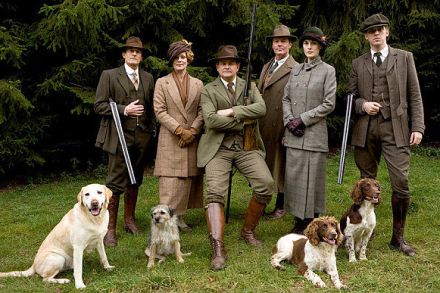
It's been a bad month for dogs, first there were reports of the fatal poisoning of a prize-winning Crufts dog, and now there will be no canine lead in the new series of Downton Abbey. Downton fans were left outraged last year after the Grantham family's beloved Labrador Isis was killed off during the fifth series of the period drama. Conspiracy theories soon developed claiming that the poor dog was the latest victim of the Islamic State, suggesting that the dog had been axed as a result of the unfortunate name similarity between her and the terrorist group. However, Hugh Bonneville, who plays Lord Grantham, says that anyone who believes that this is the reason Isis was killed off is a 'complete berk'.

Isis’ European recruits are made by alienation

From our UK edition

Sweden’s latest attempts to integrate its migrant population have suffered one or two hiccups after it was learned that staff at its ‘assimilation guide service’ were recruiting people into the Islamic State. A partial success, then. According to a recent BBC report, the Scandinavian country now tops the European jihadi league, although others give Belgium that honour. Presumably all those Swedes joining the Islamic State have been radicalised by their country’s relentless military aggression; after all we’re always being told British foreign policy is to blame for our extremism problem.

Forget Geneva: the real US-Iran carve-up is happening in Iraq

From our UK edition

 Washington DC and Iraq   We stood on a bleak hillside in eastern Iraq looking at a makeshift grave. It held a dozen Shia Arabs, according to the Kurdish troops escorting us. The dead were men, women and children murdered by fighters from the so-called Islamic State as they retreated, said the Kurds. We stepped gingerly around scraps of women’s clothing and a bone poking out through the dirt. In the town on the dusty plain below, Shi’ite militias were busy taking revenge on Sunnis, our escorts said, looting and killing. The town’s Sunni Arab population had fled to a miserable camp. Streams of sewage ran between their tents. But they wouldn’t go home, they said, until the militias left, replaced by the army. They may be there a while.

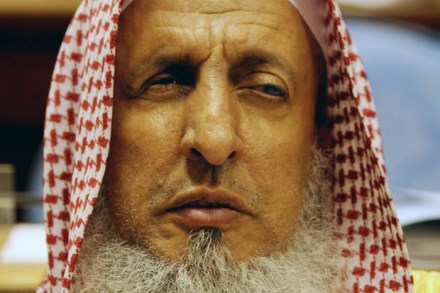
Meet Saudi Arabia’s top cleric. Like Isis, he also thinks churches should be destroyed

From our UK edition

Today a quick game of 'spot the difference.' First, here are some photos, released yesterday, of Isis pulling down the crosses on ancient churches and desecrating Christian holy sites in Mosul, Iraq. They admit to doing this because they wish to destroy all records of pre-Islamic civilisation and because, they say, they are following Islamic law. And then secondly we have Saudi Arabia's Grand Mufti speaking at a conference in Kuwait on Tuesday. There Saudi Arabia's top cleric, Sheikh Abdul Aziz bin Abdullah, called for the destruction of all churches on the Arabian peninsula. He explained that this is necessitated by Islamic law. So perhaps the first part of the game should be 'spot the difference'. The second part might be: 'and which one is our ally?' Answers below.

Where Alcibiades once walked, amateur tax spies are trying to entrap poor pistachio-sellers

From our UK edition

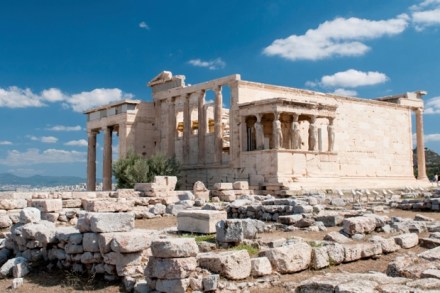
 Athens I am walking on a wide pedestrian road beneath the Acropolis within 200 meters of the remaining Themistoclean wall and the ancient cemetery to eminent Athenians. One side is lined with splendid neoclassical houses, none of them abandoned but most of them shuttered and locked up. This is the area where once upon a time Pericles, Themistocles and Alcibiades — to name three — trod, orated and debated non-stop. Back in those good old days we Athenians ruled supreme. Reason, logic and restraint placed us at the head of the queue, and genius also helped. I am climbing to the Pnyx, where Themistocles rallied his fellow citizens to defy the Persian juggernaut, and, except for a couple of stray dogs, I am alone with my hangover.

Portrait of the week | 12 March 2015

From our UK edition

Home Philip Hammond, the Foreign Secretary, said that ‘a huge burden of responsibility’ lay with those who acted as apologists for those who committed acts of terror. Parliament approved new obligations for passenger carriers to restrict the travel to or from Britain of people named as a terrorist threat. The Charity Commission required the Joseph Rowntree Charitable Trust and the Roddick Foundation to give unequivocal assurances that they had ceased funding Cage, the advocacy group known for speaking up for Mohammed Emwazi, the British jihadist involved in videos of Islamic State murders. England were knocked out of the Cricket World Cup.