Iron

A piece of Mars to toy with

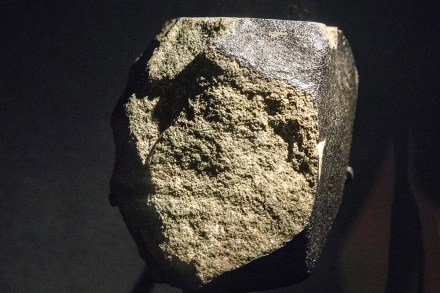
Since reading Helen Gordon’s The Meteorites, I keep catching myself in imaginary conversation with an Essex thatcher called Frederick Pratt. On 9 March 1923, he was working in a wheat field at Ashdon Hall Farm, near Saffron Walden, when he heard a strange ‘sissing’ sound and looked up to see ‘the earth fly up like water’. He later dug up, from a depth of two feet beneath the surface of the field, a stone weighing 1.27kg that had fallen from the sky. He took it to the police station, then on to the vicar, who shipped it off to the Natural History Museum. There we know it was classified as a stony chondrite meteorite, composed of feldspar, pyroxene and olivine, white specks of nickel iron and other oddments from which the solar system was formed 4.5 billion years ago.
Whoever imagined that geology was a lifeless subject?

Rocks are still and lifeless things, and geologists are men with beards whose emotional bandwidth is taken up with an unnatural attachment to cherts and clasts and the chill beauty of the subducted lithosphere. Such is the stereotype. The academic geologist and New Yorker contributor Marcia Bjornerud has managed to go a fair distance towards dispelling it. In her previous book, Timefulness, she wrote for the general reader and with persuasive lyricism about readjusting our focus to thinking in geological time.

Iron clad: good cooking’s most essential metal

From our US edition

Miles Coverdale’s translation of Psalm 105 in the Book of Common Prayer elevated iron from metallurgical to literary significance. The story of Joseph being sold unjustly as a bondservant — “Whose feet they hurt in the stocks: the iron entered into his soul” — shames flaccid times like ours. And iron’s virtues excel not least of all in cooking, where it can enter literally into our bodies and, who knows, maybe our souls too. Joseph just got things started. Think of the first ironclads, Monitor and Merrimac, hammering away at each other at Hampton Roads in 1862, of the dreadnoughts that put paid to Nelson’s wooden walls, of Agatha Christie’s ironclad alibis, of the verse in Christina Rossetti’s great carol: “Earth stood hard as iron, water like a stone.

iron