Ireland

Independence would be karmic vengeance for Sturgeon

From our UK edition

I have a mean streak. Perhaps my cruellest urge is to give people what they claim to want. When political parvenues disparage capitalism and the unfairness of meritocracy while talking up an ‘equitable’ socialist utopia, I want to stick them personally in a society where work pays the same as sloth, the well-off flee and the left behind expect everything to be free — just so long as the rest of us don’t have to submit to this inert destitution, too. When eco fanatics demand zero carbon emissions by 2025, I yearn for their own Amazon orders to arrive months later by donkey cart. I’d grant their wish: dead phone batteries on windless days and nights that are cold and dark.

Biden’s tax plan spells bad news for Ireland

From our UK edition

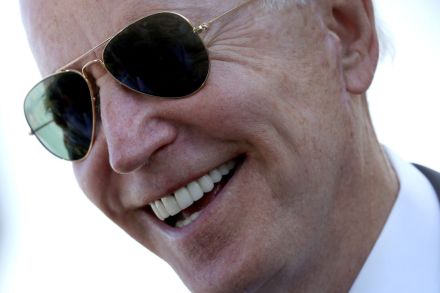
Biden’s America, of course, is all about re-engaging with the world after four years of isolationism. But if you are the Irish finance minister, perhaps the new administration isn’t looking quite so cuddly at the moment.  Biden’s first big achievement in international cooperation looks like being a global minimum corporate tax rate. It seems that G7 nations are about to announce they have agreed on such a tax, set at 15 per cent. It will mean corporations paying a minimum of 15 per cent tax on their profits regardless of where they are based in the world, where they do business and where they pretend to do business.

Letters: The unfairness of ‘free care for all’

From our UK edition

Taking care Sir: I agree completely with Leo McKinstry that care for parents should be paid out of their estate (‘Home economics’, 15 May). The costs of care are what people effectively work for, not for the passing on of wealth paid for by the taxpayer. My mother lived until she was 100, and was in care for almost 14 years. Although she had a property and shares, we funded her care until her cash/share balance was £15,000. After this time she was means-tested and between her pension and the rent from her flat, we were able to pay for some of the care, with the rest paid for by the local council. On her death the property was sold and the effective loan from the local authority was paid out of the proceeds of the sale.

The two halves of Ireland can’t be forced together

From our UK edition

Last week, Edwin Poots was elected leader of the DUP. You will have read all about him. I have. You may not previously have known much about him. I didn’t. We should hesitate, I think, to respond to his elevation with a broad-brush sneering dismissal, or in personal terms. We know, of course, about Mr Poots’s creationist beliefs and most of us reject them, and I don’t like his views on homosexuality or abortion; but Poots has proved able to work pragmatically with republican fellow politicians. In an important way, though, this isn’t about Poots, but what he represents: a unionist shift towards back-to-basics fundamentalism.

Keem Bay, Ireland: the best beach in the world

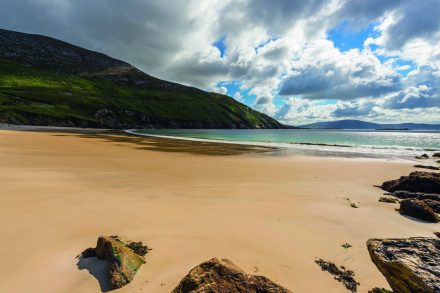
It’s a nail-biting cliff-edge ride down switchback, stomach-churning, hairpin bends. When you finally reach sea level, the Atlantic wind may be so strong and the rain so sharp that you can barely stand on the crescent of sandy shore. The distant islands of Clew Bay — 365 of them to match the days in the year — are nothing more than blistery shapes in the sea mist and wave spray. Yet this nerve-wracking mountainous route is a journey worth making. Despite — or maybe because of — being far from the madding crowd on Achill Island, off the west coast of Ireland, Mayo’s Keem Bay has been voted one of the top 12 beaches in the world, beating contenders in Fiji, Hawaii and Bermuda.

Keem

A funny time to be Irish: The Rules of Revelation, by Lisa McInerney, reviewed

From our UK edition

Lisa McInerney likes the rule of three. Three novels set in Cork structured around sex, drugs and rock’n’roll and, within that, ‘smoke, coke and yokes [ecstasy], St Paddy’s modern trinity’. The Rules of Revelation follows her debut, The Glorious Heresies (winner of the 2016 Women’s Prize; in its focus on the relationship between teenagers Ryan and Karine, it represents the sex component) and its sequel, The Blood Miracles (drugs, 2017). It reprises Glorious Heresies’ movement between multiple characters, Ryan Cusack (centre of Blood Miracles) seen through them. Ryan has returned to Cork, where bad blood waits for him, barely congealed and threatening, darkly, to ooze out at any moment.

Sinn Fein’s hollow ‘apology’ for Mountbatten’s murder

From our UK edition

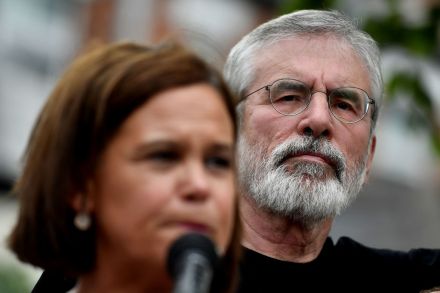
Prince Philip's death presented Sinn Fein with a particular challenge, given that the IRA murdered his beloved uncle. 'I am sorry that happened. Of course, that is heartbreaking,' said the party's leader Mary Lou McDonald this weekend. But if the words sounded sincere, don't be fooled. Sinn Fein learnt a difficult lesson back in 2011, when the Queen and Prince Philip visited, the first time for a century that a British monarch set foot in Dublin. Back then, they completely misjudged Irish public opinion and refused to participate, ending up looking like kids outside a sweet shop with noses pressed to the window. The Queen got an approval rating in the Republic of more than 90 per cent and Sinn Fein were accused of being dinosaurs. There was to be no repeat this time.

Northern Ireland’s sink estates are fertile ground for fundamentalists

From our UK edition

Northern Ireland is routinely voted one of the happiest places to live in the UK. A few weeks ago, a survey revealed that Belfast was the best city to raise a family in Britain. The Province is in the top ten digital economies of the future. A world-class film production industry is transforming it into the Hollywood of Europe adding tens of millions of pounds to the local economy. It's a stark contrast to the ugly scenes from over the Irish Sea flashing across our screens this week. Working-class loyalist communities are in a dangerously mutinous mood that is hard to square with this parallel world. Alienation and opportunity often exist in the same postcode, literally a stone’s throw away.

Why is nobody talking about Northern Ireland?

From our UK edition

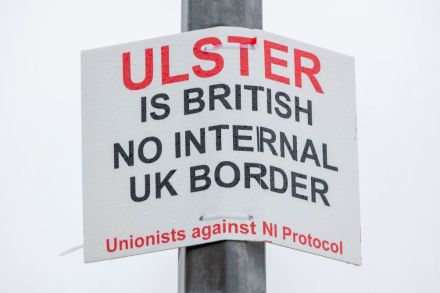
It is depressingly appropriate that a weekend which started on Good Friday was one which illustrated the shaky foundations of the agreement which brought a form of peace to Northern Ireland. Twenty three years on from that landmark deal, discontent among the Province's unionist and loyalist community is beginning to mount. Violence once again erupted on the streets of Derry last night. It was a repeat of the ugly scenes that played out over Easter weekend in Belfast’s loyalist Sandy Row area. Petrol bombs were flung and a total of 32 police officers were injured. The latest spark is mounting unhappiness among unionist pro-British groups at the Northern Ireland Protocol.

global tax

Stop the global tax!

Multilateralism was supposed to be the great theme of the Biden presidency. No longer would the US plow its lonely furrow. Instead it would engage with the rest of the world on matters of mutual interest. Where, though, does that fit with the attempt by treasury secretary Janet Yellen today to try to set a minimum level of corporate income tax for the whole world to whole world to observe? The US is no longer withdrawing from international agreements, as it did in Trump’s day — it is doing something far more objectionable, by trying to lay down American rules for the rest of the world to follow.

The secret of Ireland’s racing success

From our UK edition

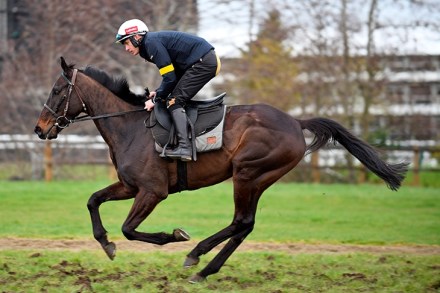
How Father Sean Breen would have loved this year’s Cheltenham Festival. The late parish priest at Ballymore Eustace, who owned a horse or two and had a pundit’s tipping spot on Kildare FM, used to complain that it was most inconsiderate of people to die in the Cheltenham run-up: over 40 years, it was only ever funerals that stopped him attending to conduct his usual service for his fellow Irish attendees, bless a few Irish horses and pray that the Almighty would leave enough in the bookmakers’ satchels for Irish punters to be paid out their winnings. There was nothing in the Bible, he used to argue, that said we should not gamble. Beware the invaders from across the Irish Sea at this year’s Cheltenham Festival, I wrote a month ago.

Is Biden turning on Brussels?

From our UK edition

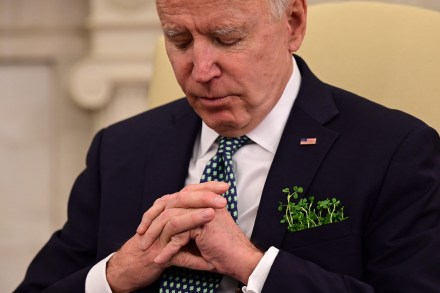
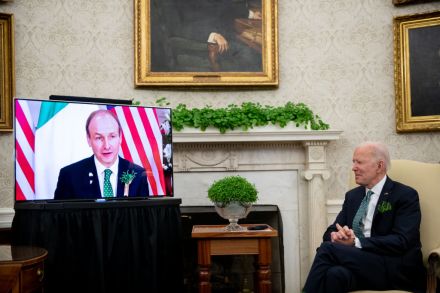
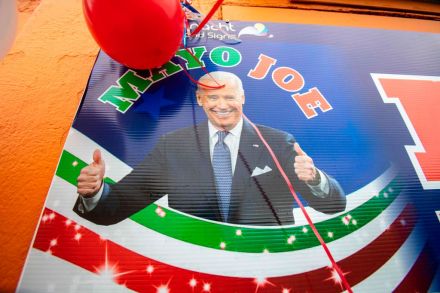
The Joe Biden administration, headed up by a proud son of Ireland, has spent St Patrick's Day briefing reporters in Washington that it will not be taking a side in the latest Irish border dispute. The new President spoke with the Irish Taoiseach on Wednesday in celebration of the two countries' history — just as the EU prepares to take the UK to court over the border row.  Perhaps Micheál Martin was planning on lightly nudging Biden to remind him of the more recent past. Six months ago, the Democratic challenger to Trump blasted Boris Johnson for putting the Good Friday Agreement at risk, saying that he couldn't allow it to become a 'casualty of Brexit'.  https://twitter.com/JoeBiden/status/1306334039557586944?

border

Biden cares about borders — as long as they’re Irish

Joe Biden won’t go to the border, but the border is coming to him. The Northern Irish border, that is. On Wednesday, Biden, Kamala Harris (pronouns: she/her) and Nancy Pelosi marked St Patrick’s Day by talking with Irish politicians from both sides of their border. Afterwards, the Irish prime minister, Micheál Martin, thanked Pelosi for her ‘continued support’ on Brexit. It’s bordering on the ridiculous. Biden’s administration refuses to admit that it has a moral and humanitarian crisis on its southern border, but it makes time to create problems on the border between two close allies, Britain and the Republic of Ireland. The administration insists it isn’t taking sides on Brexit, but the truth is that it already has.

Are loyalists plotting a return to violence?

From our UK edition

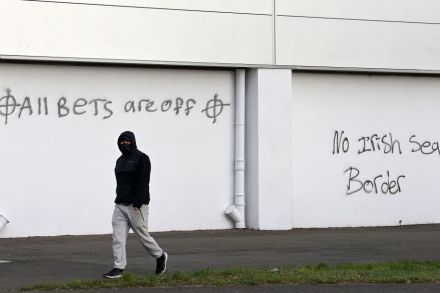
What are we to make of Loyalist paramilitary groups withdrawing support for the Good Friday Agreement over the invidious trade border that now exists in the Irish sea? The Loyalist Communities Council, a group that represents the Ulster Volunteer Force (UVF), Ulster Defence Association (UDA) and the Red Hand Commando, has written to Boris Johnson and Ireland’s Taoiseach, Micheál Martin, warning of 'permanent destruction' of the 1998 peace agreement unless changes are made to the Brexit agreement.  'If you or the EU is not prepared to honour the entirety of the agreement then you will be responsible for the permanent destruction of the agreement,' David Campbell, the chairman of the LCC, said.

Ireland’s love affair with horse racing

From our UK edition

With the Cheltenham Festival close, the quest for serious punting money intensifies. I had one potential contributor identified at Kempton on Saturday. With trainer Dan Skelton on red-hot form, and his jockey brother Harry currently winning on 22 per cent of his rides, I reckoned that their candidate for the Sky Bet Dovecote Novices’ Hurdle, the clearly useful Calico, a decent horse on the Flat in Germany, was the business at a tasty 10-3. Three hurdles out, Harry had Calico travelling strongly behind the two leaders and I was not only counting my money but also starting to frame a few ante-post doubles for the Festival.

How the EU can help calm Brexit tensions in Northern Ireland

From our UK edition

The next Northern Ireland assembly election must take place by 5 May next year. The MLAs voted in then will decide whether or not to continue the Northern Ireland protocol, which requires the UK authorities to apply EU rules on various goods entering Northern Ireland. If a majority voted against (that is all that would be needed as the petition of concern, which requires a higher threshold, would not apply), then the protocol would fall. At the moment, it looks very unlikely that the election will result in an anti-protocol majority. But it would clearly be bad for stability in Northern Ireland if the campaign turned into an attempt by Unionists to rally a majority that could vote down the protocol.

It’s time for Ireland to stand up to the EU

From our UK edition

Ireland’s political class is facing a moment of truth. Following yesterday’s extraordinary events — with the EU temporarily triggering Article 16 of the Northern Ireland Protocol as part of its desperate effort to manage its self-made vaccines crisis — the Dublin elites have some serious soul-searching to do. They must now ask themselves if they are willing to be members of this institution that has just treated them with such contempt; which has just signalled in front of the entire world that it does not take Irish sovereignty or Irish democracy very seriously at all. Contempt is not too strong a word for what the EU has just done to Ireland.

Biden and the darker side of Irish-American history

From our UK edition

My introduction to an Irish-American sense of history was not in Boston or New York but in the American Midwest. I was visiting the eccentric House on the Rock in rural Wisconsin. The receptionist told me proudly that she was Irish. ‘My people were driven out during the Famine by Cromwell… and Strongbow.’ I admired her compositional virtuosity in bringing together the 12th-century Cambro-Norman warlord Strongbow, the mid-17th-century hammer of the Gaels (and the Scots) Oliver Cromwell, and the Irish landlord clearances of the 1840s — all in one short sentence. What’s more, her declaration chimed with the self-mythologising of Irish-Americans who trace their origins back to the Great Famine of the 1840s.

How Joe Biden can be a true friend to the Irish

From our UK edition

On this day in 1974, a body was recovered in quiet fields near the Country Tyrone village of Clogher, hard against Northern Ireland’s frontier. It was that of Cormac McCabe, the headmaster of a nearby secondary school, who was also a part-time officer in the Ulster Defence Regiment, locally raised ‘home battalions’ of the British Army. McCabe had been kidnapped the day before, having crossed the border to have lunch in Monaghan town with his wife and disabled daughter. Exposed and defenceless, he was the softest of targets for the Provisional IRA terrorists who abducted him, shot him in the head and then dumped him in a bog field.

Family secrets: Life Sentences, by Billy O’Callaghan, reviewed

From our UK edition

Despite innovative work by younger writers, there remains a prominent strain in Irish literature of what we might call the ‘sad but nice’: tales of desperation elegantly unfolded, popularised by William Trevor and John McGahern and refined by Colm Tóibín and Mary Costello. A newcomer in this lane is Billy O’Callaghan, whose previous books have been so orgiastically praised by the Booker Prize winner and former literary editor of the Irish Times John Banville that I began to think O’Callaghan might be another of his pseudonyms. And if there’s one feature in Irish novels that shouts louder — or with more forceful quietness — than others, it’s the family and its secrets.