Ireland

The BB wants to put my dream farm on a skip

From our UK edition

‘Have you got your passport? Your phone? Your wallet?’ The builder boyfriend patted his pockets and told me not to worry as we drove through the Gatwick drop-off lane where they charge you £5 to open your car door for three seconds and push someone out. When I arrived back home, he texted: ‘I left my euros in the pocket of my work jeans.’ No matter. He could draw out cash when he got there. It had been a last minute rush to get him on a flight to Cork to view this dream farm I had found, in the sun-drenched valley. It was really a modest white bungalow but it had 45 acres behind it, and post and rail fences. If I squinted, it looked a bit like Southfork. It was certainly the closest I was ever going to get to homesteading.

I have found heaven in West Cork

From our UK edition

A bay mare was standing over a foal curled up sleeping at her feet. Yawning and struggling to keep her eyes open, she was snoozing herself in the sun-drenched paddock of a small white farmhouse. If I had stopped the car to admire the scene every time the scene was this perfect, then I would not have made a mile’s progress on my third house-hunting trip to Ireland. In the country lanes, drivers slowed and waved to me on every bend. A cyclist put his foot on the ground and grinned as though genuinely pleased to see me. Everyone here has time. That’s how it seems anyway. The shop windows say ‘Closed on Tuesdays’; the restaurants are ‘Open Friday and Saturday nights’ In a market square, I sat on a bench and sipped a takeaway coffee bought in a supermarket.

Why the Feinstein row will worry the White House

Why Feinstein’s intransigence will worry the White House I’m not quitting! Dianne Feinstein was channeling her inner Jordan Belfort this week when she refused to cave to calls from fellow Democrats to retire. The eighty-nine-year-old senator has been a headache for her party for some time now, with colleagues seemingly convinced that she is no longer mentally capable of executing her duties as senator and hoping for a speedy, low-key and dignified departure. The Democrats’ Feinstein problem looked like it was solved when, in February, she announced her retirement at the end of her term in 2024. But in early March Feinstein announced she had contracted shingles. Her staff said she’d only be away from the Senate for a few weeks.

The wine of the Wild Geese

From our UK edition

The Irish rarely understate their achievements. Yet there is one exception. Over the centuries, the links between Catholic Ireland and the Bordeaux wine trade have been fruitful. O’Brien (Pepys’s Ho Bryan, now Haut Brion), Lynch, Barton and many other names: these are enduring memorials to a fruitful relationship. But the best-known Hibernian exiles were warriors. From the 16th century onwards, Irish soldiers served with distinction in continental armies. Their numbers increased after the Battle of the Boyne. London wanted to break the power of Gaelic, Catholic Ireland for all time, and one way of doing so was to expropriate the native landowners. Many of them decided to repair their fortunes elsewhere. They became known as the Wild Geese.

Does Joe Biden have CTE from rugby?

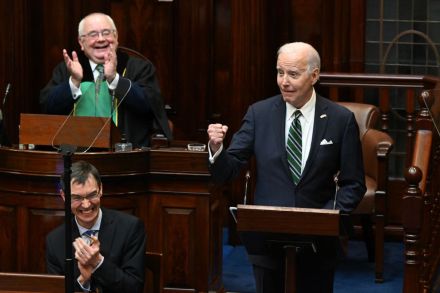
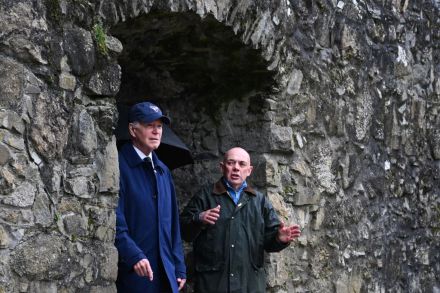
President Biden is being an American tourist in Ireland this week. In comments to the Irish Parliament in Dublin today, the president touted the merits of rugby, a sport in which Ireland is currently the top-ranked side in the world, over the American brand of football. "I'd rather have my children playing rugby now for health reasons than I would have them playing football," the president said. "Fewer people get hurt playing rugby." Biden is a rugby enthusiast, having played while at college at Syracuse. He made a point of video-calling the Ireland men's team after their historic defeat of New Zealand in Chicago in 2021. (In the video, Biden's brother James is sporting an Ireland hat and coat.

joe biden rugby concussion

Joe Biden’s Ireland trip is all about Joe Biden

Joe Biden’s Ireland trip is all about Joe Biden Half a century since he was sworn in as a US senator, the Biden brand is a well-established series of safe bets: a fondness for aviator sunglasses, a hankering for chocolate chip ice cream. Also high on the list: conspicuous displays of Irishness. The second Irish-American president is fond of quoting Heaney and Yeats. He may be the only teetotaler who enjoys St. Patrick’s Day, which he says is his favorite holiday.  And so much about Biden’s trip to Ireland this week is unsurprising. After landing in Belfast last night, the president this morning had a quick cuppa with British prime minister Rishi Sunak and gave a speech to mark twenty-five years since the Good Friday Agreement.

joe biden ireland

Barbie Kardashian and Ireland’s trans madness

From our UK edition

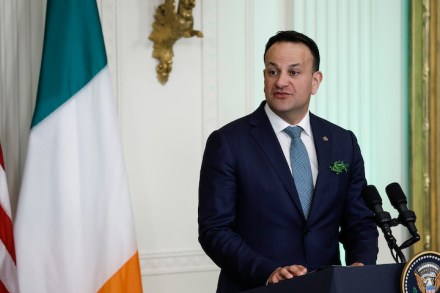
Why are politicians so incapable of answering basic questions about biology? Yesterday it was Taoiseach Leo Varadkar’s turn. A journalist asked him a yes or no question: ‘Do you believe that Barbie Kardashian is a woman?’ Barbie Kardashian, whose birth name was Gabrielle Alejandro Gentile, is a violent man who identifies as a woman. Last week he was sentenced to five-and-a-half years in jail – a women’s jail – for threatening to torture, rape and murder his own mother. He is, as the journalist who cornered Varadkar put it, ‘a violent biological male with a penis’. So what was Varadkar’s answer to this easiest of questions?

A literary pilgrimage to Dublin

From the lilting normcore of Sally Rooney’s Normal People to the frenetic genius of poetic, post-(post?) punk band Fontaines D.C., I’m drawn to talented Irish voices of late. Martin McDonagh’s Oscar-nominated tragicomedy, The Banshees of Inisherin, won three Golden Globes, and my heart, to boot. And quite rightly. It’s news to no one that the Irish have always been exceptional storytellers; some stereotypes stick because they are true. Plenty of the finest words ever written hail from the town of the hurdled ford, Baile Átha Cliath, Dublin. This fact was recognized by UNESCO in 2010, when they named it a City of Literature.

dublin

The dangerous myth-making in the Banshees of Inisherin

From our UK edition

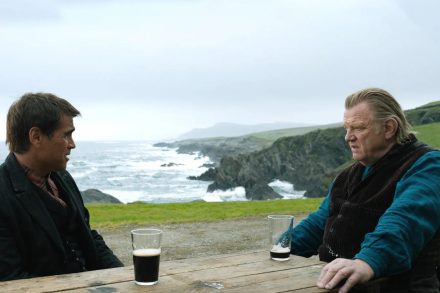
I never made it to the end of Martin McDonagh’s The Banshees of Inisherin, which won four Baftas on Sunday and has been tipped for further success at the Oscars next month. Inisherin is a fictional place that apparently translates as 'Island Ireland'. I know it’s probably churlish of me, but, being Irish, I was turned off by the film’s maudlin sentimentality mixed with self-obsession, self-harm, child abuse, wanton violence, dead pets and suicidal ideation. It bothered me that the film trotted out as many Oirish stereotypes as were in Gone With the Wind, released in 1939. Let me list some of the most obvious of these at the outset.

The Oirish Question

Sweeping down and around the Aran Islands, The Banshees of Inisherin begins as any Irish film would. The official trailer had given little away, besides a couple of strong-sounding accents and weak-looking Guinness. Very Irish; too Irish, perhaps. Despite my respect for Martin McDonagh and reverence for In Bruges, even I felt trepidatious. My father, too, had an air of skepticism about him. The line between Irish and Oirish is so fine — so easily and often overstepped — that when the film opened on gray cliffs and green fields, you could be forgiven for fearing the worst. For despite the accelerated evolution of contemporary Irish cinema, Hollywood still speaks fluent Oirish.

inisherin

The spy novelist who became an Irish nationalist

The period of the First World War was a golden age for the spy novel. There’s nothing like a really cataclysmic global conflict to stir any halfway attentive author. And perhaps the pick of the literary crop was 1903’s The Riddle of the Sands, by the Anglo-Irish writer, soldier, and politician Erskine Childers. The novel mixes some gentle satire about the graded snobberies of the Edwardian class system with a seafaring adventure involving a couple of topping British chaps going after German spies in the Baltic. It’s not only a riveting tale in itself, but so cogent in its account of the state of Britain’s maritime defenses that it prompted the Admiralty to hurriedly install a series of new coastal gun batteries.

Warning: this book may make you like Bono

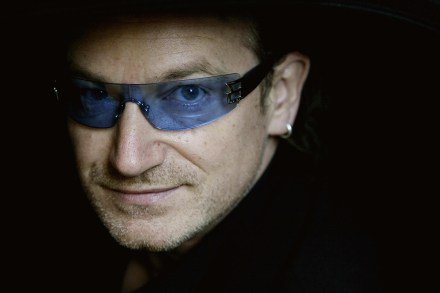
There is a famous (and, I fear, apocryphal) story about Bono at his most messianic at a U2 gig in the early part of this century. Pausing between songs, he clicked his fingers meaningfully. After doing this a few times, he said, with utmost gravity, “Every time I do this, a child in Africa dies of starvation.” Most of the audience nodded in sympathy, but one man in the front row had a better response. “Well stop fucking doing it then!” Bono’s response was not recorded, but the finger-clicking soon disappeared from his repertoire of stadium show gimmicks. It is reasonably easy to see why Bono — and, by extension, U2 — are so reviled.

bono

Letters: Why I love Warhammer

From our UK edition

Troubles ahead? Sir: Jenny McCartney’s article ‘Border lines’ (1 October) was a profoundly depressing one. Perhaps there will be a united Ireland within the next 30 years; but will it be a peaceful and happy place? I have my doubts. Might not areas such as overwhelmingly Unionist Antrim, north Down, north Armagh, east Belfast and indeed much of Co. Londonderry become no-go areas for the new Irish governing authorities – rather in the same way as Derry, west Belfast and south Armagh were for the British in the times of the Troubles? Most of the wiser commentators observe that the Good Friday Agreement was only a truce, not a perpetual cessation of hostilities.

Europe’s looming energy wars

From our UK edition

This summer marks a truce. But if, as expected, Liz Truss becomes prime minister, it is almost inevitable that tensions over the Northern Ireland protocol will resurface. Britain has been threatened with trade barriers if it tears up the protocol, with implications for import and export industries. But one possible consequence has been largely overlooked, in spite of the gathering energy crisis: the trade in gas and electricity. Imported power via undersea interconnectors is the forgotten but fast-growing element of our electricity system. In 2019, 6.1 per cent of our electricity was imported.

Who planned Field Marshal Sir Henry Wilson’s murder?

From our UK edition

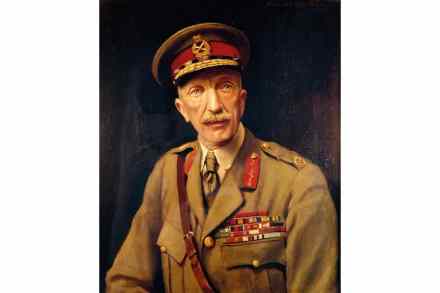
Until very recently, political assassination was a mercifully uncommon occurrence in British politics, though that has changed. Previously when such murders did happen, they were usually associated with Ireland: the 1882 Phoenix Park murders of Lord Frederick Cavendish and Thomas Burke, the killings of Airey Neave and Lord Mountbatten, and numerous unsuccessful plots and near misses. One spectacular example occurred in June 1922, when Field-Marshal Sir Henry Wilson was shot dead outside his Mayfair house by two IRA operatives called Reginald Dunne and Joseph O’Sullivan, who were swiftly captured and hanged, after a trial whose procedures were sharply criticised by George Bernard Shaw among others.

The David Trimble I know (1998)

From our UK edition

David Trimble, Northern Ireland's first minister from 1998 to 2002 and leader of the Ulster Unionist party from 1995 to 2005, has died aged 77. In 1998, Ruth Dudley Edwards wrote about the Unionist leader from a Catholic's perspective. On a wall in David Trimble's Westminster office is a cartoon of a bunker, complete with tin-hatted soldiers poking their rifles over the sandbags. I was dealing with someone with an intellectual life outside academia and politics 'Ulster,' says the caption. 'Probably the best lager in the world.' I laughed when I saw it, and Mr Trimble grinned and gestured to a 1929 election poster behind his desk, featuring Lord Craigavon glowering over the legend, 'Ulster. What we have we hold.' That's here in case people think I've gone soft.

We could all once tell bird’s-foot trefoil from rosebay willowherb

From our UK edition

‘There are a great many ways of holding on to our sanity amid the vices and follies of the world,’ wrote Ronald Blythe in 2008, ‘though none better than to walk knowledgeably among our native plants.’ To many today, when the age-old connection between people and their indigenous flora is in danger of being extinguished altogether, this pronouncement may seem eccentric; but is rightly endorsed by Leif Bersweden in Where the Wildflowers Grow, which vividly describes the botanical journey through Britain and Ireland he undertook last year. He was born in 1994 and, unusually for his generation, has been a keen amateur botanist since childhood.

Unhurried and accomplished whodunit: ITV’s Holding reviewed

From our UK edition

A couple of years ago, I happened to read Graham Norton’s third novel Home Stretch. Rather patronisingly, perhaps, I was surprised by how accomplished it was, especially in its sympathetic but melancholy portrait of life in a West Cork village. Yet, judging from ITV’s new adaptation of his first novel Holding, this was something he’d pulled off before – because, here again, it’s pretty clear both why Norton would want to write kindly about the kind of place he grew up in, and why he would have wanted to leave it. Monday’s first episode efficiently established the rural-Irish setting with shots of fields, cows and wind turbines. We then saw the village policeman P.J.

We could learn a thing or two from Swiss democracy

From our UK edition

There was another referendum in Switzerland over the weekend. This one was about protecting the young from the evils of tobacco by banning advertising anywhere children might see it. This strikes me as a good deal more liberal than the measure from New Zealand’s mildly fascistic Jacinda Ardern, who insists that young people must never smoke at all, ever, or indeed the situation here where none of us is allowed actually to see a cigarette packet in case it gives us ideas. But it’s not just cigarette advertisements that the Swiss were voting on. There are other referendums on animal (and human) experiments in research as well as a couple of lesser measures to do with stamp duty and the media.

The dog catcher, the terrorist and the dark history of Sinn Fein

From our UK edition

The dead in the ground and those who put them there in the name of ideology do not rest easily in Ireland. The Glasnevin cemetery in Dublin was recently forced to close its wall of remembrance to those who died in the Easter rising of 1916 because of relentless vandalism. In previous attacks the wall had been smashed with sledgehammers and in 2017 paint was thrown over it. What drove this constant destruction? It seems it was targeted because the attackers could not tolerate the presence of the names of British soldiers on the wall. These soldiers had died alongside republican rebels and civilians in the five days of insurrection that gave birth to the modern Irish state.