Iraq war

Tony Blair doesn’t need to apologise for the Iraq war

From our UK edition

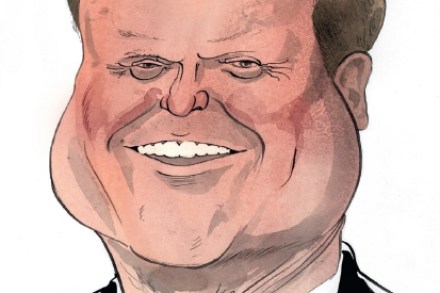
I was against the Iraq War. And I’ve been against Tony Blair ever since I first clapped eyes on his moisturised, illiberal countenance, all teeth and no soul. (In 1996 I was standing on street corners selling a magazine that said ‘Tony Blearghh!’ on its cover, while every other lefty was hailing him a messiah come to save us from Toryism.) Yet I don’t like the obsession with making Blair repent and weep and whip himself for what happened in Iraq. It’s ugly, and even worse it’s wrong: Blair doesn’t bear sole responsibility for that war.
Eastern airs

From our UK edition

On Private Passions this week the writer Amitav Ghosh gave us a refreshingly different version of what has become a Radio 3 staple. No Mozart, Mendelssohn or Monteverdi for Ghosh, who speaks five languages including Arabic and Bengali, was born in Calcutta and has lived in Delhi, Oxford, Alexandria, Brooklyn and Goa. Instead, his musical choices were all about fusion and cultural exchange. Perhaps most surprising was an ‘Oriental Miscellany’ from the late 18th century, played on the harpsichord and sounding initially quite baroque until you realised that the fingering was much more complex, more layered, infinitely more interesting. The composer William Hamilton Bird had for the first time given Hindustani folk tunes a Western notation.

Podcast: what Jeremy Corbyn’s Britain looks like

From our UK edition

What will Jeremy Corbyn’s victory in the Labour leadership contest mean for Britain and the Labour party? On this week’s View from 22 podcast, James Forsyth, Dan Hodges and Ellie Mae O’Hagan discuss this week’s Spectator cover on the impact his leadership would have. Would it be a disaster for Labour if he wins? What would the impact be on the Conservatives? Might Corbyn soften his views and become more pragmatic as leader? And will Labour’s centrists find themselves in the wilderness for many years, or rally round their new leader?  Matthew Parris and Theo Hobson also discuss whether Christianity is offering enough moral guidance on the migrant crisis.

Forget Chilcot

From our UK edition

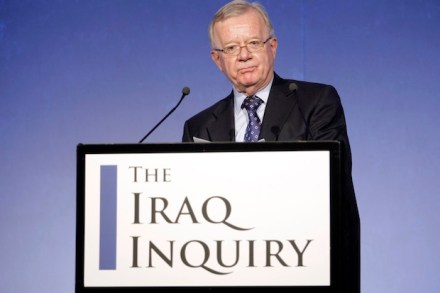
[audioplayer src="http://rss.acast.com/viewfrom22/jeremycorbynsbritain/media.mp3" title="Peter Hitchens and Fraser Nelson debate whether the Chilcot report needs to be published" startat=1916] Listen [/audioplayer]It might actually be better if Sir John Chilcot’s report is never published. I for one can no longer be bothered to be annoyed (though I used to be) by the increasingly comical excuses for its non-appearance. We all know the real reason is that the Iraq war was the product of lies, vainglory and creeping to the Americans, but they don’t want to admit it. I suspect Sir John and his colleagues would be more hurt by a patronising acceptance that they are a hopeless embarrassment than by any more anger.

Podcast: Charlie Falconer vs Douglas Murray on assisted dying

From our UK edition

The Assisted Dying Bill will return to the Commons and Lords in the near future – are we prepared for the consequences? On the latest View from 22 podcast, Douglas Murray debates this week’s cover feature with Lord Falconer, the former Justice Secretary and Lord Chancellor who has been a key proponent of the bill. Are there lessons to be learnt from euthanasia legislation in Holland, Belgium and Oregon? What impact will the law have on the mentalities of older people? And are there enough provisions in the bill to stop assisted dying becoming a ‘slippery slope’? Isabel Hardman and James Cleverly, the Conservative MP for Braintree, also discuss the 2015 intake of Conservative MPs and how they differ from previous generations.

Long life | 13 August 2015

From our UK edition

I’m going off Jeremy Corbyn. He seems more and more pleased with himself by the minute. But I understand why he is so popular with Labour supporters. It isn’t just his perceived authenticity in a field of machine politicians — the same attribute that has thrust Donald Trump to the fore in the race for the Republican nomination in the United States. It is something of which I have been reminded this week by the news that Silvio Berlusconi is planning to sell his preposterous Sardinian villa to a Saudi prince, and this is the shame felt by so many party members over their long servility to Tony Blair. For perhaps nothing better exemplifies Blair’s indifference to Labour sensibilities than his visit with Cherie to the Villa Certosa in 2004.

How to defeat a caliphate

From our UK edition

[audioplayer src="http://rss.acast.com/viewfrom22/defeatingisis/media.mp3" title="Andrew Bacevich and Douglas Murray discuss how ISIS can be crushed" startat=39] Listen [/audioplayer]Last Sunday Isis raised their black flag over Palmyra. Below the flag, in the days that followed, the usual carnage began: beheadings, torture, desecration. Syrian state TV has reported that over 400 civilians have been killed already, and the big question globally has become: how could this have happened? What went wrong with the Iraqi and Syrian troops? Isn’t there anything the West can do? Lord Dannatt, the former head of the army, has called on the British government to ‘think the previously unthinkable’ and send troops.

Sexed-up pacifism

From our UK edition

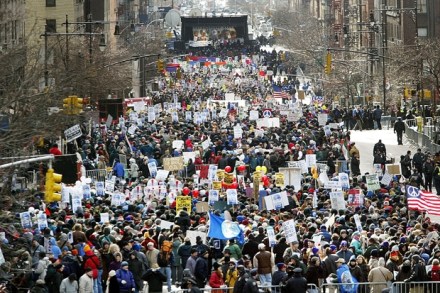
Big-screen documentaries never change the world. Blackfish has not shortened the queues to see maltreated killer whales leap through hoops at SeaWorld. Super Size Me reduced neither the all-American waistline nor the profit margin of McDonald’s. The Cove did not prevent the Japan whale industry slaughtering dolphins. So what possible chance, more than a decade after Michael Moore’s Fahrenheit 9/11, has a mere film of bringing about that most chimerical of holy grails: an admission that the case for invading Iraq was knowingly built on a lie? We Are Many revisits the anti-war marches of 15 February 2003.

The populist outsider who really could beat Hillary Clinton (clue: it’s not Elizabeth Warren)

From our UK edition

 Washington DC   Bored American reporters are pining for a Democratic primary challenger to step up against Hillary Clinton in 2016. We don’t like coronations. It’s not just cynical Republicans who cheered at ‘emailgate’ — the crisis Clinton faced after it emerged she had used a private account for her emails as Secretary of State. It makes matters more interesting, and moves the spotlight on to other, less celebrated politicians. The media is consequently obsessed with the idea that Elizabeth Warren, a Massachusetts Democrat admired by Occupy Wall Street, can take on Hillary. The more logical opponent is Joe Biden, the Vice President. There’s also Bernie Sanders, self-described socialist senator from Vermont.

Tony Judt: a man of paradox who made perfect sense

From our UK edition

Tony Judt was not only a great historian, he was also a great essayist and commentator on international politics. Few in this country will be familiar with his journalism, however, since it was largely published in America by the the New York Review of Books and the New Republic. Thankfully, this situation can now be remedied through this collection of his writings, ranging from 1995 to his untimely death in 2010 from motor-neurone disease. As was often observed during his life, Judt was a man of apparent paradoxes. A secular Jew, who as a teenager had been a left-wing Zionist, he was castigated for criticising the actions of Israel. A historian of Europe, he spent most of his career teaching in America.

Delaying publication of the Chilcot report is the right thing to do

From our UK edition

I don't know about you but I tend to think Sir John Chilcot's report into the Iraq war should not be published before it is finished. Actually, I do know about you and I know I hold to the minority view on this matter. So be it. Fashionable opinion is not on my side. Then again, fashionable opinion thinks Tony Blair is a war criminal so we may safely treat fashionable opinion with the contempt it has earned. It can go hang. Nevertheless, as Isabel says this new delay will feed a perception the report is crooked. That is, zoomers zoom and morons gonna moron and there's nothing anyone else can do about it. But you would think the Deputy Prime Minister might do his bit to reassure people that Chilcot is an honest process.

Will Marti Pellow attract enough tipsy hen parties to Evita to flog all 18,000 seats?

From our UK edition

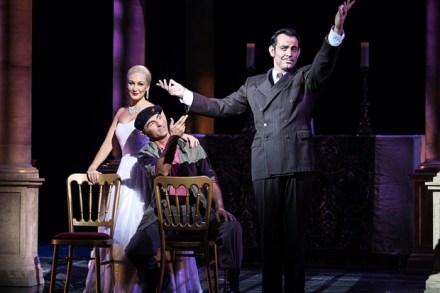
Tim and Andy are back. Their monster hit Evita opens the fully refurbed and re-primped Dominion Theatre, which is built on the scale of an airport terminal and needs a big production to fill it. This is a beautiful version of a show that marks a decline in the Tim and Andy alliance. It hasn’t the naïve and exuberant mischief of Joseph, nor the scope and the sustained dramatic force of Jesus Christ Superstar. Earnestness, and over-reverence for their subjects, are starting to creep in. It spoils the fun to know that the Perons weren’t a pair of sweet-natured do-gooders handing out beefsteaks to the underclass but a couple of egos on stilts running a dictatorship based on fear.

The Birmingham ‘Trojan Horse plot’ is — like WMD — a neocon fantasy

From our UK edition

[audioplayer src="http://traffic.libsyn.com/spectator/TheViewFrom22_12_June_2014_v4.mp3" title="Matthew Parris vs Douglas Murray on the Birmingham Trojan Horse plot" startat=55] Listen [/audioplayer]I can remember where I was when Colin Powell presented to the United Nations his evidence for the existence of Saddam’s weapons of mass destruction. I was taking a friend to an emergency medical consultation at Victoria station in London and while she saw the doctor I settled down in the waiting room to watch the presentation on TV. I found it compelling.

Podcast: the betrayal of British Muslims and the new Iraq war

From our UK edition

Do we need to take more action to tackle the Islamist threat in British schools? On this week’s View from 22 podcast, The Spectator’s Douglas Murray and Matthew Parris debate this week’s cover feature on whether the Birmingham ‘Trojan Horse plot’ is the results of years of weak policy and inaction. Should we wait until there is more concrete proof before taking drastic actions? Is the promotion of British values the right solution, and how can the government go about defining and teaching these values? James Forsyth and Isabel Hardman also discuss how the West Lothian Question will be addressed at the next election. Where do all of the parties stand on English nationalism? What can we expect in the next Conservative manifesto about the union?

Now that Iraq really is threatened by jihadists, should we intervene?

From our UK edition

The war on terror has gone not necessarily to our advantage. For the second time in a dozen years the land of Abraham has been invaded by a partly-British army, although this time it is composed not of regular soldiers but of bearded lunatics from Crawley. The Islamic State in Iraq and the Levant, an Islamist offshoot so extreme that even al-Qaeda thinks they’ve taken things a bit too far, now controls a huge swathe of Syria and Iraq, roughly in the region of 40,000 square miles, or 4.0 Wales on the International Wales Scale. That makes Sunnistan larger than an independent Scotland and with a great deal more oil. The failure of the Americans to nation-build was epitomised by the fact that a US-trained Iraqi army of 30,000 fled from just 800 ISIS militants in Mosul.

Does Boris Johnson really want to see Tony Blair tried for war crimes?

From our UK edition

What are we supposed to make of Boris Johnson? I mean, are we supposed to pay attention to what Boris actually says? Or is he permitted to play the game of politics by different rules? That is, the sort of stuff that applies to other politicians does not apply to Boris because the Mayor of London is a great entertainer and thus granted some kind of relief from the usual rules of responsibility. Just asking, you know. Consider his recent remarks about Tony Blair and the Iraq War. During an appearance on LBC last week, the Mayor appeared to endorse the fashionable daft idea that Mr Blair should be tried as a War Criminal. At the very least, Boris suggested, this is what Blair deserves.

The Unknown Known: Errol Morris tries to trip up Donald Rumsfeld – and fails

From our UK edition

Before getting onto the film I should make a few disclaimers. There is a popular view that Donald Rumsfeld was a catastrophic US secretary of defence. I do not share that view. There is also a view that his most famous phrase – about known knowns, known unknowns and so on – was a display of laughable ignorance.  I think it one of the best descriptions anyone has ever produced of the challenges posed by intelligence. And finally I suppose there is a school of people out there who shudder at the name. I’m not among them. As well as being a great public servant – both the youngest and oldest defence secretary in US history – I regard Donald Rumsfeld as an unusually likeable person.

Rebekah Brooks’s ‘Hutton style’ email

From our UK edition

People pay Tony Blair handsomely for his PR advice; but, today, thanks to the hacking trial at the Old Bailey, we allegedly get to see a glimpse of the Great Man in action for free. The court was shown this email sent by Rebekah Brooks on the day after the last ever edition of the News of the Screws went to press; it is an account of a conversation she claims to have had with Tony Blair: Only got 10 minutes before I see Charlie for confiscation! I had an hour on the phone to Tony Blair. He said: 1. Form an independent unit that has an outside junior counsel, Ken Macdonald, a great and good type, a serious forensic criminal barrister, internal counsel, proper fact checkers etc in it. Get them to investigate me and others and publish a Hutton style report. 2.

The Chilcot Inquiry is a pointless endeavour. Tony Blair’s critics will never be satisfied.

From our UK edition

I never really saw the point of the Chilcot Inquiry and nothing that has happened in the years since it first sat has persuaded me I was wrong to think it liable to prove a waste of time, effort and money. Dear old Peter Oborne pops up in today's Telegraph to confirm the good sense of these suspicions. Chilcot, you see, is most unlikely to satisfy Tony Blair's critics, far less provide the "smoking gun" proving that the Iraq War was a stitched-up, born-again conspiracy promoted by George W Bush and eagerly, even slavishly, supported by Anthony Charles Lynton Blair. This is not an argument about truth. If Chilcot fails to deliver a report confirming the existence of this kind of plot then this will be taken as proof that plot really existed.

After Saddam

From our UK edition

‘The problem is why,’ said the health project officer of a British charity working in the marshlands of southern Iraq close to Basra. ‘No one answers why?’ He was talking to the BBC journalist Hugh Sykes about the state of Iraq, ten years after the fall of Saddam Hussein. He agreed that the Americans and British had done ‘a good job’ in getting rid of the dictator but said that this had changed nothing in Basra, whose economy had been destroyed by Saddam as he drained the marshes, turning a landscape that was vivid green into burnt ochre. We also heard from the farmers who in the hours after Saddam’s fall set out with a JCB to destroy the dams and redig the ditches to bring back the water.