Iran

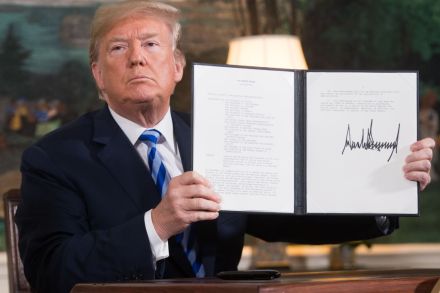
Donald Trump has been captured by the neocons

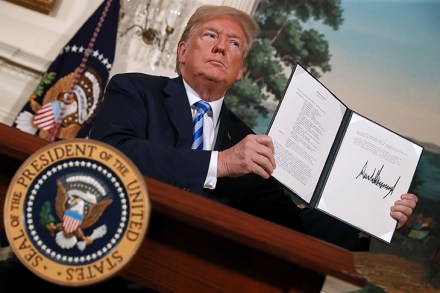
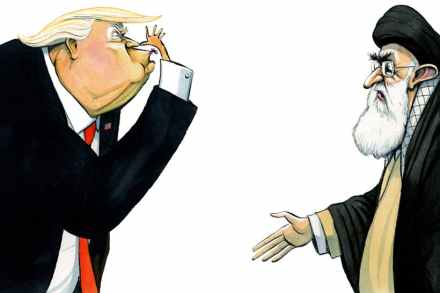
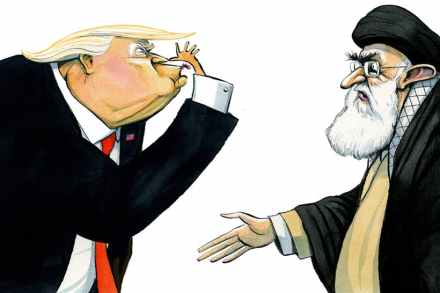
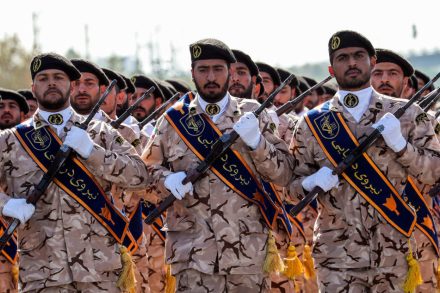
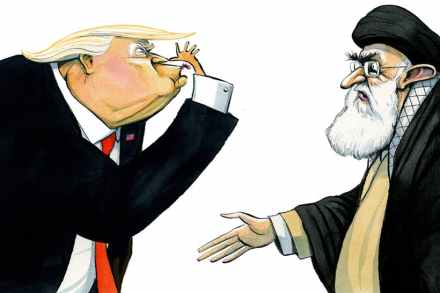
Until now Donald Trump has proceeded with relative impunity in foreign affairs. But his imposition of a terrorist designation on Iran’s Revolutionary Guard, which numbers some 1.1 million strong, could change that. Iran is promising to respond by labeling the American military as a terrorist organization. These moves could lead, willy-nilly, to a fresh conflict in the Middle East, the very thing, incidentally, that Trump promised to avoid when campaigning for the presidency in 2016. But then again Trump made a lot of promises. A wall would be built and the border secured. Obamacare would be nuked. Coal would make a big comeback. America would experience a Great Leap Forward. And so on. The contradictions of his presidency are now catching up to him.

neocons donald trump iran

Making gay rights great again

Dark days these are, but still the good Lord provides hope—not that we wretches deserve it! On Tuesday, Josh Lederman of NBC News reported: ‘The Trump administration is launching a global campaign to end the criminalization of homosexuality in dozens of nations where it’s still illegal to be gay…a bid aimed in part at denouncing Iran over its human rights record. ‘US Ambassador to Germany Richard Grenell, the highest-profile openly gay person in the Trump administration, is leading the effort, which kicks off Tuesday evening in Berlin.

richard grenell gay rights

Under cover of darkness

From our UK edition

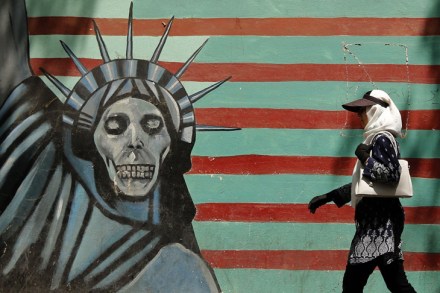
It was World Hijab Day earlier this month. You probably missed it, but you can imagine the idea: ‘global citizens’ of all faiths and backgrounds were asked to cover their heads for a day ‘in solidarity with Muslim women worldwide’. It is done in ‘recognition of millions of Muslim women who choose to wear the hijab and live a life of modesty’. Wearing a hijab is not such an abstract cause for me: I used to wear one a few years ago when I was at school in Iran. And in the spirit of solidarity, I’d like to tell you a bit more about the world I left behind when I moved to Britain in 2011 when I was nine years old. I was six when I was first made to wear the hijab to school.

When things fall apart | 31 January 2019

From our UK edition

It’s becoming clear that the travails afflicting all the major players in The Archers, Radio 4’s flagship drama, are intended by the soap’s writers (and new editor Jeremy Howe) to reflect what’s going on in the country at large, Ambridge as a microcosm of our imploding nation. As Home Farm is sold to absentee landlords with no interest in farming the land, reducing Brian and Jennifer to a terraced cottage on the green, and Ambridge’s stately home Lower Loxley Hall veers into chaos with the son and heir in jail and the business on the brink of disaster, even Brookfield, the Archers’ homestead, is standing on the edge of a financial precipice.

Is a hanged child rapist part of the persecuted LGBT minority in Iran?

I’ve written repeatedly for The Spectator about how the Western media has a track record of misreporting on the plight of homosexuals in the Middle East. However, an outrageous article by Benjamin Wenthal for the Jerusalem Post on the hanging of a child kidnapper and rapist in Iran, which was picked up by dozens of major news outlets, has introduced new depths of inaccuracy and sensationalism to the coverage. Published under the headline ‘Iran Publicly Hangs Man on Homosexuality Charges’, the article quotes Iranian student media as saying a 33-year-old man was executed in the southwestern city of Kazeroon ‘based on his criminal violations of “lavat-e be onf” – sexual intercourse between two men.

child rapist

Will nothing sate John Bolton’s lust for war?

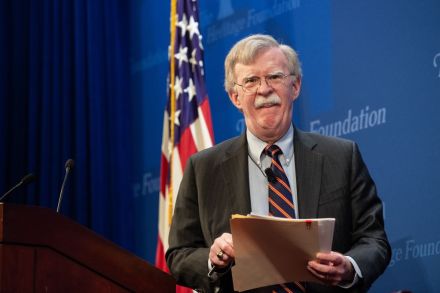
Will the Trump administration embrace the Bolton doctrine? John Bolton, whom Donald Trump appointed in April to replace the stolid H.R. McMaster, has been trying to tailor administration foreign policy to match his hawkish views. Among his initiatives, the Wall Street Journal reported, is to make a move to do what he has long wanted done, which is to wage war against the mullahs in Tehran. The result is a schism in the administration.With the resignation of Defense Secretary James N. Mattis, Pentagon officials are now starting to fight back publicly against the National Security Council, especially as Bolton tries to install his former deputy Mira Ricardel, who was fired from the National Security Council, after Melania Trump denounced her, at the Pentagon.

john bolton lust

The new boat people

From our UK edition

When the migrant crisis started, about three years ago, it was seen as a mainly Syrian affair. Caught in the crossfire between Bashar al-Assad and sundry jihadist groups, ordinary Syrians were heading for Europe, part of the largest mass movement of people since the second world war. But as we now know, that analysis was wrong. Or rather, it was only one facet of the historical migration phenomenon that was unfolding then and still is today. As a reporter, I hit the migrant trail, following the new arrivals by foot, bus, train and ferry through the Greek islands and the Balkans. I heard many languages besides Arabic, among them Pashto, Urdu, Bengali and even French (spoken by a Congolese family I encountered at the Serbian--Hungarian border).

Ignore the hawks, Trump’s Syria withdrawal is bold and brave

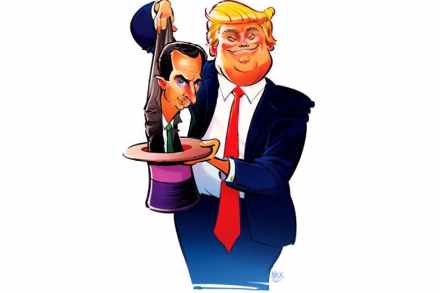
Warmongers on the Left and Right are united in their fury at President Donald Trump’s extraordinarily bold and brave decision immediately to begin withdrawing all US troops from Syria. For those of us who prefer peace, it is a sure sign that Trump deserves our unconditional support and gratitude, no matter how we view the rest of his presidency. After all, the only other time Trump united the neocons and liberal hawks was when he launched a futile cruise missile barrage last year at an empty Syrian airfield in response to an alleged chemical weapons attack against civilians.

syria

The empress of art

From our UK edition

Somewhere in the bowels of the Tehran Museum of Contemporary Art is a portrait from a lost world. Its subject is a beautiful young woman: Her Imperial Majesty, Empress Farah Pahlavi of Iran. The condition of the work, however, a luminous print by Andy Warhol from 1977, is so bad that it could be a metaphor for Iran itself. Fundamentalist vandals have slashed at it with knives. The Empress — forced into exile when the Iranian Revolution overthrew her husband, the Shah, two years after the portrait was completed — discovered this upsetting news while watching French TV in her Paris apartment. ‘Seeing that, I said, “They are stupid”,’ she tells me. ‘Instead of tearing it they could have sold it!’ One day, she hopes to see it on display again.

Hostages to fortune

From our UK edition

It says something about the level of political discourse in America that Donald Trump decided to trumpet sanctions on Iran not with a speech, but a Twitter meme in reference to Game of Thrones. 'Sanctions are coming,' he says - in a picture that might be funny if it were not so serious. The White House is, in its head, playing out a drama where it imposes sanctions and brings the Ayatollahs to heel. In reality, things are working out very differently. When it comes to the goal of containing Iran, Trump is indeed living in a fantasy land. The date in Trump's tweet is 5 November, the day America ratchets up already devastating economic sanctions against Iran, following Washington’s unilateral withdrawal in May from the nuclear treaty brokered by Barack Obama.

The EU’s desperate bid to keep the Iran deal alive isn’t working

From our UK edition

The European Union finds itself in a bind. Donald Trump's reintroduction of sanctions against Iran has left European diplomats desperately scrambling to salvage twelve years of nuclear diplomacy. On Friday, Jean-Claude Juncker underlined the EU's commitment to keeping the deal alive, saying that 'Europeans must keep their word and not give in to a change of mood, just because others are doing so'. The EU has its work cut out, but is using every tool in its arsenal to prevent Trump from undoing its efforts. A blocking statute previously levied in the 1990s has been updated and re-initiated, allowing European companies doing business with Iran to recover damages in court. Last month, Brussels provided Tehran with £15m of aid to help offset the impact of US sanctions.

The Spectator’s Notes | 9 August 2018

From our UK edition

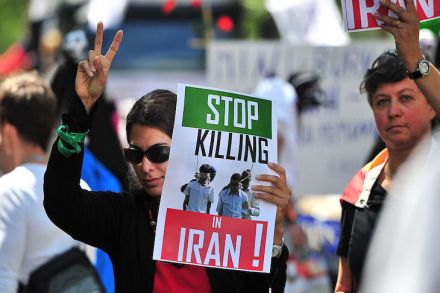
President Trump has ended US participation in the Iran deal and imposed sanctions. No doubt this is annoying to the British and other Europeans who mistakenly helped devise it, but why are they — especially we — clinging to it still? Without the United States, it cannot work. Trump’s move is supported by our allies in the Middle East — Saudi Arabia, the UAE, Bahrain, Israel — who are constantly threatened by Iranian-backed terrorism. Inside Iran, once again (but little reported), people seeking freedom and work are protesting, yet we actively support a regime which has, for 40 years, been bitterly hostile to our interests and way of life.

Trump’s Iran sanctions send a message to Europe: the U.S. is still the boss

From our UK edition

On Monday, August 6, the long-arm of the U.S. Treasury Department reached into Europe and violently shook the continent. The first wave of U.S. secondary sanctions on entire sectors of the Iranian economy are now back in force, which means major European conglomerates and large-sized businesses have a potentially existential choice to make. Do we continue to do sign deals in Iran that Washington now explicitly prohibits? Or do we take the path of least resistance by removing our money from the Iranian market and saving ourselves the trouble of billions of dollars of U.S. fines, billions more in asset freezes, and severe damage to the company’s reputation?

Boris is gone. What now for Nazanin Zaghari-Ratcliffe?

From our UK edition

What’s one woman’s life worth as the great battles about Brexit rage? Nothing at all, apparently, as Boris Johnson’s indifference towards the fate of Nazanin Zaghari-Ratcliffe shows. The British mother is, you will recall, being held in an Iranian prison on trumped up spying charges. She says she was just visiting Iran, and there is no reason to disbelieve her. Johnson took it upon himself to risk provoking the country's religious dictatorship into extending her sentence when he told a parliamentary committee that she had been in Iran to train journalists. He later apologised in the Commons, retracting ‘any suggestion she was there in a professional capacity’.

Erdogan, Trump and other fragile egos: Theresa May’s unenviable foreign policy dilemmas

From our UK edition

Given the way her Cabinet ministers are behaving at the moment, Theresa May is really rather used to dealing with fragile egos. This will come in handy over the next month when the Prime Minister has to go from what promises to be an extremely tricky Nato summit straight into Donald Trump's visit to the UK. As James says in his politics column this week, the challenges of these events, along with the ongoing problems both in the Cabinet and Parliament over Brexit, will make July one of the hardest months of May's premiership to date. But trying to tell her warring ministers to shut up seems easy compared to the foreign policy challenges that the Prime Minister is facing. They would not be easy for any leader.

The Spectator’s Notes | 28 June 2018

From our UK edition

Gordon Brown, echoing Aneurin Bevan, says that the greatest gift that the NHS brings to people is ‘serenity’. He is surely right that this is what it brought 70 years ago — for the simple, important reason that people would no longer need to say of treatment, ‘I just can’t afford it’. But comparable ‘serenity’ is provided, in different ways, in, for example, Germany, the Netherlands and Australia. Defenders of today’s NHS have to explain not why it is more serene than pre-1948, but whether it matches the current arrangements of comparable countries. ‘Serenity’ is not the word one would apply to many British hospitals today. In these Notes last week, I mentioned the fear felt by the old.

Putin says he’s making Russia great again. In reality, it’s crumbling

This is Putin’s time. Next week, the Fifa World Cup kicks off in Moscow, and the Kremlin has spared no expense to showcase Vladimir Putin’s new Russia as a vibrant, safe and strong nation. Half a million visitors will be welcomed — with the Russian press reporting that the notorious ‘Ultra’ hooligans have been officially warned to behave themselves or face the full wrath of the state. Despite four years of rock-bottom oil prices, Putin has nonetheless found the cash to build or refurbish a dozen new stadiums. Moscow has undergone a two-year city-wide facelift that has left it looking cleaner, fresher and more prosperous than any European capital I have seen.

Putin’s rot

This is Putin’s time. Next week, the Fifa World Cup kicks off in Moscow, and the Kremlin has spared no expense to showcase Vladimir Putin’s new Russia as a vibrant, safe and strong nation. Half a million visitors will be welcomed — with the Russian press reporting that the notorious ‘Ultra’ hooligans have been officially warned to behave themselves or face the full wrath of the state. Despite four years of rock-bottom oil prices, Putin has nonetheless found the cash to build or refurbish a dozen new stadiums. Moscow has undergone a two-year city-wide facelift that has left it looking cleaner, fresher and more prosperous than any European capital I have seen.

The Spectator Podcast: The Italian Job

From our UK edition

In this week’s episode, we talk about Italy’s new coalition – what will the Five Star and Lega partnership mean for Italy and for Europe (00:35)? Journalist Peter Oborne and politician Stephen Crabb also get in a fiery debate about whether Conservative Friends of Israel are a little too friendly (12:00). And, on a slightly different note, we get a dominatrix to explain why powerful men loved to be spanked…(26:30) Italy is forming a government. In the March elections no single party received more than 40% of the vote, leaving the most successful party – the Five Star Movement – forming a strange coalition with the party Lega.

The sense of an ending | 17 May 2018

From our UK edition

The timing of the Today programme’s series about hospices could not have been more apt, coming as it did so soon after Tessa Jowell’s death was announced with its array of tributes and the poignant interview with her husband and one of her daughters. In themselves such personal testimonies are not always that helpful — everyone’s situation is individual and the actual outcomes necessarily different. But what Jowell’s family said about her last hours and their evident acknowledgment and acceptance of their situation gave a real sense of purpose on Monday to Zoe Conway’s report from the North London Hospice. This was part of the Dying Matters campaign, urging us to think more about death and end-of-life care.