Intellectual dark web

Dave Rubin’s lazy new book

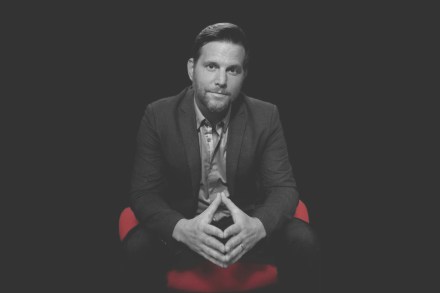
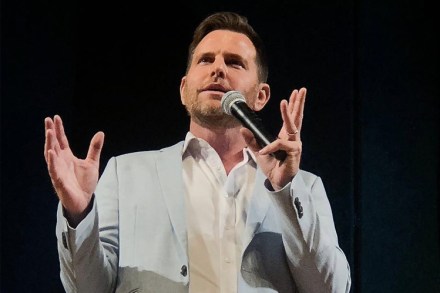
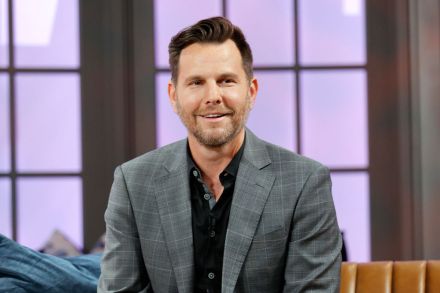
I didn’t want to review Dave Rubin’s Don’t Burn This Country. One Dave Rubin book seemed like enough — arguably too many — for a lifetime. Yet like a burglar who retires from his life of crime only to pass a mansion with its doors wide open and the glint of jewels beyond the hallway, I was pulled in again. Just one more job. In case anyone has never heard of Mr. Rubin, he is an interviewer and commentator who began as a mildly left-wing contributor to the Young Turks and then drifted towards the “anti-woke” realms of the “Intellectual Dark Web,” where his talk show became a hub of the phenomenon as he interviewed anyone and everyone who didn’t like “safe spaces” and blue-haired transsexuals.
Down with the Intellectual Dark Web

In the winter of 2018, Politico magazine ran a 'Culture Wars' issue, providing its delicate, cosmopolitan readership with a glimpse of the intellectual stirrings in the provinces of the empire. One of the articles, 'The Voice of the “Intellectual Dark Web”’, profiled Australian journalist and founding editor of Quillette, Claire Lehmann. At the time, the ‘Intellectual Dark Web’ represented a kind of vanguardism, or at least prestigious media coverage portrayed it as such. For example, Bari Weiss, then a writer for the New York Times, romanticized the concept in a story for the paper. ‘What is the IDW and who is a member of it? It's hard to explain, which is both its beauty and its danger.

intellectual dark web

Sigh Ngo more: Mumford disowns a son

Pity the poor rockstar who finds himself embroiled in the culture wars because he liked the wrong book. Winston Marshall, banjo player for  the hugely successful band Mumford and Sons, almost certainly had no idea what he was getting himself into when he decided to tweet praise at Andy Ngo, the conservative journalist, for his best-selling book about the horrors of antifa. 'Finally had time to read your important book. You’re a brave man,' tweeted Marshall, referring to the conservative journalist’s latest periodical Unmasked: Inside Antifa’s Radical Plan to Destroy Democracy. The book describes itself as telling 'the story of this violent hate group from the very beginning'. Queue a barrage of condemnation from the Twittersphere, accusing Marshall of 'endorsing fascism'.

winston marshall mumford and sons

We’re all thought criminals now

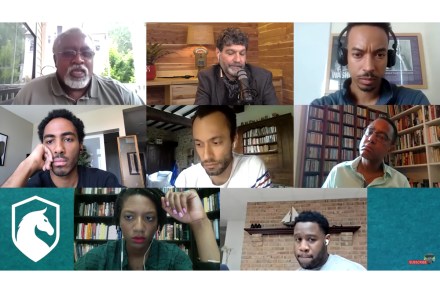
I’m disappointed that Bari Weiss has resigned from the New York Times and not just because she was one of the few voices of reason on the paper. A while ago, I flew to New York at Bari’s request to be interviewed by her for a forthcoming profile of a group of maverick writers and intellectuals in what was billed as a follow-up to her famous piece on the ‘Intellectual Dark Web’ — a kind of Junior College branch. Among those to be featured were the African American essayist Coleman Hughes; the Australian editor-in-chief of Quillette, Claire Lehmann; and the Swedish columnist Paulina Neuding. We spent an enjoyable afternoon together at the Times building on Eighth Avenue, having our photographs taken and being wined and dined by Weiss in the boardroom.

bari weiss anti-semitism

Is this the sanest debate on race yet?

The race debate is rapidly descending into a one-note diatribe where white accountability has become the only game in town. White liberal voices now dominate an increasingly febrile narrative but alongside mainstream flagellations about systemic racism and white supremacy, a less hysterical, more nuanced discussion is taking place. Black centrist and conservative intellectuals have been quietly trying to unpick what's really been going on across western democracies. Their conclusions run counter to the mainstream story we are all being impelled to sign up to, namely that injustice runs deeper than mere skin color.

bret weinstein

Extra, extra — read all about us!

Instead of telling us about America, or even the world outside, American journalists now tell us about other American journalists. The dirty laundry of America’s journalists is aired hourly on Twitter, where it stinks the place out. None of it is news and nobody will remember any of it in 10 months, let alone 10 years. It’s amazing to watch adults setting their emotional temperatures by palace intrigues at the New York Times. A series of laughably esoteric conflicts have consumed the industry in recent days. Each has generated thousands of self-referential tweets, articles, think pieces and podcast episodes.

manhattan journalism

The modern art of stupid-smart

Two years ago, I went to a megachurch service at Liberty University. Its guest speaker was Ben Shapiro. I asked some conservative students in the crowd what they thought of him. ‘He’s stupid smart,’ one said, ‘way smarter than me.’ The words have stuck with me ever since. ‘Stupid-smart’, a progression from ‘super-smart’, is the kind of compound modifier we’ve needed for years. How better to describe the small army of commentators, authors, critics and activists who now comprise the majority of the pundit class? Thanks to the internet, intellectual debate has been made dim, and we’re living in in the age of stupid smartness. Across the media landscape, professional megabrains pop up like big mushrooms.

stupid-smart

What makes Joe Rogan so successful?

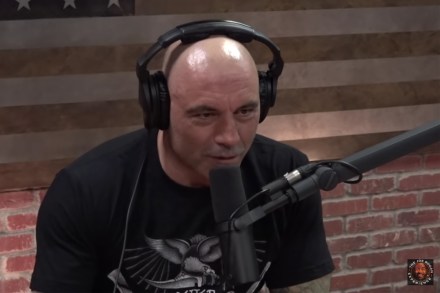
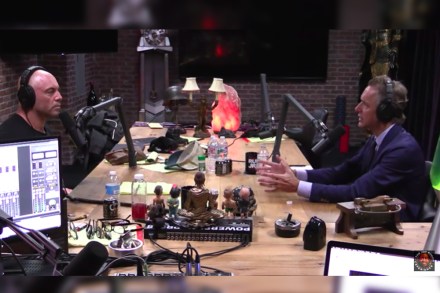
If you had watched the Joe Rogan Experience in the early 2010s, you would have had no idea that it would become the world’s largest, most influential podcast. Filmed in the living room of the Fear Factor host and Ultimate Fighting Championship commentator Joe Rogan, JRE featured Rogan and his hapless sidekick Brian Redban hunched over webcams in novelty t-shirts and beanies and talking to a strange assortment of comedians and conspiracy theorists. It was sponsored by Fleshlight, a company which produced masturbatory aids.Fast forward 10 years and JRE is moving to Spotify in a deal allegedly worth $100 million. It is watched and listened to millions of times a week. Guests have included Elon Musk, Mike Tyson, Bernie Sanders, Robert Downey Jr and Mel Gibson.

joe rogan

Did Dave Rubin steal the only good idea in his book?

‘I want you to walk into a bar and order yourselves a full-bodied opinion,’ Dave Rubin writes in his new book. It seems the podcast host’s habit is more along the lines of glancing over to the next stool and saying ‘I’ll have what she’s having.’ Don't Burn This Book: Thinking for Yourself in the Age of Unreason is currently sitting in 12th place on the New York Times nonfiction bestseller list. Reviews, though, have not been particularly kind. 'Despite its provocative title, it's hard to imagine anyone being so angered by a book loaded with the same milquetoast arguments that he's been hammering for years,' wrote Anthony L. Fisher in Business Insider. 'Don’t Burn This Book is not a serious work.

dave rubin
intellectual dark web

An autopsy of the Intellectual Dark Web

Exactly two years ago, on May 8, 2018, Bari Weiss published an essay in the New York Times titled ‘Meet the Renegades of the Intellectual Dark Web’. Describing a subculture of liberals, conservatives and disaffected leftists who were engaging in conversations about free speech, left-wing censoriousness and un-PC subjects like sex differences and transgenderism, Weiss described three common features of these different people:‘First, they are willing to disagree ferociously, but talk civilly, about nearly every meaningful subject… Second, in an age in which popular feelings about the way things ought to be often override facts about the way things actually are, each is determined to resist parroting what’s politically convenient.

Dave Rubin’s ode to the so-called ‘independent thinker‘

Dave Rubin loves to talk about ideas. In his new book, Don't Burn This Book, he tells the reader:‘I want you to walk into a bar and order yourselves a full-bodied opinion. I want you to get absolutely wasted on facts until 3:00 a.m., and then, when you’re just about ready to pass out, I want you to get another large glass of reality and chug it.’It's telling that Rubin suggests that we order the opinion before the facts. Would it not make more sense to suggest, say, blending a cocktail of facts into an opinion? Rubin’s advice seems backwards to me.But it would be wrong to take this suggestion seriously. Don't Burn This Book is not a serious work. It is, in fact, extremely lazy, bearing all the hallmarks of a project that was knocked together over a few wet weekends.

dave rubin

The rise of cancel chic

This article is in The Spectator’s February 2020 US edition. Subscribe here. Last summer, at a secretive dinner in Manhattan, I heard a New York Times staffer regale our table with some tales. He told us about how a dozen or so people had, like him, faced the most perilous horror imaginable for a blue checkmark Twitter person. They’d been canceled. For some, it was a tweet. For others, posing in a photograph with a Republican, or clicking ‘like’ on a Facebook post written by a known transphobe, or perhaps expressing an unhealthy familiarity with the work of Milton Friedman. For the Times staffer, he deigned to question gender theory in the office and sent half his team hyperventilating into paper bags and the other privately giving him the thumbs up.

cancel chic

Jung love

This article is in The Spectator’s January 2020 US edition. Subscribe here. If Jim Proser’s goal in writing Savage Messiah was to convince people to take Jordan Peterson seriously, I am afraid he has failed miserably. Peterson, for those without an internet connection, is a Canadian psychologist who rose suddenly to fame after he posted a video on YouTube criticizing a bill that proposed criminalizing speech against transgenderism. In 2018 he published 12 Rules for Life: An Antidote to Chaos, which has sold several million copies. He has confounded undemanding television hosts like Cathy Newman, but he has also debated Sam Harris and Slavoj Žižek, all while keeping up his popular podcasts and lectures.

peterson

Back to work with Dave Rubin

It’s a normal hot day in Los Angeles somewhere east of the 405 freeway. It’s also the day after Labor Day, so talk show host Dave Rubin, like most Americans, is back at work. For him, though, it was more than a long weekend. He’d been off the grid for 33 days straight, the whole of August and then some. No news, no phone, no nothing. So the first thing he says to me when I walk in the door is ‘Don’t tell me anything about current events! That’s part of the deal on the show today. The guest host is going to tell me what I’ve missed.

dave rubin

The alternative media has censorship problems too

A common view is that the mainstream media loves censorship. Mainstream commentators smear people as bigots, mainstream social media platforms close their accounts and mainstream politicians applaud their efforts. Alternative tendencies like the 'Intellectual Dark Web' have emerged to oppose censorship. But is the alternative media free of its own censorious trends?One of the more memorable episodes of The Joe Rogan Experience involved the comedian cum commentator-cum-podcaster Mr Rogan sitting down with his friends, the comedian Bryan Callen and the UFC heavyweight Brendan Schaub. Schaub had just come off a loss by technical knockout and expected to discuss the bout in a collegial fashion.

alternative media

The strange tale of Travis Pangburn and the ‘IDW’

Readers can be forgiven – indeed, should bless the Lord – for not knowing ‘Tana Mongeau’ and ‘Fousey’ but on the strange alternative universe that is YouTube they have 3.7 million and 10 million subscribers respectively. Young people have flocked to hear their crazed, interminable ramblings about fashion, music and ‘drama’. This year, both decided to take their newfound fame into the outside world and hold festivals where they could meet and entertain their fans. Both of their events were catastrophic. Mongeau’s resulted in gigantic queues after she overlooked the elementary task of selling tickets according to the venues capacity. Ambulances were called after her fans suffered from dehydration in the summer heat.

travis pangburn idw