Inflation

When will the Tories do something about house prices?

From our UK edition

Anyone who doubts that the fiscal response to the pandemic has stoked inflation needs to look at the latest figures from the Nationwide on the housing market. Yet again they confirm that the deepest recession in modern history has been accompanied by a boom in house prices. Moreover, the inflation does not seem to have been reined-in by the ending of the stamp duty holiday. The price of the average home, according to the building society, rose by a further 0.9 per cent in November to reach £252,687. This is ten per cent up on last November and 15 per cent up on March 2020, at the beginning of the pandemic. How can a global crisis which temporarily put several million people out of work in Britain have resulted in a housing boom?

Inflation rises again. The BoE has questions to answer

From our UK edition

Inflation is back, and while some people continue to cling to the idea that its resurgence is a temporary phenomenon, today’s figures further stamp out that optimism. Consumer inflation was up to 4.2 per cent in the year to October, a surge from just over 3 per cent the month before. This takes inflation to its highest level since 2011, with prices only set to rise further heading into 2022. Why has the Bank been so insistent about the temporary nature of this round of inflation? Much of the rise is due to increasing energy costs, which were always expected to worsen this winter: global shortages continue to bite as the world opens up again post-lockdowns.

Eighteen months of inflation is not ‘transitory’

From our UK edition

The big central banks have been insisting for months now that the rise in inflation is temporary, and will fade once the great awakening of the world economy starts to settle down. The Federal Reserve, Bank of England and the European Central Bank have looked on as inflation has overshot their forecasts. But when the opportunity to tame it with an interest rate hike approaches, the banks pass it up, reiterating instead that it is ‘transitory’ — the monetary equivalent of ‘it’ll be fine’. With inflation now at a 30-year high in the United States — 6.2 per cent — it’s starting to look like a pretty big bump. But should we worry? Is this just a glitch of lockdown unwinding itself?

Does Joe Biden understand inflation?

From our UK edition

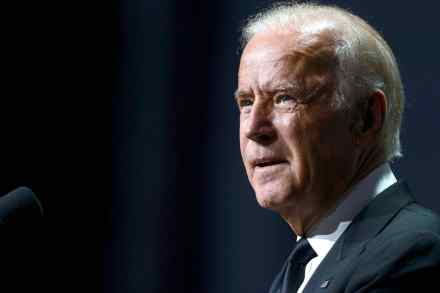
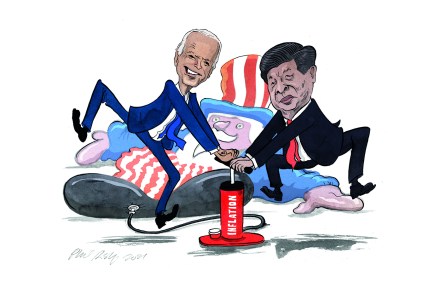
I have a horrible feeling that the Biden presidency may come to be defined by a single quote which will echo down the ages, featuring not just in economics textbooks but becoming a byword for hubris of all kinds. Speaking of his $1.75 trillion ‘Build Back Better’ plan, the President declared last week: 'Seventeen Nobel prizewinners in economics have said that my plan will ease inflationary pressures'. Not so fast, Mr Biden. Today, the Bureau of Labor Statistics announced that the Consumer Prices Index (CPI) for October rose to 6.2 percent, higher than expected and the highest rate since 1990, the very beginning of the low inflationary era.

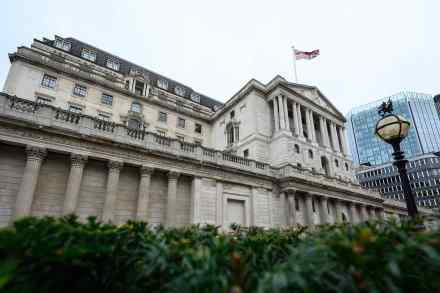
What is the Bank of England playing at?

From our UK edition

Last week, the Bank of England sent a number of confused messages. One was almost shocking: Andrew Bailey said that it isn’t his job to steer markets on interest rates 'day by day and week by week'. But as economic commentator Matthew C. Klein dryly noted this is literally his job. It is debatable whether the Bank of England needs to manage the entire yield curve (ie, buying and selling bonds in an attempt to set interest rates years into the future) but the central bank should be in charge of the short end. Those opposing an interest rate rise say that central banks should never shock markets. The Bank of England should copy the ECB, it’s argued, and start giving guidance on interest rate rises months in advance.

The Bank of England’s inflation rate stunt

From our UK edition

He isn’t Canadian. He doesn’t dominate the Davos circuit with platitudes about climate change. And he isn’t constantly warning that the British economy will turn into a cross between Ethiopia and Argentina now that we have left the European Union. In many ways, the current Governor of the Bank of England Andrew Bailey is an upgrade on his high-profile predecessor Mark Carney. And yet, in the most important respect, he is turning out to be very similar. He is constantly threatening to raise interest rates, and then backing off at the last moment.  An increase in interest rate from the ‘emergency’ level of just 0.1 per cent was not quite a done deal for today’s meeting on the Bank’s Monetary Policy Committee. But it was widely expected.

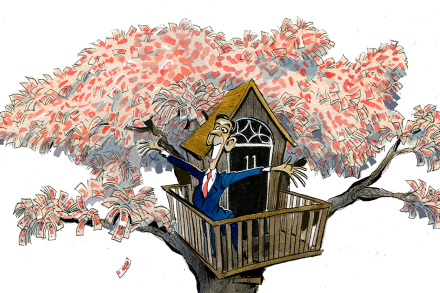
Responsible Rishi’s Budget balancing act

From our UK edition

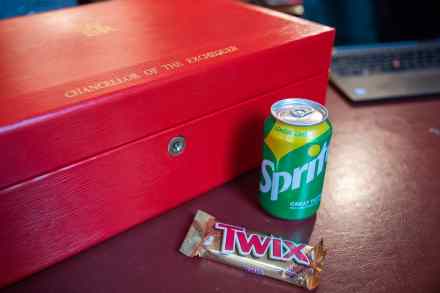
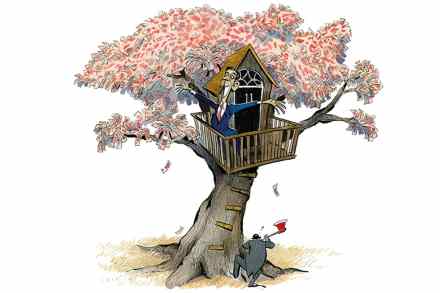
Rishi Sunak has released photos of his Budget prep, as he prepares to stand up in the House of Commons tomorrow to deliver not just the government’s latest fiscal decisions, but the results of its three-year spending review. (Photos include a shot of his pre-Budget Twix and Sprite snack, which Sunak revealed to Katy Balls on Times Radio over the weekend). As I say in the Telegraph today, this Budget is a difficult balancing act for the Chancellor. On the one hand, he has some big-spenders to please, not least the Prime Minister, who is adamant that the Conservative party’s days of austerity have come to an end.

Is Rishi ready to splurge?

From our UK edition

Is Rishi Sunak losing his battle within the Cabinet to promote fiscal responsibility? We’ll find out this week, when he unveils his Budget and three-year Spending Review on Wednesday, but there were hints this morning that more spending is coming down the track. Speaking to Andrew Marr on BBC One, Sunak laid out the principles that guided his Budget process this time round: ‘Strong investment in public services, driving economic growth by investing in infrastructure, innovation and skills, giving businesses confidence and then supporting working families. Those are the ingredients of what makes a stronger Budget and that’s what we will deliver next week.

The numbers game

The most important macroeconomic development of the last three decades has been the extraordinary growth of the Chinese economy. In 1990, it was largely a subsistence peasant economy with a negligible footprint in world trade. China now provides the largest share of world exports, and by some standards has already become the world’s largest economy. In 1990, the wage of an average Chinese worker was perhaps 1/40th of that of an American worker. By 2020, it was just about a quarter: a tenfold gain in just 30 years. Before the 18th century, all societies were basically subsistence peasant agricultural societies with a small upper layer of landowning nobles and clerics. Then the Industrial Revolution began.

inflation labor

Pete Buttigieg’s high class problems

It’s time for Pete Buttigieg to truck off down the road from the Department of Transportation — if, that is, he turns up for work again and can find a driver. It’s shameful even by the standards of the federal government for the head of a department to disappear during an emergency. It’s ludicrous for a technocratic Democrat in a technocratic administration. The smart set are explaining away the supply-chain fiasco as middle-class false consciousness. ‘Most of the economic problems we're facing (inflation, supply chains, etc.) are high class problems,’ says Ron Klain, Biden’s chief of staff. That’s right, Ron: if the peasants can’t find vegetables on the shelves, let them eat the rich.

buttigieg

Sunak faces the free-marketeers

From our UK edition

Rishi Sunak didn’t give too much away tonight when he spoke in the 'ThinkTent' at Conservative Party Conference. The Chancellor is known for being cautious with his words, and has been increasingly tight-lipped in the weeks leading up to his October Budget. But his presence at the fringe event was telling in itself. Sunak was only billed for one public fringe event this year, co-hosted by the Institute of Economic Affairs and Taxpayers’ Alliance. Their ‘ThinkTent’ boasts some of the most free-market, libertarian events you’ll find at conference: both organisations are strong advocates for a low-tax, smaller state. So, not necessarily an obvious place to find the Chancellor who has overseen record peacetime spending over the past 18 months.

Has the Bank of England given up on its duty?

From our UK edition

Has the Bank of England’s Monetary Policy Committee quietly excused itself from its duty of keeping inflation down: namely, keeping the Consumer Prices Index (CPI) close to a 2 per cent target? I ask because the minutes of its September meeting, released today, show little inclination to raise rates from their historic low of 0.1 percent, even though it predicts that inflation will rise above 4 per cent and stay there at least into the second quarter of 2022.  The MPC seems to have evolved into a Committee for Leaving Interest Rates Alone or Occasionally Lowering Them You can argue that inflation isn’t everything, that growth matters more and that monetary policy should not obsess about short-term targets.

Is the inflation panic over? Probably not

From our UK edition

So, is the post-Covid inflation panic over? That is how it looked last month, when the government’s preferred inflation index, CPIH, fell to 2.1 per cent from 2.4 per cent a month earlier. We will have the latest news on Wednesday morning, but for the moment it appears that consumer prices inflation hasn’t taken off like we feared. It is a similar story in the US, where inflation fell back from 5.6 per cent in July to 5.3 per cent in August. The fact that house prices have risen so strongly throughout the deepest recession in modern times ought to be a warning sign Yet there are good reasons to suspect that the summer slowdown in inflation is a lull and that a rebound is coming. Just look at US producer prices, which ratcheted up to 8.

Are we trapped in an inflationary spiral?

From our UK edition

Are we heading for a 1970s-style inflationary spiral? Not according to Catherine Mann, former chief economist at Citigroup, who argues that we are now less exposed to fluctuations in oil prices than we were then. She also makes the case that businesses are more reluctant to put up prices and that the link between inflation and wages is weaker than it was in the years of high inflation when wages often rose three or four times a year and prices in the shops were jacked up more frequently than now. Her opinion matters because she is the latest recruit to the Bank of England’s Monetary Policy Committee, which is charged with setting interest rates to try to keep inflation within set limits.

Biden’s dismal jobs report

The Bureau of Labor Statistics issued its August jobs report this morning and the numbers are pretty dismal. While the unemployment rate dropped 0.2 percent to 5.2 percent, the number of new jobs created was only 235,000, far below expectations of about 700,000. In June the number was 962,000 and in July a whopping 1.1 million. And the unemployment was not spread evenly across the population. Unemployment went down for adult men and whites, but black unemployment went up significantly, from 8.2 percent in July to 8.8 percent in August. The surge in the Delta variant of the coronavirus is widely thought responsible.

The Bank of England’s new monetary hawk

From our UK edition

Andy Haldane’s departure from the Bank of England opened up one of the most influential roles in guiding UK monetary policy — and that role has now been filled. Huw Pill has been announced as the BoE’s new chief economist, taking up the post from next Monday. Some of the snap reaction is focusing on Pill’s similarities to those who came before him. Despite resources being poured into diversity teams to recruit a mix of applicants, it was Pill who was selected, a former Goldman Sachs economist and most recently a senior lecturer at Harvard Business School. Pill won't take kindly to ideas about reneging the Bank of England's independence But his ideology may prove very different from the other eight members of the Bank’s Monetary Policy Committee.

How the pandemic pushed up inflation

From our UK edition

Eurozone core inflation came in at 1.6 per cent in August, while headline inflation hit 3 per cent. In Germany, at least, the all-important national metric went up by a notch — to 3.9 per cent. The recorded inflation data are, to some extent, a bounce-back recovery effect — coupled with the rise in German VAT — which will distort inflation numbers from July until December. But there has been a 2.7 per cent rise in industrial goods, minus energy, which is partly a supply chain effect that could prove persistent. Food, alcohol and tobacco are up 2 per cent but services only 1.1 per cent. It is services that are keeping inflation numbers pinned down — for now, anyway. Interestingly, both France and Italy are registering inflation rates of over 2 per cent.

The American descent into madness

Nations have often gone mad in a matter of months. The French abandoned their supposedly idealistic revolutionary project and turned it into a monstrous hell for a year between July 1793 and 1794. After the election of November 1860, in a matter of weeks, Americans went from thinking secession was taboo to visions of killing the greatest number of their fellow citizens on both sides of the Mason-Dixon line. Mao’s China went from a failed communist state to the ninth circle of Dante’s Inferno, when he unleashed the Cultural Revolution in 1966. In the last six months, we have seen absurdities never quite witnessed in modern America. Madness, not politics, defines it. There are three characteristics of all these upheavals. One, the events are unsustainable.

madness

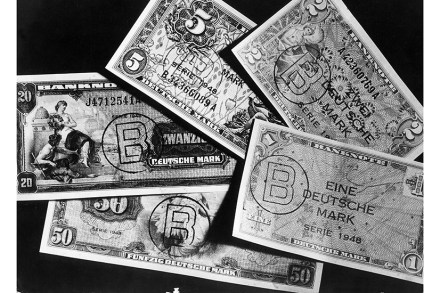
Germany’s post-war recovery was no economic miracle

From our UK edition

Lord Macaulay wrote that ‘during the century and a half which followed the Conquest there is, to speak strictly, no English history’, because everything in England was decided by an elite who spoke French. This, of course, makes it one of the most fascinating and overlooked parts of our national story.By a similar token, the years 1945-1955 have been neglected by German scholars, because their national history, in Macaulay’s terms, also did not properly exist. Germany, prostrate, shorn of its ancient east, its fate as yet undecided, was entirely run by occupying powers. Yet, as Harald Jähner argues, this is the very era which defined modern Germany. His Aftermath is what every reviewer longs for: a scholarly masterpiece which is also a good read.

Britain is ill-prepared to deal with rising inflation

From our UK edition

Inflation is on the rise again. For the third consecutive month, the Consumer Prices index outpaced the forecasters’ consensus, landing at 2.5 per cent in June, up from 2.1 per cent in May.  It’s not just that inflation is overshooting expectations that should trouble us, but that its pace of growth is so fast: at the start of the year, the headline rate was still close to the ground, coming in at 0.7 per cent in January and March, and 0.4 per cent February.  It is becoming harder for the Bank of England to stick to its prediction that inflation will peak around three per cent Now, it’s ahead of the Bank of England’s target – and there are no signs of retreat.