Inflation

Ignore the gloomsters, the economy is roaring back

From our UK edition

The horror! Yesterday we discovered that UK economic output — as measured by GDP — fell by 1.6 per cent in the first quarter of the year, 0.1 per cent worse than the 1.5 per cent originally reported. This is practically a rounding error. To put it in context, as recently as March the Office for Budget Responsibility, which crunches the numbers for the Chancellor, was forecasting that GDP would fall by 3.8 per cent in Q1. As well as still beating these gloomy expectations, the latest figures are also old news. But if anything, the detail is encouraging. The downward revision to headline GDP was largely due to a bigger decline in consumer spending than first thought, mirrored by an upward revision to household saving.

Has the Bank of England just blown its chance to stop inflation?

From our UK edition

The economy is growing at a blistering pace, and likely to recover all its Covid losses by the autumn. Labour shortages are emerging across a range of industries, as the supply of Eastern European workers dries up. Prices are starting to edge upwards, house prices are soaring, and commodities are getting more expensive. But, hey, it is probably a good moment to keep the printing presses rolling and pump plenty of freshly minted pounds into the economy. The Bank of England’s Monetary Policy Committee (MPC) decided not just to keep base rates at 0.1 per cent today – that was largely expected – but also to maintain its programme of quantitative easing at £875 billion. And it may well have blown its chance to nip inflation in the bud before it starts to escalate.

Is inflation about to bite?

From our UK edition

The signs were there for all to see — pubs, restaurants, hairdressers and so on all pushing up their prices. Businesses have to make a profit while observing social distancing, dealing with soaring fuel prices and fast-accelerating wages. Yet the latest inflation figures seem to have caught many people by surprise. The Consumer Prices Index (CPI) is back above the Bank of England’s target at 2.1 per cent. Fears that Brexit would lead to a surge in food prices appear to be unfounded Drill down into the figures and you can see that, while the current level of CPI is not in itself a problem, inflationary pressures are building.

Two reasons why Andy Haldane is right to worry about inflation

From our UK edition

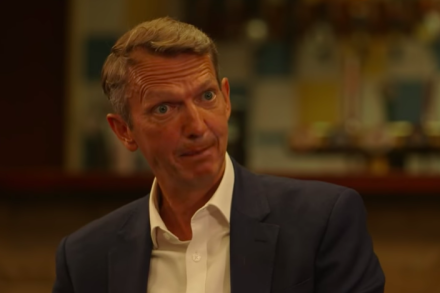
Companies are facing critical shortages of staff. Commodity prices keep spiking upwards. Central banks are printing money on an unprecedented scale, and governments are running deficits of a size that haven’t been seen in peacetime before. What could possibly go wrong?  Well, quite a bit, as it happens. And the departing chief economist of the Bank of England Andy Haldane is completely right to warn that the real risk we face over the next couple of years is not a prolonged slump, but a re-run of the spiralling prices of the 1970s.  To his credit, Haldane was seldom afraid of challenging orthodox views during his time at the Bank. Now that he is leaving, he has become increasingly off-message.

Is the euro area at risk of an inflation surge?

From our UK edition

If you like a snapshot of a bang-on target, this is it: headline inflation in the euro area for May came in at 1.99 per cent on an annual basis, which gives a whole new meaning to close to, but below 2 per cent. The number itself, however, is entirely meaningless.  As ever, the more important number is the core rate of inflation, which excludes energy, food and alcohol, and which shows no sign of breaking out its range of around 1 per cent. But even the core rate is subject to some noise. For example, the pandemic-related cut in the VAT rate during the second half of last year contributed to the steep fall in the core rate in August and the steep rise in January.

Has Covid accelerated the cashless society?

From our UK edition

Time is, I fear, running out. Running out, that is, to avoid handing to a small number of multinational corporations our right to buy and sell things. Running out to prevent governments and central banks helping themselves to our savings, by means of negative interest rates. The payments industry is closing in on its target of driving cash out of circulation and instigating cashless payments as the only way of doing business. That, at least, is the conclusion one might reach from reading a report by Worldpay: the Global Payments Report 2021. It claims that cash payments in UK shops in 2020 made up 13.4 per cent of total payments, down from 27.4 per cent in 2019. By 2024, it predicts, they will be down to just 6.9 per cent. By the same year it will be down to just 0.

Is Biden’s inflated presidency about to burst?

Is President Joe Biden living up to expectations? It’s hard to say, since the expectations generated on his campaign trail were so murky. Biden made plenty of promises on the stump but only one thing was ever clear: he wasn’t Donald Trump. Beyond that, no one was really certain what iteration of Biden would enter the Oval Office on Inauguration Day. A pragmatic moderate or a progressive ideologue? A return-to-normal steady hand or a malarkey-scourging bomb thrower? The law-and-order author of the PATRIOT Act or the 'Black Lives Matter' anti-racist he suddenly morphed into last summer? Biden was so defined by who he wasn’t that no one ever quite worked out who he was. Now we have our answer. Whatever moderation was once attributed to him has been quickly abandoned.

inflation

Inflation is the biggest threat to Boris

From our UK edition

The vaccines are rolling out. Lockdown is easing, the EU has been forgotten about, and the Labour party has returned to its traditional pastime of plotting furiously against its leader. No one is even talking about wallpaper anymore. Things could hardly be going better for Boris Johnson, and that has been reflected in local election results and in the polls. There is one looming threat, however. The return of inflation. In truth, rising prices have been destroying governments for a hundred years, and it would be complacent to imagine this one will be the exception. President Biden has embarked on a tax, spend and borrowing spree the like of which has not been witnessed before in peacetime As figures out today make clear, prices are starting to rise again.

Joe Biden and the magic money nightmare

‘We have nothing to fear but fear itself,’ said Franklin D. Roosevelt famously, at his first inauguration in the depths of the Great Depression in 1933. What he didn’t allow for was the danger of overconfidence. Yes, a country can talk its way into recession, but it can also print and spend its way into an inflationary nightmare. That is the worrying prospect now facing America as Joe Biden, a president often compared to FDR, tries to tempt the country into a post-Covid spending spree courtesy of magic money. It has become deeply unfashionable to worry about inflation. According to proponents of modern monetary theory, what happened in Weimar Germany and more recently in Mugabe’s Zimbabwe somehow is not relevant to developed economies.

inflation

How are we enjoying the Biden presidency so far?

Well, that didn’t take long. Less than four months into the Biden-Harris deep-state maladministration and we have roaring inflation, the most disastrous jobs report in recent memory, rising unemployment, spiking gas prices, an imploding stock market, devastating cyber attacks on critical infrastructure and a janus-faced crisis on our Southern border in which tens of thousands of disease-ridden illegal migrants are huddled into cages while thousands more fan out across the fruited plain taking jobs from Americans even as they infect us with COVID. Quick work, Joe! And of course that is just the tip of the proverbial North Atlantic iceberg into which His Senileness is steering the ship of state.

biden

Inflation fears grow

From our UK edition

Two months ago The Spectator reported on what was keeping Rishi Sunak awake at night ahead of the Budget: an inflation resurgence that could damage Britain’s economic recovery as it comes out of the pandemic. He deliberately designed his March Budget with inflation in mind, trying to make the UK’s finances ‘Biden-proof’ if inflation or interest rates started to move, and the cost of servicing the country’s debt became remarkably more expensive.At the time, Sunak was a lone voice on the matter. His inflation fears put the decision to raise tax into perspective, but many remained critical of his rather cautious approach. Inflation seemed a strange focus as the conditions for major change appeared glaringly absent.

The trouble with capital gains tax

President Biden wants to nearly double the tax on income from capital gains, currently at 20 percent, to 39.6 percent. Add to that the 3.8 percent Obamacare surcharge and you’re up to 43.4 percent. Many states tax capital gains as well and in 13 of them (plus the District of Columbia) the total tax on capital gains would be over 50 percent with the proposed new federal rate. In California it would be a staggering 56.7 percent. But it gets worse. Unlike the tax on regular income, the capital gains tax is not indexed for inflation. So with long-held assets, much of the gain is illusory. For instance, if you bought an asset in 1971 for $50,000 and sold it this year for $1,000,000, you would owe taxes on a nominal capital gain of $950,000. At 56.

capital gains tax

Can Melinda still keep Bill Gates in check?

From our UK edition

‘We are seeing very substantial inflation,’ the great investor Warren Buffett told shareholders in his master company Berkshire Hathaway at their online annual meeting last weekend. He was talking chiefly about the housebuilding businesses in his port-folio, hit by rising material costs in what he called a ‘red hot’ economic recovery. But his remarks align him on a broader front with jittery bond investors and big-name economists, such as Larry Summers of Harvard, who have fuelled the US ‘inflation scare’. And if it’s coming over there — pessimists whisper — surely it’s coming over here? Maybe, but let’s keep this in perspective. Headline US inflation is 2.

The thinking behind Rishi Sunak’s cash grab

From our UK edition

Rishi Sunak’s tax hikes pack a punch: by 2025, over £19bn is estimated to be raised from the freeze to the personal tax threshold, and a staggering £50bn from a new, tiered corporation tax structure. That’s a lot of people out of pocket, and businesses diverting their profits away from workers and consumers and towards the state. Criticisms of the cash grab are splashed across the front pages of the papers today. Across the pond, the Wall Street Journal has lambasted Sunak’s policies: 'Britain’s political class, and especially the governing Conservative party, prides itself on fiscal rectitude. So Mr. Sunak already faces pressure to “pay for” all this relief. We sympathise, but in this instance he would have been better off waiting.

Has the era of low inflation really come to an end?

From our UK edition

How many times have you heard in recent months that the era of low inflation is at an end?  The case for that assertion is beginning to look somewhat shaky. This morning brings news that the rate of inflation last month – at least as measured by the Consumer Prices Index (CPI) – fell slightly in December from 3.1 per cent to 3.0 per cent. While that is hardly a dramatic move it shows that, once again, the surge in inflation predicted by some has failed to materialise. Now that the inflationary effect of a fall in the pound in the second half of 2016 has dropped out of the annual figures there is every reason to suspect that November’s CPI figure of 3.1 per cent will represent the peak of the current inflationary cycle.

Why cryptocurrencies are the answer

From our UK edition

The craze for cryptocurrency can be explained by a host of factors: the allure of getting rich quick; the attraction of off-the-grid accountancy for malefactors like tax evaders and drug dealers (though Bitcoin is traceable); the glamour of the new. Despite blockchain currencies’ wild volatility thus far, I’d still posit that the more underlying attraction is to a reliable store of value. Bitcoin investors may not recognise their motivation as such, but the impulse behind computer-generated currency is revolutionary: to take the production and control of money away from government. Now that we live in a world of 100 per cent fiat currencies — backed by nothing — governments can print their hearts out, and they do.

Portrait of the Week – 19 October 2017

From our UK edition

Home Theresa May, the Prime Minister, and David Davis, the Brexit Secretary, went to Brussels and had dinner with Jean-Claude Juncker, the president of the European Commission and the EU’s chief negotiator Michel Barnier. They came up with a joint statement that ‘efforts should accelerate over the months to come’. But by this week’s meeting of the European Council, Britain was deemed not to have done enough about the price it would pay to allow the EU to discuss trade matters. No great hope was held out that it would be any better by the next meeting in December. Keir Starmer, Labour’s Brexit spokesman, said: ‘There is no way we would vote for a no deal.

The real story about inflation? That 3pc is a blip, and the rate will soon fall

From our UK edition

Oh dear. About this time last year, as part of its series of predications about how the sky would fall in after the Brexit vote, the NIESR predicted that inflation would hit 4 per cent. This was way out of line with the the consensus, higher than other economist was forecasting. But in the rather febrile atmosphere its nonsense forecast was given plenty of coverage – including a page lead in (yes, you guessed it) the Financial Times. It turns out that inflation has peaked at 3 per cent, and is widely expected to fall. Since the NIESR has been congratulating itself recently on the accuracy of its forecasts, it’s worth reminding ourselves what it has to say about inflation.

Cutting the student loan interest rate will only help richer graduates

From our UK edition

This weekend the papers mooted that Theresa May’s government is looking to cut the English and Welsh student loan interest rate – now at a 6.1% headline rate for those who began uni in or after 2012 – in order to appeal to the youth vote. I find this frustrating. Not because I object; I’ve always believed on principle student loan interest shouldn’t be higher than inflation – charging students for their education is one thing, charging them for the financing of their education is a step too far. Yet if the Exchequer has limited resources to finally shell out something to relieve student loan pressures, cutting the interest rate is far from a priority – in fact, it’s poorly targeted.

There could be a downside to the surprisingly steady inflation rate

From our UK edition

The core consumer price index of inflation held unexpectedly steady at 2.6 per cent in July, further removing any possibility of an interest-rate rise this year. So what’s the downside? My eye is drawn to a bulletin from Nationwide, the UK’s most sensible mortgage lender. It reports a fall in quarterly profits after a rise in bad debts to £36 million from £16 million for the same period last year — small numbers but a significant trend — and its chief executive Joe Garner warns the sector to ‘balance its lending carefully’ as cheap-rate consumer credit continues to balloon while growth prospects decline. I’d say he’s right on the money.