India

The lives of others | 14 May 2015

From our UK edition

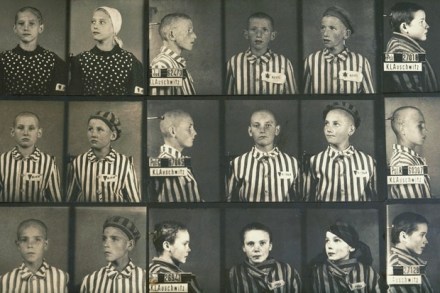
‘I call Zelma Cacik who may be living in London,’ says the announcer, in the clipped RP accent of the BBC in the 1940s. ‘I call her on behalf of her 16-year-old cousin...’ The voice betrays no emotion, no feeling, it’s so matter-of-fact, but the script spares no punches as it tells the cousin’s story in blunt statements of fact. She was born in Poland, separated from her family when she was 12 and made to work in a munitions factory while her parents, her sisters and brother were sent to Treblinka extermination camp.

Two wheels good

From our UK edition

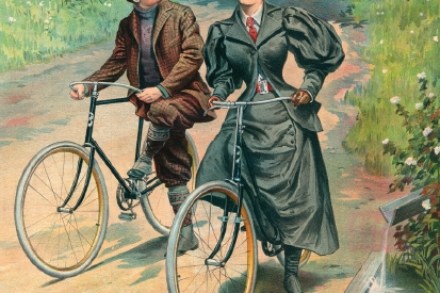
Bicycles — in Britain, anyway — are the Marmite means of transport. I am among the bicycle-lovers, almost religious and certainly addicted in my need to have a daily bike ride. But I can see why people — and drivers in particular — hate some of us: for our smugness, our need to keep on moving through red lights and along pavements. It isn’t like this in Holland, where bicycling is so embedded in daily life that most drivers are bicyclists and vice versa; where mutual understanding leads to mutual respect. Why do bicycles have this effect? Of intense affection among some, hatred among others; of mass use in some countries, limited use in others? Paul Smethurst could have answered the question. And his book does have some juicy little statistics in it.

Long life | 23 April 2015

From our UK edition

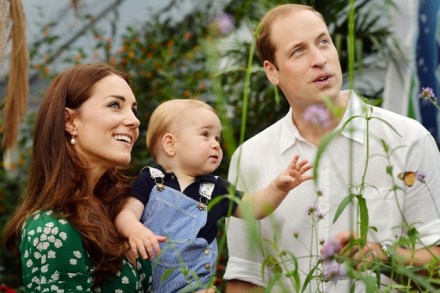
There are already people camping outside St Mary’s Hospital, Paddington, to await the birth shortly of another royal baby, the second child of the Duke and Duchess of Cambridge. It is hardly a very exciting event. Babies are born all the time, and there are already quite enough descendants of the Queen to ensure the survival of the Windsor dynasty on the throne of the United Kingdom for a long time to come. Yet there are many people in this country for whom this commonplace event will be more thrilling than the forthcoming general election, even though it could presage the dismemberment of the country itself. The British monarchy continues to enjoy enormous popularity.

The roots of the matter

From our UK edition

[audioplayer src="http://rss.acast.com/viewfrom22/panictimefordavidcameron-/media.mp3" title="Lara Prendergast and Louise Bailey, a hair extensions specialist, discuss the hair trade" startat=1622] Listen [/audioplayer]Perhaps you recall the moment in Les Misérables when Fantine chops off all her hair? The destitute young mother sells her long locks, then her teeth (a detail often excluded from child-friendly adaptations) before she is eventually forced into prostitution. It would be nice to think that her experience was no longer a reality, that the business of human hair had gone the way of the guillotine — but the truth is, it’s booming. The modern market for extensions made of real human hair is growing at an incredible rate. In 2013, £42.

A mingling of blood and ink

From our UK edition

Historical fiction is sometimes accused of being remote from modern concerns, a flight towards nostalgia and fantasy. It’s not an accusation you can reasonably level at M.J.Carter’s historical crime novels. The first, The Strangler Vine, was set in an unsettling version of colonial India. Its sequel, The Infidel Stain, takes place three years later in 1841, in a London that Dickens would have recognised. The story follows the subsequent careers of her two main characters — the louche and mysterious Jeremiah Blake and his far more respectable young friend Captain William Avery, now retired from the East India Company’s army. Blake is making his living as an inquiry agent.

Crossing cultures

From our UK edition

For an Indian woman to make a dancework about La Bayadère is a promising prospect. This classical ballet of 1877 by Russia’s French-born genius Marius Petipa tells the simple story of an Indian temple dancer — essentially a religious sex slave — whose potential salvation by an amorous young soldier is dashed when he expediently marries the rajah’s daughter. Death and transfiguration ensue in some addictively gorgeous balletic poetry, along with all sorts of improbable exotica to please the tsar’s eye. Londoner Shobana Jeyasingh, born in India, trained as a traditional Bharatanatyam dancer, and is a contemporary dance choreographer of keen intelligence, if sometimes letting her brain get the better of her choreographic imagination.

Jeffrey Archer’s diary: a pirate at the traffic lights, and other Indian wonders

From our UK edition

This last week, in India, I visited six cities in seven days: Mumbai, Pune, Bangalore, Hyderabad, Calcutta and New Delhi. This is my 11th trip to India and from the very beginning the signs were good. For a start, the temperature on arrival in Mumbai was a cool 22 degrees and I was told it had rained for the past two days, though I’ve actually never seen rain in Mumbai before. Because of a new eight-lane highway, we got from the airport to the Taj Hotel in the city centre in just 40 minutes, despite a minor hold-up. As the car was idling in a traffic jam, a young boy who couldn’t have been more than six or seven tapped on my car window. He was holding a pile of books. I wound the window down, and he asked: ‘Would you like the latest Jeffrey Archer?

What it’s really like to live in India today – stressful

From our UK edition

After a month cooped up in a Scottish castle, no internet, no TV, and no radio, watching hectic snowflakes billowing through the wooded hillside opposite my window, I realise that what I’ve missed most about this supposed deprivation has not been the news (to which I thought I was addicted) or the chatter, the company of other voices, but the chance to be taken in my head to other places and inside quite different experiences of life. It’s not just the factual education that radio can provide (although I’m pretty sure most of what I know has come from listening on air), it’s the absorbing intimacy of hearing other people talk about themselves, as if only to you, one-to-one, in direct communication.

An uncomfortable interview for India

From our UK edition

British film-maker Leslee Udwin's video interview with one of the Delhi rapists may not make for comforting viewing, but there are some home truths in there that must be faced up to. In the past hour, the Indian government has banned the video - a move which is both cowardly and futile. They fear the rapist’s remarks that he has ‘no remorse’, and that he ‘blames the victim for fighting back’ might create ‘an atmosphere of fear and tension’. In the West, a similar message is being touted around: that the rapist should never have been given a platform. Don’t show the video and allow him to justify his actions. I visited Delhi’s Tihar Jail in 2012, where rapist Mukesh Singh is currently awaiting his death sentence.

Jeffrey Archer: Bollywood plagiarised my books

From our UK edition

Jeffrey Archer is none too impressed with the Bollywood film industry. In an interview with India's DNA Newspaper, he said that several Bollywood films have ripped off his books without his permission. The comments came after the convicted perjurer was asked whether his novels have the potential to translate into Hollywood films: 'Well, forget Hollywood, just look at your Bollywood! These bunch of thieves have stolen several of my books without so much as a "by your leave".' According to Lord Archer, his books Not A Penny More, Not A  Penny Less and Kane and Abel have both inspired successful Bollywood films. In the interview Archer goes on to say that he has found Indian film producers difficult to work with.

Sophia Duleep Singh: from socialite to socialist

From our UK edition

Princess Sophia Alexandrovna Duleep Singh (1876–1948) had a heritage as confusing as her name. Her father was a deposed Indian maharajah who had been exiled to England, her mother the Cairo-born illegitimate daughter of a German merchant and an Abyssinian slave. The young princess was brought up in considerable splendour on a vast Suffolk estate as a thoroughly anglicised aristocrat who would be presented at court and become an enthusiastic participant in the Season before unexpectedly joining the battle for women’s suffrage. Anita Anand traces what she calls the ‘roots of rebellion’ to Sophia’s father.

The National’s latest attempt to cheer us up: three hours of poverty porn

From our UK edition

Bombay is now called Mumbai by everyone bar its residents, whose historic name (from the Portuguese for ‘beautiful cove’) has been discarded for them by their betters. Near the airport a huge advertising board bearing the slogan ‘Beautiful Forever’ overlooks an alp of discarded junk where homeless paupers crouching in tin shacks toil and slave around the clock to earn a meagre bowl of grey, rat-licked gruel. Welcome to the National’s latest attempt to cheer us all up. The verminous scrapheap teems with cocky adolescents, witty thieves, evil moneylenders and struggling mums.

International cricket must return to Pakistan (and my team went first)

From our UK edition

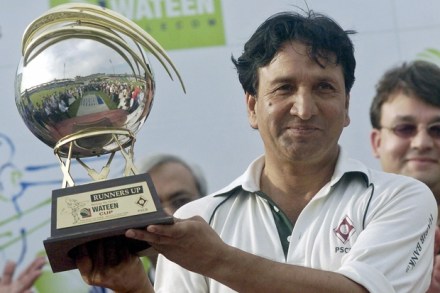
In a tiny courtyard just off the teeming alleys of Lahore’s old town, a young Pakistani boy in a gleaming white shalwar kameez picks up his Adidas cricket bat and proceeds to clout to all corners the plastic ball his pal is chucking down. Behind him on the wall the outline of three stumps is drawn, and the word Out! chalked there, more in hope you feel. In the corner a little schoolroom has emptied out and excited young boys and girls, books in hand, look on, giggling happily. Is this the new Imran? Almost certainly not, but we are in one of the holy places of Pakistan cricket, and in this troubled but vibrant country, only cricket comes close to Islam as a unifying passion.

The voices of Indian PoWs captured in the first world war

From our UK edition

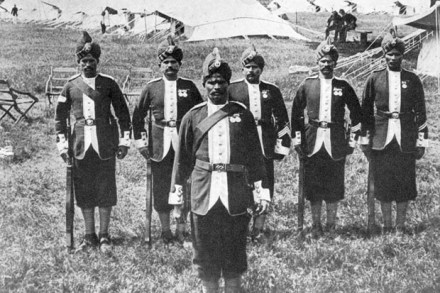
At six o’clock on 31 May 1916, an Indian soldier who had been captured on the Western Front alongside British troops and held in a German PoW camp stepped up to the microphone and began to speak. Not in Hindi or Urdu, Telugu or Marathi but in perfectly clipped English. He tells his audience, a group of German ethnologists, the biblical story of the Prodigal Son. That his voice still survives for us to listen to, clear and crisp through the creak and crackle of time, is an extraordinarily emotive link not just back to the Great War but to the days of Empire.

There’s one obvious question about immigration, but nobody is asking it

From our UK edition

If you were to close your eyes at any debate on immigration, you might reasonably picture the participants standing back-to-back, shouting and gesticulating to opposite corners of the room. On such occasions, there’s typically only one point on which everyone actually agrees: that very highly skilled migrants – doctors, engineers, scientists – are welcome here in Britain. Oddly, though, nobody ever seems follow up with the obvious question: what about the countries these migrants leave behind? Look at the four nations from which we take most foreign doctors – India, Pakistan, South Africa and Nigeria. Is it not unfair to deprive them of their brightest medical minds?

The Spectator at war: Keeping the Holy Places holy

From our UK edition

From The Spectator, 7 November 1914: We are glad to note that the Indian Government has issued a reassuring proclamation as regards the Holy Places. We trust, however, that before long France, Russia, and Britain, all of whom are Powers with large numbers of Mohammedan subjects, will join in a common declaration to the Moham- medan world that in no circumstances shall we interfere with the Holy Places or the religious feelings of Mohammedans. Moslems may be perfectly certain that no rearrangements made after the war will compromise in the very slightest degree religious rights in Arabia. We owe such a declaration to our Mohammedan subjects and to ourselves. It must not be supposed that there is serious danger of any attempt to proclaim a Holy War succeeding.

Sex-specific abortion is gruesome – but not explicitly illegal in Britain

From our UK edition

Imagine that you became pregnant. Imagine that you were entirely dependent upon your husband. Imagine that you became the victim of domestic violence during that pregnancy, and your husband began demanding that you did not give birth to a baby girl. Facing strong social pressure, coercion, or violence to end a pregnancy because you are carrying a girl, is a reality for a disturbing number of women in Britain, according to women’s advocacy organisation Jeena International, which helps women escape domestic violence. To begin tackling this issue, a large group of MPs led by Fiona Bruce have proposed the Abortion (Sex Selection) Bill.

Gymkhana is morally disgusting – and fortunately the food’s disgusting too

From our UK edition

Gymkhana is a fashionable Indian restaurant in Albemarle Street. It was, according to its natty website, ‘inspired by Colonial Indian gymkhana clubs, set up by the British Raj, where members of high society came to socialise, dine, drink and play sport’. This is revolting, in the same way that eating in homage to apartheid South Africa or to commemorate the genocide of native Americans is revolting. Not that this is exceptional, of course; these days no crime is so calamitous it cannot be seconded into an entertainment experience or themed meal. There is, after all, a cafeteria at Auschwitz which received the following review online: ‘They have a range of foods, from snacks, drinks, ice cream, hot dogs, burgers and meals. Plenty of seating.’ Ah, plenty of seating.

Why Bombay airport is the greatest 21st century building – and what we can learn from it

From our UK edition

'If I had to say which was telling the truth about society, a speech by a minister of housing or the actual buildings put up in his time, I should believe the buildings.' So said Kenneth Clark in his unsurpassed Civilisation. I haven’t listened to any speeches by India’s or Maharashtra state’s ministers of housing, but I hope the new terminal at Bombay’s international airport is telling the truth about their country. Opened in February, it is a triumph: not just the greatest airport building in the world, but a strong contender for the greatest of all buildings of the 21st century so far. I’ve done quite a bit of travelling in the past few months, and have been inside my share of airports.

From Burma — or maybe Saigon — to Manchester via Calcutta

From our UK edition

England   We dropped off our daughter Eve at her new school in the Midlands and started the long journey home to Africa. On the train we sat down and my wife Claire looked as if she’d seen a ghost when she saw the elderly lady in the opposite seat. After ten minutes Claire said, ‘I’m sorry I keep staring at you, but you look exactly like my grandmother. Where are you from?’ The woman said she was from Trinidad, but her family was originally from Kerala, in India. Claire said her grandmother was from Calcutta. Our son Rider looked puzzled. ‘Where are we from?’ For him the counties whizzing by our train window were foreign lands. After Kenya, Elspeth Huxley said, England was like a ‘castrated leopard’.