Idf

The Israel-Lebanon ceasefire is in danger of shattering

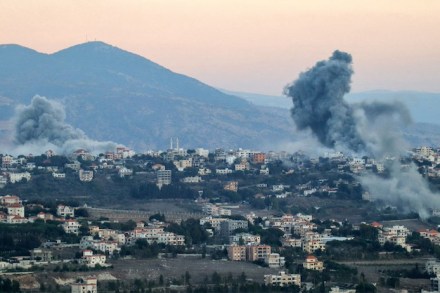
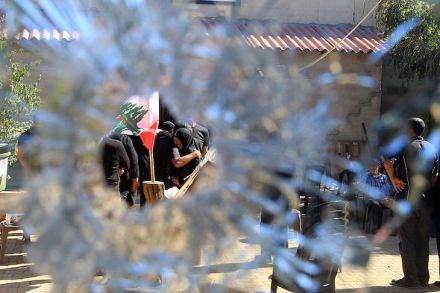
It’s been almost a year since Israel and Hezbollah, the Lebanese militia that arguably held more power in Lebanon than the government itself, signed a ceasefire to end a ferocious two-month long war. The deal couldn’t have come at a better time; thousands of Israeli air and artillery strikes had pulverized southern Lebanon, Hezbollah’s traditional base of operations, leading to a displacement crisis and killing close to 4,000 Lebanese. Whole swaths of northern Israel had been vacated due to Hezbollah missile attacks, forcing the Israeli government of Prime Minister Benjamin Netanyahu to spend money on tens of thousands of civilians bunking in hotel rooms. But the agreement is wearing thin. The ceasefire is really a ceasefire in name only. Will it hold?

lebanon

Fordow in a fortnight?

From our US edition

The decision whether to use American planes and bombs to demolish Iran’s Fordow nuclear facility is the most consequential of Donald Trump’s presidency. Iran’s hardened facility is buried deep inside a mountain, well beyond the striking power of Israeli fighter jets. The question is whether the US will use its B2 bombers to destroy Fordow with the mammoth, deep-penetrating bombs that only US planes are big enough to deliver. Whether to drop those bombs is the decision that now awaits President Trump. Reports are that he has already approved the strike plans but has not authorized their implementation. That’s the final decision that he has said he will make within two weeks. Two weeks, however, is the outside limit.

Where does Lebanon go from here?

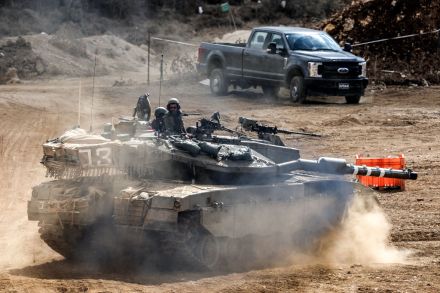
Israel’s overt ground intervention into Lebanon is now entering its third week.  So far, the Israel Defence Forces (IDF) have advanced just a few kilometers in and established control in a number of locations across the border.  The IDF itself has described its ground action on the border as consisting of ‘limited, localised and targeted raids.’  Standing at a border observation post a few days ago, my impression was that this description appears accurate, at least for now.  Looking across to the towns of Bint Jbeil, Maroun a Ras, Ain Ebel and Ait a Shaab, we heard the occasional sound of artillery cannons.  Twice, we saw interceptions of ordnance fired from the Lebanese side.

Where conflict in the Middle East goes from here

From our US edition

Anything written on the Middle East at this moment in history is almost instantly out of date. As Lenin said: “There are decades where nothing happens; and there are weeks where decades happen.” The Arab-Israeli war in 1967, the Iranian revolution in 1979, the invasion of Iraq in 2003...the region may once again be at one of those forks in the road that dictate the fate of nations for years to come. Journalists’ predictions age like milk out of the fridge. Nevertheless, here are some: Israel attacks Iran. This isn’t a hard one. The question is what form that attack will take. The prime minister, Benjamin Netanyahu, has wanted to bomb Iran’s nuclear facilities before, only to be stopped by the US.

With Israel, the US is caught in a world of contradictions

From our US edition

Ever since a 2,000-pound bomb demolished Hezbollah’s headquarters in Southern Beirut last Friday and killed Hassan Nasrallah, the leader of the organization since 1992, there was an expectation among the commentariat that Iran would retaliate. The scope of that response, however, was very much in dispute. The Iranian government was reportedly divided about whether to respond at all, with the newly-elected president, Masoud Pezeshkian, taking the position that an attack against Israel would likely ruin his foreign policy agenda — he offered the West the thinnest of olive branches during his time in New York for the UN General Assembly meetings — and give the Israeli government an excuse to strike inside Iranian borders.

Biden White House rocked by protests

From our US edition

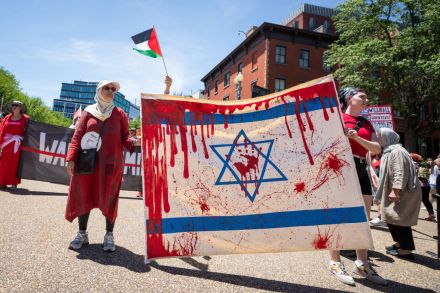
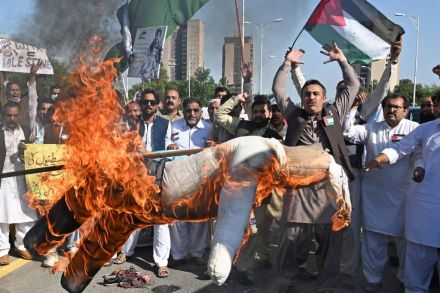
The Biden White House had a difficult weekend as pro-Palestinian protesters continue to be a thorn in the side of the administration and the Democratic Party. Thousands arrived outside of the White House on Saturday to call for an immediate and permanent ceasefire and for Biden to stop sending weapons to Israel. Police erected additional fencing around the White House in anticipation of the protests and deployed pepper spray against at least one demonstrator, but no arrests were made. Instead, the pro-Palestinian activists left graffiti on statues in Lafayette Square and trash strewn around the perimeter of the White House complex.

protests

Why hasn’t Hamas freed its American hostages?

From our US edition

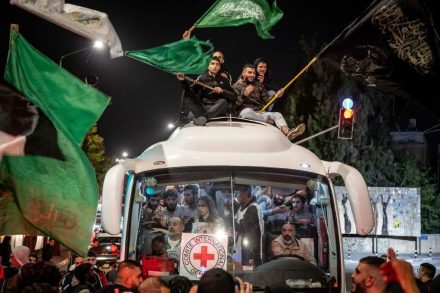
Hamas’s most valuable assets are the American hostages it holds. That simple fact means the terrorist organization will demand the highest value in return. What can America give Hamas in exchange? Not prisoners, since the US doesn’t hold any Hamas fighters. That means the US cannot follow the Israeli pattern of giving Hamas three Palestinian prisoners in exchange for every one held by Hamas. Nor can America provide boatloads of cash, as the Biden administration has for Iran. Biden could continuing giving Iran money, but that is much harder in the midst of war. And it is untenable politically to pay Hamas directly while the fighting continues. The Biden team might promise to help rebuild Gaza later, but that’s not valuable to Hamas right now, as it fights for its life.

hamas

The war Israel is losing against Hamas

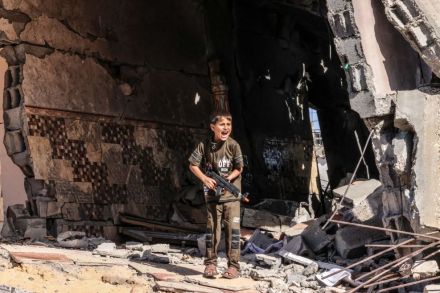
The Gaza conflict is bloody, brutal, and genuinely heartbreaking, but it is also perfunctory. This is a fight in which the military battle is predetermined: Hamas cannot win, and Israel cannot lose. What happens in between is almost balletic in its endless predictability. Hamas fires rockets, Israel fires back; Hamas targets Israeli cities; Israel bombs buildings in which Hamas hides and stores weapons. So what’s the point? Well, apart from Hamas needing to show strength – and Israel needing to, in the words of its security experts, 'mow the grass' by periodically degrading Hamas’ military capabilities – there is a wider battle raging. This fight isn't about missiles or rockets but about narratives; to fight you need a reason.

Inside Hamas’s tunnel complex

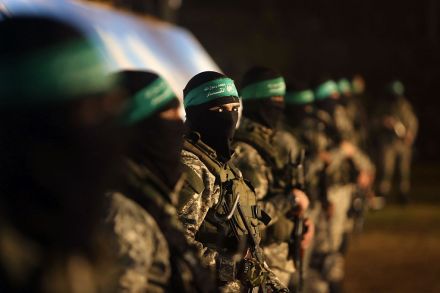
In the wake of its ceasefire agreement with Israel, Hamas has again attempted to paint itself as a struggling resistance movement against an occupying force. After 11 days of fighting, which left more than 250 people dead, Hamas’s co-founder, Mahmoud Zahar, claimed a strategic and a symbolic victory.  ‘The new element here is the degree of the resistance movement, in particular in Gaza, to attack the Israeli targets and very important points, including most of the overcrowded areas... the civilian society,’ he told Sky News. ‘So for how long will the Israelis accept that?’ By painting itself as a plucky victim, Hamas is trying to convince the Arab world – and Muslims in the West, like me – that we should be on its side.

The disinformation war continues between Israel and Hamas

The ceasefire between Hamas and Israel has started, and the gates to Gaza have opened for the international press. Now a new battle will begin over numbers and ratios. There will be calls for investigations, and endless debates about who ‘won’. Israel’s claims of precision targeting will come under scrutiny, but so too should Palestinian accounts, including claims of mass civilian deaths. At least 243 people are reported to have died in the Gaza Strip during Israel’s military action, including a reported 65 children. These figures rely on claims by the Gaza Health Authority – an unreliable body under Hamas control.

Hamas’s rockets are killing Palestinians too

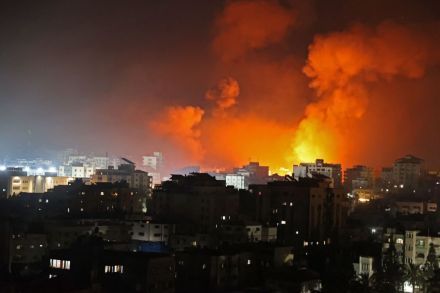
Israel’s military action in Gaza is widely reported daily across the world. Images of hundreds of rockets lighting up the skies over Israeli cities and of the rubble of destroyed buildings in the Gaza Strip are once again part of the daily cycle of print and broadcast news. But most reports are thin on details of Israel’s military activities. What exactly are their aims? How are they pursuing them? And how much success are they having? Often Israel’s military activities seem baffling to the wider world. The country’s reluctance to give a detailed, running-commentary on every strike frustrates journalists and citizens, who then assume the worst of motives for these unexplained acts.