Identity politics

What hope is there for the Church of England today?

A familiar defence of Anglicanism holds that flowers of principle bloomed in the mucky soil of compromise. Yes, this idea runs, the Church of England that evolved from Henry VIII’s marital strife was indeed a theological hotchpotch; but there is nevertheless much to be said for a tolerant strand of Christianity forming a middle way between Roman Catholic and hardline Protestant alternatives.   The perceived breadth of Anglicanism has long remained its selling point. Like the proverbial Australian farm, it is (or was) a Church with few fences but many wells. Elasticity over matters of secondary importance used to apply at a structural level. The old system involving autonomy for the
Mickey Down, Charlie Gammell, Sean Thomas & Douglas Murray

32 min listen

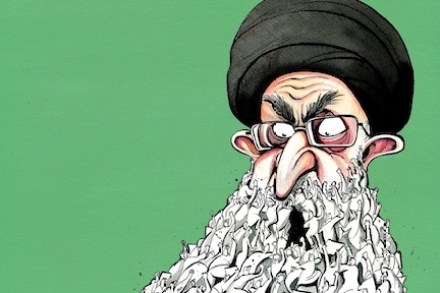
On this week’s Spectator Out Loud: Mickey Down, co-creator of Industry, reads his diary for the week; Charlie Gammell argues that US intervention could push Iran into civil war and terrorism – warning that there are more possibilities than just revolution or regime survival; false dichotomy at the heart of; Sean Thomas bemoans the bittersweet liberation from his libido; and, Douglas Murray believes Britain has a growing obsession with race. Produced and presented by Patrick Gibbons.

Iran’s useful idiots, Gordon Brown’s second term & the Right’s race obsession

43 min listen

As the world watches events in Iran, and wonders whether the US will intervene, the Spectator’s cover this week examines ‘British complicity in Tehran’s terror’. When thinking about what could happen next in the crisis, there is a false dichotomy presented between regime survival and revolution; the reality is more complicated, though there is no doubt that this is the biggest threat to the theocratic regime in decades.  For this week’s Edition, host Lara Prendergast is joined by political editor Tim Shipman, columnist Rachel Johnson and features editor – and Edition co-host – William Moore. They commend the bravery of Iran’s protestors but criticise the ‘inept, naive and wrong’ response of the Foreign Office.

Art and moralising don’t mix

Against Morality is not against morality. But it is against moralising. Which is a start. Anti-cancel culture, anti-identity politics, Rosanna McLaughlin’s small book of essays is the first insider-artworld publication to condemn the Savonarolan turn within culture. A cause for celebration, you might think. Her argument is perfectly sound. ‘Morality has become the central pillar, the justification for art, the bar by which we measure whether something is good or bad’, and it’s been a disaster. Forcing art to ‘communicate clear and approvable messages’, cleansing the canon of bad behaviour, conscripting artists as ‘empathetic social workers’, has impoverished art, flattened it to such an extent that the work of the

Our great art institutions have reduced British history to a scrapheap of shame

Let’s indulge in some identity politics for a second: I am from Hong Kong, born as a subject of the last major colony of the British Empire, minority-ethnic, descended from Chinese refugees, now living here in exile. This summer, both the National Portrait Gallery and Tate Britain are presenting new displays that are meant to reflect the ‘inclusive’ and ‘diverse’ identities of Britain. Supposedly, I fit nicely among their target audience. In reality, as an immigrant looking to be included in this nation, I am perplexed by my visits. For two publicly funded museums tasked with telling the story of this country through the portraiture of its eminent figures and

How politics killed theatre

Hope can be remarkably persistent. And so, despite several years of experience pointing in starkly the other direction, a recent weekend saw me at Who Killed My Father at the Young Vic, the latest from ubiquitous Belgian director Ivo van Hove. A young friend had gone with his father the previous week and both described it as ‘excellent’. Intense, but in a good way. Worthy broadsheet publications gave it four stars. I had my doubts: Édouard Louis, on whose angry memoir about growing up in a working-class, homophobic home in northern France the play was based, is not my cup of tea. But the friend, and his father, are both

Identity politics is in retreat in Hollywood

‘Diversity is woven into the very soul of the story.’ If those words of praise from a rave review in a left-leaning journal sound to you about as inviting as a cup of cold sick, then my advice would be to stay well clear of The Sandman. Neil Gaiman’s epic graphic novel series (launched in 1989), set in the world of dreams, was relentlessly inclusive long before it became the norm. ‘I wanted to change hearts and minds,’ Gaiman has said in an interview. ‘I had trans friends and still do, and it seemed to me that no one was putting trans characters into comics. And I had a comic.’

Has identity politics had its day?

Have we reached peak woke? In Hollywood, that seems to be the emerging consensus. Thanks to the box office success of Top Gun: Maverick and the disappointing performance of Pixar’s Lightyear, in which Buzz Lightyear’s commanding officer is a black lesbian, the studios think audiences may be tiring of being lectured to. The same is true of the streaming platforms, with the biggest hits of the year being shows that take the mickey out of corporate virtue-signalling (The Boys) or just celebrate old-fashioned American heroism (The Terminal List). In this context, the reaction of Netflix when some of its employees staged a walkout over Dave Chappelle’s un-PC jokes in his

Has liberalism destroyed itself?

According to Vladimir Putin, liberalism is an ‘obsolete’ doctrine, a worn-out political philosophy no longer fit for purpose. In this well-timed, rather urgent book, Francis Fukuyama attacks that view and puts a vigorous case for the defence. Despite its faults, liberalism is a force for good, he says, and it remains the only political philosophy capable of taking on the authoritarians of Moscow and Beijing. But the despots are not the central focus of his argument. The biggest threats to the liberal society, he writes, come from within. In Fukuyama’s crisp retelling, the liberal ideal emerged in the aftermath of Europe’s wars of religion. The notion that people could only

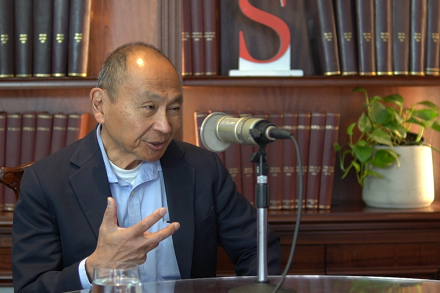
Francis Fukuyama on Ukraine, liberalism and identity politics

This week, Sam Leith spoke to Francis Fukuyama – the author of ‘The End of History and the Last Man’ and the newly released ‘Liberalism and its Discontents’ on the latest episode of The Book Club. You can watch their conversation below, listen to it here or read this transcript. The conversation has been edited for length and clarity.   Sam Leith: Liberal is a word that means something very different in Tennessee than it does in Muswell Hill. What exactly are the parameters of what you call classical liberalism? Francis Fukuyama: It does have a very different meaning in the United States than it does in Europe. My definition of it is closer

Musical conservatives ought to love identity politics

It’s 2022 and classical music is, again, dead. It’d be surprising if it wasn’t. In 2014 the New Yorker published a timeline by the industry analyst Andy Doe showing the precise chronology of the decline and fall. Ageing audiences in the 21st century, the gramophone in the 20th, the dangerous new technology of the pianoforte in the 1840s: all, in their time, were considered proof that the rot was terminal. Doe traced the root of the problem back to a papal bull in 1324, giving new potency to Charles Rosen’s remark that ‘the death of classical music is perhaps its oldest continuing tradition’. Anyway, the fatal blow this time is

The Batley and Spen result is a rejection of identity politics

What should we make of the Batley and Spen by-election, won by Labour with a majority of just 323 votes? The victory, slim though it may be, is a credit to Kim Leadbeater who – with a gutsy campaign – has proved her doubters wrong and done her sister, the late Jo Cox, proud. This was by no means an easy campaign to fight. During the most toxic by-election for many years, Leadbeater became a target for two hostile and overlapping groups: aggressive self-proclaimed Muslim ‘leaders’, who with George Galloway tried to prise the constituency’s large Muslim population away from Labour, and the far-left in the party, who tried to use

Kemi Badenoch: The problem with critical race theory

Even now, months after the event, Labour MPs have not forgiven Kemi Badenoch for saying that Britain is one of the best countries in the world in which to be black. It was during the Black Lives Matter protests and many politicians — including Sir Keir Starmer — were ‘taking the knee’ to show fealty to its cause. Badenoch took a different view, seeing within all this a pernicious ideology that portrays blackness as victimhood and whiteness as oppression. In parliament this week, she went further: this, she said, is ‘critical race theory’ — a new enemy for the Tory party and, as equalities minister, one for her to fight.

Hatred is in the eye of the beholder

There’s a broad mainstream consensus on both sides of the Atlantic: Trump’s tweet telling four hard-left minority Congresswomen to ‘go home’ to the crime-ridden countries they’re from, when three of the four were born in the US, was racially inflammatory and staggeringly ill-judged.  But the first question that would be raised in the UK if a British politician committed such a gaffe is the last question raised in the US: was that post ‘hate speech’? The First Amendment to the American constitution guarantees five basic freedoms, including freedom of speech, and these principles ought rightly to pertain in other democracies such as Britain. (I’m sorry, but we’ve one-upped the Brits

Economics is having an identity crisis

It has become commonplace for news reports to refer to almost any civic unrest, or even unusual patterns of voting, as evidence of ‘resurgent nationalism’ — implicitly suggesting a visceral hatred of foreigners and a desire to set the clock back to the glory days of racial homogeneity and casual homophobia. We should be wary of accepting this media trope: for one thing it may arouse far more fear than is warranted. But apart from the needless fear it generates, it is also slightly dubious to suggest that it is the gilets jaunes or the Five Star Movement or the supporters of Brexit or even Donald Trump who are acting

Hell hath no fury like an irate teenage girl

Something troubling is happening to our girls. I noticed it again most recently at this year’s Battle of Ideas — the annual festival of free speech staged at London’s Barbican by Claire Fox. It’s a wonderful event, where ex-revolutionary communists like Claire rub shoulders with Thatcher-ite radicals like me and we’re reminded how much we have in common. I feel right at home among the bright, engaged, friendly crowds and when I speak I generally get a warm reception. But there are always exceptions, aren’t there? On this occasion the trouble came from a bloc of teenage girls in the audience for my panel. Judging by their accents and dress

The BBC’s anti-white rhetoric

Cassian Harrison, the editor of BBC Four, told the Edinburgh International Television Festival last week that no one wants to watch white men explaining stuff on TV any more. ‘There’s a mode of programming that involves a presenter, usually white, middle-aged and male, standing on a hill and “telling you like it is”,’ he said. ‘We all recognise the era of that has passed.’ I’ve been puzzling over this. Why would one of the Beeb’s most senior executives, himself a white, middle-aged man, say something likely to antagonise such a large number of the people who pay his £170,000 salary, i.e. licence payers? After all, 87.2 per cent of the

Antipodean notebook

Whenever I visit a country I try to pitch high and meet the president or prime minister. In Australia this proves tricky. At the start of the week Malcolm Turnbull and I are on for lunch, but commitments force me to call off. By the end of my visit he is no longer prime minister. One of his excellent predecessors comes to see me at my hotel. At first I marvel at the ease with which former prime ministers can move about in Australia. But I soon wonder if people are unfazed because they reckon it might be their own turn to run the country next. I am here for

Identity theft

I got some bad news this week. I discovered that I’m a ‘privileged, white male’. It was my agent who broke it to me. We were talking about the trouble he’s having in finding a publisher for my book — a work of non-fiction — when the following exchange took place. Me: What’s wrong with my book? Agent: There’s nothing wrong with your book. It’s brilliant. It’s moving. It’s funny. Me: OK. So what’s the problem? Agent: You’re the problem. Me: Excuse me? Agent: You’re a middle-aged, privileged white man. You’re out of fashion — and so is your book. Publishers think you’re too male. Too white. Things are difficult

Identity politics are by definition racist

To mark last weekend’s one-year anniversary of the violent right-wing demonstrations in Charlottesville, Virginia, a meagre two dozen card-carrying white supremacists showed up in the town, vs thousands of anti-racism protesters — proportions that may reflect the nation as a whole. Nevertheless, ever since the 2017 rally, the American left has thrown around the pejorative ‘white supremacist’ with such abandon that you’d think the country was jagged with peaked white hats from sea to shining sea. By fits and starts, the past 50 years have seen equality of opportunity for minorities in the States improve dramatically. Yet racial rhetoric, and the overall touch-and-feel of race relations on the ground, is