Ian fleming

Night moves

From our UK edition

The Night Manager (BBC1, Sunday) announced its intentions immediately, when the opening credits lovingly combined weapons and luxury items. ‘Blimey,’ we were clearly intended to think, ‘it’s a bit like James Bond.’ True, the main character works — at this stage, anyway — in the hotel trade rather than as a secret agent. Yet, when it comes to dress sense, being irresistible to the ladies and alternating between looking suave and enigmatically purposeful, Jonathan Pine (Tom Hiddleston) has little to learn from the great man himself. Pine was first seen heading to work in 2011 through an uprising in Cairo where dozens of extras were demanding the overthrow of President Mubarak.
Talk of the devil | 24 September 2015

From our UK edition

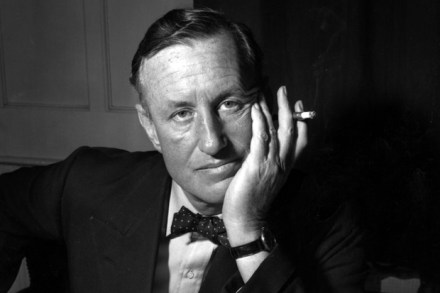
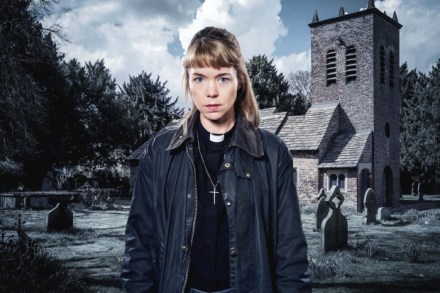
For years, Ian Fleming was famously self-deprecating about the James Bond books. (‘I have a rule of not looking back,’ he once said. ‘Otherwise I’d wonder, “How could I write such piffle?”’) Towards the end of his life, though, he finally produced an essay in their defence — proudly pointing out, among other things, that however fantastical the plots may become, they’re always carefully rooted in a world recognisable as our own. Of course, this is not something that can necessarily be said of all the Bond films — but it certainly applies to ITV’s new three-part thriller Midwinter of the Spirit (Wednesday), based on the novel by Phil Rickman. It also explains why the programme already feels so promising.

Stars in their eyes | 24 September 2015

From our UK edition

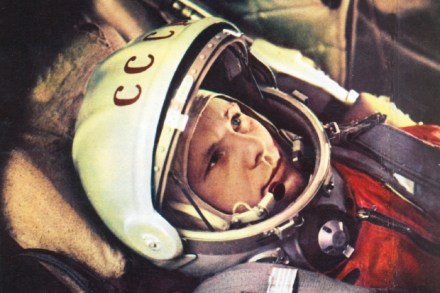
‘The dominant narrative of space,’ I was told, in that strange language curators employ, ‘is America.’ Quite so. Kennedy stared at the moon and saw a promotional opportunity. Nasa’s logo was designed by the flamboyant Raymond Loewy. A PR man wrote Neil Armstrong’s unforgettable lines. Every event at Cape Canaveral (later the Kennedy Space Center) was televised, while, in the USSR, Star City was built in furtive secrecy just outside Moscow. Tom Wolfe glorified the US space programme in The Right Stuff, his boisterous 1979 masterpiece of reportage where the cowboy mentality of the fly-boys co-mingled with the technical marvels of California aerospace, myth-making the while.

Life with old father William

From our UK edition

This intensely written memoir by Adam Mars-Jones about his Welsh father, Sir William, opens with the death of Sheila, Adam’s mother, of lung cancer in 1998: ‘She died with self-effacing briskness in little more than a month.’ Adam too is self-effacing, moving in while his mother was dying, then staying on as his father’s main carer. The second of three brothers, he explains away this generous act: ‘As an under-employed freelance, I had time to spare.’ ‘Dad’, diagnosed informally as ‘demented’, was by then a retired High Court judge granted a low rent for a large flat in Gray’s Inn. Adam lived in the flat’s converted attic. Adam is thorough and, it appears, fair.

If I were prime minister, by Ian Fleming

From our UK edition

This article was first published in The Spectator on 9 October, 1959. I am a totally non-political animal. I prefer the name of the Liberal Party to the name of any other and I vote Conservative rather than Labour, mainly because the Conservatives have bigger bottoms and I believe that big bottoms make for better government than scrawny ones. I only once attended a debate in the House of Commons. It was, I think, towards the end of 1938 when we were unattractively trying to cajole Mussolini away from Hitler. I found the hollowness and futility of the speeches degrading and infantile and the well-fed, deep-throated ‘hear, hears’ for each mendacious platitude verging on the obscene.

Ian Fleming: cruel? Selfish? Misogynistic? Nonsense, says his step-daughter

From our UK edition

When from my eyrie beneath the Christ Corcovado I looked closely at this (unusually) typed letter from Ian Fleming I saw that it was ‘dictated in his absence’ and that it must have been sent by the devoted ‘Griffie’, model for Miss Moneypenny. Scarcely surprising: five days later, on the 12th birthday of his only child Caspar, Ian — as much a father to me as a stepfather — died from a third massive heart attack. (‘I am sorry to have troubled you like this,’ he said to the ambulancemen who took him to Kent & Canterbury hospital.) That too was not unexpected. Early in 1963 I left for Rio de Janeiro, where my husband John Morgan had been posted as commercial attaché.

James Bond’s secret: he’s Jamaican

From our UK edition

Ian Fleming’s first visit to Jamaica was pure James Bond. In 1943, as assistant to the Director of Naval Intelligence, he flew from Miami to Kingston to attend an Anglo-American naval conference and to investigate the rumour that Axel Wenner-Gren, a rich Swede and supposed Nazi, had built a secret submarine base at Hog Island, near Nassau. He was accompanied by his old friend Ivar Bryce, who was also in intelligence, and who put him up at a house his wife had recently bought. As they left the island, Fleming told Bryce, ‘When we have won this blasted war, I am going to live in Jamaica… swim in the sea and write books.

James Bond, author

From our UK edition

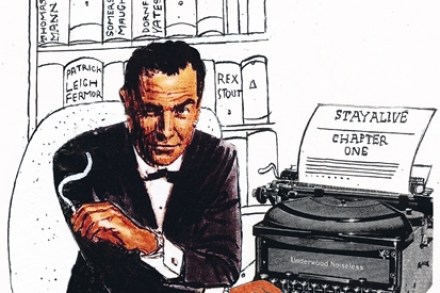
There is one last James Bond book from the late 1950s that remains unpublished. We will not find the typescript lurking in the archives, nor hidden amongst the papers held by Ian Fleming’s estate, for this book is not about James Bond but written by Bond himself. It is from Fleming’s 1959 novel Goldfinger that we learn that 007 spends his hours on night duty at the Secret Service compiling a manual on unarmed combat called Stay Alive!, containing the best that had been written on the subject by his peers in intelligence agencies around the world.