Ian fleming

They should never make another James Bond film

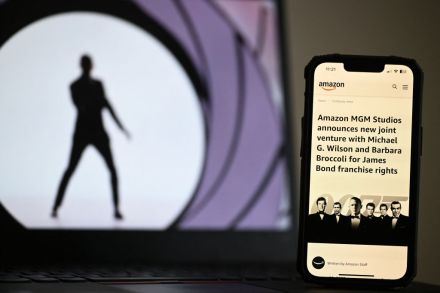
The 25th and most recent entry in the James Bond franchise, No Time to Die, premiered over four years ago. Since then, there has nonetheless been Bond drama. In 2022, Amazon acquired MGM, and with it the rights to 007. But it took several more years to wrest producer control from Eon productions, run by the Broccoli family’s Barbara Broccoli and her half-brother Michael G. Wilson, scions of the filmic spy empire created by their father Albert “Cubby” Broccoli. (The family claims that the vegetable is named after them, their fortune having been founded by crossing rabe with cauliflower.) Most recently, writers for the long-delayed upcoming 26th Bond film, set to be directed by Denis Villeneuve, appear to be stumped, plotwise.
Bored of the rings: ‘wokery’ takes on Tolkien

"Woke” is a term much overused by those on both sides of the culture war but — a little like pornography — while it may be difficult to define, you absolutely know it when you see it. The capture of the entertainment industry by an ideology — perhaps more accurately described as a group of roughly consanguineous ideas that seem, superficially, to be the Right, Kind and Thoughtful beliefs to hold — seems now to be absolute. Fiction of all kinds has been affected, but heroic narratives have proved especially vulnerable, perhaps because of the size and dedication of their audiences. You will doubtless know the kind of thing I mean.

Rings

Where will the vogue for censoring our best-loved authors lead?

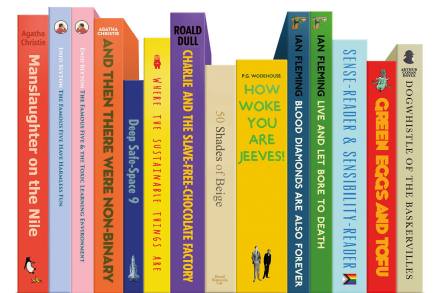
It was recently announced in the Daily Telegraph that the novels of P.G. Wodehouse — much beloved by millions, including me, for their combination of wit and soufflé-light evocation of an England that never really existed but which almost might have done — are the latest to fall foul of that new scourge of writers the world over, the “sensitivity reader.” New editions of Wodehouse’s masterly works Right Ho, Jeeves and Thank You, Jeeves have been reissued with the craven disclaimer “Please be aware that this book was published in the 1930s, and contains language, themes and characterizations which you may find outdated. In the present edition, we have sought to edit, minimally, words that we regard as unacceptable to present-day readers.

authors

Should I have had a sensitivity reader review my book?

Reason magazine reported last summer on the rise of sensitivity readers, and publishers have made headlines for their plans to release sanitized versions of Roald Dahl's and Ian Fleming's works. I’m not sure what’s more depressing: the fact that publishers are hiring sensitivity readers to purify these books, or the fact that I probably should have had one review my books before they were published. In an ideal world, sensitivity readers would be in as much demand as Betamax repairpersons. But we do not live in an ideal world. We live in a world full of hypersensitive Twitter users who relish finding offense in the unlikeliest of places. Hence the proliferation of sensitivity readers, or "authenticity readers" as they’re sometimes called.

sensitivity

Do James Bond’s would-be censors have a point?

James Bond may have battled the nefarious forces of SMERSH, SPECTRE and other international terror organizations, but surely he has never faced quite so implacable a foe as the sensitivity reader. Following in the footsteps of Roald Dahl, the wholesale revision of whose books led to international outrage, Ian Fleming’s Bond novels, which have been re-released to mark the seventieth anniversary of the first publication of Casino Royale, have undergone their own exercise in alteration. But is it an egregious travesty à la Dahl, or — whisper it — might someone have had an idea arising from nobler motives?

bond

Turning the page on James Bond

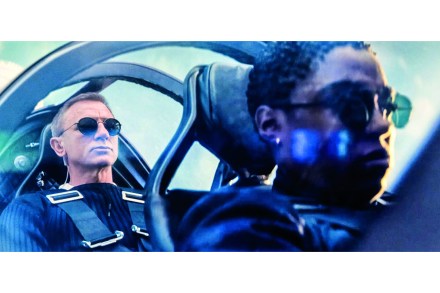
The much-delayed 25th James Bond film, No Time To Die, is finally limping onto the big screen. There are gadget-packed car chases, scarred supervillains and revelations as to the loyalties of supposedly sympathetic characters, but there are also new, socially-conscious elements. Lashana Lynch plays a PoC 00-agent who is very much Bond’s equal at spycraft. Fleabag’s Phoebe Waller-Bridge has been parachuted in as a script doctor, to notify us that this is a post-#MeToo Bond. Without a simultaneous release on a streaming service, Daniel Craig’s swan song as Bond will stand or fall on its theatrical performance.

bond
no time to die bond

The spy’s the limit

No Time to Die is Daniel Craig’s last mission as James Bond. Clocking in at well over 180 minutes, it might more accurately be called No Time to Pee. The epic length and general air of slothful despair derive from the picture’s tortured development. Mess and confusion are the inevitable product of two directors, platoons of writers, a tangled residue of multiple plotlines and the star’s blatant misery at being once again vacuum-packed into a tuxedo one size too small. ‘We did our best,’ Daniel Craig has said repeatedly in promotional interviews. M wouldn’t accept that, so why should we? Bond begins No Time to Die with plenty of time to die. He has retired with his heart broken and the rest of him in little better shape.