Hunting

Man’s fraught relationship with nature extends back to prehistory

From our UK edition

It is now almost a prerequisite of any dispute among environmentalists to recall a judgment offered by the literary critic Raymond Williams – that ‘nature’ is perhaps the most complex word in the English language. Attempts to unravel its meaning are fraught with challenge. Does it signify just the living elements of the biosphere, or does it include inanimate parts, such as mountains and rivers? The extreme heat of the Sun at its core makes it the place least hospitable to life – yet it is equally the source of the whole process. Perhaps the greatest of all associated questions is whether humans are subsumed within, or inexorably separated from, the Sun’s operations. Jeremy Mynott’s book does an exceptional job of teasing out most of nature’s multiple meanings.
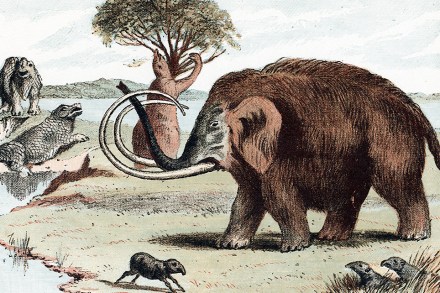

Botswana’s President: elephant hunting isn’t cruel, it’s necessary

From our UK edition

Last month, Botswana’s Minister for Environment and Tourism Dumezweni Mthimkhulu threatened to send 10,000 elephants to Hyde Park. This week, Botswana’s President Mokgweetsi Eric Keabetswe Masisi went a step further and suggested sending 20,000 elephants to Germany. These are strange and not entirely plausible threats, yet they reflect the frustration that Botswanan politicians feel over western governments lecturing them about animal rights. The United Kingdom and Germany are both in the process of passing laws to block the importing of hunting trophies.

How game ranching protects endangered species

Game ranching in Africa is big business, farming wild animals that unlike regular livestock have evolved there and don’t need much care. What they do need is space. South Africa’s most famous reserve, Kruger National Park, is an 8,000-square-mile chunk of wilderness on the border with Mozambique, but private land stocked with wildlife covers almost ten times that area. Ranchers stock their property at game auctions where animals are sold to ranchers who either want to introduce a species or add a new bloodline. In 2019, American cattle breeders were delighted when an Angus bull sold in North Dakota for a record $1.51 million. But in 2016, the winning bid for a stud buffalo in South Africa was close to $10 million.

game
goose

My first family goose hunt

It's a slow Sunday in Paducah, Kentucky, the day before our snow goose hunt. Morning Mass down the road, where the priest quizzingly asked where we were from. Brunch with my husband’s family at a cozy café. Chocolate cake with that crackly boiled icing and fresh coffee in the late afternoon at his aunt and uncle’s house. It isn’t until close to dinnertime that we pack up our bags and hit the road for the bootheel of Missouri, where we will hope to catch a few hours of sleep at our hotel before we meet our local hunting guide. About halfway through our drive, the phone rings with bad news. Our guide, Scooter, spent the day scouting and could find no signs of geese at his usual spots.

hogs

How serious is the feral pig problem?

Let’s play a guessing game: I’m a dangerous force threatening Americans’ health, safety and way of life. We largely rely on government agencies to monitor and manage me. What to do about me is still a matter of debate, as is the severity of the menace I actually create. The media is likely sensationalizing the threat. A new study suggests I’m “not as bad as originally thought,” that reports of the devastation I’m causing were “premature,” and that if you’re outside a specific subset of people I disproportionately affect, you wouldn’t know I exist. Still, there are interactive maps to track my movement, and I’m reported to be related to a new, “hard-to-eradicate, super” strain invading from a foreign country. What am I? Yep, you guessed it.

From pit-ponies to polo ponies: hoofprints on the British landscape

From our UK edition

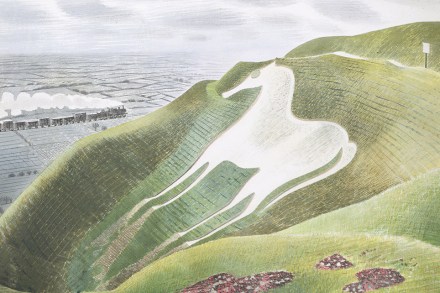
Horses have schlepped, hauled and galloped grooves into Britain, providing the muscle for transport, industry, agriculture and leisure and the inspiration for myth, art and literature. In The Bridleway, the environmentalist Tiffany Francis-Baker maps this busy-storied topography from the Uffington White Horse to ancient roads, canals, coaching inns, race courses, conservation projects and public art. She crosses the country to speak to horse-people and explores old bridleways. Some of the landscapes she visits are subsiding, as she puts it, ‘into the healing bosom of the earth’. Others are threatened with erasure, and so, ‘to keep these spaces full of memory, all we must do is tread the same paths, either on foot or by hoof’. The charm of her book lies in wayside details.

Stop ignoring the real environmentalists

What does throwing soup on a piece of art have to do with the environment? When we hear the word environmentalist, what comes to mind is something like an Extinction Rebellion or JustStopOil activist: young, urban, progressive, with an expressly political agenda. But what if there are other categories of environmentalists that are expressly ignored, that may have the insights we need to solve the very real environmental problems we face? In my PhD research, I spoke with people who produced a significant amount of food for their own consumption in and around Chicago. Many of them were were disaffected by the focus on climate change and the obsession with consumption as activism.

environmentalists

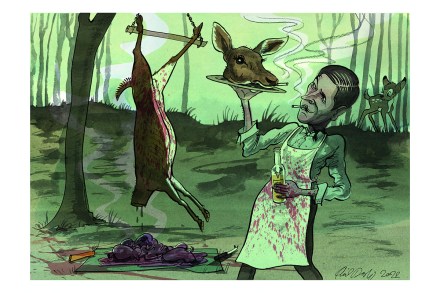
Hunting deer in the DC suburbs

I was driving along in my 2018 Honda minivan when I received a call from a member of the National Symphony Orchestra who has been on leave since March 2020: “Just bagged a doe. If you’re up for it, I’m going to gut this thing.” I regretted taking the call through the van’s speakerphone. A text message followed; thankfully the image did not project onto the dash display. I spent the rest of the drive to school explaining to my four daughters how Daddy had to dissect Bambi for work. My father took me hunting once in high school. He shook me awake at six in the morning, loaded me into the family car, a 1998 Chevy minivan, then drove it straight into a deer. I can still picture the white-spotted fawn’s body cascading across the asphalt. “Thank God it was just a baby.

deer

The next big hunting battle

From our UK edition

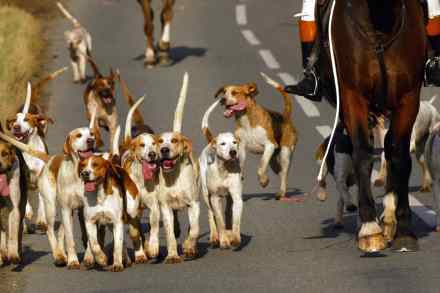
In his memoirs, Tony Blair did not have much good to say about his government's seven-year long struggle to ban fox hunting. The former PM, writing in 2010, admitted he deliberately sabotaged the 2004 Hunting Act to ensure there were enough loopholes to allow hunting to continue. Confessing that he initially agreed to a ban without properly understanding the issue, Blair wrote: 'If I’d proposed solving the pension problem by compulsory euthanasia for every fifth pensioner I’d have got less trouble. By the end of it, I felt like the damn fox.

Should monuments to past Archbishops of Canterbury come down?

From our UK edition

This week, the Church of England issued its document ‘Contested Heritage in Cathedrals and Churches’. It is guidance for what those locally running more than 12,000 churches should do about their monuments ‘to transform unjust structures of society, to challenge violence of every kind and pursue peace and reconciliation’ and address ‘the Church’s own complicity in structural sin’ and ‘oppression or marginalisation of people on the basis of their race, gender, religion or sexual orientation’. In church monuments, this usually boils down to whether the person commemorated had links with slavery. Seen from a parish level (where the poor churchwardens, such as my dear wife, will have to do the work), here are some preliminary questions.

Letters: The C of E’s obsession with critical race theory

From our UK edition

Christian approach Sir: Dr Michael Nazir-Ali’s criticism of our report ‘From Lament to Action’ (‘Bad faith’, 1 May) was wide of the mark in its suggestion that Marxist-inspired critical race theory was the ‘intellectual underpinning’ of our approach. Far from it. The source material for our report was three decades of reports on the issue of racial justice from the General Synod of the Church of England. Doubtless there are valid criticisms which can be made of Synod; however, being a hotbed of radical Marxism is not one of them. Our report explicitly rejects any idea that our work should be viewed as a battle in a culture war.

A vegan’s defence of field sports

From our UK edition

In modern Britain, the quickest way to prove that you’re a good person is to show that you love animals. People share cat videos and pose with dogs in pictures for dating websites. Anyone who is seen to hurt animals — like the Danish zoo that culled a giraffe or the lawyer who clubbed a fox — is sent to a special circle of social media hell. Those who participate in field sports reside in this inferno: the men and women who shoot, stalk or hunt. They are killers in a society that doesn’t like to see death. When polled, around 85 per cent of the British public are in favour of keeping New Labour’s hunting ban, and a majority want to extend the ban to shooting and stalking. I consider myself an animal lover.

What happens when Facebook pays for news?

From our UK edition

The recently departed head of MI6, Sir Alex Younger, wants to balance China’s ideological antagonism to the West with the need for coexistence. Commenting on the government’s new ‘integrated review’, he says we must fight back with technological innovation and stronger alliances but avoid a second Cold War. He advocates ‘One Planet: Two Systems’ — a globalised echo of the Anglo-Chinese Hong Kong Agreement by which Hong Kong was handed back to China in 1997 under the principle of ‘One Country: Two Systems’. Sir Alex’s is an interesting analogy, but the important thing to note about ‘One Country: Two Systems’ is that China adhered to it only for 20 years and is now trashing it. Could the same problem take over the world?

Letters: It’s too late for Boris

From our UK edition

Disastrous decisions Sir: In his otherwise excellent analysis of Boris Johnson’s premiership (‘The missing leader’, 19 September), Fraser Nelson suggests that he could still succeed. It’s too late. Although we ‘know that he’s not responsible for the pandemic’, he is responsible for the government’s response to it. The consequences of that hysterical response, seemingly contrived by a small, mostly unelected cabal, have been, and will be, disastrous for huge numbers of people; the enormity of the failures too great to be set against subsequent successes. Boris persuaded us to support him with a carefully crafted image of a jovial positive thinker, a libertarian and man of the people. He’s been found out.

Britain’s hunts are a rural lifeline in the fight against coronavirus

From our UK edition

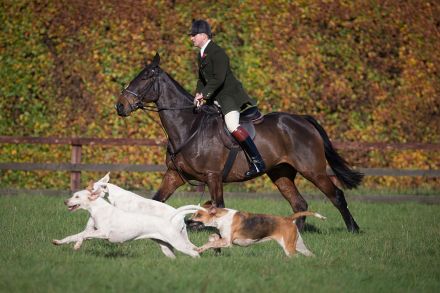
Puppy shows cancelled. Point-to-points put on hold. Hound shows, team chases, skittles leagues, pony club camp – all have been axed from the countryside calendar. These are not announcements that tend to make headlines. What’s the cancellation of the Cattistock Countryside show when Glastonbury is grinding to a halt? Not that it’s a competition, but it's a fact that rural areas get overlooked in times like these. In response, countryside folk are taking matters into their own hands. In my own village in Dorset – a village not big enough to qualify for a postbox – Sylvia, an ex-schoolteacher, has decided it’s essential we have a community pop-up shop for emergency rations.

The mysteries of the Corbyn world-view

From our UK edition

It is worth fixing for posterity the feelings which, on polling day, swirled in the breasts of many who wanted a Boris victory. Being a journalist, I normally enjoy the electoral scene with some detachment. I cannot claim to be neutral, since I have never, even in Tony Blair’s pinkish dawn of 1997, wanted a Labour government; but I can take it in my stride. This time, however, millions, including myself, were knotted with fear that anything other than a clear Tory victory would destroy Brexit and make Jeremy Corbyn prime minister. The risks were actually frightening. We sought distractions. Listening to the Radio 4 Today programme that morning, I heard the sports presenter admitting he did not know how to pronounce his tipster’s selection for the 2.30 at Newcastle, Calliope.

Labour thinks that its trump card is Trump

From our UK edition

On Wednesday morning, I was hoisted into the air of Whitehall on a cherry-picker. A century ago the proto-Cenotaph appeared in time for the London Peace Parade in July 1919, which followed the signing of the Treaty of Versailles. In that first year, the Cenotaph was only a timber and canvas structure, built to last a week; but Edwin Lutyens’s design seemed so right that the present structure, more precisely designed, was built in Portland stone for Remembrance Day 1920. English Heritage, now a charity rather than a government body, cares for the monument — as it does for 400 monuments in England, including 46 in London. The chairman, Vice-Admiral Sir Tim Laurence, husband of the Princess Royal, wanted me to see its annual clean before this Sunday’s Remembrance Day parade.

Hog wild in Indiantown

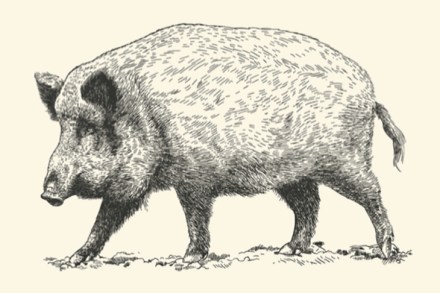
This article is in The Spectator’s inaugural US edition. Subscribe here to get yours. My old college roommate and I were sitting on a 180-pound wild male boar. Neither of us were habitual hoggers. It was our first rodeo. Florida Route 710, the Beeline Highway from Palm Beach to Indiantown, is a two-lane straight shot out of the tropics and into the scrub near Lake Okeechobee. In the Twenties, a Baltimore banker, S. Davies Warfield, built a railroad into central Florida from Palm Beach. Up went Indiantown’s gridded streets and houses, and the Mission Revival-style Seminole Inn, where Warfield’s niece Wallis Simpson stayed both before and after marrying Edward VIII. But Warfield’s plans were scuppered by two hurricanes and the Depression.

hog

In New Hampshire, smoking saved my life

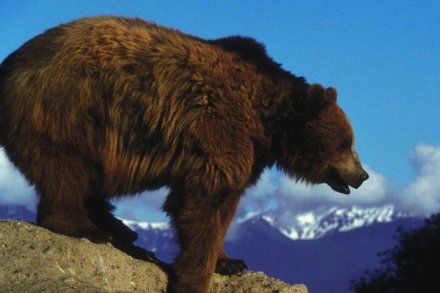
I almost got killed this week. I went for a very early morning walk in a New Hampshire forest, in the icy rain. Black coat, black hood, black trousers. And so the hunter saw this hunched, awkward, shambling black beast, stumbling over sodden logs, and immediately raised his rifle to his eye and cocked the trigger. One thing, and one thing only, saved me. The armed cracker, looking through his telescopic lens, thought to himself: ‘Hey, it’s a bear — but it’s… smoking a cigarette?’ And so, at the last second, refrained from pulling the trigger. I had this brush with death related to me, with great glee, by the people who ran the bed and breakfast where I was staying. I’d been quite oblivious.

bear new hampshire smoking

Big two-hearted river

From our UK edition

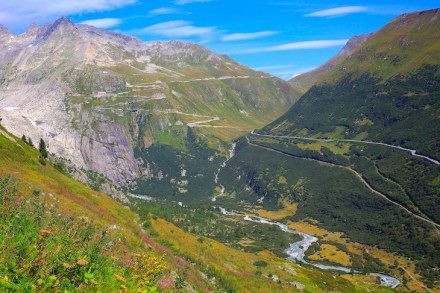
The Rhône is a strong river. The Loire derives graciousness from its châteaux. The Rhine and the Thames have been sentimentalised: not the Rhône. There are no Rhône-maidens, no suggestion of ‘sweet Rhône run softly till I end my song’. A powerful onrush of water rips past the banks of a river that knows how to drown men. But it also brings fertility in abundance. This is probably the oldest wine-growing region in France. The romantic version is that Greeks brought the Shiraz grape from Persia; 2,500 years later, Syrah is still the region’s vinous bedrock. As one would expect from a combination of the River God and the Sun God, these are powerful wines, easily hitting 14 degrees.