Human rights

The Malala phenomenon – as seen from Pakistan

From our UK edition

Mixed emotions stirred here in Pakistan when Malala Yousafzai came within kissing distance of the Nobel Prize. The reaction was reminiscent of how we felt when Sharmeen Chinoy's Saving Face was up for an Oscar: great to be noticed by the world, but how tragic that the path to such recognition was paved with acid burnt faces. The deplorable act of attacking Malala increased the aversion felt for the Taliban among ordinary Pakistanis. But terrorists do not feed on public support; their demented ideology is sustenance enough. Pakistanis wept when Malala was battling for her life, and heaved a sigh of relief when she survived. We are proud that she has thrived. As for her moving to England, it affirms our view that the West has an equal penchant for inflicting and preventing pain.

Melissa Kite: I can no longer find knickers small enough to fit me

From our UK edition

Barely a week goes by when a female Lib Dem minister doesn’t pledge some new coalition initiative on ‘female body confidence’. The junior equalities minister Jo Swinson was at it again when she congratulated Debenhams for becoming the first high-street retailer to introduce size 16 mannequins. Ms Swinson said: ‘The images we see in the world of fashion are all pretty much the same. It’s as if there’s only one way of being beautiful. Yet nine in ten people say they would like to see a broader range of body shapes shown in advertising and the media.’ For broader range of body shapes, read fat, by the way. For nine in ten people, read nine in ten fat people.

The Right’s attitude to radical Islam is as bad as the Left’s

From our UK edition

Whenever a heresy-hunting left-winger fixes me with an accusatory glare and demands to know how can I talk to 'someone like that' (the 'someone' in question being a right-wing object of righteous denunciation) I reply, 'I’m a journalist and will talk to anyone - even you.' Still, I like to have a choice. I did not have one when I was sitting on a platform discussing Silent Conquest - a film about the 'Muslim' destruction of free speech in Europe and North America. I was uneasy about what I had seen, and became more irritable when the organisers announced a surprise guest, Tommy Robinson, formerly of the English Defence League. It is not that I doubt the sincerity of his conversion from extremist politics.

Can Britain leave the Commonwealth?

From our UK edition

My dad used to tell me that when he was a foreign correspondent in the 1960s he was once assigned to the Gambia where, upon arriving at the airport, some man started trying to sell him a watch. Brushing aside the persistent chap, dad finally said ‘sorry, I’m going to be late for my meeting with the foreign secretary’, only for the man to tell him ‘I am the foreign secretary’. They got on famously, my dad said. I imagine the standard of African politician at the time was probably higher than it is now.

No shame in protesting against pro-Putin conductor, Valery Gergiev

From our UK edition

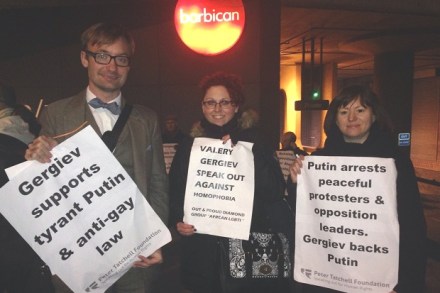
For a moment I thought someone had spiked my tea with LSD. With escalating levels of disbelief, I read Melanie McDonagh’s bizarre account of last Thursday’s protest at the Barbican against the pro-Putin Russian conductor Valery Gergiev. Then, as her article became ever-more divorced from reality, I wondered if perhaps she had been the victim of an acid prankster. Melanie is usually a fine writer. What prompted her to scribble such tosh? She lambasts the ‘barracking’ and ‘bullying’ of Gergiev, describing him as a ‘Russian composer’. Actually, he’s a conductor and he was nowhere in sight that evening. We were on the pavement outside, not in the ‘concert hall’. It was a small, good-natured, peaceful protest.

David Cameron should confront Australia over Nauru asylum detention centre

From our UK edition

Walking a lap of the North Pacific island of Nauru would take you three and a half hours. One kilometre inland, you would glimpse the republic’s phosphate mines. Living hundreds of kilometres from anywhere must sometimes feel like incarceration for the 10,000 or so Nauruans. What makes the republic seem even more prison-like is the way it is used by Australia as a detention and processing facility holding over 800 mostly Iranian asylum seekers. As fellow Commonwealth members, we should be concerned about this dot in the Pacific, and the way that Australia is off-shoring facilities there. Nauru is used by Australia to distance itself from the human face of its asylum problem.

Should Saudi men be allowed to drive?

From our UK edition

It’s important that newspapers make themselves sounding boards for unpopular opinions, especially in an age when identity is sacred and people are judged by having the right views rather than the right behaviour. But we still reserve the right to mock if they are badly argued, such as this Guardian piece arguing that since most Saudi women oppose lifting the driving ban, we should not be campaigning for it. It concludes: ‘People in Saudi Arabia have their own moral views and needs. What works in other societies may not fit in Saudi, and the reverse.

Veiled differences

From our UK edition

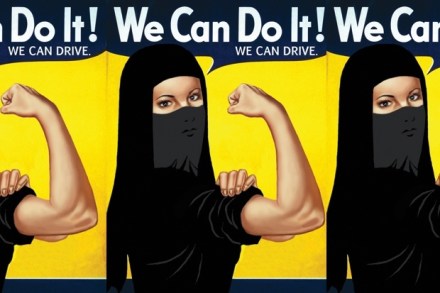
Last night I took part in an interesting debate for Channel 4 News. It was on the wearing of the niqab - or full face veil - in the UK. I think it was my first speaking appearance at the East London Mosque - and certainly the first time I have addressed an audience almost entirely consisting of women whose faces I could not see. Yasmin Alibhai-Brown was, like me, arguing against the wearing of the full-face veil and she made some excellent points. I stayed around afterwards talking to some of the niqabis, and polite and pleasant though most of them were I suppose it reinforced one of the things I tried to point out during the show. Most of these women had London accents and had adopted much of the 'rights' and grievance culture of our society.

There’s a global morality gap — and it’s getting wider

From our UK edition

First World, Third World, East, West, North and South; every few years economists come up with yet another supposedly more acceptable way of slicing humanity into manageable chunks. Mostly these great divides are riven by wealth; sometimes (RIP Second World) by ideology. But I think it’s time to name a new divide, a more fundamental, more puzzling one — a split between worlds that will define the 21st century much as the Iron Curtain defined the 20th. I am talking about the morality gap. It is now clear, though not much talked about, that humanity, all 7.1 billion of us, tends to fall into one of two distinct camps. On the one side are those who buy into the whole post-Enlightenment human rights revolution.

Hugo Rifkind: What is Facebook? 

From our UK edition

I’d never noticed that there aren’t any tits on Facebook. The place always seems brimming with right tits to me. But no. According to this week’s mumbling bien-pensant scandal, the world’s largest social network has decided to allow newsy videos of murder and beheading and all the rest, but still not tits, and this is an outrage. Strangely enough, it’s mainly regarded as an outrage by the sort of people who are normally to be found slamming publications such as men’s mags and the Sun because they minimise the proper news and have tits all over the place. Honestly. Anybody would think these people just like to be cross, or something. In fact there’s very little to get properly cross about on Facebook.

We need a British Bill of Rights – so we can hear less from the likes of Keir Starmer

From our UK edition

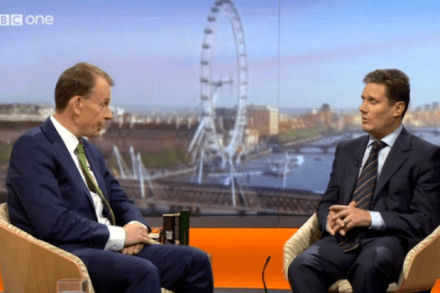
In his five years as Director of Public Prosecutions, Keir Starmer  has shown a striking appetite for (self-) publicity and given the job a higher profile than ever. He’s just informed the world, from Andrew Marr’s sofa, that he’s opposed to plans by the Justice Secretary, Chris Grayling, to tear up the egregious Human Rights Act which is playing havoc with the English justice system. I can see why he's alarmed: the confusion caused by superimposing European law on English law gives huge power to people, like him, who adjudicate. It has encouraged, in England, the emergence of American-style judicial activism.

The worrying ‘hyper-inflation’ of human rights

From our UK edition

There is a term which ought to be in better use – ‘human rights inflation'. This is the means by which the currency of ‘human rights’ – which used to mean things like ‘the right to life’ – becomes, thanks to the addition of endless spurious additional demands, severely undermined. The latest example of this trend has come to light this morning thanks to a Brazilian far-leftist who claims to be working as a rapporteur for the United Nations. As listeners to the Today programme will know (about 2 hours 37 minutes in here) according to Raquel Rolnik the latest inalienable human right is apparently the ‘right to a spare bedroom.

The judicial review row should not be about lawyers – it is about democracy

From our UK edition

The stooshie over judicial review is not about lawyers, although one should be forgiven for thinking otherwise given much of today’s coverage and reaction. Really, it is about the rule of law and representative democracy. So much of the debate around legal reform (not just judicial review) has been skewed by familiar obsessions with ‘human rights’, ‘lefty lawyers’ and ‘right-wing bastards’. Such media tropes are not created ex nihilo. Public administration has become highly politicised, and all sides play the game. I’ve heard government-types talk about the need to break 'lefty lawyers’' perceived monopoly over legal aid and some corners of the judiciary.

Soldiers’ right to protection remains, and so it should

From our UK edition

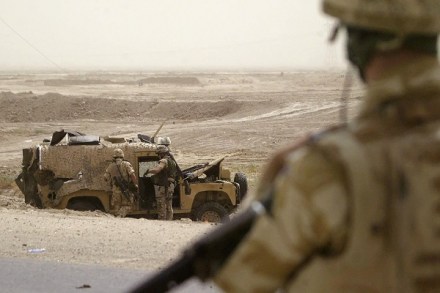
Last week’s Supreme Court ruling in the Snatch Land Rover / Challenger II cases, which allowed the families of four soldiers who lost their lives while serving in Iraq to sue for damages, has provoked some strong opinions. Some say that the MoD is in all ways different from other employers and that it should not therefore be held accountable in the courts. Of course soldiering is not ‘just another job’, but surely it does not follow that we should tolerate the deaths of young British citizens if those deaths are caused by the Government’s failure to provide adequate training or equipment. Soldiers should be no less entitled than the rest of us to protection against negligence and human rights abuses.

The Supreme Court Mothballs the British Army

From our UK edition

The British Army may never go to war again. Not because it is under-resourced and over-stretched but because, as of today, it may no longer be able to afford casualties. That, at any rate, is one thought prompted by the Supreme Court's extraordinary - to my mind - ruling that dead soldiers' families can sue the ministry of Defence for damages. According to the Supreme Court justices, the MoD may have been negligent in its "duty of care" and, consequently, the families may sue the government for failing, apparently, to safeguard the human rights of soldiers killed in Iraq (and, presumably, elsewhere). The court dismissed the MoD's suggestion there might sensibly be "battlefield immunity". I cannot for the life of me understand why. (The whole judgement can be read here.

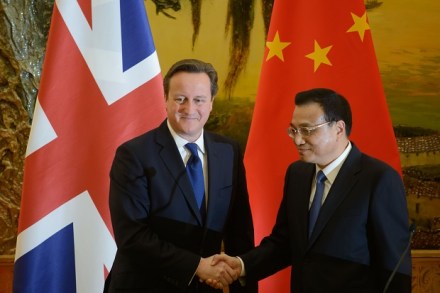
Chen Guangcheng – the brave Chinese activist who David Cameron refused to meet

From our UK edition

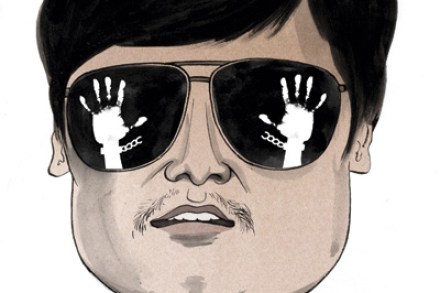
How did a blind Chinese dissident scale the walls of his house while under house arrest, evade government surveillance, travel hundreds of miles to Beijing, seek asylum in the American embassy and in the process shine attention on a horror the world has grown used to? The questions for Chen Guangcheng are legion. Last week I met up with him in London. Chen, who is 41, has been blind since childhood and wears smart dark glasses. At our meeting place in central London — the headquarters of a Christian organisation which has helped arrange his visit — he sits upright, suited and tied, occasionally repositioning himself by feeling the corners of the table. He does not share the world’s fascination with his personal story.

Vladimir Putin meets the Munchkins

From our UK edition

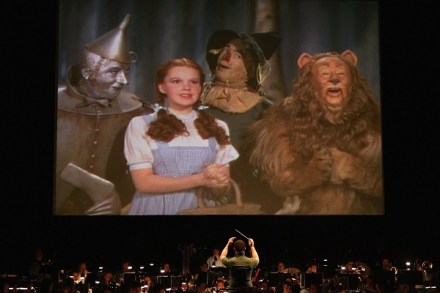
Late on Friday my editor at the Observer called and asked me to dash off a few words on what was wrong with the Mail and some Conservative MPs demanding that the BBC ban 'Ding, dong the witch is dead', a Munchkin chorus, from The Wizard of Oz. I was stuck on a train to Glasgow, but how could I resist? The partially successful attempt to stop the BBC playing a clip from a 1939 children's film is one of the most surreal cases of censorship I have seen. Right wingers were not demanding that the BBC blacklist the song because it was pornographic or libellous. The lyrics the merry Munchkins chirruped were irrelevant to them. They were censoring because they disapproved of the motives of the people who had bought the song, not because of the content of the song itself.

North Korea nukes — China has a hell of a lot to answer for

From our UK edition

Let us be clear — Beijing bankrolled this monster. As Kim Jong-un continues his bellicose bluster, now having moved a second missile to North Korea's east coast, we cannot forget: it's the Middle Kingdom that has for decades funded Pyongyang's armies and kept this cruelest of regimes afloat. Forget Kim's crankiness. North Korea is one of the most gruesome, warped dictatorships the world has ever seen. It's estimated that is has up to a quarter of a million political prisoners, in gulags that are probably beyond human comprehension. When I worked as a journalist in Asia, news would filter through, now and then, of unspeakable acts done in the concentration camps, especially to women and even children.

Reform human rights to save human rights

From our UK edition

The European Convention of Human Rights is developed and interpreted as times change; but is there a democratic imbalance when only lawyers and judges can do this? Particularly where the rights being litigated are not just matters of strict law but properly political issues. It is a valid democratic concern that the Human Rights Act, which brought the European Convention into our own law, may encourage political questions to be converted into legal questions, taken to an unelected judge rather than to Parliament. Such wider political questions affect not just the rights of the individual but of society at large – and many consider that their voices on such matters are not being heard in the appropriate forum: Parliament.

Ministerial aides demand to support backbench vote on foreign criminals

From our UK edition

All eyes are on what's happening with the cross-party amendments to two bits of legislation on Leveson, but this afternoon in the Commons there could well be another row on the Crime and Courts Bill. As we reported last week, Conservative MP Dominic Raab has an amendment to the legislation which would limit the opportunities for foreign criminals to avoid deportation. It has over 100 MPs signed up to it, including Labour grandees such as David Blunkett. But I also understand that a number of Conservative PPSs have contacted their whips saying that they would like to support this amendment and that they want to be given leave to do so. The whips could refuse and place a three-line whip on the proposal, but that hasn't been clarified yet.