Huawei

The grand names on Huawei’s payroll

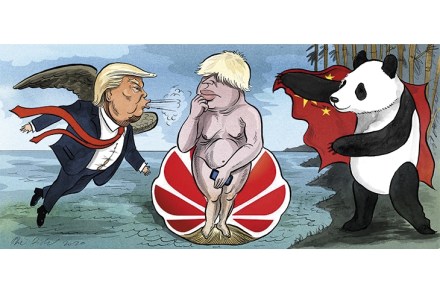
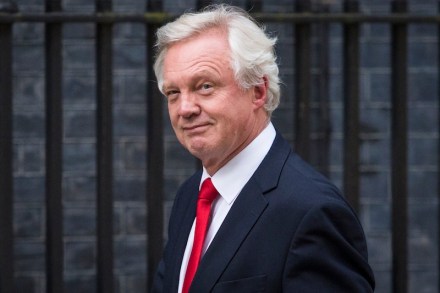
Why is it wrong, some ask, for senior British businessmen, former civil servants etc to work for Huawei UK? After all, it is a major company which needs business experience and advice here. Even now, despite the government’s apparent U-turn, it is not certain it will be excluded from our 5G contracts. Surely the answer is that if a director were to explain frankly to the public how Huawei works, he would have to admit that — whatever its formal ownership structure — it is controlled by and furthers the aims of the Chinese Communist party regime. He would also have to concede that these aims have now become hostile to British and western interests. Ren Zhengfei, the boss, expresses himself in belligerent terms.

The secret behind South Korea’s Covid success

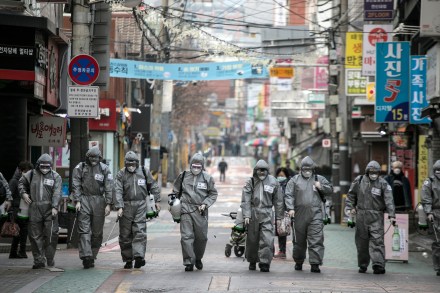
At the start of the pandemic, the situation in care homes looked particularly grim. One report on 19 March said: ‘Experts warn that hundreds of substandard long-term care facilities could serve as hotbeds for the contagious coronavirus.’ The alert came not from Wiltshire or Manchester, but from Park Chan-kyong, Seoul correspondent of the South China Morning Post. There was real fear that the residents of the city’s care homes would become victims of the Covid-19 pandemic. Yet three months on, South Korea as a whole — let alone its care homes — has suffered fewer than 300 deaths nationwide. The world is asking: how? Things have looked slightly worse recently — 49 new cases discovered last week — but this is nothing in comparison with Europe.

Who would want to come to Britain for a holiday now?

All logic suggests that the 14-day quarantine for arrivals from abroad really is, as Michael O’Leary of Ryanair put it, ‘a political stunt’. The best explanation is that it was conceived in Downing Street — with minimal consultation, unless someone rang Armando Iannucci, writer of The Thick of It — as a sop to focus-group xenophobia and parental anxiety, as well as a show of grip after the Dominic Cummings debacle. Its absurdity is highlighted by news that the West Indies cricket squad is now quarantined, while 122 high-goal polo players were reported to have beaten the deadline by slipping in last Saturday on a charter flight from Buenos Aires via the Covid cauldron that is São Paulo in Brazil.

Prepare for a big Huawei U-turn

The UK has made a strategic choice to get ‘off the trajectory of ever-increasing dependence’ on China, I reveal in the magazine this week. This is important as the UK was about to go over the precipice in terms of dependence on China with the decision to allow Huawei to construct a lasting part of the UK’s 5G network. That is now not going to happen. Downing Street describes its previous Huawei decision as a ‘legacy issue’, emphasising how no one was particularly comfortable with the compromise they came up with—Huawei’s role would be capped and it would be kept away from ‘the core’ of the network.

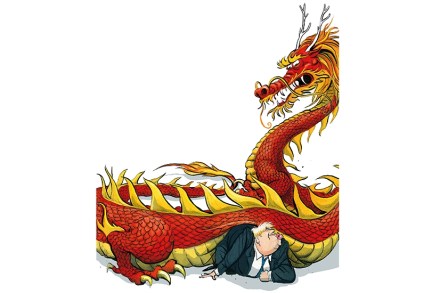
Escaping the dragon: the government’s new approach to China

How will the world be different after coronavirus? Will everything return to the way it was or will there be lasting change? For this country, there is one thing that will clearly be different: the government’s approach to China. I understand that while Boris Johnson’s grand, integrated foreign policy review has been put on hold because of the pandemic, the work on Anglo-Sino relations has been brought forward as a matter of urgency. One of those heavily involved in the development of this new policy tells me that the aim is to get this country ‘off the trajectory of ever-increasing dependence’ on China. The issue is not that Covid-19 emerged from Wuhan but what the crisis has revealed about the Chinese state and the UK’s dependence on it.

Why is Trump protecting a microchip company with close ties to China?

From our US edition

The United States and China are locked in a battle for technological superiority. President Trump has blacklisted tech giant Huawei over concerns the company will leverage its control of 5G networks to spy on behalf of the Chinese Communist party. The crackdown shows the administration is acutely aware of the national security implications of outsourcing network and chip technology. But the concerns don’t end with foreign-owned companies. Qualcomm, US-owned and the one of the world’s largest chip companies, has developed an intensely close relationship with China, potentially making it a trojan horse for communist influence. Qualcomm has been on Trump’s radar.

qualcomm

Cambridge University is kowtowing to China

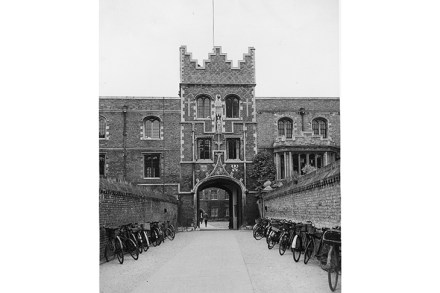
Last month, writing elsewhere, I quoted the website of the China Centre at Jesus College, Cambridge: ‘Under the leadership of the Communist party of China since 1978, [China] has experienced an extraordinary transformation… China’s national rejuvenation is returning the country to the position within the global political economy that it occupied before the 19th century.’ The tone sounded propagandist not academic. This month, all mention of the Chinese Communist party disappeared from the China Centre home page. Now the Centre says it concentrates on ‘mutual understanding between China and the West’, contributing to ‘harmonious global governance’, which should be ‘non-ideological and pragmatic’.

The MP demanding a new approach to China

Six years ago, Neil O’Brien was working for George Osborne when the then chancellor was enthusing about a ‘new golden era’ in Sino-British relations. But now O’Brien, who became the Conservative MP for Harborough in 2017, is one of the founders of the new China Research Group, a group of Tory MPs who are pushing for the government to take a tougher line with Beijing. His best-case scenario is one where the UK and its allies ‘manage to restrain some of the worst behaviours of the Chinese government’. O’Brien’s change of heart sums up the shift in Tory thinking on China.

NABJ cancels Huawei-sponsored misinformation panel

From our US edition

The National Association of Black Journalists (NABJ) was planning to run a panel tomorrow called ‘The Rise of Misinformation’ sponsored by Huawei — a Chinese consumer electronics firm with suspiciously close ties to the Chinese Communist party. Sadly, just over 24 hours before the start time, the NABJ suddenly canceled the event. What happened?A statement released by the NABJ said that the panel had ‘become a distraction from other priorities’, as it ‘had come under attack because controversial technology giant Huawei was planning to sponsor the webinar though it had no editorial control’.

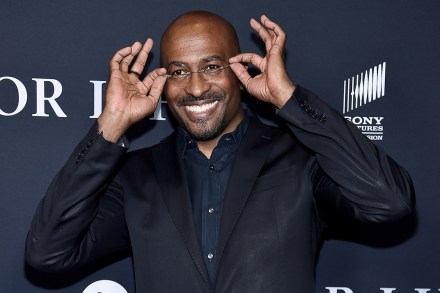
van jones nabj huawei

Sweden and Britain are not the same

Mathias Döpfner is that still rare thing — an outspoken German. I have known him slightly for many years and admire his brain and boldness: a long time ago he even came close to buying the Telegraph Group. The 6ft 7in CEO of Axel Springer has just issued a challenge to Europe and particularly to his own country. In an article published on Sunday, he told Germany that it must stop dithering and choose. The coronavirus, he says, has brought out the great danger the Chinese Communist party presents to the West.

This pandemic has put politics on fast-forward

‘The normal grease of politics is not there,’ bemoans one sociable cabinet minister. Certainly, the whispered conversations in corridors that make up so much of Westminster life are in abeyance during this period of social distancing. The fact that the backbenches and the cabinet have deep reservations about the government’s approach matters far less than it would in normal times. In the Zoom parliament, there is no such thing as the mood of the House. One Tory grandee pushing for a significant easing of the lockdown complains that the current arrangements ‘make it easier for No. 10 to ignore parliament and cabinet’. But contrary to appearances, politics has actually sped up, rather than stopped, during the pandemic.

Fake news is spreading faster than the virus

Just over a decade ago, I published one of those books with an annoying subtitle beginning with the word ‘how’. It was called Counterknowledge: How We Surrendered to Conspiracy Theories, Quack Medicine, Bogus Science and Fake History. My targets included Michael Moore, Creationists and homeopaths. I concluded that we couldn’t stop anyone circulating their ‘counter-knowledge’ on the internet, but we could at least hold to account ‘lazy, greedy and politically correct academics’ who had abandoned scientific methodology in favour of postmodernism. Otherwise, I warned pompously, quoting the title of an etching by Goya, ‘the sleep of reason will bring forth monsters’.

How Bill Clinton junked America’s supremacy

From our US edition

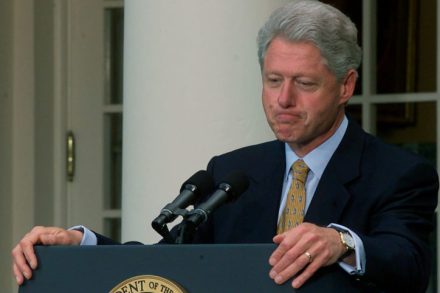
‘This is a good day for America,’ said President Bill Clinton on May 24, the Year of Our Lord 2000. ‘In 10 years from now we will look back on this day and be glad we did this.’ Clinton was talking about the House of Representatives’ vote to award normal trade relations to China. And he was right. By 2010, despite the crash of 2008, the knowledge class still largely considered the decision to support China’s entry into the World Trade Organization as a great boon. China’s rise had turbocharged globalization and made us all richer — never mind the stupefying sovereign debts. Labour unions had opposed it, but leaders and corporations were still enthralled by the gargantuan consumer markets.

President Bill Clinton speaks in the Rose Garden, May 24, 2000 in Washington, D.C. after the China trade vote in Congress.

I tried to warn the National Security Council about China — and was fired for it

From our US edition

The societal implications of 5G — on how we live and how we work — are truly mind-boggling. And so is the capacity to abuse that power. Let’s be totally clear: anything connected to an unsecured 5G network will be a potential weapon that can be used to gain geopolitical influence and control. If China were to control a 5G network, it would be able to weaponize the technology within entire cities — or entire countries — served by that network and hold that city or state at its mercy.

5g national security council

A lesson in survival from pre-21st century Marks & Spencer

When I wrote last week about business-to-business pain-sharing for survival, I was naturally thinking first about UK companies. I say ‘naturally’ because in every aspect of this crisis, ­national interest has, as it were, trumped trans­national co-operation. That’s particularly the case where medical supplies are concerned — as in the US President’s attempt to stop the Minnesota-based manufacturer 3M exporting respirator masks to Canada. But wider questions about global supply chains have been brought into focus by one vivid case: the wipe-out of fashion orders from factories in Bangladesh, Cambodia and Vietnam, whose operatives — low-paid but lifted by their jobs out of greater poverty — are the flagbearers of globalisation en masse.

Coronavirus is a metaphor for our vulnerability over Huawei

Monday night’s Commons rebellion over Huawei was on a surprisingly serious scale for a new government with a big mandate. The problem for the government is not just the actual danger of our security being breached by Huawei, real though that is. It is also strategic. The government is not treating the subject this way, but sees it as merely a matter for the Department for Digital, Culture, Media and Sport. This is a bad mistake. We have achieved Brexit. We are making our own way in the world. Our closest allies in terms of trust, language, cultural links, democratic values and shared interests are our four partner nations in the ‘Five Eyes’ deep intelligence partnership — the United States, Canada, Australia and New Zealand.

Coronavirus is a metaphor for Britain’s vulnerability over Huawei

From our US edition

Monday night’s House of Commons rebellion over Huawei was on a surprisingly serious scale for a new government with a big mandate. The problem for the UK government is not just the actual danger of our security being breached by Huawei, real though that is. It is also strategic. The government is not treating the subject this way, but sees it as merely a matter for the Department for Digital, Culture, Media and Sport. This is a bad mistake. We have achieved Brexit. We are making our own way in the world. Our closest allies in terms of trust, language, cultural links, democratic values and shared interests are our four partner nations in the ‘Five Eyes’ deep intelligence partnership — the United States, Canada, Australia and New Zealand.

huawei

Washington is furious at Boris’s Huawei bid

Boris Johnson faced his first major rebellion of the new parliament on Tuesday. Parliamentarians are waking up to the fact that this decision has far greater diplomatic ramifications than was originally appreciated. Despite their sizeable majority, the government narrowly avoided defeat and will be vulnerable when future bills relating to Huawei are tabled. The reaction in Washington DC to Boris Johnson’s decision to allow Huawei to tender for the 5G contract validates the concerns of the new 'awkward squad' of former cabinet ministers and Tory select committee chairs. Rarely have Democrats and Republicans been so united.

Tories rebel over Huawei – meet the new ‘awkward squad’

This afternoon Boris Johnson came close to losing a Commons vote for the first time since the election. Over 30 Tory MPs broke a three-line whip in order to protest over the government's decision to allow the Chinese company Huawei to be involved in the UK's 5G network. The government saw off the rebellion by Tory MPs over an amendment calling for Huawei to be removed from the 5G network in two years time if it is still deemed 'high risk’ by British cybersecurity experts by 306 votes to 282. This means that the government's working majority of 87 was cut to 24. The rebellion was spearheaded by Iain Duncan Smith who was backed by Damian Green, David Davis, Owen Paterson, Tom Tugendhat and Bob Seely.

We should be wary of our spooks’ complacency about Huawei

I might be feeling more confident about the government's decision to give Huawei a limited role in building Britain's 5G network, 'on the advice of intelligence agencies', were I not reminded of the effectiveness of British spooks by the recent appearances of Alexandre del Valle on French radio. Del Valle is the author of numerous books on Islamism and the Middle East, a knowledge accrued over many decades, including a spell in the late 1990s working for France's General Secretariat for Defence and National Security, an inter-ministerial body answering to the Prime Minister. His latest book, The Project, explores how the Muslim Brotherhood has successfully spread across the West, and to promote the book he's been giving a series of media interviews.