Housing

Save our grey belt!

From our UK edition

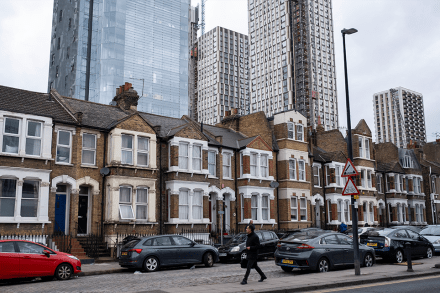
While working as a callow speechwriter for the Labour party in the mid-1980s, I suggested to a member of the then shadow cabinet that perhaps we should do something in support of the teachers, who were clamouring for more money. ‘Sod them, they’re all Tories,’ came the response. Well, how times change – and also how little. This supposedly marginal land is in danger of disappearing, and with it the wildlife that abounds These days there are just nine teachers in the country who vote Conservative and they keep their heads down in case a colleague dobs them in for the hate crime of existing. However, the principle of helping only those who voted for you seems to have been continued by Labour down the years.

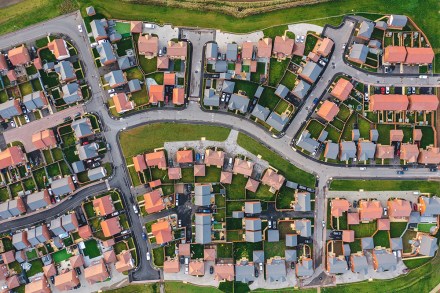
What the Tories got wrong on housing

From our UK edition

Sir Keir Starmer may be our first atheist prime minister, but his manner in parliament resembles that of what, in House of Lords terminology, is called a ‘Most Reverend prelate’. There is a lot of sonority about serving others, disagreeing well etc. These are good sentiments but, when trying to be good, ‘show, not tell’ is better. Adopting an archiepiscopal tone, a political leader is quickly tripped up. For example, Sir Keir wants to drive peers aged over 80 out of the Lords, thinking this conducive to the public good; and yet, as I write, he is having his first much-prized bilateral with Joe Biden, who is six years older than the Nato alliance whose 75th anniversary western leaders have gathered to celebrate.

How Elon Musk could solve the housing crisis

From our UK edition

People sometimes ask me why I don’t go into politics. Why on earth would I do that? No, if you want to exercise power and imagination, the only remaining role which appeals is to be some kind of Bond villain. To anyone familiar with modern bureaucracy, there’s something hugely attractive about an organisation where the HR department is replaced by a pool full of sharks. I think this fantasy largely explains why electorates are now drawn to candidates who seem a tiny bit sinister or weird. ‘Who knows?’ they think. ‘They might actually do something different.’ Never mind Trump: my guess is that if Elon Musk were eligible to run for president, he’d get 60 per cent of the vote.

Unless the Treasury is tamed, there’s no solution to Britain’s problems

From our UK edition

The Tory era is not (quite) over yet, but already the obituaries are in. In particular, two new books from Torsten Bell and Paul Collier seek to bury not just Rishi Sunak and his cabinet but the whole economic approach that the Conservatives have taken since 2010, or perhaps even 1979. Let’s start with Bell – until very recently head of the Resolution Foundation thinktank, and before that the man who, as Ed Miliband’s policy director, gave us the joy of the EdStone. Great Britain? sets out a comprehensive list of the ways in which we have become a ‘stagnation nation’: low investment, high inequality, insufficient house building, stingy benefits, low-paid labour and so on.

Live the high life… in a mid rise

From our UK edition

How radically left-wing is Labour’s proposed ‘renationalisation’ of the railways? Though militant Mick Lynch of the RMT union ‘strongly welcomed these bold steps’, the real answer is: hardly at all. The revolutionary socialist group Counterfire agonised thus: ‘While it would be extremely obtuse to say that Labour’s policy is bad, it would be naive to say it was adequate, let alone particularly socialist.’ I’m struggling to disagree with that summary. The central idea of taking train operating franchises into public hands as they expire comes as no shock: LNER, Northern, Southeastern and the dreadful TransPennine Express have already met that fate, along with Scottish and Welsh trains, and those that remain private are largely despised by passengers.

Louis XIV would envy your life

From our UK edition

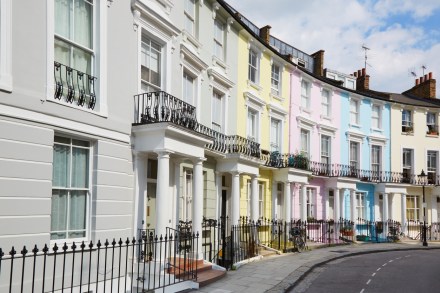
Some things in life acquire an outsize popularity which defies all common sense. The outlandish appeal of such things cannot be explained except by reference to René Girard’s theory of mimetic desire – the idea that there are many things we value not for their intrinsic utility and enjoyment but because we see that other people want them. Examples of such positive feedback loops in excess fashionability would include sourdough bread, Miss Taylor Swift and houses in Clapham or Fulham. Property is simply a stupid, rivalrous, uninnovative, rent-seeking repository for people’s money Fulham, for instance, is so far west it should have its own time zone.

Who uses Grindr? 

From our UK edition

Meet market Who uses the gay dating app Grindr?  – The site claims 27m users worldwide, 80.5% of whom identify as gay. – 13m users are active on a monthly basis. Some 923,000 are paid users. – 80% are younger than 35. – 39% are single. – 48% are in the US. – The average user is on the site for 60 minutes per day. – The ‘explore’ feature – which allows users to see who on the app lives in a particular town or city – is accessed more in London than any other city in the world. – Grindr accounts for 3% of global use of dating apps. The most popular is Tinder, which accounts for 27% of global use. Source: grindr/businessofapps.

Jeremy Hunt should stick to sensible pledges – it’s too late for big moves

From our UK edition

Imagine you’re Chancellor Jeremy Hunt, drafting your Autumn Statement for delivery in three weeks’ time. Bookies’ odds for a Tory general election win have moved out to six-to-one (against Labour’s dead-cert one-to-seven) following by-election wipe-outs. The Lib Dems look set to nab your South West Surrey seat if you don’t stand down anyway. And you can’t give your back-benches red-meat tax cuts because public borrowing for this year could run £30 billion higher than forecast. Releasing the pension ‘triple lock’ to save money would alienate older Tories. Inheritance tax giveaways that might please them would be campaign gold for Labour.

I’m not convinced Thomas Heatherwick is the best person to be discussing boring buildings

From our UK edition

Architects are often snobby about – and no doubt jealous of – the designer Thomas Heatherwick, who isn’t an actual architect yet still manages to wangle important building commissions. And he knows this. In his documentary for BBC Radio 4, Building Soul, where he examines what he calls the ‘blandemic’ in today’s architecture, he asks to interview fellow Spectator writer Jonathan Meades, who responds: ‘The last person who should be doing a series on urbanism is a designer.’ Heatherwick wears this as a badge of honour. Indeed, qualifying as an architect is no guarantee of quality – check out the past nominations for the Carbuncle Cup, the now defunct prize for the ugliest building in Britain.

What’s behind the bungalow boom?

From our UK edition

‘Bungalows are almost perfect,’ as the old gag goes. ‘They only have one floor.’ But these once unfashionable properties are rapidly becoming anything but a joke. While the mortgage crisis is cooling most sectors of the housing market, demand for bungalows is growing. Estate agents report the properties receiving dozens of offers, selling for tens of thousands over the asking price or being snapped up before officially going on the market. The usual breed of downsizers and retirees looking to replace large family homes with something all on one level are facing stiff competition from budget-conscious purchasers seeking to renovate single-storey homes – and often turn them into family homes with stairs.

In praise of the suburban semi

From our UK edition

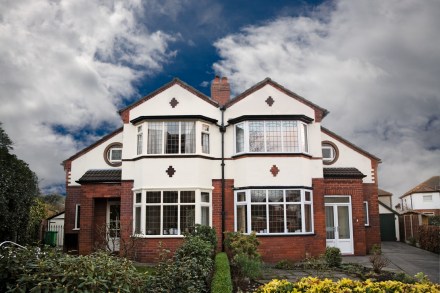
In 1939 George Orwell took aim at burgeoning British suburbia and its population of lower middle class lackeys in his novel Coming Up for Air, memorably describing the new homes being built on the fringes of cities as ‘semi-detached torture chambers where the poor little five-to-ten pound a-weekers quake and shiver'. More than eight decades on and the Office for National Statistics reports that one in three of us lives in a semi-detached home, an architectural style with a far longer and more interesting history than Orwell may have been aware of. They are also – officially - the hottest property type on the market. Analysis of more than 100,000 house sales over the past year by sales firm Property Solvers found that semis took an average of 150 days to sell.

Are mortgage rates the next crisis?

From our UK edition

The average two-year fixed mortgage now sits at 6 per cent, according to financial data group Moneyfacts – just below the 6.65 per cent reached in December last year, after the fallout from Liz Truss’s mini-Budget. Five-year fixed rates aren’t too far behind, at 5.7 per cent. For many of the 2.4 million homeowners whose mortgages are up for renewal between now and the end of next year, this is, at best, cause for alarm. At worst, it’s an alert to a crisis. Later this week, we’ll get last month’s inflation data – and the next rate update from the Bank of England. Threadneedle Street’s dilemma is only getting worse. Between core inflation rising last month (from 6.1 per cent on the year last April to 6.

At home with Jacob Rees-Mogg

Before I arrived at Gournay Court, Jacob Rees-Mogg’s seventeenth-century home in Somerset, I’d missed the main event. Beforehand, I’d asked the Conservative Member of Parliament to lean in to whatever our photographer asked — and somehow, before I turned up an hour late, she managed to get him in a nearby field feeding sheep from the palm of his hand. He didn’t seem to mind. In fact, there were only a few times he said no to our increasingly deranged demands. Once was after we asked him to get up on the humongous dining room table, spread his legs and act natural. “Well, I couldn’t possibly do that,” he replied. When you drive up to Gournay Court, you encounter what I can only describe as the quintessential British upper class. Think afternoon tea at the Savoy.

Rees-mogg

Why developers deserve to pay for the cladding crisis

From our UK edition

In recent months, Michael Gove has been upsetting not only the house-building industry but its defenders, too. The Levelling-up Secretary has been accused of ‘blackmail’ by online newspaper Cap X, which compared his actions to ‘Putin’s Russia or Erdogan’s Turkey’. The Telegraph mocked him up on a wrecking ball Miley Cyrus-style, and several trade press articles have accused him of ‘declaring war’ on the industry. The reason? Gove has ordered housing developers to pay for ‘life safety’ remediation measures on blocks they built, which have been found to have serious fire safety defects in the aftermath of the 2017 Grenfell Tower fire – regardless of whether they were to blame for the flaws or still own the building.

How the bottom fell out of the prime country market (again)

From our UK edition

As trophy homes go, the Grade II*-listed Glen Usk is hard to top. Set on the west bank of the River Usk in Wales, it is a white rendered neoclassical fairy-tale of a Georgian country house and its current owners have thoroughly renovated the eight-bedroom home, set in 35 acres.  At the tail end of 2021 it went on the market with estate agent Fine & Country for £6.5 million. In November the Monmouthshire property’s price was dropped by £2 million after failing to find a buyer (and also to reflect a decision to reduce the amount of land to be sold with it from 75 acres to 35). Three months later, it is still on the market.

Why are experts always wrong about house prices?

From our UK edition

Over the past two generations, those with property in the UK have been unwittingly transformed from owners to investors. This makes no sense, and has led to a lot of baby boomers feeling smug and clever when in reality they’ve just been lucky. However, the effect has been lasting and means property owners are now a politically valuable group – and that what your house is worth has disproportionately strong influence on how rich you feel. And of course, now that everyone has an interest in the value of their home, there are plenty of supposed experts willing to pretend they’re helping you look ahead to see what will happen in the market. It’s particularly prevalent at this time of year, i.e.

A house-hunter’s guide to haggling

From our UK edition

Not so long ago buyers were treating house-hunting as a blood sport – price ceiling-shattering bids and gazumping were commonplace everywhere from the Cornish coast to the London suburbs to the Lake District. But six months is a long time in property. Following the debacle of the mini-Budget and amid rising interest rates and soaring living costs, not to mention looming recession, the power balance in the market has firmly shifted. Vendors can no longer sit back and wait for the offers to pour in.  Buyers who don’t have to move are increasingly taking a wait-and-see approach. Those still up for a move are determined not to overpay, often hoping to factor in future price falls to insulate themselves against negative equity.

The truth about why we hate estate agents

From our UK edition

Once again estate agents have been named among the least-trustworthy people in Britain, rated in the public consciousness somewhere between politicians and journalists (ouch). Less than a third of people believe agents tell the truth, according to the annual Veracity Index from market research firm Ipsos Mori, which tracks consumer trust in particular professions – less than the same time last year. Many of us have our own horror stories of widespread chicanery in the sector: when moving house recently, for example, I was informed I would not be permitted to view a house I was interested in until I agreed to list my flat with the selling agent first.

Is North London’s housing market recession-proof?

From our UK edition

Of all the suburbs in Britain none has become quite so politicised as North London. This slightly leafy (and lefty) swathe in and around Islington – with Hampstead Heath marking its northern edge and Regent’s Park its southern boundary – is treated by our recent political leaders as a kind of shorthand for, to borrow a phrase from Suella Braverman, the ‘tofu-eating wokerati’. Liz Truss took a dig at her privileged metropolitan enemies who ‘taxi from North London townhouses to the BBC studio’ to criticise her, ignoring the fact that Islington is not all Upper Street boutiques and multi-million pound homes. Islington is one of London’s most deprived boroughs, and more than a third of children in Camden live in low-income families.

House of cards: why are so many property sales collapsing?

From our UK edition

Moving house is said to be one of the most stressful life experiences, right up there with bereavement and divorce. But what about the stress of not moving? Amid the upheavals of the past few months increasing numbers have seen their property ladder dreams collapse around their ears. According to market analyst TwentyCi there has been a ‘sharp increase’ in the number of deals falling through. More than 90,000 agreed sales disintegrated between July and September, an 18 per cent increase on the same period in 2019. Wendy and William Waterton know exactly what it feels like to be on the sharp end of a collapsing sale. In the past two years it has happened to them twice. The couple bought their one-bedroom starter flat in Woolwich, south-east London, for £320,000 in 2017.