Peter Apps

Peter Apps is a contributing editor at Inside Housing and author of Homesick: How housing broke London and how to fix it.

‘Build baby build’ is not a housing strategy

From our UK edition

There are too many middling politicians in this country who look at Donald Trump with envy. I might not like his politics, they think, but isn’t he such a great communicator? Don’t you see how good he is at speaking to normal people? What could we learn from this? The answer, of course, is nothing. History tells us that governments can ask for huge increases in the volume and speed of house building, or a proper focus on quality and safety, not both. Trump succeeds at being Trump because he is nothing like most politicians. He has built a character over decades of TV series, pro-wrestling cameos and a flashy, moneyed, highly public life of excess. Staid, serious politicians on this side of the Atlantic only embarrass themselves by attempting to ape his style.

Blair’s government can’t escape blame for the Grenfell disaster

From our UK edition

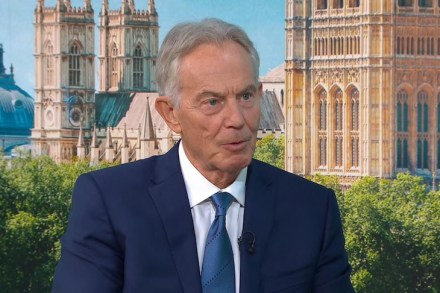
‘This is a difficult thing to say, but it's the honest truth – however good your system is and however well-intentioned it is, and however hard people work, they're going to make mistakes.’ So said former prime minister Tony Blair on Sky News on Thursday – in response to being asked whether the Grenfell Tower fire represented ‘a failure of leadership’ by government.  This was a system which Blair’s governments had more than a small hand in creating It’s possible that Blair – who spends his time these days trotting around the world representing his modestly named ‘Tony Blair Institute for Global Change’ – doesn’t really know much about what caused the Grenfell Tower fire and what the landmark report into it revealed on Wednesday.

Why developers deserve to pay for the cladding crisis

From our UK edition

In recent months, Michael Gove has been upsetting not only the house-building industry but its defenders, too. The Levelling-up Secretary has been accused of ‘blackmail’ by online newspaper Cap X, which compared his actions to ‘Putin’s Russia or Erdogan’s Turkey’. The Telegraph mocked him up on a wrecking ball Miley Cyrus-style, and several trade press articles have accused him of ‘declaring war’ on the industry. The reason? Gove has ordered housing developers to pay for ‘life safety’ remediation measures on blocks they built, which have been found to have serious fire safety defects in the aftermath of the 2017 Grenfell Tower fire – regardless of whether they were to blame for the flaws or still own the building.

Why disabled people will be forced to stay in burning high-rises

From our UK edition

‘Grenfell is a story about a failed evacuation.’ These are the words of Professor Ed Galea, an internationally respected expert in fire safety and evacuations who, among other things, wrote a pivotal study into the attempted evacuation of the World Trade Centre on 9/11. But this is something the British state, and particularly the Home Office, appears utterly unable to accept. For decades, this country has relied on telling residents in burning tower blocks to ‘stay put’. This has been baked into the way we build our high rises: we require walls, floors and ceilings to effectively break the building up into a series of small, fire resisting boxes.

The state failures that led to the Grenfell Tower fire

From our UK edition

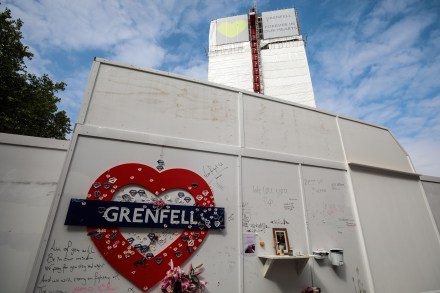
This month, five years after the Grenfell Tower fire and four years after the inquiry began, ministers will finally be called to account for the government’s failure to prevent the awful fire. Four former Conservative ministers and one Liberal Democrat will be cross examined – with the inquiry focusing on the years following the Lakanal House fire, which killed six in south London in 2009. But the evidence heard in recent weeks – from former civil servants and representatives of organisations which advise government on fire safety – has already exposed what looks and sounds like a monstrous abdication of the state’s duty to protect the lives of its citizens.

London also needs ‘levelling up’

From our UK edition

‘The further a person is from one of our great capitals—whether it is London, Edinburgh, Cardiff or Belfast – the tougher life can be,’ Michael Gove told the House of Commons on Wednesday. It is his mission, as the first holder of the ludicrous title of secretary of state for levelling up, housing and communities, to fix this situation. But is it true? It may come as some surprise to the people of Barking and Dagenham in east London, where 48 per cent of children live in households considered to be experiencing poverty, that they are among the most privileged in the UK. It may also be surprising to the occupants of, for example, the Shankill Road in Belfast that their postcode offers them privileges not available to the market towns of northern England.

The scandal of the government’s cladding cover-up

From our UK edition

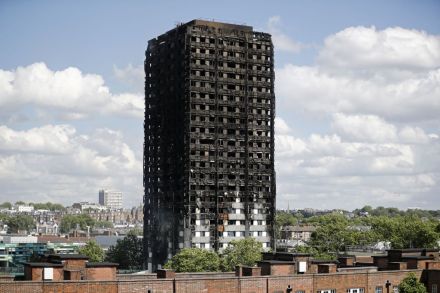
The Number 10 Christmas parties during lockdown have dominated the news agenda in recent days – and for good reason. But there has arguably been an even bigger government scandal brewing, one which has largely been overlooked in Westminster. On Tuesday the government told the Grenfell Tower Inquiry that it was ‘deeply sorry’ for the ‘past failures’ which contributed to the devastating 2017 fire which killed 72 people. Apologies always come in varying forms of breadth and sincerity and this one (as is often the case when delivered by an expensive QC) was carefully limited.

The dark side of ‘insulating Britain’

From our UK edition

Let me start with some statements of fact. The planet is heating up dangerously fast with devastating consequences for everyone that lives on it and if we don’t stop pumping carbon into the atmosphere we have no future as a species. In the UK, a major source of our carbon emissions comes from homes and a large part of that is because we burn gas whenever we put the radiators on. Each UK household emits around 2.7 tonnes of carbon every year heating their home. That’s utterly unsustainable and must stop. To some the answer is to insulate our homes so tightly that we no longer need to use much energy heating them, if any at all.

How the residents of Grenfell Tower were failed

From our UK edition

In April 2010, seven years before the building was burned to the ground, a smaller fire broke out at Grenfell Tower, leaving three residents injured and exposing a serious problem with the block. Instead of funnelling smoke out of the building, the tower’s smoke extraction system simply moved it up to higher floors. This was extremely worrying in a block with just one escape staircase. ‘Should a fire occur in the staircase of Grenfell Tower, there will be no escape route for residents of Grenfell Tower,’ wrote leaseholder Shah Ahmed in May 2010. ‘This raises serious health and safety issues and could trap the residents of building in a fire with no escape.

Cladding risks creating a political crisis for the Tories

From our UK edition

Today, for the third time in as many months, MPs will vote on an amendment to prevent the costs of removing cladding and fixing other fire safety defects being passed on to residents. For some time now, thousands of British homeowners have been left fearing for their lives and facing ruinous bills after fire safety issues following the Grenfell Tower fire were identified in tens of thousands of tall and medium rise buildings across the country. In most cases, building owners have been able to charge individual flat owners to fix the defects, even though their apartments were signed off as safe under government regulations at the time.

The dark heart of the cladding scandal has been exposed

From our UK edition

The Grenfell Tower Inquiry has exposed the dark heart of the building safety crisis in recent weeks, as it examined the role of cladding and insulation firms in causing the fire. We have learned that the products used in the tower’s cladding system were known to be severely flammable and that tests pointing this out were suppressed by the manufacturers as they chased lucrative contracts for high rise buildings. There is no underplaying the size of what has been revealed by this section of the inquiry. This is a monstrous corporate scandal, enabled by failures of some of the construction sector’s most respected institutions.

Six ways the state failed to prevent the cladding crisis

From our UK edition

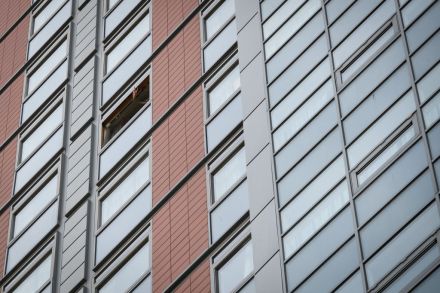
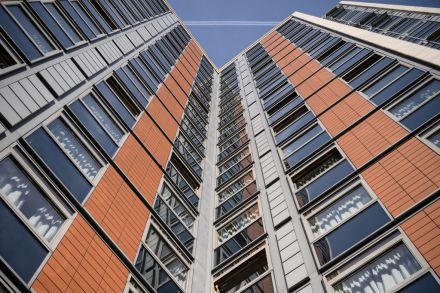
Talk to anyone for long enough about the UK’s building safety crisis and you soon will be asked: why are we in such a mess? Why, in one of the wealthiest countries on earth with a functioning planning and regulatory system, are thousands of people currently trapped in homes built with dangerous and combustible materials? How could we have allowed so many unsafe buildings to be built, signed off, sold and inhabited for all these years? Like all questions of this scale, there are multiple answers which combine to form a complex picture. But while people are quick to draw conclusions about reckless builders cutting corners, there is less awareness of the role successive governments and their industry guidance have played in creating the crisis.

The ‘cladding tax’ could end up being a disastrous mistake

From our UK edition

Since the first buildings with dangerous cladding were discovered in the aftermath of the Grenfell Tower fire, one question has hung continuously over all efforts to make them safe: who is going to pay? Now, after three and a half years of stilted progress, the government appears to be on the verge of answering that question. The answer it is reaching for could prove to be the most controversial and politically damaging mistake since the building safety saga began. The government’s current proposal began when Michael Wade, an insurance guru, was drafted by the Cabinet Office to help find a solution to the cladding problem.

The most shocking moments from the Grenfell Tower Inquiry in 2020

From our UK edition

In the past year, a series of horrifying details have emerged from the Grenfell Tower Inquiry, as it began to examine the companies which manufactured and installed dangerous cladding and insulation on the tower block. Taken together, they point to an enormous corporate scandal. Below are seven of the most shocking revelations from the Inquiry this year: 1. ‘There is no point in fire stopping, as we all know; the ACM will be gone rather quickly in a fire’ This email, first disclosed in January, drew audible gasps from the public gallery when it was read out. It was sent by Daniel Anketell-Jones, design manager at the subcontractor Harley, which installed cladding on Grenfell Tower.

The Grenfell Tower inquiry is uncovering a major corporate scandal

From our UK edition

A picture of an enormous corporate scandal has emerged at the Grenfell Tower inquiry to little fanfare over the last three weeks. The mammoth inquiry has been slowly going through the evidence surrounding the build-up to the fire, which killed 72 people in June 2017. Until November, it had been examining the fitting of the deadly cladding system to the walls of the building. What the inquiry revealed was dispiriting but predictable: pennies were pinched, no one in an enormous chain of construction professionals took responsibility for key safety decisions, and the external oversight of their actions was almost non-existent. In recent weeks though, the tone of the inquiry changed, and the revelations have become considerably more startling.