Hong kong

The real reason for Pope Francis’s disgraceful Pompeo snub

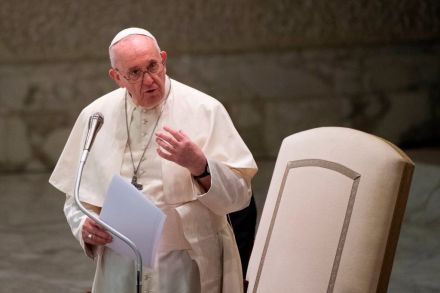
Why did Pope Francis refuse to meet Secretary Pompeo in Rome this week? The obvious answer is that he didn’t want to confront the diabolical consequences of renewing the Vatican’s 2018 deal with the Chinese Communist party. These go beyond the harassment of loyal Chinese Catholics who now find themselves forced by the Pope to recognize party stooges as their own bishops. We’ve never seen the text of the Vatican-Beijing pact, and we won’t be informed about the terms of its renewal, but it’s clear that somehow President Xi has also secured Francis’s silence on China’s genocidal campaign against the Uighurs.
pope francis

Why poetry matters

From our UK edition

Juan Carlos, ex-King of Spain, behaved foolishly in relation to money and sex, and so his decision to leave Spain is sad, but justified. That seems to be the view of most moderate people outside Spain who are not ill-disposed to the monarchy. But it is it right? Certainly Juan Carlos’s foolishness was real, but his imposed exile (it is not really voluntary) to the Dominican Republic is not a punishment for a crime: there has never been any legal process. It is a partisan political act which is bad for the unity of Spain. Juan Carlos’s exile was forced on the current King, his son Felipe VI, by a weak prime minister, the Socialist Pedro Sanchez.

Welcome to authoritarian Hong Kong

From our UK edition

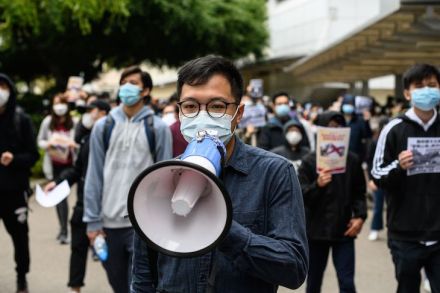
The national security law in Hong Kong has been passed for just over a month, but the scope of Beijing's plans are now clear. This is a constitutional coup. The safeguards which have historically defended human rights in Hong Kong have been shattered. Rule of law has been replaced with rule by law – and the Communist Party's word is law. Thursday 30 July brought home the reality of the new status quo. Hong Kongers woke up to the news that four young people aged between 16 and 21 years old – representing a small group of students who campaigned for Hong Kong independence last year – heard a midnight knock on the door and were arrested. Their crime? Posting on social media, or ‘organising and inciting secession’ in the new dystopian Hong Kong.

Portrait of the week: Vaccine hopes, the Russia report and a knighthood for Captain Tom

From our UK edition

Home A coronavirus vaccine developed by the University of Oxford, tested on 1,077 people, was found to induce antibodies and T-cells that could fight the virus. Boris Johnson, the Prime Minister, said he hoped for a ‘significant return to normality from November, at the earliest, possibly in time for Christmas’. At the beginning of the week, Sunday 19 July, total deaths from Covid-19 stood at 45,273, with a seven-day average of 68 deaths a day. But Professor Carl Heneghan of Oxford University discovered that anyone who had tested positive for coronavirus but died later of another cause was included in the Public Health England figures. The Queen knighted Captain Sir Thomas Moore, aged 100, on the grass of Upper Ward in Windsor Castle.

Does classical Athens give us a clue to China’s next move?

From our UK edition

In 1984, China agreed a ‘one country, two systems’ treaty with the UK, designed to control the relationship between Hong Kong and China for 50 years after Britain ceded control of the colony in 1997. It has now broken the treaty, for no other reason than that it can. So what next in that tinderbox? Classical Athens was at war three years out of four, and if arbitration had failed to solve the treaty problem, it would have gone to war. No Greek preferred war to peace, but fighting for life and territory was simply a given of the ancient world.

Is Taiwan the next Hong Kong?

From our UK edition

The fate of Hong Kong should make us worried about Taiwan. China’s introduction of a new security law for Hong Kong — which hollowed out the spirit of the ‘one country, two systems’ notion — is a powerful reminder of the importance of sovereignty for the Chinese Communist party. We should ask whether Taiwan is next on the list. In the past few months, as the world battled to control the Covid-19 pandemic, Beijing indulged in increased military activity across the Taiwan Strait. The purpose was to remind the newly re-elected Taiwanese president, Tsai Ing-wen, that Taiwan is an inherent part of China and that there is no alternative to reunification with the mainland by 2049.

Farewell, dear Hong Kong

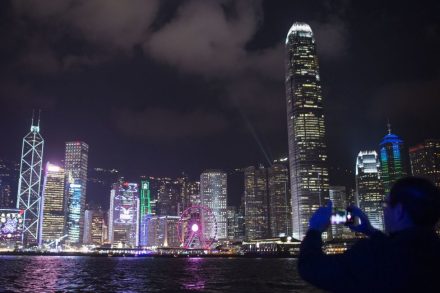
There was no way to know that the last trip I took to Hong Kong just a few years ago would likely be my last. I assumed we still had another 27 years before Hong Kong and China’s ‘one country, two systems’ framework reached its end, but Beijing had other plans. Increasingly emboldened in its domestic social control and assertive in its foreign policy, the Chinese government broke its promise when it sidestepped Hong Kong’s legislature to pass a sweeping national security law targeting ‘secession’, ‘subversion’ and ‘collusion’. These concepts are so broadly-defined as to be easily weaponized against even a nominal critic of the CCP, with a possibility of life in prison as punishment.

Hong Kong skyline

Gracious China allows athletes to speak out on social issues again

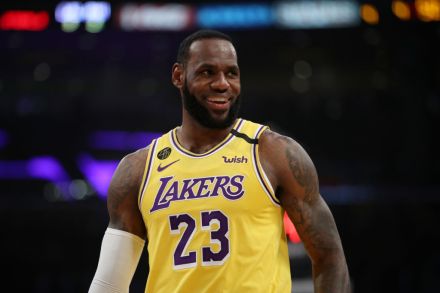
Even after China unleashed a viral pandemic on the planet, crashing the world economy and killing thousands, we all find ourselves in their debt. You see China has been magnanimous enough to let those who matter most in America finally begin to weigh back in on social and political issues: our beloved professional athletes.Remember when China stopped NBA players from speaking about what was happening in Hong Kong? That now seems a long time ago. This past week has seen a flurry of professional athletes finally stand up and speak out against a racist government and police brutality. At an Atlanta rally in the wake of the shooting of Rayshard Brooks, Atlanta Hawks head coach Lloyd Pierce spoke about the protest movements happening across the world. What about China?

lebron james china athletes

Letters: Did Bristol really want to see Colston fall?

From our UK edition

Hong Kong’s success Sir: Carl Heneghan and Tom Jefferson are right to compare the UK’s Covid-19 response with Hong Kong’s (‘Who cared?’, 6 June). We write as UK-trained emergency physicians, who have worked as specialists in both the UK and Hong Kong. In many ways, the economic and healthcare contexts are similar. The majority of care is delivered at minimal cost to the patient at the point of care; we share similar per capita GDP and human development indices. But we responded very differently to Covid. In Hong Kong, initially all patients with possible Covid were admitted to hospital until they tested negative. No one with suspected Covid was transferred to care homes. Healthcare staff, patients and the public routinely wear surgical masks.

Letters: What Hong Kong really needs from Britain

From our UK edition

Hong Kong’s future Sir: So we have a moral duty to protect the people of Hong Kong and guide them back to the golden world which existed before 1997 under British rule (‘Let them come’, 6 June)? Come off it. It is true that the hope behind the 1984 Joint Declaration was for HK to move gradually to stronger democratic forms, although under the direct authority of the government of the PRC, as it had been with the UK. What has destabilised Hong Kong and alarmed Beijing is digital grass-roots empowerment — the same thing that half the world’s governments are facing. In Hong Kong it appears in a particularly virulent form. The Chinese have their own way of trying to police it.

What is Dominic Raab not telling us about Hong Kong?

From our UK edition

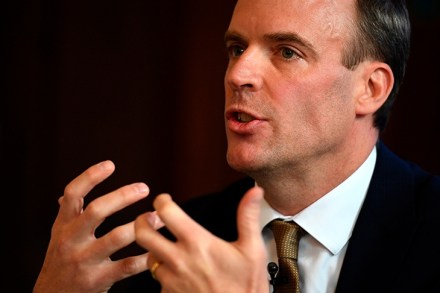
The government’s promised ‘pathway to citizenship’ to Hong Kong people is wonderful, but has the Foreign Office arranged a get-out clause? Last week, Dominic Raab told parliament that ‘if China enacts the [proposed new security] law, we will change the arrangements for British National (Overseas) passport holders in Hong Kong’. He added, however, that ‘We do not oppose Hong Kong passing its own national security law’. Behind this lies the fact that the Basic Law of Hong Kong, arising from the Sino-British Agreement of 1984, prescribes that Hong Kong ‘shall enact its own laws to prohibit any act of treason, secession, sedition or subversion against the Central People’s Government’. So far, it has not done so.

Don’t compare the nationwide riots to Hong Kong

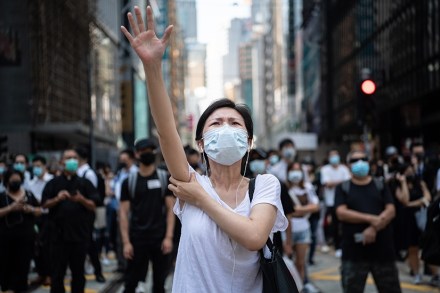
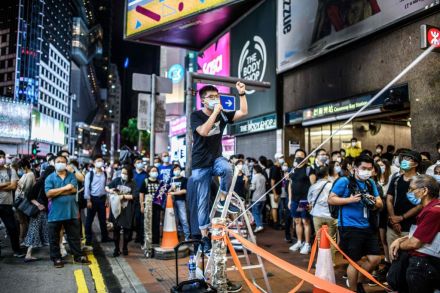
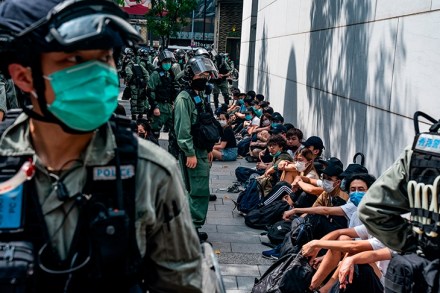
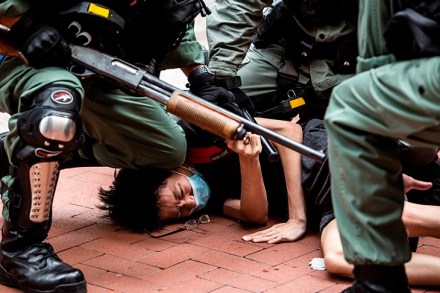
As soon as the unrest began in Minneapolis, the inevitable comparisons with Hong Kong began. We saw throngs of masked demonstrators take to the streets holding placards and chanting slogans while police in riot gear discharged rubber bullets, pepper spray and tear gas. We saw skirmishes in which protesters were pinned to the ground with excessive force. We saw smoldering barricades and burning police vehicles. But that’s where the superficial similarities between the two protest movements end. Hong Kong’s protests began as a revolt against the controversial extradition bill (which would have allowed extraditions to mainland China). It built upon past pro-democracy movements and morphed into an existential battle against the Chinese Communist party.

hong kong

The Spectator’s proud history of standing up for Hong Kong

From our UK edition

This week in 1989, the Chinese authorities massacred protestors in Tiananmen Square, Beijing. I was editing this paper. It struck me that the people of Hong Kong would suffer huge collateral damage. The Spectator should campaign for them, I thought, and draw attention to the dangers of trusting China to honour the 1984 Sino-British Agreement which Mrs Thatcher and Deng Xiaoping had made to provide for the handover to China in 1997. So we turned the leading article into a two-page affair (a thing unheard-of) and devoted the whole cover to a drawing by Nick Garland of Britannia and the British lion, both kowtowing. The headline was ‘Our Betrayal of Hong Kong’.

How Xi Jinping plans to crush Hong Kong

From our UK edition

The Hong Kong government has recently extended its Covid regulations banning gatherings of more than eight people until 4 June. How convenient. Last year, according to organisers, 180,000 people gathered to commemorate the anniversary of the Tiananmen massacre on 4 June 1989. In future, being an organiser may well land you in court under a new national security law, which Beijing announced last week at its annual National People’s Congress. Perhaps we should have expected it. After all, the Basic Law, Hong Kong’s ‘constitution’, lays down that the Hong Kong government should enact such a law, and the big party meeting in October told us that the ‘legal systems and implementation mechanisms for protecting national security’ would be set up.

Bailing out businesses looks inevitable – but it’s not all bad

From our UK edition

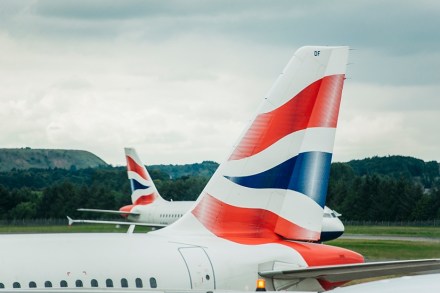
Should the government be prepared to take equity stakes in major companies that will struggle to survive the current crisis? That’s a question already on the table in relation to Jaguar Land Rover and Tata Steel, and likely to arise for British Airways, aero engine maker Rolls-Royce and others. We’re told Chancellor Rishi Sunak is working on a plan, called Project Birch, to bail out ‘viable companies which have exhausted all options’ and whose collapse would ‘disproportionately harm the economy’. That means large-scale loan support first, with conversion to equity as a last resort — and to some pundits it smacks of the 1970s interventionism that left swathes of under-performing British industry addicted to state subsidy.

Pompeo: Hong Kong autonomy statement made with ‘great sadness’

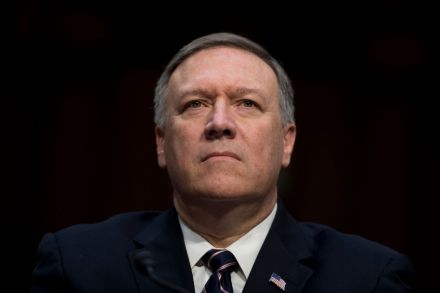
Secretary of State Mike Pompeo said during a press call Wednesday afternoon that his decision to declare Hong Kong no longer autonomous from China was made with ‘great sadness’ but that it merely ‘reflects the facts.’ Pompeo released the statement, which is required annually by Congress, on Wednesday morning. The statement indicated that China had violated Hong Kong’s autonomy to such a point that the United States would likely be forced to strip its special trading status. The move could also severely affect China economically, as they often use Hong Kong as a middleman for international trading. ‘Things have deteriorated significantly in these last months,’ Pompeo said on the call.

lab leak pompeo

Taiwan’s balancing act is becoming ever more precarious

From our UK edition

After a landslide victory in January’s election, Taiwanese president Tsai Ing-wen was re-inaugurated on Wednesday at a scaled-down ceremony in Taipei. As ever, Taiwan’s relationship with China was the central issue of the election. This year, though, a greater sense of urgency surrounded the vote, primarily because of the instability in Hong Kong.  Now, polling day feels like it belongs to a distant past, taking place amid rumblings of a new virus infecting residents of Wuhan across the Taiwan Strait. Although Taiwan has rightly received much praise for its response to coronavirus, the past few months have not been without significant difficulties.

China is using coronavirus to crack down on Hong Kong

From our UK edition

One thing’s for sure: when the history of Covid-19 is written, we’re going to need a few chapters on those who did well out of this crisis. Step forward China. Or rather the Chinese Communist Party (CCP). The Chinese Government is making the most of this pandemic, using it as one giant audition for leadership of the global order while the US takes a leave of absence. And it has spent plenty of time and public relations effort positioning itself as the PPE messiah sent to redeem afflicted nations; a messiah even capable of raising the dead, if its statistics are to be believed. But if you think the CCP’s virus opportunism is limited to mask diplomacy, think again.

How coronavirus can save Hong Kong

From our UK edition

The coronavirus has enforced a hiatus in Hong Kong’s widespread political unrest with worries about transmission stalling protests. Dissatisfaction with the government still festers, fuelled by the mishandling of the health crisis - all the ingredients are there for protests to reignite. But the lull in the unrest gives the Hong Kong government and their counterparts in Beijing a window of opportunity. It is imperative that the British government encourages all sides to grasp the next few months as a moment for reconciliation. President Xi Jinping has been busy using this space to reshuffle the officials overseeing Hong Kong from Beijing’s side by appointing loyalists Xia Baolong and Luo Huining.

Xi’s dictatorship is a tragedy, not a farce

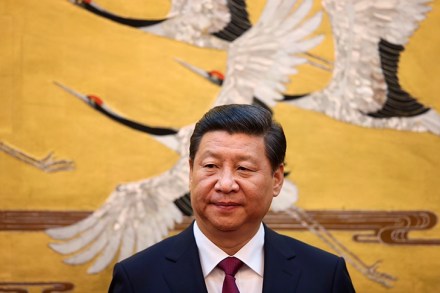
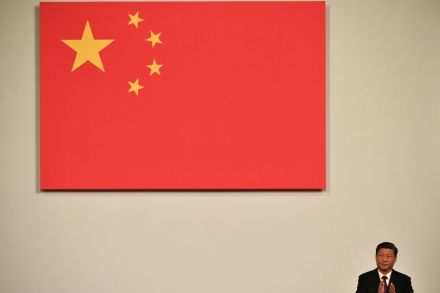
A successful dictator has to have ruthlessness, control, influence and competence. So how does China’s leader, Xi Jinping, rate as a dictator? Xi has been in power since 2012 and thus has enough of a track record to judge.On ruthlessness, he ranks highly. The concentration camps he has created for China’s Muslim minority in Xinjiang and the suppression of the movement in Hong Kong — in violation of the 1984 agreement with the UK — are the most tangible examples. The November 2019 leak of the 'Xinjiang Papers', more than 400 pages of internal Chinese documents, to The New York Times provided an unprecedented documentation of the origins and implementation of crackdown against Muslims of Xinjiang.

xi