Hong kong

The Christian grace of Jimmy Lai’s prison drawings

From our UK edition

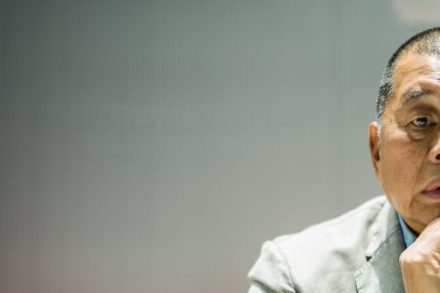
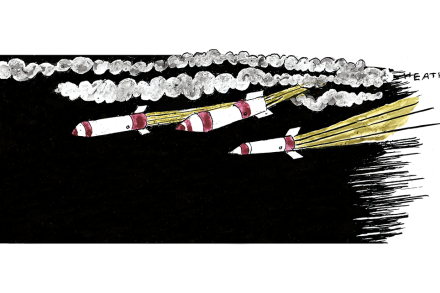
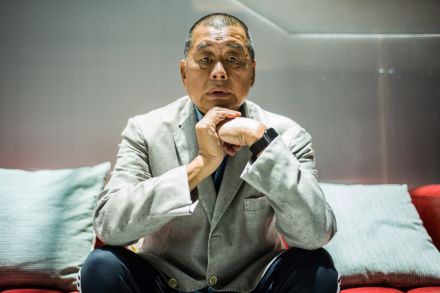
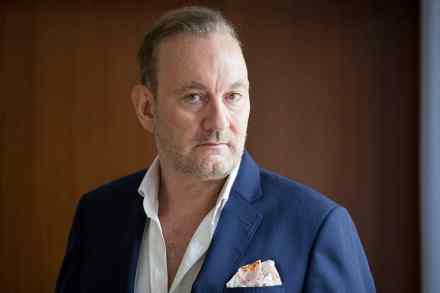
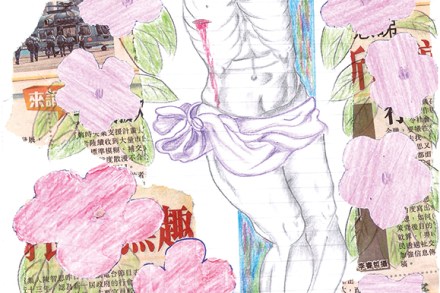
Sharp-eyed readers will notice that Peter Brookes’s fox, who normally tops this column, is absent. They can be reassured. He has gone to ground but will be (in hunting parlance) ‘bolted’ in time to return for future issues. I decided to remove the fox for Holy Week because the replacement drawing tells a story. It is by Jimmy Lai, the billionaire former boss of Apple Daily in Hong Kong. He drew it in solitary confinement in Stanley prison. He has now been incarcerated for nearly 2,000 days. This February, he was sentenced to a further 20 years for ‘conspiracy to collude with foreign forces’ and ‘to publish seditious materials’.
A sinister strangeness: City Like Water, by Dorothy Tse, reviewed

From our UK edition

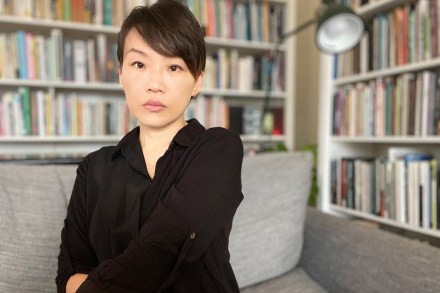
In Dorothy Tse’s City Like Water the location is never named. Anonymous, mutable, it slips from normal into nightmare, strangeness signalled from the opening lines: ‘In the place I used to live, my rusty top bunk rocked like a boat. Night after night, it carried me off towards a secret crevice.’ This is a novel written out of sorrow and anger: the pain of recalling sweeter times. It’s not the boy narrator who is unreliable; it’s the city itself. When, in Invisible Cities, Italo Calvinodescribed Marco Polo’s travels, he named 55 settings – each delineating an aspect of Venice. Tse has acknowledged Calvino as a major influence, and the locus of City Like Water, in all its bewildering manifestations, its beauty and squalor, can only be her own city – Hong Kong.

Jimmy Lai cannot be left to die in jail

The decision to sentence Jimmy Lai to 20 years in jail in Hong Kong is no surprise, but it is no less shocking or heartbreaking. For his family, especially his courageous wife Teresa, son Sebastien and daughter Claire, who have advocated so tirelessly for their father over the past five years, one can only imagine the pain and grief they feel. Sebastien and Claire have walked the corridors of power in Washington, DC, London, Ottawa, Brussels, Paris and beyond, and sat in television studios for hour after hour, seemingly to no avail. For Hong Kong, this is yet another dark day, yet another nail in the coffin of the city’s freedoms. And for everyone who cares about liberty, the rule of law and basic human rights, this sentence is a punch in the solar plexus.

lai

Portrait of the week: ‘Misleading’ Reeves, trial without jury and Great Yarmouth First

From our UK edition

Home What Rachel Reeves, the Chancellor of the Exchequer, told voters about the economy in a special press conference on 4 November was at odds with what the Office for Budget Responsibility had told her, Richard Hughes, its chairman, explained in a letter to the Commons Treasury Committee. Asked directly by Trevor Phillips on Sky if she had lied, Ms Reeves replied: ‘No, of course I didn’t.’ Sir Keir Starmer, the Prime Minister, said: ‘There’s no misleading there.’ Chris Mason, the BBC political editor, concluded: ‘On one specific element of what the Chancellor and the Treasury told us before the Budget, we were misled.

Why the Budget let banks off the hook

From our UK edition

‘Banks don’t vote and citizens don’t love them, so they’ll always be the Chancellor’s target of choice,’ I wrote in September when one of this autumn’s many false Budget trails pointed towards a left-pleasing extra surcharge on bank profits. But it didn’t happen: partly because Rachel Reeves was love-bombed by Goldman Sachs chief David Solomon and JPMorgan chairman Jamie Dimon, promising new investment in the UK if she held off; partly because she had evidently figured out that a raid on banks that already pay higher tax rates than in any other major financial centre – many of whose bosses are already packing to move to Dubai – would make them even less eager to help boost growth by lending more to British businesses.

Petty, malicious and tremendous fun – the Facebook office drama

From our UK edition

Careless People, Sarah Wynn-Williams’s account of her time at Facebook, has landed top of the New York Times’s bestseller charts and fourth in the UK’s Sunday Times equivalent. It owes its success in large part to a ferocious campaign that Meta – Facebook’s parent company – waged against it on publication. When Meta faces a barrage of public criticism, which it often does, it typically stays quiet and gets on with things. And that approach works – its share price has continued to soar despite scandal after scandal. So when the company not only published a series of furious denials but also had staffers post about the book on their personal social media feeds, and even launched a legal action to prevent Wynn-Williams promoting it, people started to take notice.

Is the future of democracy in the balance?

From our UK edition

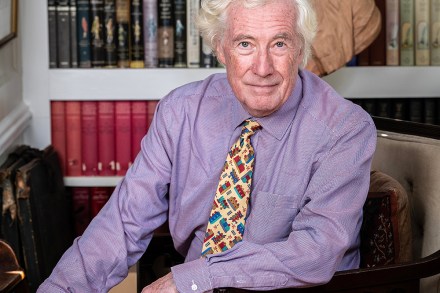
At the turn of the century, the ineluctable march of democracy seemed assured. The Cold War extinguished and eastern Europe freed, a Whiggish history of the world continued to be written. A quarter of a century on, the great wave has broken and rolled back. Democracy is not what it was in Chile, Peru, Venezuela, Brazil, Hungary, Egypt, Turkey, Russia and Afghanistan. It has not emerged in China. The future looks less democratic than the past. Such concerns bother the big brain of the former Supreme Court judge and medieval historian Jonathan Sumption in his latest brilliant collection of essays.

Why we must not forget Hong Kong

Forty years ago this Christmas I visited Hong Kong for the first time — a few days after the signing in Beijing of the Sino-British Joint Declaration that sealed the former colony’s transfer to mainland rule in 1997. It was a moment of apprehension, but at least the timetable had been set. And how lucky I was to have experienced that extraordinary outpost as it was then, in such contrast to what China’s masters have made it now. The Christmas Day service in St. John’s Cathedral, overhead fans stirring the turbid air, was a poignant glimpse of Hong Kong’s past. Norman Foster’s Hongkong Bank building, the most expensive in the world at the time, was approaching completion as a symbol of commercial confidence in the future.

Hong Kong

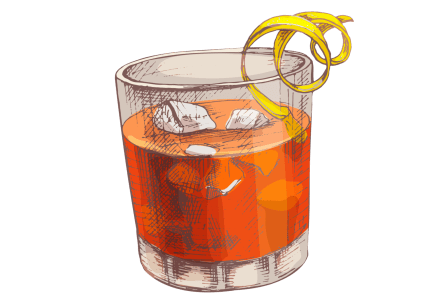
Negroni inflation is out of control

From our UK edition

Forty years ago this Christmas I visited Hong Kong for the first time – a few days after the signing in Beijing of the Sino-British Joint Declaration that sealed the former colony’s transfer to mainland rule in 1997. It was a moment of apprehension, but at least the timetable had been set. And how lucky I was to have experienced that extraordinary outpost as it was then, in such contrast to what China’s masters have made it now. The Christmas Day service in St John’s Cathedral, overhead fans stirring the turbid air, was a poignant glimpse of Hong Kong’s past. Norman Foster’s Hongkong Bank building, the most expensive in the world at the time, was approaching completion as a symbol of commercial confidence in the future.

Hong Kong justices decide to keep Jimmy Lai in jail

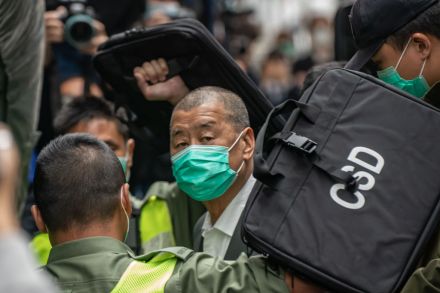
Hong Kong’s top court decided Monday to uphold Jimmy Lai and six other pro-democracy activists’ convictions for their campaigning during the anti-government protests that rocked the city in 2019. In a unanimous agreement, the court dismissed the bid to overturn the convictions of the seven activists.   Among the justices who voted to uphold the conviction was British justice David Neuberger, who is still serving as non-permanent judge in the former British colony.   Lai, seventy-six, the founder of the pro-democracy newspaper Apple Daily, was found guilty in 2021 of organizing and participating in an unauthorized assembly in August 2019 during months-long pro-democracy protests in the China-ruled city. He was sentenced to seventeen months in prison.

jimmy lai

The rootlessness that haunts the children of immigrants

From our UK edition

As a child, Edward Wong had no idea that his father had been in the People’s Liberation Army. The only uniform the young Wong associated with his parent was the red blazer of Sampan Café, the Chinese take-away his father worked at in Virginia. China was seldom spoken of, with Wong getting only snatches and hints of what seemed like a painful family history – one the adults were keen to brush over. But, like many second-generation immigrants, Wong gravitated towards his father’s homeland in a bid to better understand the man. His parents’ silence only compounded the enigma.

Inside the handover of Hong Kong

During the negotiations between the UK Foreign Office and the Chinese government that led to the 1997 handover of Hong Kong to China, I was engaged in the fruitless search for oil in the South China and Yellow Seas, in partnership with the China National Offshore Oil Corporation, or CNOOC (“Snook”). These arrangements were the first to be concluded with western companies since the Cultural Revolution. They were conducted with a chilly civility in Beijing — then still a spartan city to say the least, with only two hotels available to western visitors. We were installed in the north of the city in a hotel designed allegedly by I.M. Pei, about an hour’s drive from the CNOOC offices.

Hong Kong

Letters: Bully XL owners are deluding themselves

From our UK edition

Bed and breakfast Sir: Cindy Yu asks, in her ‘Leaving Hong Kong’ piece (23 September): ‘Where are they?’ I can help with that one. I live near Epsom, Surrey, and there has been a huge influx of people from Hong Kong here over the past 18 months. The area is attractive because housing is affordable in south-east terms compared, price-wise, with where they have come from. There are half a dozen very good schools in Epsom, Sutton and Cheam – and the area has very low crime rates. If anybody wants to seek positives from controlled immigration then it is here. The influx of the Hong Kongers (as Yu described them) has undoubtedly stimulated the local economy in terms of house and car sales and given the hospitality industry a big boost.

The high and lows of a Hong Kong jockey

From our UK edition

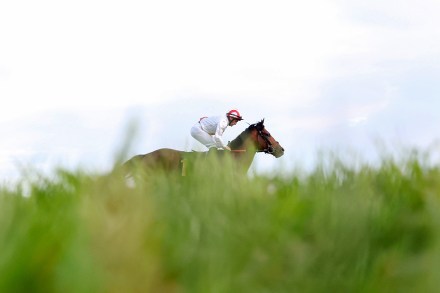
You can take a jockey who has ridden there out of Hong Kong; it’s a lot harder, I reflected, after a chat at Newbury with Neil Callan, taking Hong Kong out of the jockey. Even though this is his second season back on home territory after spending ten years in that racing pressure cooker, Neil still watches every one of the 18 races a week at Sha Tin and Happy Valley and remains grateful for what Hong Kong did for him. He went out there as a good jockey – you don’t get invited to take up a Hong Kong contract unless you are in the top echelons elsewhere – and he came back a better one. Back in the UK, Neil Callan, the champion apprentice in 1999, had been in the top five for some years.

Where is today’s equivalent of the Free Tibet movement?

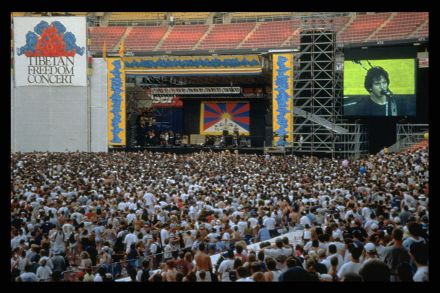
Remember “Free Tibet?” The Tibetan Freedom Concert, a series of music festivals that began in 1996, featured such impressive acts as the Beastie Boys, Red Hot Chili Peppers, Smashing Pumpkins, Rage Against the Machine, U2 and A Tribe Called Quest. An entire generation of young Americans — enchanted with “the other” of Tibetan Buddhism — had no qualms condemning what they believed to be an authoritarian Chinese regime. And why not? The People’s Republic of China, however much they fumed over international denunciations of the Tibetans, seemed weak, and incapable of silencing the Western entertainment industry’s indignation. These days, not so much. The NBA apologizes for players or coaches who criticize Beijing’s actions in Hong Kong.

free tibet

Dominic Cummings understands Singapore. The Tories still don’t

From our UK edition

I’ve read Kwasi Kwarteng’s surprisingly positive review of my book, Crack-Up Capitalism. Although it was unexpected to see someone from the libertarian corner being so enthusiastic about what is clearly a critical book, the experience was not new. After my previous book, Globalists: The End of Empire and the Birth of Neoliberalism, was published in 2018, I was startled to find Deirdre McCloskey, a leading classical liberal historian, praising the book as a manual for ‘keeping a liberalism which has made us rich and free.’ Globalists explained how neoliberals wanted to keep decision-making from democratic electorates. I took McCloskey’s praise as a validation of my core thesis.

Why journalists shouldn’t be on TikTok

Americans: watch your backs. Last week, Forbes released a bombshell report that ByteDance, the parent company of TikTok, the popular video recording and meme app, was planning to monitor and track the physical location of Americans. It’s not the first time there have been national security and human rights questions swirling around ByteDance, the China-based technology company that owns all of TikTok’s offshore data and could easily be leveraged by the Chinese government. Forbes would not specifically say which Americans ByteDance was targeting, but it would not be too farfetched to assume they would be influential figures in media and politics — the same folks China tracked during Hong Kong’s volatile freedom and democracy protests.

tiktok

The price of courage: On Java Road, by Lawrence Osborne, reviewed

From our UK edition

Lawrence Osborne’s novels are easy to admire. They tend to deal with characters trapped in morally questionable situations and their backdrops, from Macau to Greece, are often glamorous and exotic. Like any British novelist who deals with morality in foreign places, he gets compared with Graham Greene, but On Java Road, his sixth novel, owes much to Patricia Highsmith too. At its heart is a crime – the disappearance of a young woman in contemporary Hong Kong – but this, as much as anything, is a structural device on which to hang an examination of moral courage. What, Osborne asks, is required to protect democracy when doing so comes with great risk?

China’s grave insult to the Catholic Church

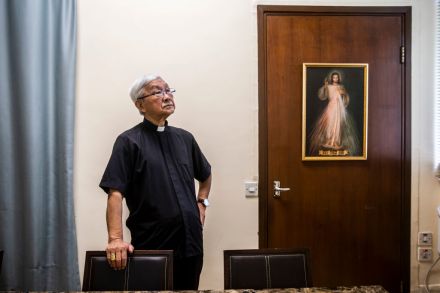
The outrageous arrest of Cardinal Joseph Zen last week — together with the Vatican’s weak response — presages dark days for Catholics under Beijing’s authority. Nicknamed “the conscience of Hong Kong,” Cardinal Joseph Zen is known and respected throughout the world for his fearless defense of Chinese Catholics and his opposition to communism. As bishop of Hong Kong, he encouraged and celebrated annual masses on June 4 for the victims of the Tiananmen Square massacre (participation in a Tiananmen Square memorial was one of the “offenses” that put Hong Kong media tycoon Jimmy Lai in jail last year). This year, the diocese of Hong Kong has canceled the June 4 Tiananmen Square memorial masses, for the first time in over two decades.

Hong Kong is now a police state

No one now denies that Hong Kong is a fiefdom of Beijing. Its democratic leaders have been packed off to prison on spurious grounds or have left the territory, and its street protests have long been beaten to pieces with batons. The 2020 national security law has made mockery of Hong Kong's last shreds of freedom of expression, rendering all criticism of the Chinese Communist Party akin to terrorism; and its uncensored homegrown newspapers are now closed by the state — their proprietors inexorably marched off to jail. Any pretense of adherence to the treaties signed by Britain and China around the time of the handover in 1997 — treaties that guaranteed Hong Kong autonomy — has long fallen away. Hong Kong is a subject province of the People's Republic now, and nothing more.