Homosexuality

The Buttigieg delusion

Referring to her imaginary victory in the midterm elections, the LARPing governor of Georgia, Stacey Abrams, delivered to Democrat voters a come-to-Jesus moment. ‘The notion of identity politics has been peddled for the last 10 years, and it’s been used as a dog whistle to say that we shouldn’t pay too much attention to the new voices coming into progress,’ she said to an audience last week. ‘I would argue that identity politics is exactly who we are and it’s exactly how we won.’ She didn’t win, for the record. But this is what they call in therapy a breakthrough. The Democrats seemed to have finally entered the fifth stage of grief: Acceptance, a time of adjustment, readjustment and resolve.

buttigieg

Barometer | 9 May 2019

From our UK edition

Endangered species The UN claimed a million species of plants and animals could become extinct. If they all died out, how many would we be left with? — The number of new species being discovered is growing at a faster rate than species are dying out. In 2011, the UN Environment World Conservation Monitoring Centre estimated there were 8.7 million species — 7.77 million of which were animals, 610,000 fungi and 300,000 plants. At the time, around 1.2 million species had been discovered and described. — In 2017, Arizona University came up with a new estimate: 2 billion. Between 70 and 90 per cent, it said, were bacteria.   Unequal rights The Sultan of Brunei reversed a decision to extend the death penalty to men convicted of homosexual acts. Where is gay sex illegal?

Step aside, First Ladies: it’s Chasten Buttigieg’s time to shine

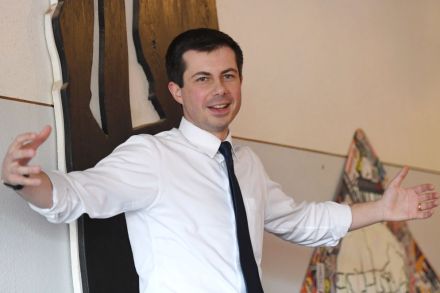
Jackie Kennedy oversaw a restoration of the White House and transformed the First Residence into a museum of American art and history. She also arranged for the Mona Lisa to tour America (a move that caused riots in Paris). Betty Ford, candid about her struggle with drugs and alcohol, established the nation’s preeminent addiction treatment center. Rosalynn Carter attended cabinet meetings and was the president’s emissary to Latin America and Melania Trump is a paragon of grace, elegance and style for American women to admire. But it’s time to step aside, First Ladies, because there’s a big, goofy, gay nerd coming through and his name is Chasten Buttigieg.

chasten buttigieg

Pastor Pete and the politics of religion

Religious faith may be declining in America but it is still a cultural force to be reckoned with, looming large in any general election cycle. Courting religious voters remains a factor in the calculus of any prospective presidential candidate, especially as neither party seems a natural home for many of them. Americans are actually losing their religion rather faster than their faith. A recent poll showed that ‘nones’ – those without a religious affiliation –  are now the country’s largest group for the first time: Americans are increasingly defining their own faith, and not asking a church to do it for them. In this landscape, what a ‘Christian’ believes as a core value is suddenly malleable and open to influences from all sides.

pete buttigieg

Love me, or go to hell

From our UK edition

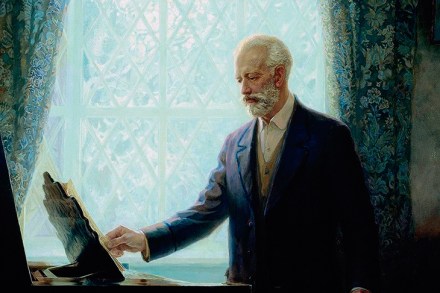
This is a wonderful and moving book of correspondence and biographical documents promising one Tchaikovsky in its subtitle and introduction, but actually delivering another — and thank the musical gods for that. Nothing here is horrid or even secret; the Russian edition was published in 2009 and has been used by English-speaking authorities since. And yet it claims to ‘unlock’ scandal: Pyotr Ilyich Tchaikovsky often swore in his letters (shock!), had many homosexual encounters, including one-night stands (covered in previous biographies) and felt at home in the upper echelons of the 19th-century Russian autocracy.

They say Enoch Powell had a fine mind. Hmm

From our UK edition

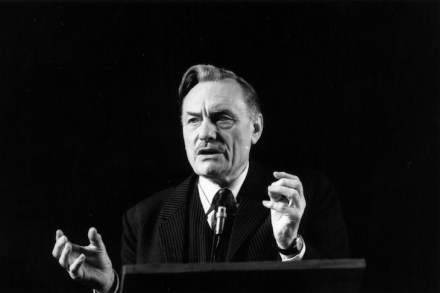
Enoch Powell has been in many minds this month. It’s the 50th anniversary of his famous ‘Rivers of Blood’ speech and I took part in a BBC radio programme discussing this — and hearing the speech itself read superbly by the actor, Ian McDiarmid. The small campaign against the very broadcasting of the speech fizzled out — not least, I think, because the ghastly text does Mr Powell no favours, and many of us who had never read it in its entirety were shocked not only by its tone but by its careless inaccuracy and faltering logic. Yet there’s been a widespread popular view that, agree or disagree with him, the man had a fine mind, a fastidious regard for facts, and courage.

Anthem for groomed youth

From our UK edition

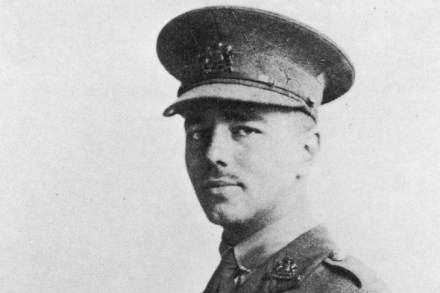
This year is the centenary of the Armistice to end what Siegfried Sassoon called ‘the world’s worst wound’: the first world war. A bare week before the conflict concluded in a grey November, another poet, Sassoon’s friend and protégé Wilfred Owen, whose work now epitomises the waste and futility of that struggle, was cut down by a machine-gun as he tried to lead his men across the Sambre-Oise canal in one of the war’s last battles. Owen’s sombre verse, the ‘poetry of pity’ as he called it, came to represent the disillusion and despair that set in as casualties climbed into the millions and the blood of Britain’s youth drained hopelessly away in the Flanders mud.

Cottage industry

From our UK edition

There are nights when, crossing the dark parkland by my house, I see a man beneath a remote streetlamp. He is usually alone, and smokes as he circles the low walls of a squat little building. Most nights, after innumerable cigarettes and several laps of the place, he will slip from the light for good. Sometimes another figure will appear, warily loping in and out of the lamplight. A brief exchange follows before cigarettes are extinguished and both slink off into the building. This, I have discovered, is cottaging — or at least the first stages of it. Those who know about cottaging might, quite understandably, have thought it a thing of the past. But as my man under the streetlight explained to me later, when we met, even in the internet era it still has appeal.

Worse for wear

From our UK edition

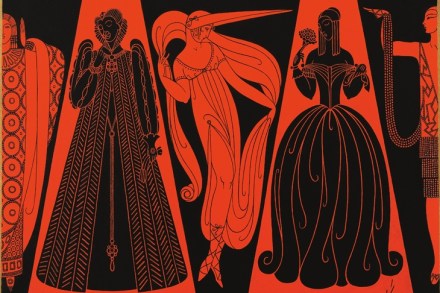
Erté was destined for the imperial navy. Failing that, the army. His father and uncle had been navy men. There were painters and sculptors on his mother’s side, but they were thought very frivolous. Romain de Tirtoff (‘Erté’ came from the French pronunciation of his initials) was born in 1892 at the St Petersburg Naval School where his father Pyotr was inspector. When he was a little boy, his aunt bought him a set of wooden soldiers. Instinctively, he hated war, violence and, above all, uniforms. He burst into tears and threw the box out of the window. What he liked best was to play with his mother’s old perfume bottles, which he dressed in scraps of lace to make ballerinas.

Arabian nights

From our UK edition

Recall the media coverage at the height of the Jimmy Savile scandal, times it by about a thousand, and you get an idea of the hysteria currently surrounding gay men in Egypt. That’s not an arbitrary analogy. The social ramifications of coming out as a ‘gay man’ in most parts of the Middle East are the same as for some chap on a council estate in Barnsley declaring in a packed pub at closing time that he has a 12-year-old girlfriend. Two detained gay rights campaigners who waved the rainbow flag at a recent Cairo pop concert, and thus provoked the clampdown, are presently learning that the hard way.

Gleaming pictures of the past

From our UK edition

If you think you know what to expect from an Alan Hollinghurst novel, then when it comes to The Sparsholt Affair, you’ll almost certainly be right. Once again, Hollinghurst explores British gay history by plunging us into haute bohemia over several decades of the 20th century. (A few years ago he told an interviewer that the main characters in his next book ‘will all be more or less heterosexual’: a plan that sounded pretty unlikely at the time and, seeing as this is his next book, was evidently abandoned.) Once again, he combines his broad sweep with plenty of equally impressive close-up analysis — and all in prose that manages to be both utterly sumptuous and utterly precise.

How pleasant to know Mr Lear

From our UK edition

Edward Lear liked to tell the story of how he was once sitting in a railway carriage with two women who were reading aloud to children from his Book of Nonsense. When a male passenger confidently asserted that ‘There is no such person as Edward Lear’, the writer was obliged to prove his own existence as ‘the painter & author’ (in that order) by showing the passengers his name on his hat, handkerchief and visiting card. In an extraordinary drawing of this event, Lear depicted himself and the two women realistically, but the doubting man is a cartoonish figure straight out of one of his limericks. Lear’s two worlds of ‘art and nonsense’ wonderfully collide in this anecdote and its illustration.

Persistent buggers

From our UK edition

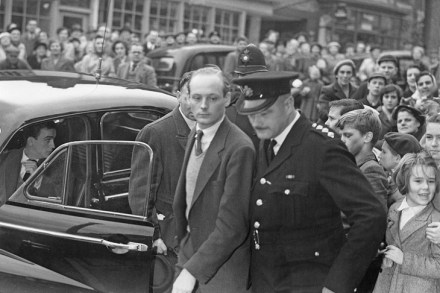
The credit for decriminalising male homosexuality in 1967 — for those over 21 in England and Wales at least — goes to Harold Wilson’s government, the Labour MP Leo Abse, and the Conservative peer Arthur Gore, 8th Earl of Arran. Yet more than a decade before the Sexual Offences Act received royal assent, a journalistic campaign to overturn an unjust and unworkable law had begun in the pages of The Spectator. After the dust had settled in post-war Britain, disparate MPs held the sincere but mostly tacit belief that the law criminalising homosexuality desperately needed amendment, if not scrapping entirely.

What should party leaders be allowed to believe?

From our UK edition

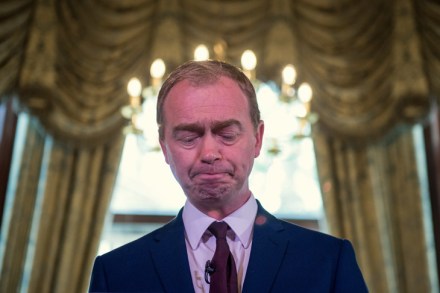
‘If he can’t be in politics,’ the Archbishop of Canterbury tweeted last week after Tim Farron resigned the leadership of his party, ‘media & politicians have questions.’ So prelates now think complex theological concerns can be despatched within the Twitter limit of 140 characters. They cannot. Let me now unpack Dr Welby’s abbreviated consideration of this subject and examine what’s behind it, because the subject is of profound importance —and not only for Christians. Nobody has said Mr Farron can’t be in politics. He has been returned as MP for Westmorland and Lonsdale with the support of 26,686 voters.

Fantastic Mr Fox

From our UK edition

Sand in the Sandwiches is the perfect show for those who feel the West End should be an intellectual funfair. It sets out to amuse, surprise, divert, uplift and nothing more. Edward Fox’s biographical portrait of John Betjeman has a smattering of his most famous poems ingeniously woven into the narrative. Fox knows his stuff. His shrill, elongated upper-middle-class accent is 99 per cent impersonation and 1 per cent exaggeration. He reminds us that when Betjeman said ‘Edwardian’ he rhymed the second syllable with card, not sword. From early boyhood Betjeman knew that poetry would be his trade. Aged 14, he read the sonnets of Oscar Wilde’s chum, Bosie, and judged them superior to Shakespeare’s. He sent the ageing poet an admiring letter.

Moments of absurdity

From our UK edition

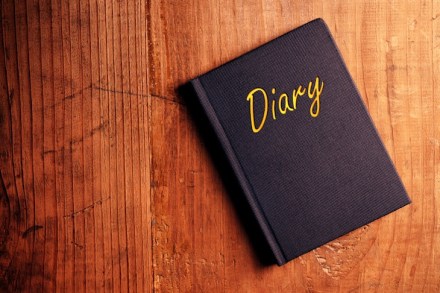
The bestselling humourist and New Yorker essayist David Sedaris is renowned for an almost hypnotic deadpan drollery and maybe especially for The Santaland Diaries, his uproarious account of earning part-time cash as a department store Christmas elf. Now he is bringing out an edited version of his personal diaries. It’s the first volume of two, taking us from his days as a broke student, stoner and young gay man in North Carolina and Chicago, through to the years of literary fame and success in New York and Paris as the new century dawns — a distinction worn lightly. Fans, semi-fans and non-fans (I am midway between the first two categories) may well crack open this book in search of David Sedaris’s private reality.

The cops should have said: it’s just Stephen Fry, what did you expect?

From our UK edition

Coming to a workplace near you, perhaps — masturbation breaks. The policy was first recommended by a psychologist at Nottingham Trent ‘University’ and has now been supported by Dr Cliff Arnall, who is a life coach. These brief moments of respite in the working day would, according to old Cliff, result in less aggression, higher productivity and more smiles. I’m sure he’s right. ‘I’ll read the lesson in a few minutes, Justin, I’m just off for a quick Sherman. Pass me that copy of the Tablet, will you?’ I do wonder if in some workplaces — the BBC commissioning centre, all advertising agencies, Channel 4 News, the Law Society — these breaks are already de rigueur and, further, are unceasing in their duration.

Love under wraps

From our UK edition

It’s an important subject: the existence of a permanent and significant minority within London’s life. Gay men and lesbians have always been there, leaving — or taking care not to leave — traces of their existence. But for the historian, a difficulty arises: often the only evidence lies in their occasional brushes with the law. We often know nothing about how gays lived in each other’s company. Letters were destroyed; diaries were scrupulously kept free of anything that could lead to a conviction; and lives were reconstructed around the fictions of a bachelor chambers, or two ladies sharing. How many devoted footmen to bachelor barristers were actually lovers of decades?

The Spectator’s Notes | 4 May 2017

From our UK edition

Guy Verhofstadt, the European Parliament’s main Brexit negotiator, tweeted on Monday: ‘Any #Brexit deal requires a strong & stable understanding of the complex issues involved. The clock is ticking — it’s time to get real.’ This was on the same day as media reports — allegedly leaked by associates of Jean-Claude Juncker, the European Commission president — criticised Theresa May for her naivety about Brexit talks at the dinner she gave Mr Juncker last week. These tactics are intended to affect our general election. By throwing Mrs May’s campaign slogan adjectives ‘strong and stable’ back in her face, Mr Verhofstadt was goading her at the decisive moment of her political career. So were the friends of Mr Juncker.

Tim’s a Christian, so he’s not allowed an opinion

From our UK edition

Maybe I’m wrong about this, but I don’t remember the BBC running a documentary 100 days into Barack Obama’s first presidency and kicking him from pillar to post. Interviewing almost exclusively people who hated him, pouring scorn on his every utterance. They did it this week to Donald Trump, though, and even wheeled out Jeremy Paxman to present this travesty of a documentary. Because Jeremy was interviewing exclusively people with whom he wholeheartedly agreed, he didn’t get the chance to put on that famous supercilious expression we all used to love, back when he was good. Shame. With Obama, as I remember, it was a very different approach. The studio floors were still awash with liberal ejaculate well after 100 days of his singularly inept presidency had elapsed.